REVIEW · KAWAGOE
Historic Town of Kawagoe – Small town of Edo 3h Walking Tour
Book on GetYourGuide →Operated by Masahito Ito · Bookable on GetYourGuide
Kawagoe feels like time travel, in walking form. This 3-hour small-group tour takes you through the atmosphere of Edo-Tokyo in Koedo and connects it to four modern eras—Meiji, Taisho, Showa, and Heisei. I especially like how you get hands-on looks at Kura-Zukuri warehouse-style streets after the 1893 fire, and I like the smart pacing that mixes sightseeing with shopping and a real break for sweets. The main catch: it’s a lot of walking, so it’s not a good fit for mobility impairments or wheelchair users.
I found the structure reassuring. You meet at Starbucks at Seibu Hon-Kawagoe Station, walk together right away, then you’ll have built-in time for wandering and shopping before the guided visits and the final sightseeing chunk. The tour runs with a live English guide, and the experience is led by Masahito Ito (often referred to as Ito-san).
In This Review
- Key highlights you’ll care about
- Getting to Kawagoe: Koedo is the point
- The four eras: how Meiji, Taisho, Showa, and Heisei come alive
- Kura-Zukuri streets after the 1893 fire: what to look for
- A historic-style cafe break: drink and cake/snack included
- Candy Alley and Confectionery Yokocho: sweets with a time stamp
- Bell tower moment and the Kawagoe Festival Museum
- The guide factor: Masahito Ito’s style makes questions easy
- Value and price: is $70 worth 3 hours?
- Practical tips so your day trip stays fun
- Should you book this Kawagoe small-town walking tour?
Key highlights you’ll care about
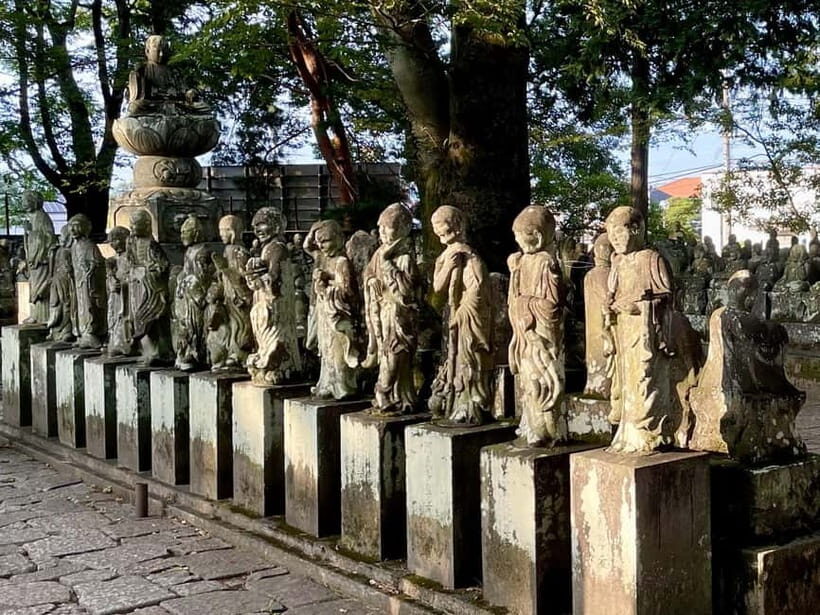
- Four eras explained on the streets: Meiji, Taisho, Showa, and Heisei, not just a museum-style overview
- Kura-Zukuri street scenes: warehouse facades that shaped the look of Kawagoe after the 1893 great fire
- Candy Alley and Confectionery Yokocho: a retro candy lane connected to early Showa-era (1930s) sweetness culture
- Bell tower moments and museum stops: including the Kawagoe Festival Museum and a bell tower that’s shown in action
- A real break included: 1 drink plus 1 cake/snack at a cute historic-style cafe
- Small group energy (max 6): enough attention from Ito-san to ask questions and get help with practical items like go-shuin
Getting to Kawagoe: Koedo is the point
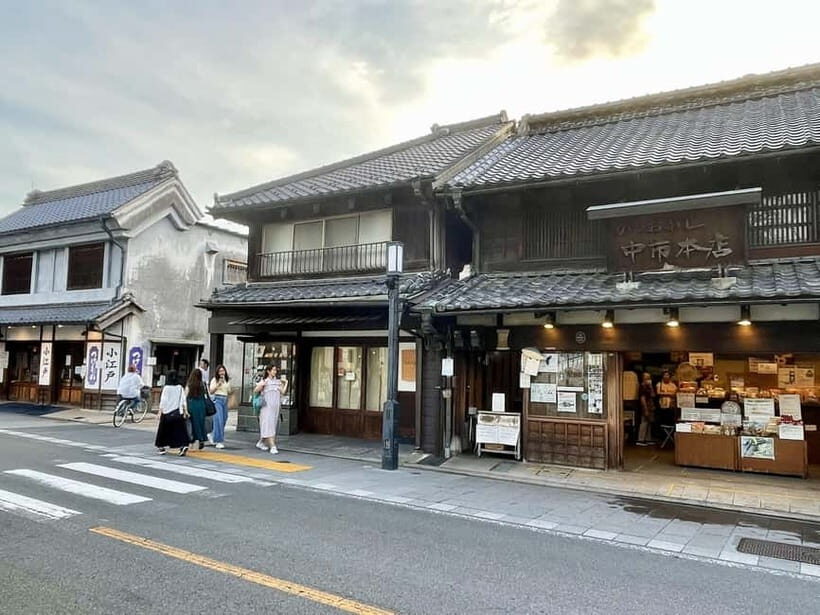
Kawagoe sits about 40 kilometers northwest of Tokyo, and it’s the kind of day trip where you can feel the change in pace fast. You start at Seibu Hon-Kawagoe Station, meeting in front of the Starbucks outside the ticket barriers. It’s a simple, easy-to-find anchor point, and it keeps you from burning time hunting for the group.
From there, you’re walking into Koedo—the nickname for Kawagoe that leans into the idea of Small Edo-Tokyo. Even if you’ve read about Edo districts, what makes Koedo work is the way the street layout and old building styles turn into a moving backdrop for the story. You’re not just looking at one landmark. You’re walking through a neighborhood where the past shows up in storefronts, facades, and the rhythm of the lanes.
One more thing I appreciate: you’re given a chunk of free time to shop and wander on your own. That matters in a place like this, because some of the best shopping is small and spontaneous—snack stops, sweet choices, and quick photo pauses.
You can also read our reviews of more tours and experiences in Kawagoe.

The four eras: how Meiji, Taisho, Showa, and Heisei come alive
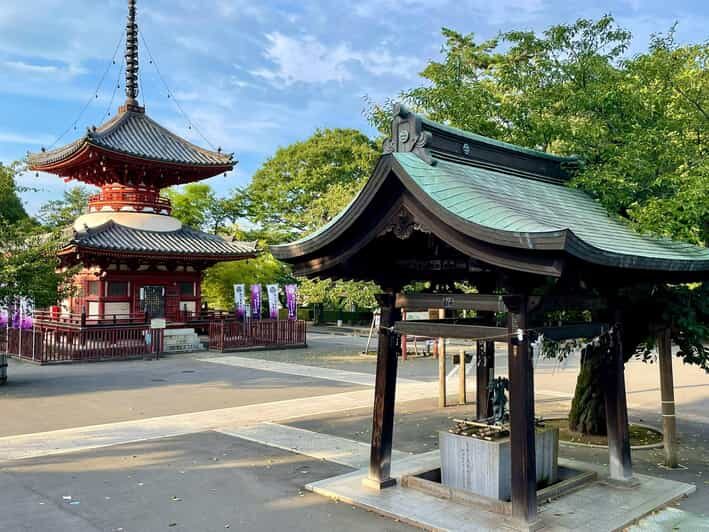
The tour’s biggest promise isn’t a long list of sites. It’s the time-layer approach: Meiji, Taisho, Showa, and Heisei, presented as a connected story you can see while you walk.
Here’s what that means for you in practical terms:
- Meiji and the aftermath of 1893: You’ll see how the look of the town ties back to reconstruction after the great fire in 1893. That’s where the Kura-Zukuri feel becomes more than decoration—it becomes evidence of how communities rebuilt.
- Taisho: You get a sense of “modernizing” without losing the town’s identity. Think of this as the era that sits between old town patterns and later consumer culture.
- Showa: This is where Kawagoe’s food-and-street culture starts to hit hard. Confectionery Yokocho connects to the early Showa period (1930s), when dozens of shops were part of the town’s daily flavor.
- Heisei: The tour helps you understand how the town preserved character while still living as a modern city—meaning you’re not only stuck in old photos.
I like this structure because it prevents the classic problem with short tours: you see buildings but don’t understand why they matter. Here, the eras act like “interpretive glue” so the street scene clicks into place.
Also, because the group is limited to just 6 participants, the guide can adapt pacing if people are curious (or if you’re lingering at a shopfront). That small-group style is where the walking tour becomes more than a checklist.
Kura-Zukuri streets after the 1893 fire: what to look for
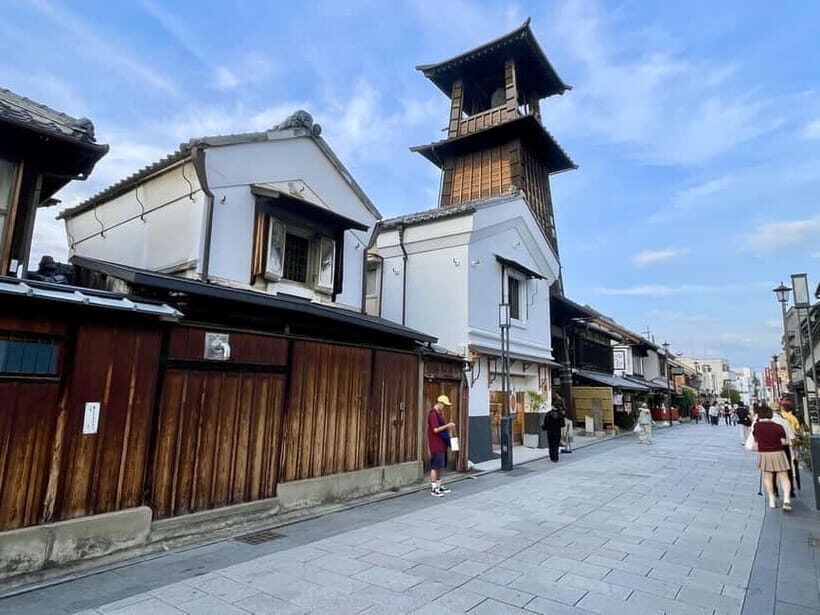
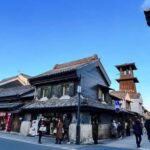
If you’ve ever admired Edo-style buildings in pictures, Kawagoe can be a reality-check in the best way. The Kura-Zukuri houses—those heavy-lidded warehouse-style facades—aren’t just cute scenery. They’re part of the town’s resilience story.
In this tour, you’ll spend real time on the main street area where these buildings line up after the 1893 great fire. When you’re there, don’t rush past the fronts. Slow down for three things:
- The shape and texture of the facades: The distinctive look often signals storage-minded architecture, which ties to how the town historically functioned.
- The street-level storefront rhythm: Even when buildings are old, the street still behaves like a living shopping area.
- How the old and new sit next to each other: That contrast is what helps you understand later eras like Showa and Heisei.
One practical note: this is a photo-friendly section, so bring your camera ready. But wear comfortable shoes, because the best sightlines are also the spots where you’ll want to stop and stand.
A historic-style cafe break: drink and cake/snack included
You don’t just get walk-and-look. You get a built-in pause. Part of the experience is a stop at a cafe in an old building setting—described as a cute place with historical buildings and cultural properties, plus seasonal touches. And yes, you get 1 drink and 1 cake/snack as part of the tour.
In one of the standout comments, the included drink was described as beer and snack. That’s exactly the kind of practical perk that makes a short 3-hour tour feel worth your time: you’re not waiting until later for your energy refill, and you’re not stuck choosing between sightseeing or eating.
I also like that the cafe isn’t treated like an afterthought. A break like this helps you enjoy the rest of the walking. It keeps the day from turning into “fast walking, fast photos, then collapse.”
If you have dietary restrictions, the only safe move is to ask when you arrive. The tour data confirms food is included, but it doesn’t spell out specific options.
Candy Alley and Confectionery Yokocho: sweets with a time stamp
This is the stop that makes Kawagoe feel different from most Tokyo-area day trips. Confectionery Yokocho is described as having more than 70 stores in the early Showa era (1930s). That detail matters because it turns “shopping for snacks” into a direct line to how the town’s culture formed.
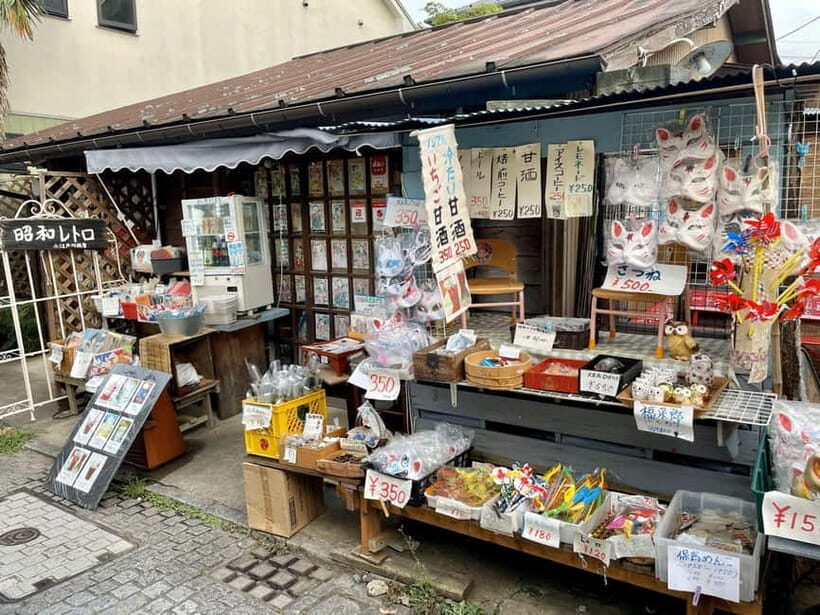
Then there’s Candy Alley, which shows up as a highlight for people who return for more. The appeal is simple: it’s a narrow, retro-feeling lane where you can browse sweets while you’re also thinking about how long this kind of candy culture has been part of Koedo.
What I’d do if you’re there: treat this as your sampling zone, not your final shopping decision. Look around, get a sense of what’s popular, then buy the one or two things you really want. If you buy everything immediately, you’ll regret it the moment you spot a different packaging style two blocks later.
Also, because you’re with a guide, you can ask quick questions in English without the “language friction” that can slow down browsing. One past group experience noted help translating when entering a local clothing store—so if you’re the type who likes to ask questions, expect a smoother time.
Bell tower moment and the Kawagoe Festival Museum
A walking tour is only half the story when it lacks a “hold onto this” anchor. Here, you get that through a bell tower moment and the Kawagoe Festival Museum.
People highlight two things in particular:
- seeing the bell tower in action
- enjoying the Festival Museum as a focused counterpoint to the street walking
That pairing is smart. The bell tower gives you a sensory marker—something you can watch and remember. The museum then gives you context so you don’t leave with only images. Together, they help explain how local traditions keep moving forward.
Even if you don’t consider yourself a “museum person,” this kind of stop works because it’s not trying to replace the town. It’s meant to clarify it.
The guide factor: Masahito Ito’s style makes questions easy
In a small town like Kawagoe, a good guide can turn a 3-hour walk into a story you actually carry home. This tour is led by Masahito Ito, and multiple group experiences praised his explanations as clear and his willingness to answer questions.
One family-focused comment added a great detail: the guide helped participants handle go-shuin—those stamp books people use at shrines/temples—and also helped with translation when entering a local clothing store. That kind of “hands-on guidance” is exactly what makes the difference when you’re in Japan but don’t want your day to feel like guesswork.
So here’s what you should do: if you want to get the most from the tour, bring questions. Ask about what you’re seeing right then—what an architectural element is for, why a lane feels the way it does, how the eras connect. With a group limited to 6, your questions don’t get lost.
Value and price: is $70 worth 3 hours?
At $70 per person for a 3-hour tour, you’re paying for three main things:
- Guided interpretation of Kawagoe’s era-by-era story
- Access and entrance fees to certain attractions
- A built-in break with 1 drink and 1 cake/snack
Transportation from Tokyo isn’t included, so you’ll still budget for trains to and from Kawagoe. But the tour does remove the “planning tax” that usually costs time and energy on a day trip—figuring out what’s meaningful, where to go, and how to connect the pieces.
For a short itinerary, the best value is when you’d otherwise spend money twice: once on convenience (private wandering with poor context) and once on food later. Here, the included cafe stop plus the entrance fees mean you’re not paying separately for everything.
If you already know Kawagoe very well and want to roam freely, you might prefer a self-guided day. But if you want your photos to come with explanations you can understand fast, this tour offers strong value.
Practical tips so your day trip stays fun
You’ll walk a lot in 3 hours, and Kawagoe’s streets can get busy during peak seasons. Do yourself a favor and show up ready.
Bring:
- comfortable shoes
- a hat
- camera
- sunscreen
- water
And a quick mindset tip: this isn’t a “rush to see everything” plan. It’s better to treat it like a guided orientation. Let the guide help you pick what’s worth lingering over.
Also note the clear limits:
- Smoking isn’t allowed
- It’s not suitable for people with mobility impairments or wheelchair users
Should you book this Kawagoe small-town walking tour?
Book it if:
- you want Koedo and Kura-Zukuri explained with an era-by-era lens
- you like a small-group walking format with time for shopping
- you’d value a guide who can help with on-the-ground details like go-shuin and translation at local shops
- you want a day trip that gives you both street scenes and context (bell tower moment plus the Festival Museum)
Skip it if:
- you hate walking or need step-free access
- you prefer long unstructured wandering with no guidance or organized stops
- you already plan to do a full, independent Kawagoe deep dive and don’t need interpretation
If you do book it, I’d plan to stay in Kawagoe a bit after. The guide stops at a good point for energy and direction, and then you can continue with your own lunch and extra sweets while the town is still fresh in your head.