REVIEW · KANAZAWA
Kanazawa Art : Long Tradition of Potter’s Wheel Experience
Book on Viator →Operated by Beauty of Japan · Bookable on Viator
A potter’s wheel session in a real kiln.
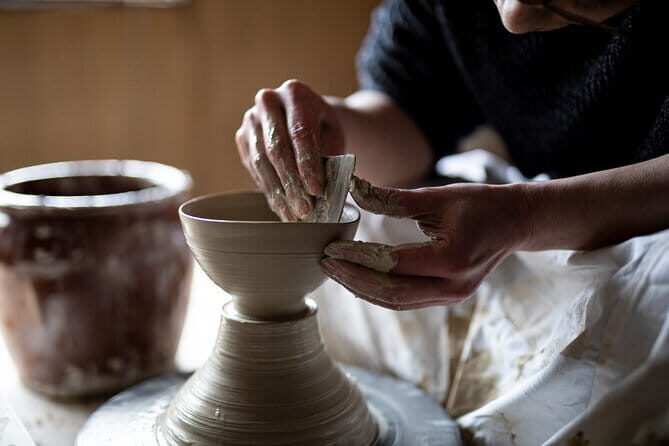
What makes this one special is that you’re not doing a craft demo in a showroom—you’re working with Kutani ware at the only Kutani ceramic kiln in Kanazawa, a studio that has been open since 1870 (Meiji 3). The hands-on lesson walks you through the core steps: working clay on the wheel, then finishing with Kutani coloring.
I like two things a lot here: the step-by-step instruction in English and the small group size (up to 4 people), which means you actually get time to correct your hands and posture instead of rushing through. One reviewer even mentioned their group got filmed for Japanese TV, which tells you the place feels lively—not staged.
One thing to consider: you don’t take your piece home the same day. Your fired Kutani pottery is sent to you later (about 3–5 months), and shipping fees aren’t included, so plan for that extra cost.
In This Review
- Key things I’d highlight before you go
- Why this Kutani kiln feels different from the usual “pottery class”
- Price and value: what you’re really paying for ($91.21)
- Getting started at Nomachi: a simple, no-fuss visit
- The wheel lesson: working with Kutani porcelain clay (and why it’s tricky)
- Coloring and finishing: what “Kutani coloring” means in real life
- Waiting for your pottery: the shipping window is part of the deal
- A realistic look at instruction quality (including the “not certified” note)
- Who should book this pottery-wheel workshop in Kanazawa?
- Practical tips so you don’t overthink the wheel
- Should you book Kanazawa Art: Long Tradition of Potter’s Wheel Experience?
- FAQ
- How long is the potter’s wheel experience?
- What’s included in the price?
- Is shipping included for the finished Kutani pottery?
- How long does it take to receive your pottery after the workshop?
- How many people are in the group?
- Where do I meet for the experience?
Key things I’d highlight before you go
- Only Kutani kiln in Kanazawa with roots going back to 1870
- Porcelain-clay texture: fine, different feel, with guidance when it gets tricky
- Wheel time built for beginners: you’re taught how to place your hands
- Small groups (max 4) so you get personal coaching
- Finished ware is shipped rather than carried home
- Lesson and ware included, but shipping costs extra
Why this Kutani kiln feels different from the usual “pottery class”
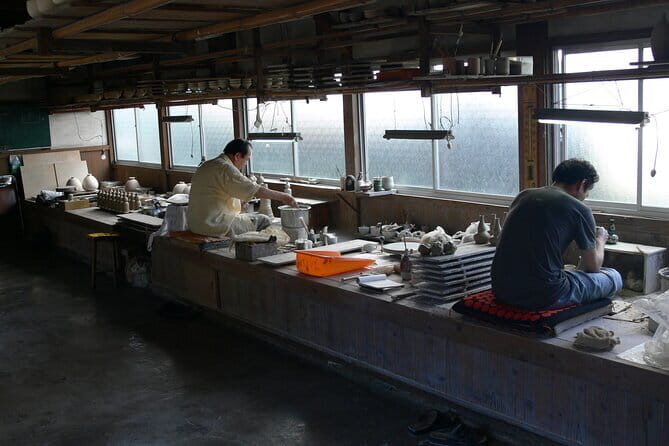
This experience centers on a working Kutani studio in Kanazawa, and that matters more than you might think. A lot of art lessons are basically paint-and-sit-down workshops. Here, the focus is the craft workflow: clay preparation characteristics (Kutani ware uses a very fine porcelain clay), shaping on the wheel, and finishing with Kutani coloring practices.
The kiln is the draw, too. This isn’t a pop-up location. The Kutani Kosen Kiln has been operating since 1870 (Meiji 3), and that long continuity shows up in how they run the session. Even the tone feels old-school: you get taught the basics of controlling the wheel and shaping the form, rather than being handed a template and told to copy.
And yes, it’s in Kanazawa, which is a great base for slow travel. The studio area is the kind of place where you can wander a bit before or after, with small streets that make the craft feel part of daily life instead of a tourist stop.
You can also read our reviews of more tours and experiences in Kanazawa.



Price and value: what you’re really paying for ($91.21)

At $91.21 per person, this workshop isn’t the cheapest craft activity in Japan. But it’s also not just paying for a 60-minute “try it once” moment. Your fee includes:
- the lesson fee
- the ware fee (the pottery you make is part of the included cost)
What’s not included is shipping, which is common for ceramics, especially when the piece needs to be fired and prepared before it can travel. So your true total depends on whether you’ll ship home and what shipping ends up costing.
Here’s the value angle I’d use to decide: you’re paying for (1) instruction that helps you avoid common wheel mistakes and (2) a fired Kutani piece that becomes a keep-sake, not just a temporary project. Reviews also point out you end up with an actually usable item—someone described making a tea cup—so the workshop isn’t just about the process. It’s about the result you’ll receive later.
If you’re the type who likes hands-on learning and wants a real object at the end, this price starts to make sense. If you only want a quick souvenir and hate waiting, you may decide it’s not worth the wait.
Getting started at Nomachi: a simple, no-fuss visit
The activity starts at 5-chōme-3-3 Nomachi, Kanazawa, Ishikawa 921-8031 and ends back at the meeting point. That’s a good setup for day planning because you don’t have to figure out how to get somewhere else after class.
Duration is about 1 hour, and you’ll receive a mobile ticket (so you’ll likely scan from your phone). Confirmation is sent within 48 hours of booking, subject to availability, which is helpful if your schedule is still firming up.
Group size is capped at 4 travelers. In practice, that tends to mean you can ask questions without feeling like a number. It also makes it easier to step away for a moment if you’re trying to calm down your clay nerves (more on that in a minute).
The wheel lesson: working with Kutani porcelain clay (and why it’s tricky)
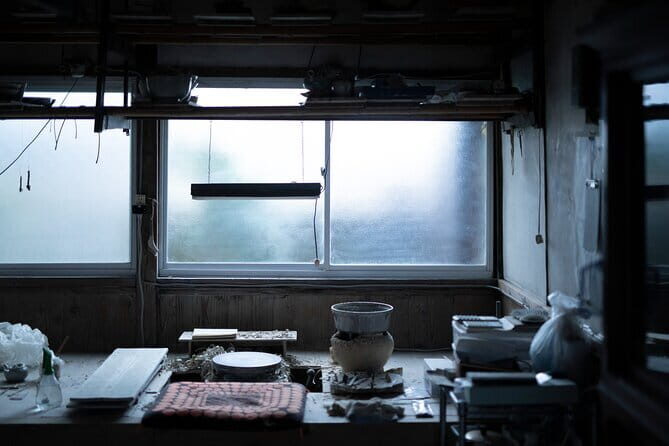
Your hands meet the main event right away: you try the potter’s wheel using Kutani ware clay. This clay is made from a ceramic stone called porcelain clay. The key detail is that it’s very fine and has a unique texture and feel compared with typical pottery clay.
That matters because fine porcelain-clay can feel harder to control. It’s not just “hard” in a vague way; it can respond differently when pressure and speed aren’t quite right. If you’ve never worked with clay, the texture difference can surprise you—like trying to steer on a surface you aren’t used to.
The good news: the potter/teacher guides you through it. The instruction is step-by-step, and reviewers specifically mention:
- feeling anxious at first, then relaxing once they understood what to do
- getting very clear help with the correct way to place your hands so you don’t ruin the shape
This is where the small group size helps again. You’re not just listening to instructions in a group and hoping your turn comes soon. You can focus on learning one thing at a time: how your hands affect the form, what mistakes look like, and how to correct them.
Also, don’t judge your final “skill level” by the first few minutes. Wheel work tends to feel awkward until you get the feel of the motion and pressure. Even with good instruction, your hands need a bit of time to learn the new rhythm.
Coloring and finishing: what “Kutani coloring” means in real life

After the wheel shaping, the process includes final coloring. Kutani ware is known for its decorated style, and this kiln’s workshop keeps that focus by combining forming with finishing steps rather than stopping at the raw shape.
You’ll likely spend most of your hour actively working, then finish with a piece that’s ready for the studio process that comes after your visit. Even if you don’t see the whole kiln workflow (you’re not running the firing yourself), the workshop still connects you to it. The clay and decoration are planned so the kiln can treat it correctly later.
One practical note: because your item is made as Kutani ware to be fired and shipped, you’re not selecting from a “menu” of pre-made shapes. You’re making a piece during your lesson. That’s part of the charm, and it’s also why you have to be okay with a wait afterward.



Waiting for your pottery: the shipping window is part of the deal

This isn’t a take-home-right-now workshop. Your finished pottery is sent to you in about 3–5 months.
Some listings mention around five months, while other parts of the description say about three months. The safe way to plan is to treat it as a 3–5 month timeline. That’s long enough that you’ll forget a bit, and then it will feel like a pleasant surprise when the package arrives.
Shipping fee is not included, so factor that into your budget. Reviews also mention shipping as a separate cost, which matches the general pattern for ceramics that need firing and careful handling.
What I like about the delayed shipping: it turns your class into a long-term souvenir. You’re not just buying a postcard of the experience. You’re investing in a real piece that becomes part of your home later.
What to consider: if you need a gift for a specific date, this isn’t the right craft for last-minute timelines. Plan ahead (and yes, I mean that with a grin, because pottery does not care about your calendar).
A realistic look at instruction quality (including the “not certified” note)

The guide listed for the experience is described as not licensed or certified. That sounds alarming if you’re thinking of safety standards, but it doesn’t automatically mean the teaching is bad. The key is how the session feels in practice.
From the experience write-ups you provided, the instruction seems to be:
- explained step-by-step
- offered in very good English
- delivered with patience, especially for first-timers
So here’s the balanced take: if you’re nervous because you want a formally certified instructor, this probably isn’t the model you’re looking for. But if you just want clear guidance that helps you make a decent piece—and you’re okay with waiting for shipping—the instruction quality appears to be a core strength.
Who should book this pottery-wheel workshop in Kanazawa?

This workshop is a great match if you:
- like hands-on learning with actual coaching
- want a memorable Kutani craft you can use (not just look at)
- enjoy beginner-friendly experiences where your mistakes get corrected
It also works well for mixed-age groups—one review mentioned doing it with teenage boys, and everyone got meaningful hands-on time. It’s also a good option if you like art but don’t want to spend a whole day in a museum.
You might hesitate if you:
- need something immediately to take home
- hate any extra costs beyond the listed price (since shipping isn’t included)
- dislike waiting months for a handmade item
And if you’re the kind of traveler who enjoys watching the craft process and learning the technique behind it, this is better than a surface-level souvenir.
Practical tips so you don’t overthink the wheel
You don’t need special experience, but you do need the right mindset. Wheel work looks easier than it is, and that first attempt can feel clunky. Go in expecting a learning curve.
A few practical ideas that usually help in pottery sessions like this:
- Plan for patience: the first pass is learning, not producing perfection.
- Watch hand positioning cues carefully: one reviewer specifically noted instruction helped them avoid butchering the piece.
- Ask for one correction at a time: with a small group, you can do better if you focus on the most important adjustment you’re given.
Also, since the clay is very fine porcelain clay, treat it like a material that needs gentle control. That’s not about fear—it’s about respecting the way the clay wants to behave.
Should you book Kanazawa Art: Long Tradition of Potter’s Wheel Experience?
If you want a genuinely hands-on art moment in Kanazawa, I’d say yes, book it—especially if you’re curious about Kutani ware and you like learning a technique instead of just taking a photo. The value is strong because the price includes both the lesson and the ware fee, and the session is structured around real wheel practice with guidance.
My main hesitation is the wait. You’ll need to be okay with your finished piece arriving 3–5 months later, plus possible extra shipping costs. If that timing works for you, this is the kind of experience that gives you a long-lasting reminder of Kanazawa—one that becomes useful at home, not just a memory.
FAQ
How long is the potter’s wheel experience?
It lasts about 1 hour.
What’s included in the price?
Your fee includes the lesson fee and the ware fee.
Is shipping included for the finished Kutani pottery?
No. Shipping fees are not included, even though your finished piece is sent to you later.
How long does it take to receive your pottery after the workshop?
Your finished product is sent to you in about 3 months (and some details mention around 5 months), so plan for a 3–5 month timeline.
How many people are in the group?
The group is limited to a maximum of 4 travelers.
Where do I meet for the experience?
The start location is 5-chōme-3-3 Nomachi, Kanazawa, Ishikawa 921-8031, Japan, and it ends back at the same meeting point.