REVIEW · KANAZAWA
Kanazawa Private Customizable Half Day Tour
Book on Viator →Operated by Japan Awaits · Bookable on Viator
First thing: you steer the day. This private, customizable Kanazawa half-day lets you pick 2 to 3 sights and set the pace, with an English-speaking guide handling reservations and bookings so you can just show up and wander. I like that you also get built-in transport around town, plus a structure that works well for busy itineraries starting from Kanazawa Station at 8:00 am.
Two things I really liked: the “choose your own mix” approach (so you do not waste time on what you would skip anyway), and the way the guide turns place-names into context. Guides like Hideo, Hirano, and Harumi are consistently described as engaging and helpful, with one guide even talking you through how to use the buses and trams while keeping the city history easy to follow. The main drawback to plan for is simple: four hours is short. If you try to cram in too much, you will feel rushed, even with a private setup.
In This Review
- Key Highlights You’ll Feel Quickly
- A Half-Day Plan That Lets You Drive
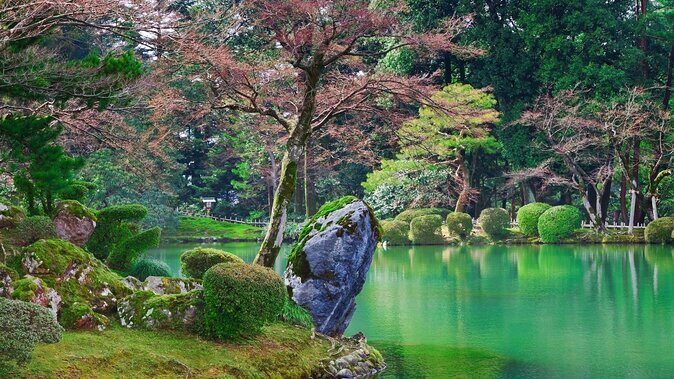
- Kenroku-en: The Garden With Six Kinds of Charm
- Myoryuji Temple (Ninjadera): Edo-Era Secrets Without the Buildup
- The Geisha Teahouse District: Old Streets, Quiet Performance Atmosphere
- Seisonkaku Villa: A Maeda Family Story in Elegant Form
- Nagamachi Samurai District: Where the City Still Smells Like History
- Omicho Market: 180+ Shops for Snacks and a Reset
- Kanazawa Castle and the D.T. Suzuki Museum: Mind and Memory
- The Guide Changes Everything (Hideo, Hirano, Harumi)
- Price and Timing: Is $156.89 Worth It?
- Morning Start at 8:00: The Smart Way to Beat Crowds
- Should You Book This Kanazawa Custom Half-Day Tour?
- FAQ
- What’s the duration of the Kanazawa private custom tour?
- Where does the tour start and end?
- How customizable is the itinerary?
- Is hotel pickup included?
- What happens if the weather is poor?
- Is it a private tour?
Key Highlights You’ll Feel Quickly
- Private, customizable flow: choose 2–3 stops that match your interests, not some fixed bus route.
- Kenroku-en in the morning: a classic garden feel with time to actually stroll and notice details.
- Ninjadera (Myoryuji): Edo-period temple lore that adds punch to the sightseeing.
- Samurai district streets in Nagamachi: narrow lanes, old walls, and atmosphere you can walk through slowly.
- Omicho Market with 180+ shops: an easy place to snack and reset mid-tour.
- Your guide handles the hard parts: English support and practical explanations, from Hideo’s transit tips to Harumi’s extra-mile care.
A Half-Day Plan That Lets You Drive
This is a private tour for your group only, built around flexibility. You select 2 to 3 sites from the Kanazawa highlights, and your guide shapes the route to match what you care about—gardens, temples, samurai neighborhoods, market time, or a mix of them. It is not just a checklist tour. It is a “you pick the theme, we build the day” approach.
Reservations and bookings are handled for you as part of the tour service. That matters in a city where popular places can be time-sensitive. You also get English-speaking professional guidance, so you are not left deciphering signs while your legs quietly question your life choices.
One practical thing: the tour operates in city only. That means you get Kanazawa depth, not long-distance logistics. For a half-day, that is exactly the right focus.
You can also read our reviews of more private tours in Kanazawa


Kenroku-en: The Garden With Six Kinds of Charm
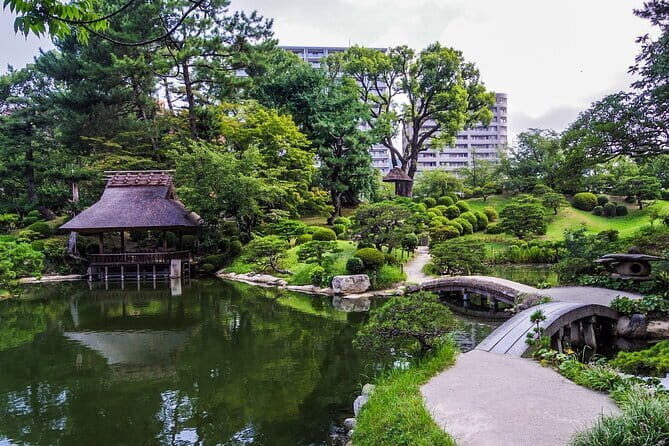
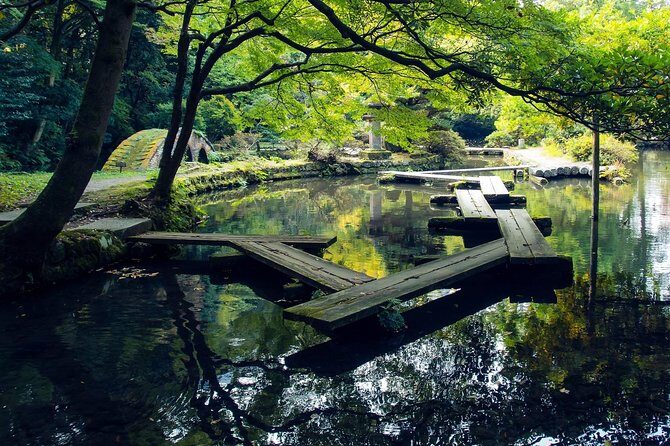
Kenroku-en is one of Japan’s “Three Great Gardens,” and even if you have seen other famous gardens, this one has its own pace. Expect a classic landscaped walk with an “old private garden” feel, the kind where sightlines and seasonal details are part of the experience. A garden like this rewards slow steps, not camera-sprint energy.
Why I like it for a custom tour: it is a strong anchor stop. Even if your other picks are temple and neighborhood streets, Kenroku-en gives you a visual breather and a sense of what Kanazawa values—design, balance, and careful placement of views.
What to consider: gardens can be a bit on your feet. The tour lists a moderate physical fitness level, which usually means you should be comfortable with walking paths and uneven ground. If you know you need frequent breaks, tell your guide so the schedule can flex.
Myoryuji Temple (Ninjadera): Edo-Era Secrets Without the Buildup
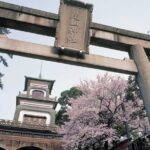
Myoryuji Temple is often called Ninjadera, the Ninja Temple, and that nickname gives you a fun entry point into Edo Period life. What you are really going for here is atmosphere and historical context—why this temple mattered to the Maeda lords, the rulers of the region during the Edo era.
A great guide turns this from spooky folklore into understanding. Hideo, for example, is described as explaining the feudal system and architecture in a way that sticks. That is the kind of context that makes a stop feel worth the time, even if you are not a “temple person.”
What to consider: the appeal here is interpretation and story. If you want purely aesthetic sightseeing with zero backstory, you might find yourself wanting more time than the tour slot allows. Still, for a half-day, it is a smart choice because the theme connects to multiple other stops.
The Geisha Teahouse District: Old Streets, Quiet Performance Atmosphere
Kanazawa’s district with teahouses where geisha perform is one of those places that looks different depending on time of day. During a half-day tour, you are likely to experience it at daytime tempo, but the street layout and the preserved character still land.
This is a great choice when you want Kanazawa to feel lived-in rather than museum-only. It pairs well with temples and samurai districts, because it adds another layer: arts patronage, refined living, and the social history that ran alongside the samurai era.
A practical note: you may not get a guaranteed show (the tour description focuses on the district setting, not a scheduled performance). The value is the environment and the guide’s explanation of what this area represents.
Seisonkaku Villa: A Maeda Family Story in Elegant Form
Seisonkaku (Seisonkaku Villa) was built in the last years of the Edo Period by a Maeda lord for his mother. That family connection matters. It is not just a pretty building; it is a clue to who had power, what mattered to them, and how architecture expressed care and status.
This is one of those stops that works especially well with a guide who likes details. You want someone to point out the layers of design and explain why it survived when so much else did not. If you like the “human reason” behind historical sites—who built it, who it was for—you will likely enjoy this one.
What to consider: it can feel more structured and indoor-and-outdoor balanced than a garden. If you prefer open-air wandering over formal spaces, this might be better as your second stop rather than the main anchor—so you still get time for long walks.

Nagamachi Samurai District: Where the City Still Smells Like History
Nagamachi is the samurai district at the foot of the former Kanazawa Castle. The streets preserve an old atmosphere: samurai residences, earthen walls, private entrance gates, narrow lanes, and water canals. That list is basically your itinerary in miniature. You will walk through a neighborhood that does not need a lot of interpretation to feel different.
This is a top pick for a custom tour because it gives you “texture.” Gardens are beautiful, temples add story, but streets give you the daily-life frame. It is also a strong pairing with Kanazawa Castle, since the district sits in the castle’s shadow in historical terms.
What to consider: narrow lanes mean you should expect some slower walking. Also, since the tour lists moderate physical fitness, be ready for uneven surfaces and steps that might not be designed for wheelchairs or fast strolling. If you have mobility limits, talk to the guide early so they can adjust where you spend your time.
Omicho Market: 180+ Shops for Snacks and a Reset
Omicho Market is one of Kanazawa’s most popular attractions, with more than 180 shops and restaurants. The best way to use a market stop on a half-day tour is not trying to “finish” it. It is letting it break up the day.
I like markets here because they work for almost every travel style:
- If you love food, you get lots of choices in a concentrated area.
- If you do not, you can still browse stalls and soak up the local rhythm.
- If it is raining, a market can still keep the day moving without killing the schedule.
A small consideration: markets are easy to overdo on a tour that is only four hours. If you pick Omicho as one of your three stops, keep your expectations realistic. You can snack and stroll, but you will not have time for a long sit-down meal unless your other stops are light.
Kanazawa Castle and the D.T. Suzuki Museum: Mind and Memory
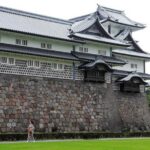
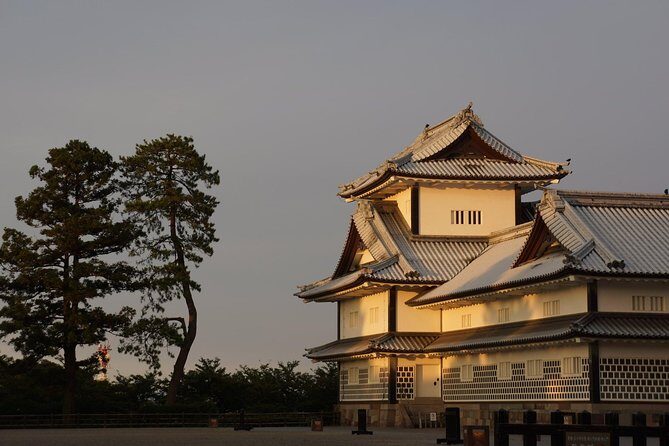
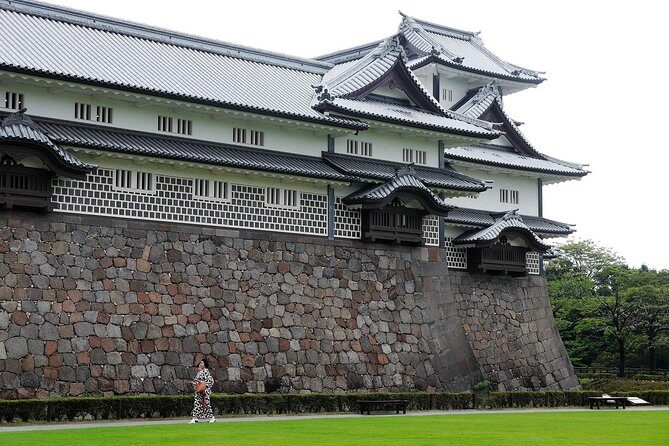
Kanazawa Castle is a large partially-restored castle site, located next to Kenroku-en, which once formed part of the castle’s private outer garden. This stop helps connect the dots: why the garden and the castle mattered together, and how power shaped the city layout.
Then there is the D.T. Suzuki museum. This museum has educational programs, a contemplation space, and tranquil gardens. That combo is unusual in the best way. You do not just learn facts; you get a quiet place to think after walking around history-heavy areas.
If you like balance in your itinerary, this pairing makes sense. Castle gives you the outward structure and political backbone. The Suzuki museum slows your brain down and offers a calmer ending.
What to consider: “contamination” with spelling aside, the key is that your day may end more slowly here. Plan on taking your time, especially if the weather turns. If you are trying to sprint through everything, this stop is the one where you might feel you lost the plot.
The Guide Changes Everything (Hideo, Hirano, Harumi)
The strongest signal across experiences with this tour is the human factor. The guides are not just reading facts off a card. They connect Kanazawa’s systems and spaces.
Hideo stands out for mixing big-picture structure with practical city help. One experience notes he explained the buses and trams you needed to catch, alongside the feudal system, architecture, and key buildings with clear, engaging descriptions. That is the rare blend of history plus real-life logistics, which helps you not just during the tour, but after it too.
Hirano is praised for being locally helpful and for giving recommendations for the rest of the trip. That kind of “what to do next” is where a private guide pays off. One account also notes Hirano stayed longer because she enjoys her work—nice reminder that a good guide reads the room and adapts.
Harumi is another big name here. Experiences describe her as professional, knowledgeable, fluent in English and Spanish, and willing to go the extra mile even with rainy conditions. If you want peace of mind—someone who can keep the flow when weather changes—this matters.
In practical terms: with a custom tour, a good guide helps you choose what to drop and what to prioritize. That is how you end up with a half-day that feels complete instead of crowded.
Price and Timing: Is $156.89 Worth It?
At about $156.89 per person for a roughly 4-hour private tour, value comes down to what you choose and how you use the flexibility. This price is not cheap in absolute terms, but it is competitive when you remember you are buying multiple things at once:
- a private, customizable itinerary (not a fixed route),
- an English-speaking professional guide,
- hotel pickup and drop-off within the city center (when applicable),
- transportation within Kanazawa,
- and bookings/reservations handled for you.
Also, consider timing. The tour is usually booked about 31 days in advance on average. That suggests people plan it as a mid-trip foundation—something that sets their expectations and gives them a Kanazawa “map in your head.” If you wait too long, you might still book, but the custom planning and reservations can become harder.
Who this tour is best for:
- First-timers who want the highlights but hate rigid schedules.
- Travelers who want history explained clearly, without turning the day into a lecture.
- Small groups who will make use of hotel pickup and a private vehicle or transit plan.
Who might hesitate:
- People who only want to walk around with no guiding at all. This tour is designed for guided context and smart sequencing.
- Anyone who wants to do more than three major stops in four hours. Even customizable tours have limits.
Morning Start at 8:00: The Smart Way to Beat Crowds
The tour starts at 8:00 am at Kanazawa Station, and it ends back at the meeting point. Morning energy helps. Kenroku-en and other main attractions feel better earlier, and you get calmer walking conditions.
You should plan to arrive at least 10 minutes early, and the guide waits up to 30 minutes after the start time before canceling. That is standard, but it matters—if you are coming from a hotel that runs slow in the mornings, build in cushion.
If you are relying on public transportation, the tour info says it is near public transit, which is helpful. You are not trapped in a remote corner of town.
And yes, you should dress for the weather. Rain can happen, and the tour is weather-dependent in the sense that it can be canceled due to poor conditions, with a different date or full refund offered.
Should You Book This Kanazawa Custom Half-Day Tour?
I think you should book if you want a Kanazawa “greatest hits” day that still feels personal. This tour is especially strong when you care about how places connect—castle with garden, samurai district with city layout, temples with Edo-era power, and markets with everyday life.
Skip it if you are the type who only wants free time to roam and does not want to pay for guiding and logistics. Also, if you know you hate walking even moderate distances, be careful with how many outdoor stops you choose.
My practical suggestion: pick one big anchor (often Kenroku-en), add one story stop (Ninjadera or Seisonkaku), and keep Omicho Market or Nagamachi as your flexible slot. That way you end with either atmosphere or snacks, not “everything a little bit,” which is how half-days turn into mild disappointment.
FAQ
What’s the duration of the Kanazawa private custom tour?
It runs for about 4 hours.
Where does the tour start and end?
It starts at Kanazawa Station and ends back at the meeting point.
How customizable is the itinerary?
You choose 2 to 3 sites for a personalized tour of Kanazawa, and your itinerary is planned around your preferences.
Is hotel pickup included?
Hotel pickup and drop-off are included if your hotel is within the city center.
What happens if the weather is poor?
The experience requires good weather. If it is canceled due to poor weather, you are offered a different date or a full refund.
Is it a private tour?
Yes. It is a private tour/activity, and only your group participates.