Broken pottery gets a golden second chance, and you’ll work on the repair by hand in Kanazawa with artisan Rin Kiyose. I especially like the intimate, skill-based rhythm of lacquer application and the way gold powder coating turns a fix into something quietly stunning.
This is also one of the more calming workshops I’ve seen for travelers who want culture with a slower pace, because the process favors focus and presence over rushing. One possible drawback: the whole session is about 1 hour 15 minutes, so you won’t get days of practice—just a concentrated taste of the craft.
In This Review
- Key highlights you’ll feel fast
- Kintsugi in Kanazawa-Craft: what the gold repair really means
- Meet Rin Kiyose at IN KANAZAWA HOUSE
- The 1 hour 15 minute hands-on flow: lacquer then gold powder
- What to watch for while you’re working
- The restored kura atmosphere: calm you can actually access
- A practical tip: keep your hands ready and your mind quieter
- Choosing your souvenir: small plates and accessories
- Price and value: why $143.08 can be worth it
- Who should book this Kintsugi workshop
- The smart way to prepare before you go
- Should you book Kintsugi Experience in Kanazawa-Craft?
- FAQ
- Where does the workshop start in Kanazawa?
- How long is the Kintsugi workshop?
- Who guides the workshop?
- What will I do during the session?
- What can I choose as my take-home item?
- What’s the group size?
- How do I get my ticket?
- Do I need to print anything?
- Is it near public transportation?
- What’s the cancellation timeframe?
- Is it suitable for most travelers?
Key highlights you’ll feel fast
- A real, hands-on Kintsugi process: you finish the join with lacquer and gold powder.
- Guidance from Rin Kiyose: a young artisan and fourth-generation successor in a Kaga Maki-e family.
- Small group limit (max 6): easier to ask questions and stay steady during the delicate steps.
- A restored kura setting: wood-and-lacquer atmosphere, dim light, and a mindful pace.
- Pick your souvenir style: small plates or accessories made to take home.
- A bonus local-craft vibe: the host may share other artists’ work and point you to a great paper shop address.
Kintsugi in Kanazawa-Craft: what the gold repair really means
Kintsugi is often sold as a cool-looking technique. It is that. But the deeper value is the mindset: you’re not hiding damage—you’re highlighting it. In this workshop, the “damage” is already prepared, and your part is finishing the join in a way that makes the break look intentional.
That’s why this experience works so well for wellness-minded travelers. You’re doing something tactile and precise, but the goal isn’t performance. It’s attention. You brush lacquer, you watch the shimmer, you add gold powder at the right moment, and you let the piece guide your pace.
And unlike many quick souvenirs, you’re not just stamping a logo or decorating a blank. You’re participating in the logic of the craft—repair as art, imperfection as part of the story.
You can also read our reviews of more tours and experiences in Kanazawa.


Meet Rin Kiyose at IN KANAZAWA HOUSE
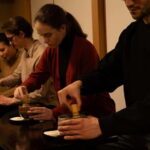
The workshop is run by IN KANAZAWA HOUSE, in Kanazawa. You start at their address on Hōsai (1-chōme-4-28), and it ends back at the meeting point.
What matters here is the human side. You’re guided by Rin Kiyose, described as a young artisan born into a family that has practiced Kaga Maki-e in Kanazawa for three generations, now with Rin as the fourth-generation successor. Even if you don’t know Kaga Maki-e history, you’ll feel what that means: the guidance is rooted in long practice, and the focus is on doing things carefully, not theatrically.
One thing I like about this kind of setup is that you’re not treated like a fast-moving ticket number. With a maximum of 6 travelers, you’re more likely to get your questions answered and your steps corrected while your hands are still learning the feel of the process.
The 1 hour 15 minute hands-on flow: lacquer then gold powder
This class runs about 1 hour 15 minutes, so the schedule is efficient. It also means you’ll avoid the common problem of sitting through long lectures while nothing touches your hands. Here, the work is the teaching.
Here’s what your time is likely to include:
First, you’ll be oriented to the method and the tools. You’re working on a piece that’s been handcrafted and prepared by the artisan, and your role is completing it through two key steps: lacquer application and gold powder coating at the final join. That’s important: it’s not total DIY from zero. You get real participation without starting from blank clay.
Next comes the precision part. Lacquer isn’t paint you can rush. It’s a finishing material that needs care in how it’s applied. Your job is to apply it so the join is clean and the surface looks right.
Then you’ll add the gold powder for the final effect. This step is visually satisfying even if you’re not an art person. The point isn’t glitter for show—it’s that gold line that makes the repair visible and meaningful.
You’re also using authentic tools. The goal is to experience the technique the way it’s meant to be done, not how it might be simplified for a group craft table.
What to watch for while you’re working
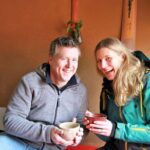
You’ll likely be encouraged to slow down and focus. In fact, the experience is described as mindful and calming, with a dim, gentle light and silence as part of the atmosphere. If your mind tends to race while traveling, this is a great counterweight.
If you’re tempted to over-correct every tiny detail, remember the spirit of Kintsugi: beauty comes from the line where things broke and were made whole again.
The restored kura atmosphere: calm you can actually access
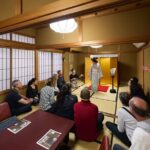
The setting is a big part of why people find this workshop grounding. It’s held in a restored kura, a traditional warehouse-style building. That matters more than you might think.
In a kura, the materials and smell are part of the experience: wood, lacquer, and time-worn textures. Add dim light and a quiet work rhythm, and you get a natural off-switch for travel stress. You’re not trying to meditate in a loud room. You’re doing a task that rewards calm focus.
The workshop is described as offering relaxation through small motions—brushing lacquer, focusing on the shimmer of gold, and staying present through the process. That combination is one reason this workshop reads like both craft and wellness.

A practical tip: keep your hands ready and your mind quieter
Because the session is delicate, the best move is simple: clear your distractions. If you come in mentally juggling a sightseeing list, this workshop will feel harder than it needs to be. If you come in ready to pay attention to one small thing at a time, it feels great.
It’s also the kind of activity where you might forget to take photos, because the work is absorbing. If you want photos, plan to do it briefly at the beginning and end, then let the process be the main event.
Choosing your souvenir: small plates and accessories
You’ll create a unique souvenir that you help complete and take home. You can choose from small plates or accessories.
That choice affects how practical the item is for travel. A small plate can be heavier and more fragile, depending on packing. Accessories can be easier to transport, but the category includes different possible forms, so you’ll want to follow the workshop guidance about handling and care.
The important thing: the item isn’t mass-produced. It’s finished by you as part of a guided craft process, so it carries your time and your attention—not just your wallet.
And because it’s Kintsugi, it won’t look like a generic repaired object. The gold join is part of the design. It’s meant to be seen.
Price and value: why $143.08 can be worth it
$143.08 per person isn’t a “snack-sized” workshop price. So the real question is value: what are you paying for?
You’re paying for:
- Real artisan guidance from Rin Kiyose
- A limited group size (max 6), which usually improves the quality of feedback
- A structured, traditional technique using lacquer and gold powder
- A take-home item that reflects the Kintsugi philosophy, not just a decorative craft outcome
- A setting in a restored kura that gives the experience a slower, calmer pace
At this price, you should want an experience where you leave with something meaningful and where you feel guided by someone who cares about craft. If you’re mainly shopping for a quick photo opportunity, there are cheaper options in Kanazawa. If you want a hands-on cultural moment that also feels therapeutic, this hits the mark.
Also, consider timing. The experience is often booked about 18 days in advance on average, so waiting too long could limit your options.
Who should book this Kintsugi workshop
This workshop is a strong fit if you:
- Like hands-on cultural activities and don’t mind concentration
- Enjoy Japanese craft traditions where the process matters as much as the result
- Want a calmer itinerary moment to balance temples and markets
- Appreciate the idea of making something beautiful out of imperfections
It may be less ideal if you:
- Want a long, in-depth history talk. This is a short workshop built around doing the work.
- Prefer highly social, high-energy activities. The tone is gentle and quiet.
- Need constant entertainment. You’re here to focus, not to be entertained.
The smart way to prepare before you go
You don’t need special experience, and the workshop notes that most travelers can participate. Still, a little prep helps.
- Plan for a slow pace. This won’t feel like a typical factory tour.
- Bring a calm mindset and let your hands learn.
- If you care about photos, set a quick moment for them before the actual work begins, then focus on the process.
- Think about how you’ll pack your chosen souvenir once it’s finished.
If you’re pairing this with other Kanazawa stops, schedule it as a reset. It’s the kind of experience that makes the rest of your day feel clearer.
Should you book Kintsugi Experience in Kanazawa-Craft?
Book it if you want a rare mix of Japanese craftsmanship and mindful calm, with a small group and real guidance from Rin Kiyose. The biggest reason to choose this class is that it gives you participation in the method—lacquer and gold powder—while the atmosphere supports slowing down.
Skip it if you’re mainly looking for a casual craft with minimal focus. The session is short, the technique is precise, and the magic comes from attention.
If you’re on the fence, I’d treat this as a high-value stop when you want more than a souvenir. You’ll leave with a piece that literally carries a philosophy of repair and presence.
FAQ
Where does the workshop start in Kanazawa?
It starts at IN KANAZAWA HOUSE, at 1-chōme-4-28 Hōsai, Kanazawa, Ishikawa 920-0862, Japan, and it ends back at the same meeting point.
How long is the Kintsugi workshop?
The experience lasts about 1 hour 15 minutes.
Who guides the workshop?
You’re guided by Rin Kiyose, a young artisan and fourth-generation successor from a family with three generations of Kaga Maki-e practice in Kanazawa.
What will I do during the session?
You’ll help complete a handcrafted piece by finishing the join with lacquer application and gold powder coating, using authentic tools.
What can I choose as my take-home item?
You can choose from small plates or accessories.
What’s the group size?
The workshop has a maximum of 6 travelers.
How do I get my ticket?
You’ll receive a mobile ticket.
Do I need to print anything?
The experience uses a mobile ticket, so you won’t need to print based on the information provided.
Is it near public transportation?
Yes, it’s described as near public transportation.
What’s the cancellation timeframe?
Cancellation is free, and you can cancel up to 24 hours in advance for a full refund.
Is it suitable for most travelers?
The activity notes that most travelers can participate.