REVIEW · TOYAMA PREFECTURE
Kimono Experience in Toyama Hokuriku
Book on Viator →Operated by おきがえ処KIPPO · Bookable on Viator
A canal in a kimono changes everything. In Toyama’s Uchikawa River area, you get to choose your kimono (and obi style) and step right into the local rhythm, not a stage set. The experience is built for photos, but it also feels like real daily-life scenery as you walk near the water.
I especially like the way the day starts: you register, pick from lots of colors and patterns, then get dressed with clear guidance. The staff also makes the whole process friendly and professional, so first-timers don’t feel lost while learning the basics.
One thing to consider is that you’ll be out for a good chunk of time, including a walk around the canal area. If weather is rough, plan for it, because the strolling part is the heart of the look.
In This Review
- Key points you’ll actually use
- Toyama’s Uchikawa River look: the setting does half the work
- Entering Okigaedokoro Uchikawa KIPPO and picking your kimono
- Dressing help you can count on (and photos that don’t feel rushed)
- Matcha tea etiquette: the small lesson that makes it feel real
- Azumabashi Bridge and the Uchikawa canal stroll
- Returning for the final change: wrap-up and leave clean
- Price and time: is $39.09 good value?
- Who should book this kimono experience in Toyama?
- Quick practical tips before you go
- Should you book KIPPO’s kimono and matcha experience?
- FAQ
- How long does the kimono experience in Toyama take?
- Where is the meeting point?
- Is it a private experience or shared with other people?
- What’s included in the price?
- What happens during the matcha part?
- Do I get time to take photos?
- Do I need to bring a ticket?
- Can most travelers participate?
- Can I cancel for a full refund?
Key points you’ll actually use
- You choose your kimono first: colors and patterns are part of the fun, not an afterthought.
- Dressing is guided: you’re helped through getting into the kimono and obi properly.
- Matcha isn’t just a drink: you learn a simple etiquette flow for greeting, sweets, and tea.
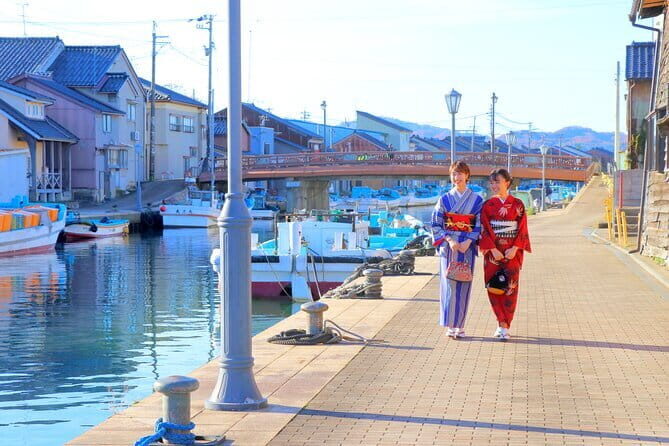
- You get a real photo route: Uchikawa River views, plus stops near shrines, temples, shops, and bridges.
- Private means your group sets the pace: only your party participates.
Toyama’s Uchikawa River look: the setting does half the work
Toyama’s Uchikawa River area is a rare kind of backdrop. It feels like a local canal neighborhood with traditional buildings and small-town texture, not a crowded tourist strip. When you’re wearing a kimono here, the whole street scene makes sense at once.
This is why the experience works so well. You’re not just renting clothing and leaving. You step into the same kind of environment where people have walked and lived for a long time, then you get time to enjoy it at your pace.
The outing is also timed well for photos. You get the kimono and dressing first, then you walk outside while you’re still freshly styled, which keeps your look consistent for pictures.
You can also read our reviews of more tours and experiences in Toyama Prefecture.

Entering Okigaedokoro Uchikawa KIPPO and picking your kimono
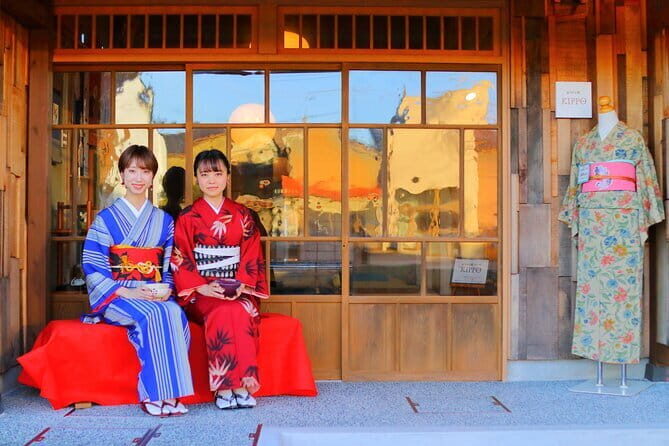
The meeting point is Okigaedokoro Uchikawa KIPPO in Imizu, Toyama. After registration, the first real moment is choosing your kimono and getting the style you want, not what someone hands you without input.
You’ll find many colors and patterns available. That matters because kimono aren’t one-size-fits-all in the photo sense. If you’re picky about tones—bright vs. soft, bold patterns vs. calmer ones—this choice time is where you steer the experience.
Then the dressing part starts. You’ll be guided through putting it on, and you can also take photos inside the shop while you’re there. It’s a good move to grab a few pictures before you head outside, since you’ll be busy later and it’s easier when everything is fresh and neat.
Dressing help you can count on (and photos that don’t feel rushed)
Kimono dressing can be intimidating if you’ve never done it. Here, the setup is meant to make the process manageable and calm, with staff support through the steps.
You also get a bit of “pause time” inside. The retro-style space—part Showa-era shop vibe—is a friendly place to shoot photos without fighting for a good angle on the sidewalk.
What I like about this structure is that you’re not stuck trying to figure things out alone. You’ll learn what you’re wearing and how it should sit, so you can relax and focus on being in the moment.
Matcha tea etiquette: the small lesson that makes it feel real
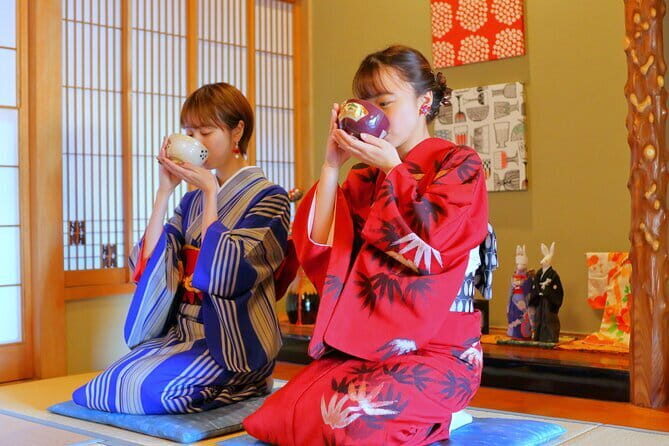
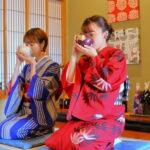
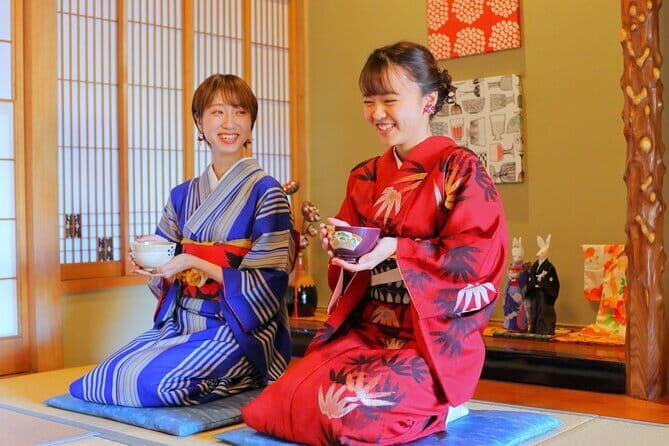
After you’re dressed, the experience shifts to matcha. You’ll participate in a matcha experience and learn basic Japanese etiquette around the tea service.
You’re taught a simple sequence: how to greet, how to receive the sweets, and then how to drink the tea. It’s not presented as a performance where you must be perfect. It’s more like a quick, useful guide that helps you do the tradition the right way and understand what’s happening.
There’s also an advantage to this being taught while you’re already in kimono. It connects the outfit to a cultural moment, instead of feeling like two unrelated activities stapled together.
From the way the staff explains things, English guidance is part of the experience. That’s a big comfort for visitors who want to participate without guessing what to do next.
Azumabashi Bridge and the Uchikawa canal stroll
Once the matcha part ends, the experience turns into walking time. You’ll stroll around the Uchikawa area near Azumabashi Bridge, and you’ll find shrines, temples, shops, and multiple unique bridges along the way.
This outdoor segment is where the kimono look becomes the star. You’ll get that “every corner is a photo opportunity” feeling, but the best part is that it’s not random. The canal route naturally gives you water views, old-building textures, and bridge angles.
Plan your mindset for a calm pace. The walk is included as part of the experience design, but you’ll still be in control of how long you linger by a shrine entrance or how many photos you take with the river behind you.
Weather can change how this feels. In cold conditions, you’ll be grateful you only have to dress once and then head out with layers under your kimono setup, rather than trying to reinvent your clothes mid-day.

Returning for the final change: wrap-up and leave clean
After the stroll, you head back to the shop to take off the kimono. This final step is important because it closes the loop and keeps the day from dragging.
It also means you don’t have to worry about how to remove it yourself or how to manage the logistics later. You’re not taking on the “what now?” stage. The experience ends where it started, so your plan stays simple.
If you’re hoping to fit this into a Toyama day without stress, that wrap-up style helps. You get in, you do the core cultural moments, you walk, you get changed out, and you’re done.
Price and time: is $39.09 good value?
At $39.09 per person, this is priced like a short, high-impact cultural activity. The key value isn’t just the kimono rental itself. You’re also getting kimono dressing help and a matcha experience included.
Compare that to the common DIY approach: even if you only rented a kimono, you’d still need to deal with how you’ll wear it and how you’ll understand what you’re doing during a tea moment. Here, the experience folds those steps into one guided flow.
The total duration is listed as about 1 hour 30 minutes to 3 hours, depending on timing and your pace. That’s a practical window for visitors who want something meaningful without eating an entire day.
Also, the experience uses a mobile ticket, which usually means less paper handling and less friction at arrival. For travelers moving between sights, that matters.
Who should book this kimono experience in Toyama?
This is a strong fit if you want an authentic-feeling outfit experience that connects to a real cultural moment. If you care about photos, you’ll get plenty. If you care about manners and tradition, you’ll also get something you can explain later.
It’s also a good choice for people who are new to kimono. The process is guided, the steps are explained, and the staff approach is friendly and professional.
Because it’s private—only your group participates—it works well for couples and small groups who want less waiting and more comfort. It’s also helpful if you’re sensitive to feeling rushed, since the flow is designed around guided stages instead of a constant shuffle.
Finally, it suits anyone who wants a Toyama experience focused on one area. Uchikawa River gives you scenery, culture touchpoints like bridges and nearby religious sites, and a distinctive town atmosphere in a compact radius.
Quick practical tips before you go
You’ll be most comfortable if you dress smart for the kimono day. Wear easy layers underneath if the weather is cool, since you’ll be outside during the walk.
Bring the expectation that your schedule includes both indoor and outdoor time. Indoor moments include choosing and dressing, plus the matcha etiquette portion. Outdoor time includes the stroll around Uchikawa and Azumabashi Bridge, where the kimono really shines.
And bring a camera-hungry mindset. The experience has built-in photo opportunities inside the shop and out along the canal route. If you come thinking you’ll take “just a few,” you may end up taking more, because the river angles are too good to ignore.
Should you book KIPPO’s kimono and matcha experience?
I’d book it if you want a short, guided way to experience Toyama in a way that feels connected. The combination of kimono choice, dressing support, matcha etiquette, and a canal stroll makes it more than a costume rental.
You should also consider booking if you like structured cultural learning. Learning the basic etiquette—greeting, sweets, then tea—turns a simple drink into a moment with meaning.
Skip it only if you’re mainly looking for a fast photo stop with zero instruction. This experience includes guidance for a reason, and that’s part of the payoff.
If you have a few hours to spend in the Uchikawa River area, this is one of the most straightforward ways to make your Toyama day memorable.
FAQ
How long does the kimono experience in Toyama take?
It runs for about 1 hour 30 minutes to 3 hours, depending on timing and how your visit goes.
Where is the meeting point?
You meet at Okigaedokoro Uchikawa KIPPO, 3-12 Chūōmachi, Imizu, Toyama 934-0012, Japan.
Is it a private experience or shared with other people?
It’s private. Only your group participates.
What’s included in the price?
The price includes kimono rental, kimono dressing, and a matcha experience.
What happens during the matcha part?
You’ll be guided through basic matcha etiquette, including how to greet, take the sweets, and drink the tea.
Do I get time to take photos?
Yes. You can take photos inside the store and also during the stroll around the Uchikawa area and bridge area.
Do I need to bring a ticket?
You’ll receive a mobile ticket.
Can most travelers participate?
The experience indicates that most travelers can participate.
Can I cancel for a full refund?
Yes. Free cancellation is available up to 24 hours in advance for a full refund.