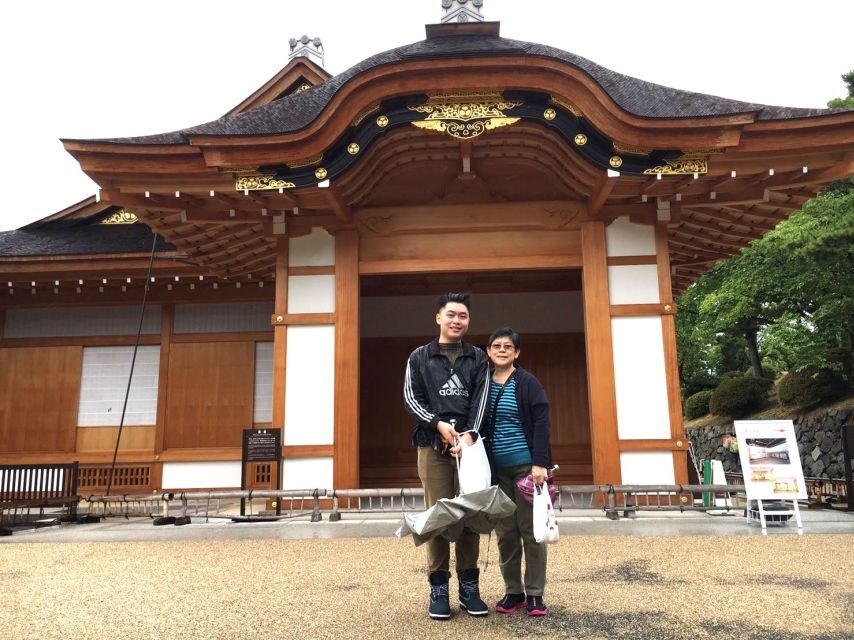
REVIEW · TOYAMA PREFECTURE
Auspicious Kumiko Traditional Woodcraft Experience
Book on Viator →Operated by 株式会社河島建具 · Bookable on Viator
Wooden lattice art feels like mental yoga. In Tonami, Toyama, you get a short, hands-on kumiko workshop led by a master craftsman, plus a guided look at how this style shows up in a traditional shoin-zukuri room. It’s a compact cultural experience that mixes explanation, careful building, and real architectural context.
What I like most is how the session stays practical: you learn the meaning behind kumiko patterns, then you actually assemble one of the prepared designs yourself. I also love that after the workshop, you don’t just leave with a souvenir—you tour a traditional Japanese shoin-zukuri room and see the woodwork and kumiko craftsmanship built into the space.
One thing to consider: the price has sparked grumbles. At $42.35 for about an hour, it’s best if you’re here for instruction and the building moment, not just a quick craft photo op.
In This Review
- Key Highlights Before You Go
- Tonami, Toyama: Why Kumiko Fits Here
- Meeting The Craftsman And Choosing Your Kumiko Design
- Hands-On Kumiko Building: Precision Without Nails Or Tools
- The Shoin-zukuri Room Tour: Seeing Kumiko Where It Belongs
- Price And Value: Is $42.35 Worth It?
- Who This Workshop Suits (And Who Might Prefer Another Day)
- Practical Tips For a Smooth Workshop Day
- Should You Book This Kumiko Traditional Woodcraft Experience?
- FAQ
- How long is the kumiko workshop?
- Where does the experience start?
- What’s the price per person?
- What is included in the price?
- What isn’t included?
- How many people are in a group?
- Can I choose a kumiko design?
- Is a mobile ticket used?
- When do I receive confirmation?
- What’s the cancellation policy?
Key Highlights Before You Go
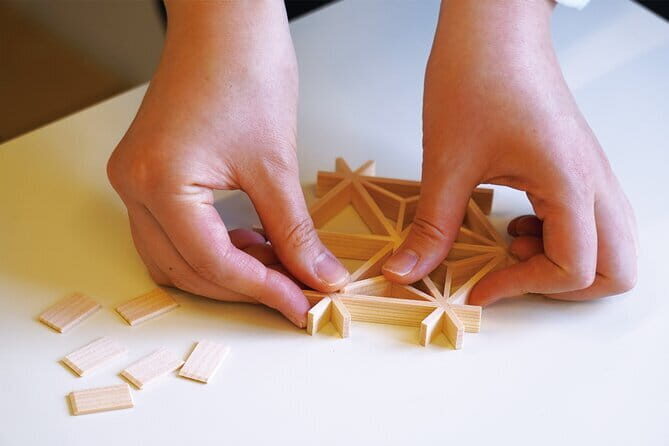
- Choose a design from 2–3 prepared options, so you’re not waiting to invent a pattern from scratch
- Assemble precisely cut pieces by hand, without nails or tools, focusing on fit and patience
- Learn the pattern meaning and architectural role from a master craftsman, not a generic overview
- See kumiko in context by touring a traditional shoin-zukuri room after you finish your piece
- Small group size (max 10) keeps the instruction time feeling personal
- Materials are included in the $42.35 experience fee, so you’re not hit with extra workshop costs
Tonami, Toyama: Why Kumiko Fits Here
Toyama is the kind of place where woodworking isn’t a hobby—it’s part of the region’s identity. This workshop runs out of the Tonami area, in the surroundings of the Inami region, which is known for its long tradition of woodcarving. That matters because kumiko isn’t taught as a standalone craft. It’s tied to how Japanese architecture uses lattice-like woodworking as structure and detail.
If you care about making something that feels connected to place, this is a good match. The experience is built around the idea that kumiko patterns have meaning—so you’re not just assembling a kit and hoping it looks right. You learn what the pattern represents, then you build it under guidance.
Also, the time is efficient. It’s about one hour, which makes it easy to slot into a day of sightseeing in Toyama without turning your schedule into a jigsaw puzzle.
You can also read our reviews of more tours and experiences in Toyama Prefecture.

Meeting The Craftsman And Choosing Your Kumiko Design
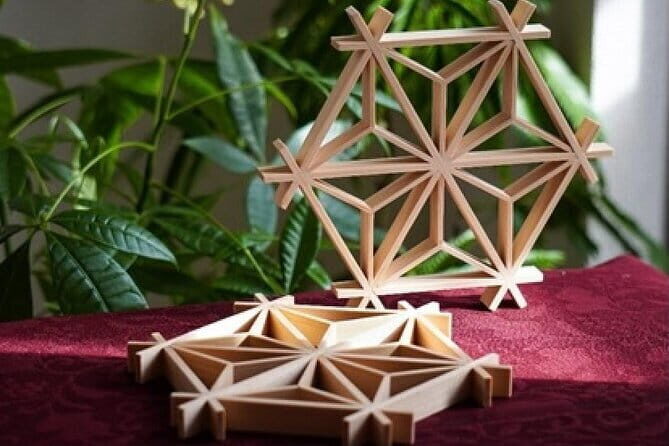
You start at 511-2 Aradakaya, Tonami, Toyama 939-1324, Japan. Then you settle in with the instructor and begin with the explanation portion. This is where the workshop earns its credibility: you’re guided through the history of Japanese architecture and why kumiko patterns matter within that world.
You also get to choose your outcome. The workshop offers two or three kumiko designs prepared in advance, and you pick one before you start assembling. I like this approach because it removes the uncertainty. You can focus on building rather than second-guessing design decisions, especially if you’re new to kumiko.
The master craftsman also answers questions about the techniques and the materials/woods involved, which is a big deal for anyone who wants to understand what they’re holding—not just finish a craft. With a small group (up to 10), you’re more likely to get your questions answered instead of watching someone else’s instructions at the back of the room.
Hands-On Kumiko Building: Precision Without Nails Or Tools
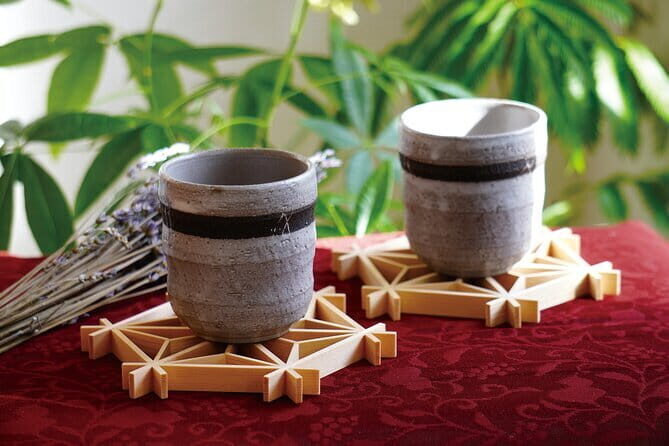
Now for the part your hands will remember.
You’ll build your own small kumiko piece using parts provided for your chosen design. The workshop format leans into precision. In the instructions, you connect precisely cut wooden pieces into a lattice-style structure. And yes, the vibe is hands-only: there’s no need for nails or tools for the assembly part.
That’s exactly why this feels satisfying. Kumiko isn’t about forcing things together. It’s about alignment—how each piece meets its neighbors. If you’re the type who likes measured work, you’ll feel yourself getting calmer as you go. The whole thing is short, but it has that slow, satisfying rhythm.
Also, because the parts are prepared, you’re not stuck doing the hardest part of the craft: cutting and shaping raw wood into accurate components. Instead, you focus on assembly and fit, guided by someone who knows what good looks like.
Potential drawback: if you’re hoping for a long, detailed class where you learn every step of cutting, you might find the workshop more like guided building than full craftsmanship training. The experience is designed around getting you to a finished piece quickly and accurately.
The Shoin-zukuri Room Tour: Seeing Kumiko Where It Belongs
After the hands-on portion, you move into the “wait, this is actually worth it” section: a tour of a traditional shoin-zukuri room.
Shoin-zukuri is a classic Japanese architectural style, and the point of this visit is to show kumiko as part of a real built environment, not just a craft you do once and pack away. You can admire traditional woodwork and kumiko craftsmanship in the building’s fixtures—so you see how lattice patterns contribute to the look and feel of a refined interior.
This is where the workshop stops being only about making and becomes about understanding. When you’ve spent time assembling a pattern, it’s much easier to notice craftsmanship in the room around you. You’ll likely look at the wood details with new attention—how surfaces connect, how patterns repeat, how everything feels intentional.
One more practical upside: even if you don’t consider yourself a “wood person,” walking through a traditional room makes the experience feel more complete. You’re not just leaving with something small; you’re leaving with a mental picture of how this woodworking shows up in everyday architectural design.
Price And Value: Is $42.35 Worth It?
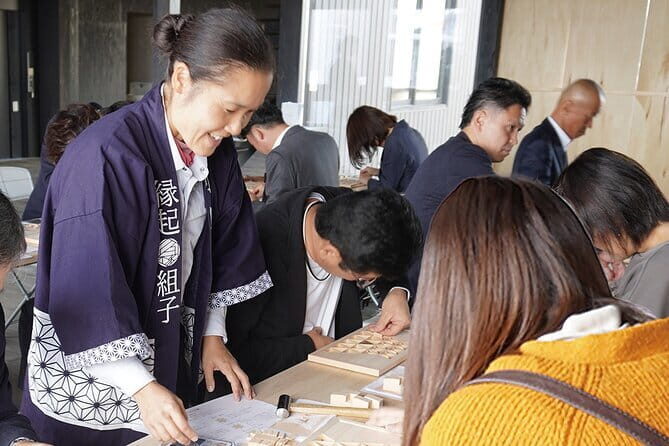
At $42.35 per person, the first question is obvious: is this just for tourists holding a wooden kit?
The better way to judge it is by what’s included and what you get for your time. Your fee includes both the experience and the material cost. That means the price is covering:
- instruction from a master craftsman
- the prepared materials for your chosen design
- a guided tour of a traditional shoin-zukuri room
And you’re not just paying for a product. You’re paying for the guided understanding that helps the product mean something. A lot of craft experiences end after you make the item. Here, the room tour gives you context—so the workshop feels less like a takeaway and more like learning.
Still, it’s fair to flag the downside: the price has been criticized as overpriced compared to other options in Japan. If your expectation is a cheaper, drop-in craft with minimal explanation, you may feel the pinch.
My take: this is a good value if you care about technique, patient instruction, and seeing how kumiko works inside traditional architecture. If you’re budget-first and mostly want a quick souvenir, you might want to compare alternatives before committing.





Who This Workshop Suits (And Who Might Prefer Another Day)
This experience fits best if you:
- want a hands-on introduction to kumiko with expert guidance
- enjoy careful work and don’t mind taking your time
- like architecture and want to connect craft to a real interior setting
- are traveling with someone who enjoys “quietly impressive” skills and details
It may feel less ideal if you:
- expect a full-day, step-by-step course on designing and carving (this is about finishing an assembled piece in roughly an hour)
- want the cheapest possible souvenir craft
- prefer experiences where the output is larger or more customizable than a prepared design
One more note: the group limit of 10 travelers is a meaningful factor. It supports a more personal pace, so you’re not just a body in a long line.
Practical Tips For a Smooth Workshop Day

A few small things will help you get the most out of the time you have.
First, plan to arrive a few minutes early at the meeting point. The workshop starts at a specific location in Tonami, and you’ll want to settle before instructions begin.
Second, go in with patience for precision. Even though it’s a guided kit assembly, kumiko rewards careful alignment. If you tend to rush, you’ll likely feel friction as pieces don’t want to behave.
Third, ask questions during the explanation portion. The craftsman’s answers are part of what makes the experience memorable—especially questions about technique and the woods used.
Finally, if you’re booking this for a specific day in Toyama, do it sooner rather than later. On average, this experience is booked around 45 days in advance, and the group size is capped at 10.
Should You Book This Kumiko Traditional Woodcraft Experience?

Book it if you want a short, high-skill-feeling workshop with real context. I’d especially recommend it if you like architecture details, enjoy careful making, and want a souvenir that’s tied to how Japanese interiors work, not just a craft prop.
Skip or compare if you’re price-sensitive or expecting a long class where you learn every stage of kumiko from scratch. In that case, the “prepared design + assembled by hand” format might not feel like enough for the money.
Bottom line: this is for people who appreciate craftsmanship and the story behind it. If that’s you, the hour flies by.
FAQ
How long is the kumiko workshop?
It’s approximately 1 hour.
Where does the experience start?
The meeting point is 511-2 Aradakaya, Tonami, Toyama 939-1324, Japan. The tour ends back at the meeting point.
What’s the price per person?
The price is $42.35 per person.
What is included in the price?
The price includes the experience fee and the material cost.
What isn’t included?
Other personal expenses are not included.
How many people are in a group?
The maximum group size is 10 travelers.
Can I choose a kumiko design?
Yes. You can choose one from the two or three kumiko designs prepared for the workshop.
Is a mobile ticket used?
Yes, the experience uses a mobile ticket.
When do I receive confirmation?
Confirmation is received at the time of booking.
What’s the cancellation policy?
You can cancel for a full refund up to 24 hours in advance. Free cancellation is available, and changes within 24 hours aren’t accepted.