REVIEW · TOKYO
Mount Fuji Private day tour from Tokyo private & Customized
Book on GetYourGuide →Operated by Yakuri Tours · Bookable on GetYourGuide
Fuji looks different when you see it up close. This private Mt. Fuji day tour is built for door-to-door pickup and a custom itinerary, so your day feels like it belongs to your group, not to a bus schedule. The big consideration: your most dramatic Mt. Fuji views depend on weather, and if you choose Mt. Fuji 5th Station there’s an extra local uphill toll.
I like that the operator plans a full, photo-friendly route around the Fuji Five Lakes area, pairing classic viewpoints with cultural stops. In plain terms, you get a comfortable Toyota Vellfire ride, an English-speaking driver-guide, and enough time at each place to actually enjoy it, not just hop out for five minutes. For first-time visitors, it’s one of the more practical ways to do Fuji from Tokyo without turning the day into a logistics project.
In This Review
- Key Takeaways Before You Go
- What Makes This Private Mt. Fuji Day Tour Work From Tokyo
- Toyota Vellfire Comfort and a Driver-Guide You Can Actually Ask Questions
- A balanced reality check on service
- The Fuji-Area Route: How Each Stop Adds a Different Angle
- Oshino Hakkai: Eight Ponds, One Story About Fuji’s Water
- Mt. Fuji View Stop: The Photo Stop That Depends on What the Sky Allows
- Chureito Pagoda: The Postcard View With a Short Walk Payoff
- Lake Kawaguchiko and Oishi Park: Fuji Reflections and Easy “Slow Time”
- Kitaguchi-hongu Fuji Sengen Shrine: Tradition Without the Museum Vibe
- Fujiyoshida Stop: Scenic Transit Moments and a Traditional Dance Show
- Time Management: How to Get the Most From a 10-Hour Day
- Price and Value: When $354 Per Group Makes Sense
- Weather, Clouds, and the Mt. Fuji Reality Check
- Who This Tour Best Suits
- Should You Book This Mt. Fuji Private Day Tour From Tokyo?
- FAQ
- How long is the Mt. Fuji private day tour from Tokyo?
- Is hotel pickup and drop-off included?
- What’s included in the price besides the driver and car?
- Do I need to pay extra for Mt. Fuji 5th Station?
- Are there extra charges for where I’m staying in Tokyo?
- What should I bring for the day?
Key Takeaways Before You Go
- Door-to-door convenience: pickup and drop-off options across Tokyo, with the driver waiting up to 60 minutes if you’re late.
- Private vehicle comfort: a clean, air-conditioned Toyota Vellfire with onboard Wi‑Fi and bottled drinks.
- Weather-sensitive Mt. Fuji payoff: your views can be stunning or muted depending on cloud cover.
- Oshino Hakkai and Chureito Pagoda: two of the best-known Fuji-area stops done with time to walk and photograph.
- A choice-based itinerary: you can shape the day around views, shrines, or traditional village vibes.
- Potential extra costs to budget for: Mt. Fuji 5th Station has a local uphill fee, and pickups outside Tokyo’s 23 wards may cost more.
What Makes This Private Mt. Fuji Day Tour Work From Tokyo
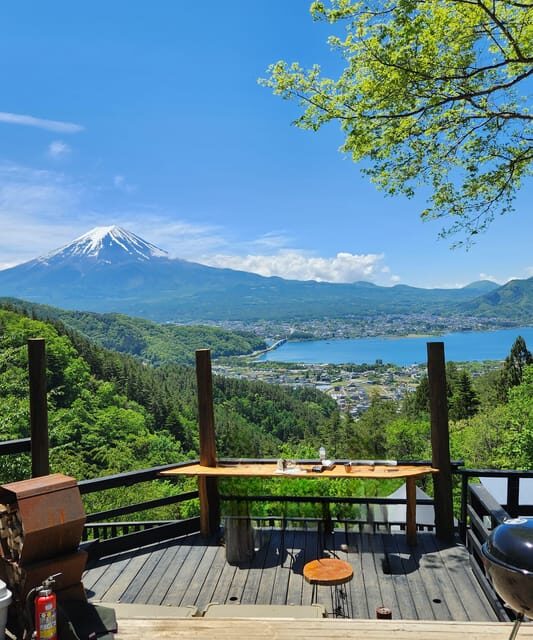
From Tokyo, getting to Mt. Fuji-area sights can be tricky if you rely only on trains and buses. This tour keeps you in one lane: you leave Tokyo in a private A/C vehicle and return the same way, with your driver handling the roads and timing.
The real win is control. Because it’s customized, you can adjust the day based on what you care about most—more walking at viewpoints, less time shopping, or swapping the order of stops when the weather shifts. You also avoid the common travel trap of spending your day transferring between stations and then arriving everywhere late.
Value matters here, too. The price is $354 per group up to 6, which is how this becomes “worth it” for families and small groups. Add that the tour includes highway tolls, fuel, and parking, plus bottled water/tea/coffee and Wi‑Fi, and you’re not nickel-and-diming yourself for the ride itself.
You can also read our reviews of more private tours in Tokyo


Toyota Vellfire Comfort and a Driver-Guide You Can Actually Ask Questions
You’re riding in a Toyota Vellfire, which is a big deal for a day that runs roughly 10 hours. It’s the kind of vehicle that keeps the trip comfortable even when the day is long and the seating matters.
Your driver is also your English-speaking guide. That means you can ask simple questions while you’re in transit—like what to prioritize if Fuji is partially covered, how long to linger at each viewpoint, or what the cultural stops are really about. I also like that the operator lists driver languages as English, Japanese, and Hindi, which can help if someone in your group prefers a specific language.
A quick practical note: the driver will wait up to 60 minutes if you’re delayed. To avoid stress, plan to be ready at the pickup point about 10 minutes early, especially in busy areas like Shinjuku and Shibuya.
A balanced reality check on service
Most driver stories in this set of trips point to professionalism and helpful guidance. For example, people specifically praised drivers like Cheema for smooth, attentive service, and Shahid as excellent and on-point. There were also mentions of Ali as hospitable and safety-focused, and Usman as informative and funny.
But one booking experience included a missed pickup and a car issue that shifted the tour to the next day, along with criticism about the driver’s manner and driving. That’s rare, but it’s the reminder you should take with you: message the provider ahead of time, confirm your pickup details, and keep your phone ready on tour day.
The Fuji-Area Route: How Each Stop Adds a Different Angle
This day is designed to cover multiple “faces” of Mt. Fuji—lakeside reflections, pagoda-framed views, shrine traditions, and a village-style Fuji backdrop. It also spreads time so you can breathe between photos.
Here’s how each major stop typically feels, plus what to watch for.
Oshino Hakkai: Eight Ponds, One Story About Fuji’s Water
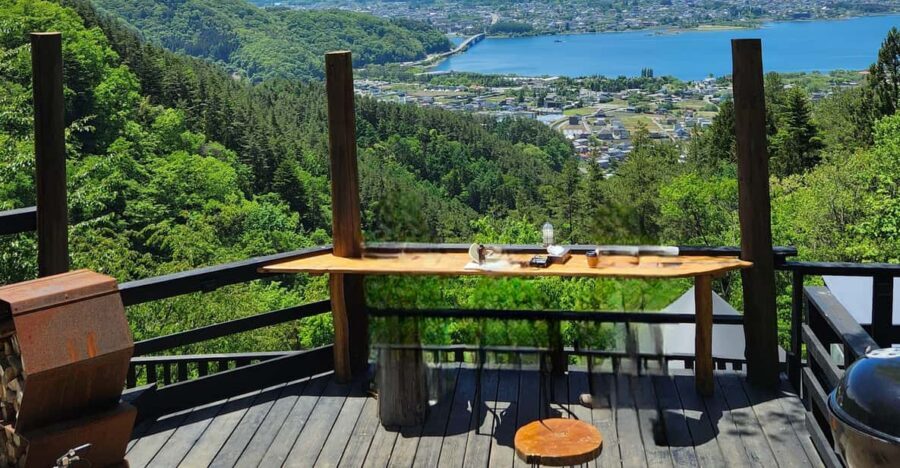
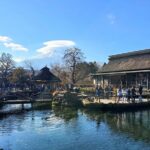
Oshino Hakkai is the place people go when they want Fuji-area nature without rushing up a mountain. You’ll get about an hour, including sightseeing and shopping time.
What to expect: eight ponds fed by melting snow from Mt. Fuji. Even if you don’t know the details, you’ll notice the calm—water that looks clear and “clean” in a way that feels different from city water. It’s also very photogenic because the village has a traditional layout with thatched-style roofs.
A drawback to consider: it’s popular. Go in with the mindset that you’re there for atmosphere and photos, not solitude.
Tip: if visibility is good, you’ll often see Fuji in the distance around this area—so it’s worth planning to look up and around, not only at the ponds.






Mt. Fuji View Stop: The Photo Stop That Depends on What the Sky Allows
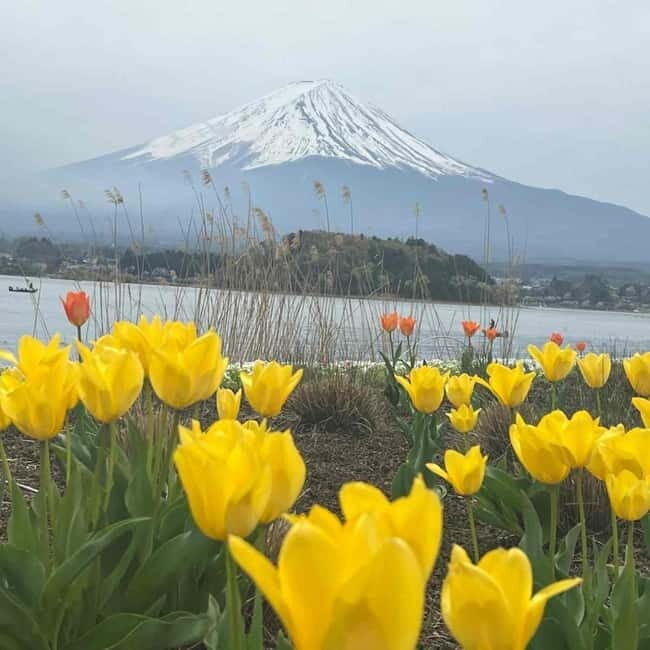
This is your main Mt. Fuji moment in the itinerary, with about an hour including a guided element plus time for photos and visiting.
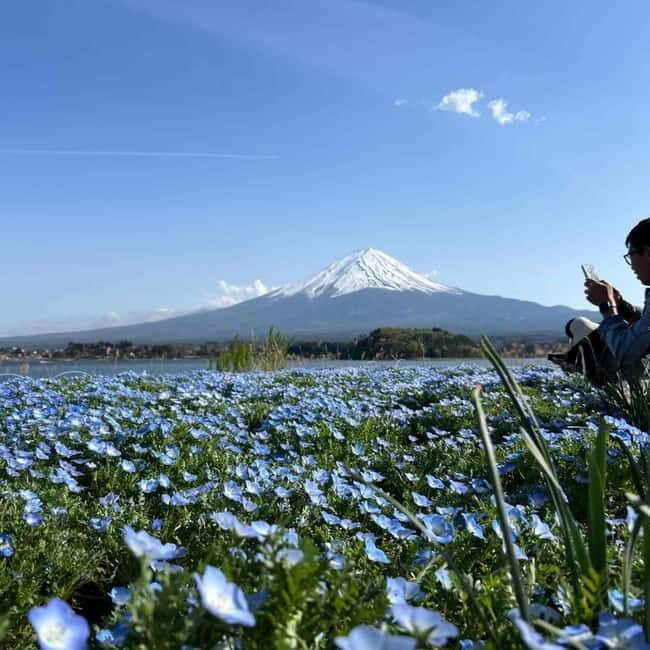
If you’re expecting a guaranteed “perfect Fuji,” adjust your expectations. Mt. Fuji is famous for disappearing behind clouds. When it’s clear, the symmetrical look people obsess over can feel almost too graphic. When it’s cloudy, you’ll still often get a sense of the mountain’s scale—just with fewer sharp details.
If you opt for Mt. Fuji 5th Station, you should plan for extra cost: there’s an uphill fee of JPY 1,500 to JPY 3,700, paid locally at the facility area. That fee is the trade-off for going higher.
Practical tip: dress for temperature shifts. Even in warmer months, the mountain air can feel cooler once you’re higher, and the day can change quickly with cloud cover.
Chureito Pagoda: The Postcard View With a Short Walk Payoff
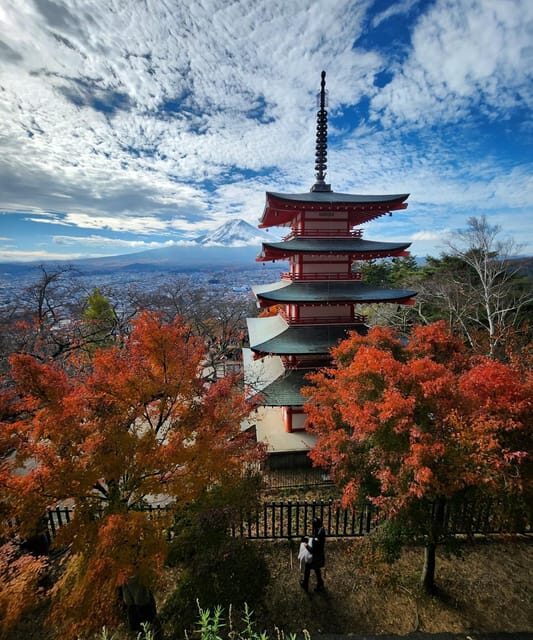
Chureito Pagoda is one of those stops where the view is the whole reason you’re here. You’ll have about an hour including time to walk and get oriented.
What makes it special: the pagoda frames a classic composition where Mt. Fuji can appear behind it. In clear conditions, it’s the kind of shot that looks staged, even though it’s not.
One consideration: you’ll want comfortable shoes. The walk is short but the ground can be uneven and crowded depending on season. If your goal is photos without stress, arrive ready to be patient for the best angles.
If you’re traveling with someone who doesn’t care about temples and pagodas, this is still a good stop because it’s primarily a viewpoint experience.
Lake Kawaguchiko and Oishi Park: Fuji Reflections and Easy “Slow Time”
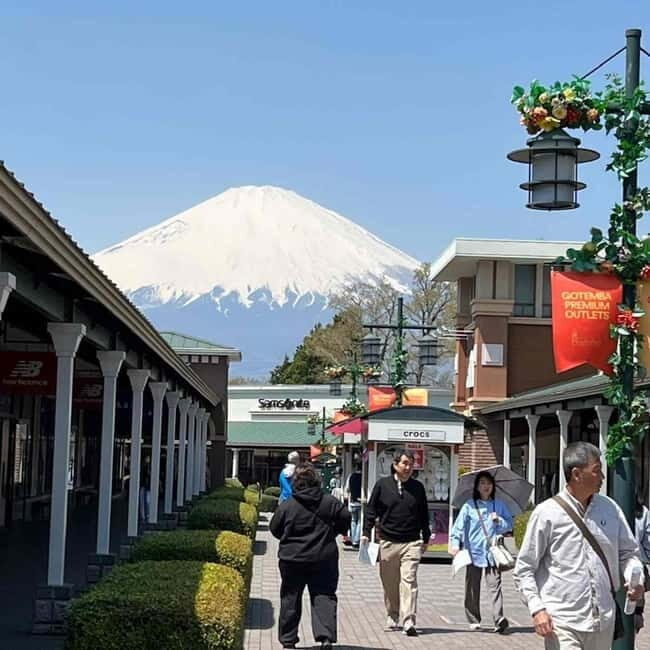
You get two lakeside-style stops: Lake Kawaguchiko (about 1.5 hours) and Oishi Park (about 1 hour). Both are built for breaks—coffee, photos, and a slower pace after the earlier sightseeing.
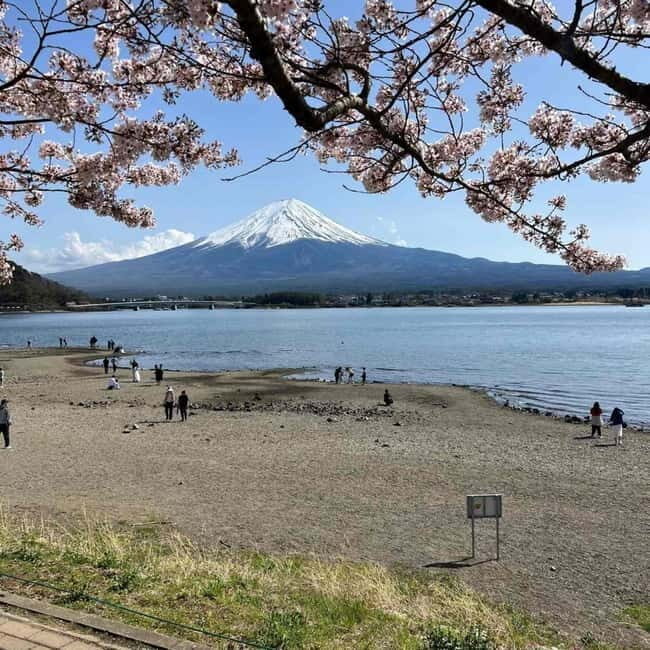
Lake Kawaguchiko is about atmosphere and that famous lakeside feeling. On clear days, the reflection of Mt. Fuji can look unreal. Even when reflections aren’t perfect, the shoreline views still help you understand where Fuji sits relative to the lake.
Oishi Park tends to feel more “viewpoint-forward.” It’s a good place to step back from the village streets and just watch the mountain and sky shift.
What I like about splitting it into two stops: it gives you options. If weather is excellent, you can spend more time comparing angles. If clouds roll in, you’re not stuck in one spot feeling like the whole day failed.
Kitaguchi-hongu Fuji Sengen Shrine: Tradition Without the Museum Vibe
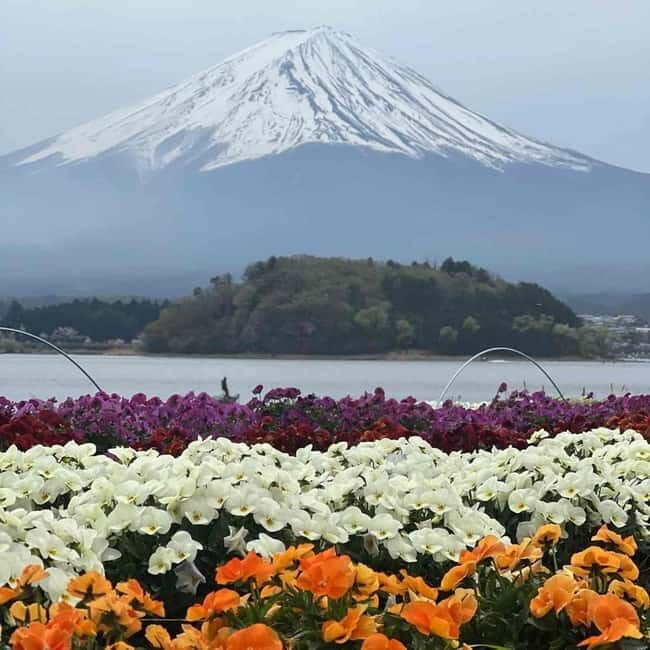
This stop adds a cultural anchor. You’ll spend about an hour at Kitaguchi-hongu Fuji Sengen Shrine, including a guided visit plus shopping/sightseeing time.
What makes it worthwhile: it connects Mt. Fuji to faith and local tradition. It’s not just “pretty architecture.” A shrine stop helps you place the mountain in Japanese cultural life instead of treating it like a single sightseeing object.
If you’ve got a small group with mixed interests, this is a strong compromise stop. The shrine gives meaning, while the Fuji-area views still keep it visually rewarding.
Practical note: bring modest, comfortable clothing. You’ll be walking a bit, and you’ll want to stay comfortable through the day.
Fujiyoshida Stop: Scenic Transit Moments and a Traditional Dance Show
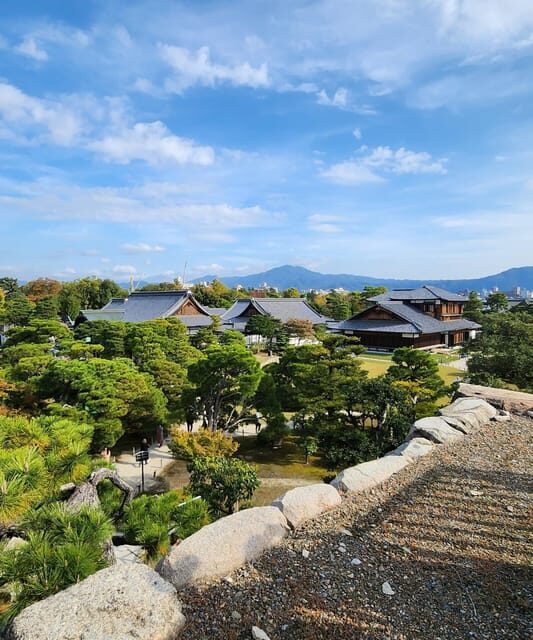
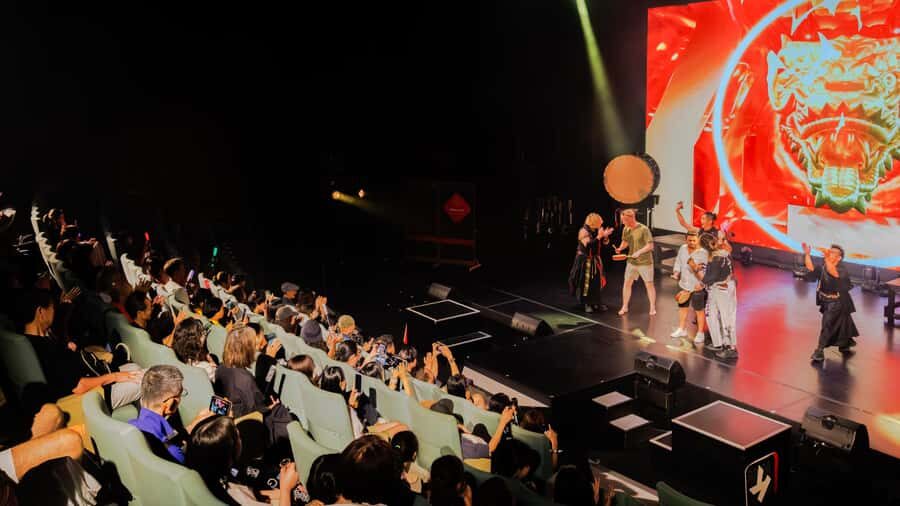
The route also includes Fujiyoshida, with scenic viewpoints on the way and a traditional dance show (about one hour).
Why this matters: it turns the day from “all looking, no doing” into something with local performance. A short dance show can be the kind of reset your group needs after a long series of outdoor viewing stops.
Even if you’re not a performance person, it helps you understand what’s happening in the region beyond the photo spots.
Time Management: How to Get the Most From a 10-Hour Day
A 10-hour private tour sounds long, but Fuji-area travel takes time, and each stop needs a little breathing room. What you want is a day where you’re not sprinting between places.
This tour’s schedule is paced to give:
- short guided moments that explain what you’re seeing,
- photo time that isn’t just a quick stop,
- and free time so you can snack, browse, or step aside when crowds form.
Here’s the approach I’d recommend for your group:
- If Fuji is clear early, lean into the viewpoints first (you’ll lose light and clarity later sometimes).
- If Fuji is cloudy early, don’t panic. Use Oshino Hakkai and shrine time to keep the day meaningful, then re-check viewpoints later.
- If someone in your group wants Mt. Fuji 5th Station, decide early enough that you aren’t rushing and paying the local toll without planning for the temperature and crowd dynamics.
Price and Value: When $354 Per Group Makes Sense
Let’s break down the math and the logic.
At $354 per group up to 6, this tour can be excellent value when:
- you want door-to-door pickup and drop-off,
- you don’t want to coordinate multiple transit routes,
- your group size is close to the cap.
The inclusions matter: the tour covers highway tolls, fuel, and parking, plus the private A/C vehicle, bottled drinks, and Wi‑Fi in the car. If you were to replicate that with taxis or multiple transfers, the cost and stress typically add up fast.
Two possible costs to remember:
- Mt. Fuji 5th Station uphill fee (JPY 1,500–3,700), paid locally.
- A JPY 5,000–20,000 charge for pickup outside Tokyo’s 23 wards (paid to the driver on tour day). No added fee within Tokyo’s 23 wards.
So this isn’t always a “single flat price with zero surprises,” but the surprises are limited and predictable.
Weather, Clouds, and the Mt. Fuji Reality Check
The hardest truth about any Mt. Fuji day trip from Tokyo is this: it’s weather-dependent. Clear visibility can feel magical, and cloud cover can turn Fuji into a vague outline.
This tour handles that risk better than many options because you’re not stuck with one fixed bus route. Your driver-guide can help you make smart calls during the day, and there’s also a rescheduling option if unexpected weather or incidents come up.
If you’re the type who needs one specific perfect photo, treat that as a bonus, not a guarantee. If you’re okay with a great day even when Fuji is partly hidden, you’ll likely enjoy it more.
Who This Tour Best Suits
This private Mt. Fuji day tour is a strong fit if:
- you’re traveling as a family or small group of up to 6,
- you want customization instead of a rigid schedule,
- you care about both Fuji views and cultural stops,
- you want comfort and less transport stress from Tokyo.
It’s also ideal if you dislike the early-morning, crowded feeling that can come with shared tours.
If you only want the single most famous photo viewpoint and nothing else, you might not use the full value. But if you want the full Fuji Five Lakes-area feel plus shrine and village-style atmosphere, this format makes sense.
Should You Book This Mt. Fuji Private Day Tour From Tokyo?
I’d book it if you want a comfortable, private day with a driver-guide who can adapt to your group and keep the schedule moving without feeling rushed. The combination of Oshino Hakkai, Chureito Pagoda, Lake Kawaguchiko, and Oishi Park is a proven Fuji route, and the option to include Mt. Fuji 5th Station is there if the day’s conditions are right.
I would hesitate only if:
- your group needs guaranteed Mt. Fuji clarity for every photo,
- you’re very sensitive to service issues and want maximum reliability no matter what,
- or you’re not close to the group-size cap, since $354 is per group, not per person.
If you do book, my best advice is simple: confirm your pickup point carefully, bring good shoes, and plan for a weather-flexible mindset. That way, even if the sky plays games, you still get a full, satisfying Fuji day.
FAQ
How long is the Mt. Fuji private day tour from Tokyo?
The tour runs about 10 hours, with timing flexible based on your preferences and on-day conditions.
Is hotel pickup and drop-off included?
Yes. Pickup and drop-off are included, and there are multiple pickup options across Tokyo. Airport and port pickups are not available.
What’s included in the price besides the driver and car?
The price covers a private air-conditioned vehicle (Toyota Vellfire), highway tolls, fuel, and parking. Bottled water and onboard Wi‑Fi are also included.
Do I need to pay extra for Mt. Fuji 5th Station?
If your itinerary includes Mt. Fuji 5th Station, there is an additional uphill fee (JPY 1,500 to JPY 3,700) paid directly to the local facility area.
Are there extra charges for where I’m staying in Tokyo?
Within Tokyo’s 23 wards, there’s no additional pickup charge. For pickups outside Tokyo’s 23 wards, an extra charge of JPY 5,000 to JPY 20,000 may apply and is paid to the driver.
What should I bring for the day?
Bring comfortable shoes, sunscreen, comfortable clothes, and a daypack. You’ll also want to dress for possible temperature changes in the Fuji area.