REVIEW · OSAKA
The Dark Side of Osaka Walking Tour
Book on Viator →Operated by Localized Walking & Food Tours · Bookable on Viator
Osaka turns serious after dark. This 5:30 pm tour takes you through Shinsekai and ends near Tobita Shinchi, with a frank look at working-class life, rules, and street culture across more than a century. I like the small group vibe (max 15) and the way the guide connects locations to real social history, not just street names. One note: if you’re expecting only polished sights, the tour’s first stretch can feel like a long walk through tougher neighborhoods.
For $25, you’re paying for guidance and structure, not attractions tickets. You’ll get a mobile ticket, all fees and taxes included, and about two hours of route planning that lands you where most first-timers don’t wander on purpose. Snacks aren’t included, so I’d plan to grab something along the way.
Wear comfy shoes and go with a curious mindset. This experience depends on good weather, and you’re moving for nearly the whole time. Still, if you want Osaka at street level, this one has real payoff.
In This Review
- Key points before you go
- What kind of tour is this, really?
- Price, value, and what’s actually included
- 5:30 pm starting point and the pacing that keeps it manageable
- Stop 1: Shinsekai and Tsutenkaku’s street-level mood
- Stop 2: Nishinari Dobutsuen-mae Deep Osaka Street
- Stop 3: Jan Jan Yokocho near the Tsutenkaku area
- Stop 4: Tobita Shinchi and the practical reality of a red-light district
- Stop 5: Tsutenkaku Hondori Shopping Street to end the night
- Group size, mobile tickets, and how to not feel rushed
- Weather and comfort: plan like a local
- Who this tour fits best (and who should skip it)
- Should you book The Dark Side of Osaka Walking Tour?
- FAQ
- How long is the walking tour?
- What does it cost?
- Where do I meet, and what time does it start?
- Where does the tour end?
- Is food included?
- Is there a mobile ticket?
- How many people are in the group?
- What’s the weather requirement?
- Can I cancel for a full refund?
Key points before you go
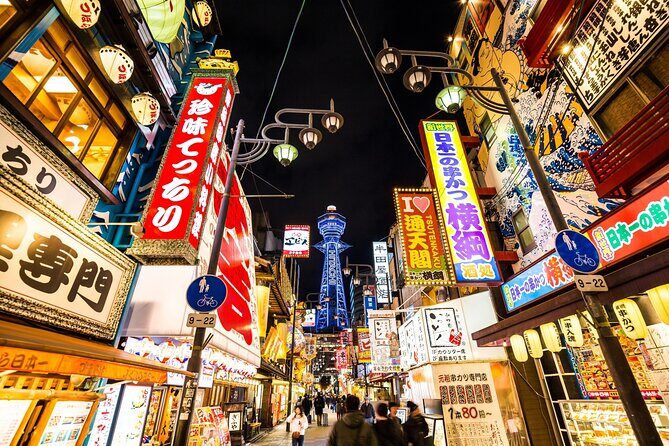
- Two hours, five focused stops: Shinsekai, Nishinari Dobutsuen-mae area, Jan Jan Yokocho, Tobita Shinchi, and Tsutenkaku Hondori.
- Night timing matters: you start at 5:30 pm and experience the neighborhoods as they shift after daylight.
- Social history approach: the route connects street scenes to how communities and institutions formed and changed.
- Small group size (max 15): easier questions, better pacing, less chaos.
- End near Tsutenkaku: the tour finishes at the tower area, so you’re not stranded far from transit.
- Bring your appetite: snacks are not included, but shopping streets along the way make it easy to buy your own.
What kind of tour is this, really?
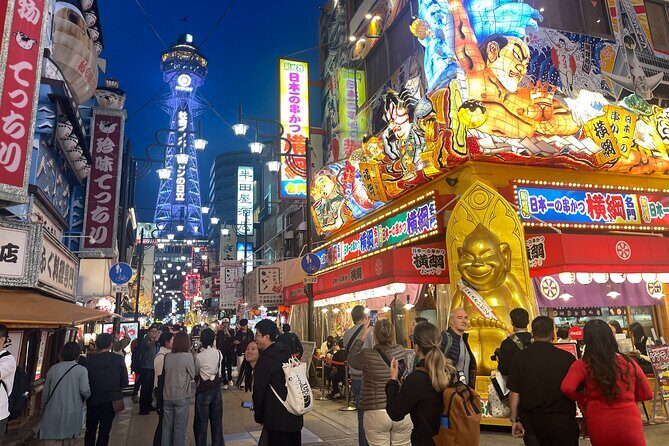
This is an Osaka night walk with a theme: the less-perfect, more complicated side of the city. The goal isn’t shock value. It’s the story behind places—especially the historic getto area and the city’s major red-light district—plus what life looks like in neighborhoods that never tried to be a postcard.
The tour is priced at $25 per person and includes all fees and taxes. That matters because a paid fixed tour usually means fewer surprises and a more predictable flow. You also get a mobile ticket, so you’re not messing with paper vouchers.
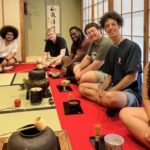
The best way to think about it: you’re paying for context and for a route that avoids the usual tourist shortcuts. A couple of guides called out in feedback—Jay, Matt, and RICO—were praised for linking the places to social history and answering questions clearly, which is exactly what you want on a tour like this.
You can also read our reviews of more walking tours in Osaka



Price, value, and what’s actually included
At $25, you’re not buying museum entry or a bunch of add-ons. You’re buying:
- a guided walk (about 2 hours),
- a route with five stops,
- and coverage of all fees and taxes.
Every stop lists admission ticket free, so you’re getting access to the storytelling without paying extra at each location. The one thing not provided is food. Snacks are listed as not included, which is normal for a walking tour—but it does mean you’ll want to plan your timing if you’re arriving hungry.
If you like structured city walking (where you know what you’re looking at and why), this is good value. If you only want hands-free entertainment and you prefer to pick sights on your own, a guided theme like this may feel less “worth it” to you—especially if you’re not comfortable walking through more working-street areas.
5:30 pm starting point and the pacing that keeps it manageable
The tour starts at 5:30 pm. That timing is key. Late afternoon becomes night in Osaka quickly, and the neighborhood mood changes in a way that feels more natural than an all-day sightseeing scramble.
It also runs with a maximum of 15 travelers. That small number helps the guide manage the group and answer questions without turning into a shuffle through crowds. One common praise is that the pace felt right—enough time at each stop to absorb the story, not so long that you feel stuck in one place.
The full walk is about two hours. You’ll spend time stopping, listening, and walking again. So treat this like an active evening plan. You’ll want shoes you can trust.
Stop 1: Shinsekai and Tsutenkaku’s street-level mood
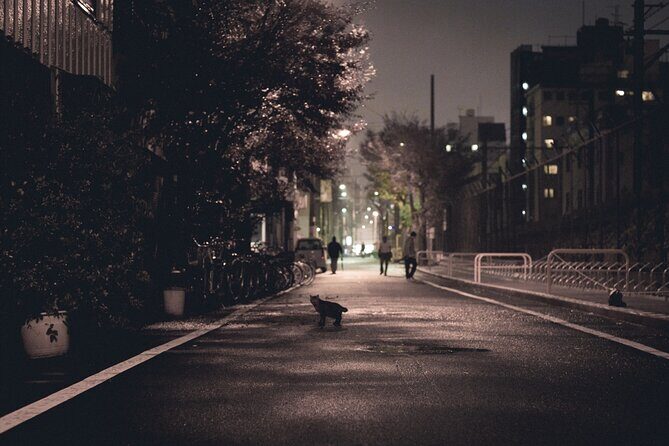
Your first stop is Shinsekai, which means New World. This is one of Osaka’s more distinctive districts, and it’s tied to a specific origin story dating back to 1912. You’ll see why people connect the area with nostalgia while still recognizing it as a real neighborhood.
You’re there for about 30 minutes, and that first segment is important. It sets tone and gives you the vocabulary to understand what you’ll see later—how architecture, street design, and regulations can shape day-to-day life.
What I like about starting here: Shinsekai gives you an entry point. Even if the rest of the tour moves into heavier subjects, you begin with a district people associate with street culture, local energy, and landmarks like Tsutenkaku that anchor the area.
Possible drawback: because Shinsekai is busy and the streets can be compact, it may feel like a lot visually in the beginning. If you’re sensitive to noise and crowds, take it slow—look up, then look at what’s at eye level.
Stop 2: Nishinari Dobutsuen-mae Deep Osaka Street
Next comes Nishinari, specifically the Dobutsuen-mae Deep Osaka Street area. This is the part of the route that turns the dial toward everyday, working-street Osaka. Nishinari is described as having an authentic, raw feel, shaped by its past as a hub for day laborers and a working-class community.
You’ll spend about 30 minutes here, and the point isn’t sightseeing in the usual way. This is where the tour’s theme becomes obvious: the “dark side” isn’t just red lights and drama. It’s also how neighborhoods were formed around labor, who had access to what, and how a city organizes itself.
Why this stop is valuable: it creates context. When you later reach the red-light district, you’ll understand the social environment around it—less as a movie set, more as part of a long-running system.
A consideration: one feedback point was that the first half can feel like wandering around tougher streets with fewer obvious things to look at. If you want constant photo ops, be prepared for stretches where the value is in the guide’s explanation, not in a single landmark.


Stop 3: Jan Jan Yokocho near the Tsutenkaku area
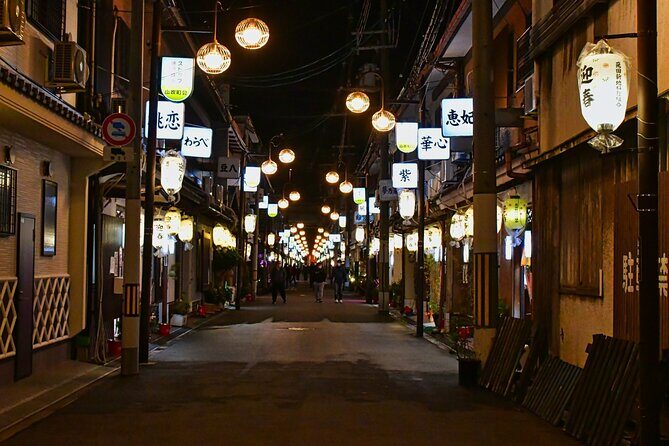
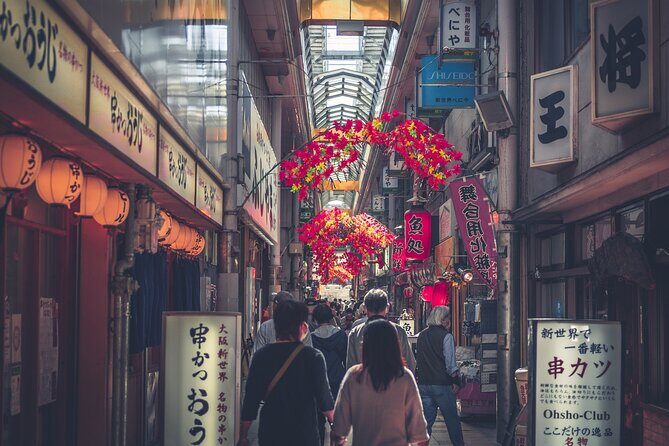
After that, you shift into a smaller, more fun pocket: Jyanjyan Yokocho, also described as Nanyodori Shopping District. You’ll spend about 20 minutes here, and it’s known for a narrow alley feel—retro atmosphere, snacks and casual dining energy, and a lot of small-street character.
This stop is a smart mid-tour break. It gives your eyes something easier than the heavier street context while keeping you in the same general neighborhood world. You’re still near Tsutenkaku, and the alley setup makes the storytelling feel more personal.
What to do here: treat it like an orientation stop. If you want to buy a drink or a bite, this is a natural place to do it since snacks aren’t included. It’s also a good moment to check photos in your head—what you saw in Nishinari, then what changed when you turned into an alley full of shops.
Stop 4: Tobita Shinchi and the practical reality of a red-light district
Then you reach Tobita Shinchi, described as Osaka’s most famous and largest red-light district, with a history over a century. Expect about 20 minutes here, plus explanation of what made the area unique—its architecture and the idea of a tightly regulated environment.
I appreciate tours that handle this topic with structure. This is one of the biggest reasons I think the guide quality matters. In feedback, Jay and Matt were praised for being thoughtful and for connecting social history to what you’re seeing, including answering questions. That approach helps you look without turning it into gossip.
How to make this stop worthwhile:
- Keep your questions respectful and specific.
- Focus on the “why” behind the layout and rules, not just the stereotype.
- Remember that this is still a real neighborhood space, not a theme park.
Possible drawback: this portion may not feel comfortable if you’re expecting a light, easy night out. It’s not explicit, but the subject matter is real. If you’re sensitive to red-light district themes, you might want to mentally prepare before you arrive here.
Stop 5: Tsutenkaku Hondori Shopping Street to end the night
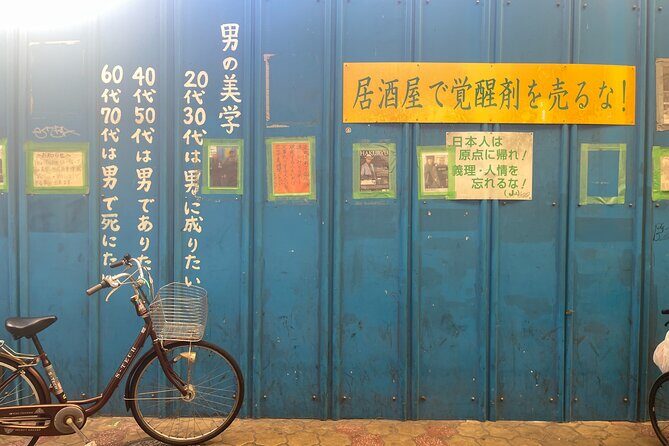
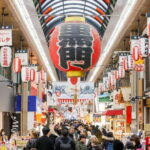
The last stop is Tsutenkaku Hondori Shopping Street, near the base of Tsutenkaku Tower. You get about 20 minutes, and it’s described as an arcade with a retro vibe, mixing shops and street-level activity.
This ending location is practical. The tour finishes at a Tsutenkaku-area address, so you’re not sent off into nowhere. It also means you end where it’s easier to keep exploring on your own if you still have energy.
Why I like this as a final stop: after two emotionally and socially heavier stops (Nishinari and Tobita Shinchi), you get a more everyday street scene. It lets you process what you learned while still staying in the Osaka-night atmosphere.
If you want a simple plan after the tour: hang around Tsutenkaku for a bit, then head back on transit. This kind of neighborhood works best when you give yourself time to decompress.
Group size, mobile tickets, and how to not feel rushed
With a maximum of 15 people, you should feel like you’re walking with a unit, not getting yanked along. And the mobile ticket is useful for short-notice travel. You’ll likely be able to show entry quickly on your phone.
One more practical point: because stops include both open streets and narrow alley-like areas, it helps to stay aware of where you’re standing. Don’t block walkways. Follow the guide’s pace. The best tours like this are easy on your feet and clear in their flow.
Weather and comfort: plan like a local
This experience requires good weather. That’s not a gimmick—it’s because the route is outdoors for most of the two hours. If rain starts, it can affect comfort and how the group moves.
Also, the tour is close to a 2-hour commitment with frequent walking. I’d bring:
- comfy shoes,
- a light layer for night air,
- and a small plan for food since snacks aren’t included.
If you’re traveling with someone who hates walking, this may not be their favorite night. But if you want the city on foot, it’s a strong use of time.
Who this tour fits best (and who should skip it)
This works especially well if you:
- want Osaka nightlife with real context,
- like learning the social story behind neighborhoods,
- enjoy guided walking where the guide explains what you’re seeing,
- and don’t mind a more serious tone at times.
It may be less ideal if you:
- want only top-tier landmarks and “pretty” scenes,
- need constant visual stimulation to stay engaged,
- or feel uncomfortable with red-light district topics, even in a respectful, structured way.
The small group size and strong guide feedback—Jay, Matt, and RICO being praised for helpful answers and solid social-history storytelling—suggest this experience is best when you value the guide’s role.
Should you book The Dark Side of Osaka Walking Tour?
Book it if you want Osaka that’s more honest than the first-page travel brochures. The combination of Shinsekai orientation, Nishinari context, Jan Jan Yokocho’s alley energy, Tobita Shinchi’s historic red-light district explanation, and a practical Tsutenkaku-area finish is a smart evening arc.
Skip it or think twice if you’re craving a low-walking, low-thought night. One downside mentioned is that the first part can feel like wandering through tougher streets without tons of obvious “look-at-this” moments. But if you’re okay with a story-led walk, that exact tradeoff is what makes the tour memorable.
If you do go, go prepared: comfy shoes, questions in mind, and an open attitude about how cities manage people, space, and reputation after dark.
FAQ
How long is the walking tour?
It lasts about 2 hours.
What does it cost?
The price is $25.00 per person.
Where do I meet, and what time does it start?
You meet at MEGA Don Quijote Shinsekai (3-chōme-4-36 Ebisuhigashi, Naniwa Ward, Osaka) and the start time is 5:30 pm.
Where does the tour end?
The tour ends at Tsutenkaku (1-chōme-18-6 Ebisuhigashi, Naniwa Ward, Osaka).
Is food included?
No. Snacks are not included.
Is there a mobile ticket?
Yes, the tour uses a mobile ticket.
How many people are in the group?
The maximum group size is 15 travelers.
What’s the weather requirement?
This experience requires good weather. If it’s canceled due to poor weather, you’ll be offered a different date or a full refund.
Can I cancel for a full refund?
Yes, free cancellation is available. You can cancel up to 24 hours in advance for a full refund.