REVIEW · KYOTO
Kioto: Gion Tour, recorrido a pie (Español/Castellano)
Book on GetYourGuide →Operated by LAMBDA CUBE LLC · Bookable on GetYourGuide
Gion looks different after walking with a guide. In a 2-hour Spanish walk through Gion’s preserved streets, I love how the guide turns ordinary corners into real context, and I especially like the focus on how the hanamachi work day-to-day—not just the famous postcard views.
The best part is that the guide encourages Q&A as you go, so you can ask about what you’re seeing right then instead of guessing later. One possible drawback: sightings of a maiko and/or geiko can’t be guaranteed, and Hanamikoji-dori isn’t included on this route, so your “geisha-watching plan” needs flexibility.
This is also a friendly commitment. For about $35 per person and a 3.3 km (2 mile) walk, you get a tight loop through three of Kyoto’s hanamachi areas without feeling like you’re wandering in the wrong direction.
In This Review
- Key things to know before you go
- Why a 2-hour Gion walk makes sense
- Meeting at Disney Kyoto Shijo-Kawaramachi (and avoiding the first headache)
- Pontocho alley and the Kamogawa mood
- Yamato-dori and moving into Gion-Kobu
- Gion-Kobu on foot: why the side streets matter
- Tatsumi Jinja and Tatsumi Hashi: calmer scenery, good storytelling
- Gion Higashi and Yasaka Shrine: the name behind Gion
- What’s missing (and how to plan around it)
- Price and value: $35 for a guided meaning upgrade
- Small group energy, Spanish guidance, and real Q&A
- Seasonal tweaks: cherry blossoms and the optional Gion Gallery
- What to bring so the walk feels easy
- Who this tour fits best
- Should you book this Gion tour?
- FAQ
- Is the tour guided in Spanish?
- How long is the walking tour?
- What areas of Gion does the tour cover?
- Is Hanamikoji-dori included on the route?
- Can I guarantee seeing a maiko or geiko?
- How far do we walk?
- Where do we meet the guide?
- Should I bring anything specific?
Key things to know before you go
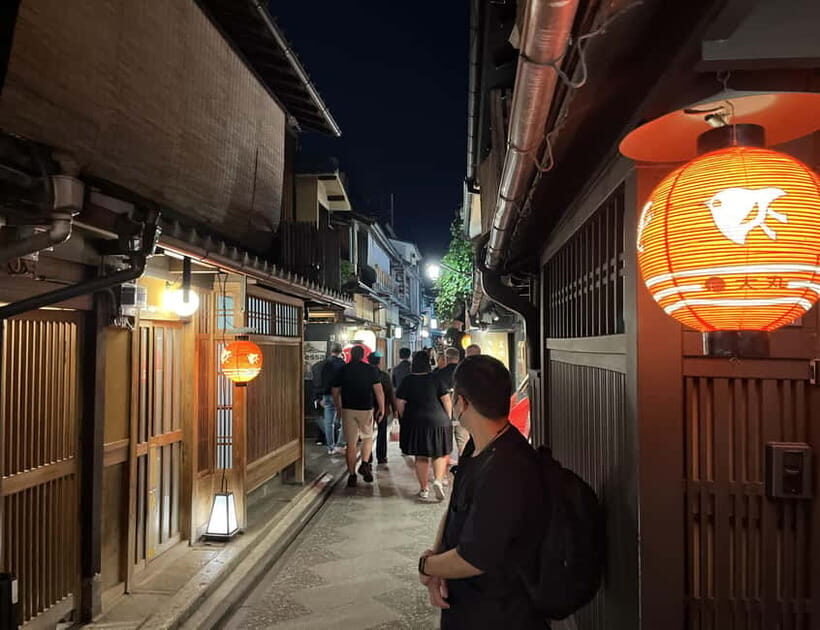
- Three hanamachi areas in one loop: Pontocho, Gion-Kobu, and Gion-Higashi
- You walk a real 2-mile route with frequent chances to stop and ask questions
- A guide’s personal explanations help you read Kyoto’s details faster (even if you’re new to Japan)
- Yasaka Shrine connects to Gion’s name, including the festival story if there’s time
- No guaranteed maiko/geiko sightings, and Hanamikoji-dori isn’t on the itinerary
- Cherry blossom timing can change the route, so expect a small adjustment in late March/early April
Why a 2-hour Gion walk makes sense
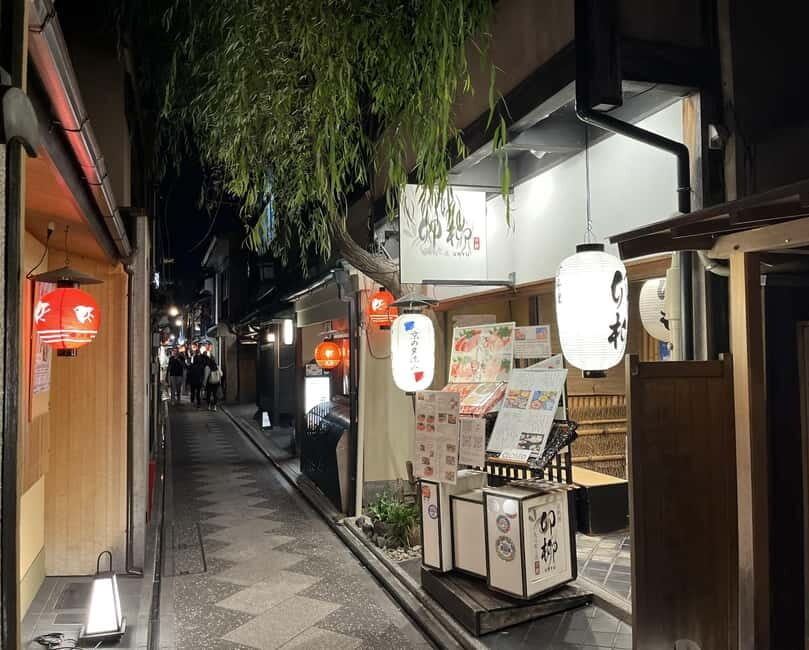
Gion is one of those places where you can easily “see stuff” and still miss what’s actually going on. The lanes, the traditional wooden houses (machiya), the river atmosphere, the shrines—everything is visually loud, but the meaning can be quiet if you’re going on your own.
That’s where this tour earns its value. The format is short enough that you stay sharp, but structured enough that you’re not just following a route. You’re learning what each area is, why it developed that way, and how the hanamachi lifestyle fits into Kyoto today.
The tone also matters. Guides on this walk tend to be close and responsive—people ask questions, and the conversation keeps moving. If you’re curious about how daily life works in Japan (not just entertainment district trivia), this is the right kind of tour.
You can also read our reviews of more tours and experiences in Kyoto.



Meeting at Disney Kyoto Shijo-Kawaramachi (and avoiding the first headache)
Your guide meets you in front of the Disney store at Disney – Kyoto Shijo-Kawaramachi—there’s only one Disney shop in Kyoto, so it’s designed to be easy to spot. Look for the guide seated and holding an iPad showing the tour image text for Kioto Gion Recorrido Guiado ESPAÑOL/CASTELLANO.
Practical tip: arrive a bit early. Even with a small group (limited to 6), you want a minute to get oriented so you start walking with confidence.
Pontocho alley and the Kamogawa mood
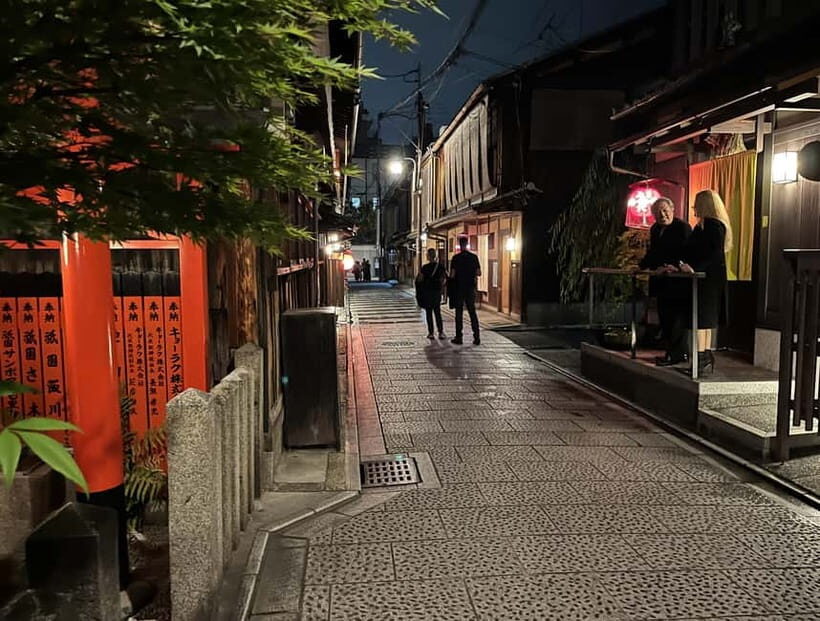
The tour kicks off in the Pontocho alley area. If you’ve ever looked at photos of Kyoto at night, this is the zone that helps explain the atmosphere—narrow lanes, old-style streetscape, and the sense that the city has rhythms beyond the main roads.
From there, you head toward Pontocho Kaburenjo and the Kamogawa (the river). Standing near the river matters because Kyoto’s geographies are tied to daily flow: where people walk, where businesses cluster, and how districts feel different from one block to the next.
You’ll also pass by Yagi-san and Kita-san statues. These aren’t the kind of sights you automatically search for, but they give the walk a “Kyoto detail” feel—small markers that help explain why the area has stories attached to it.
Then you cross to Sanjo Ohashi (bridge). Bridges are an underrated way to understand a city: they force you to change perspective, and your guide can connect the physical layout to how neighborhoods developed.
How to enjoy this stretch: keep your camera handy, but don’t treat it like a photo hunt. The best moments here are when you slow down and listen long enough to connect what you see to what you’re learning.
Yamato-dori and moving into Gion-Kobu

After the river and bridge area, the route transitions toward Yamato-dori, then into Gion-Kobu—including Gion-Shinbashi-dori and Gion Shiragawa surroundings.
This is where the tour starts doing something more than sightseeing. Gion is often reduced to one idea online, but the walk pushes you to see hanamachi as a working cultural district with traditions, schedules, and routines. The guide explains the history of the area and the hanamachi structure, including what maiko and geiko life can look like in practice.
You’ll also hear about why neighborhoods stay recognizable. It’s not only about aesthetics; it’s about preservation, community identity, and how Kyoto protects the feel of places where tradition continues.
Possible drawback: because this tour is focused on learning, you may not spend as long as you’d like in any single lane for pure wandering. If you’re the type who loves endless strolling with no script, this route’s structure may feel a touch directive.
Gion-Kobu on foot: why the side streets matter

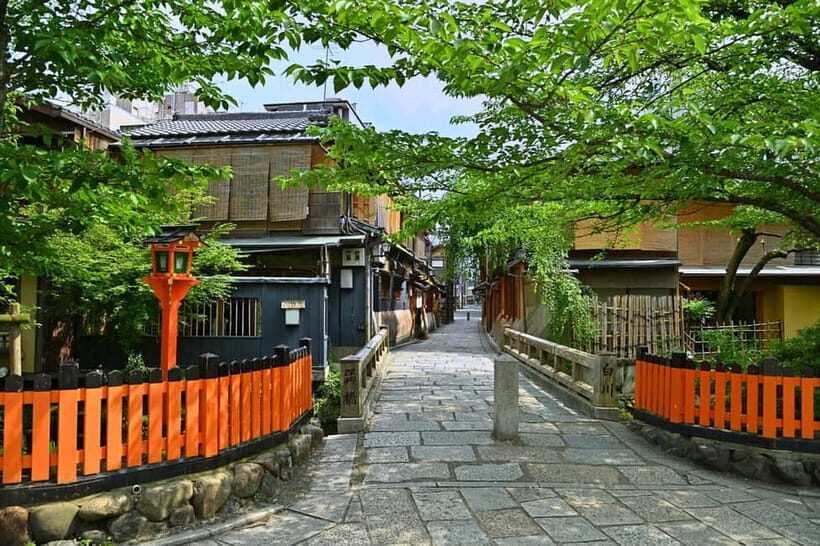
Walking through Gion-Kobu (north) and the preserved neighborhood areas is one of the main reasons this tour is worth the money. The streets are narrow, and if you don’t know what you’re looking for, it’s easy to miss the cues that make the district feel layered rather than just scenic.
Here’s what this part gives you:
- A clearer sense of what a hanamachi is (beyond the word)
- A better mental map of where you are within Gion
- More confidence spotting features you might otherwise overlook (woodwork, signage, street layout, and how the space channels movement)
And crucially, you can ask follow-up questions. People on Spanish-speaking tours often want to know the “why” behind what they’re seeing—why a street is shaped a certain way, why certain practices exist, why some areas feel quieter at specific times. This guide style is built for that.



Tatsumi Jinja and Tatsumi Hashi: calmer scenery, good storytelling
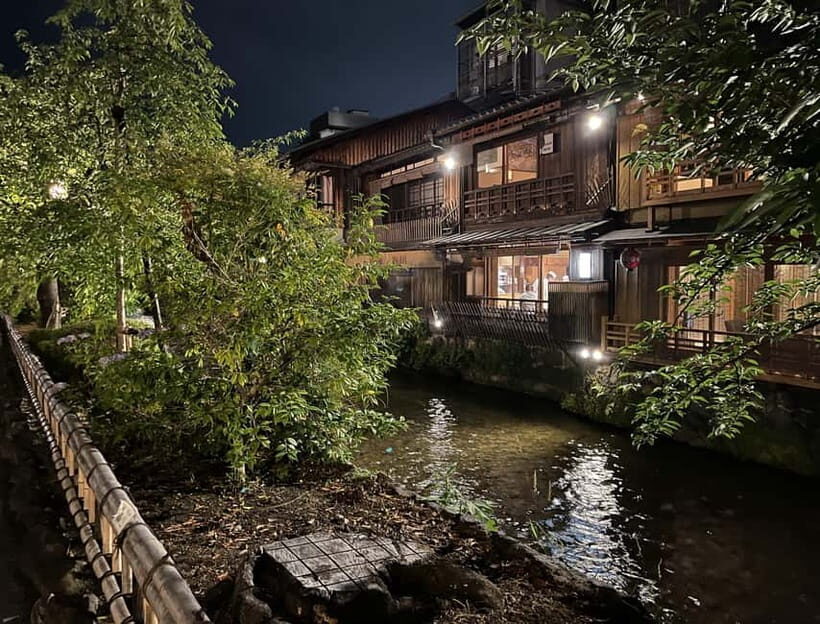
The itinerary then includes Tatsumi Jinja, followed by Tatsumi Hashi (bridge).
Shrines like this are not only spiritual sites; they’re also anchor points in Kyoto geography. You get a moment where the walk’s energy drops a bit and you can reset your attention. That matters in Gion because the area can feel like sensory overload—people, cameras, and constant visual detail.
On this stretch, you’re more likely to appreciate the “in-between” experience: learning without forcing it to compete with the busiest streets. The bridge also helps you see the district from another angle, which is useful if you’re trying to understand how paths connect rather than treating everything as separate stops.
Tip for your comfort: this is part of the walk where good shoes pay off. Even if you’re not walking far overall, Kyoto’s stone and uneven surfaces can add up.
Gion Higashi and Yasaka Shrine: the name behind Gion
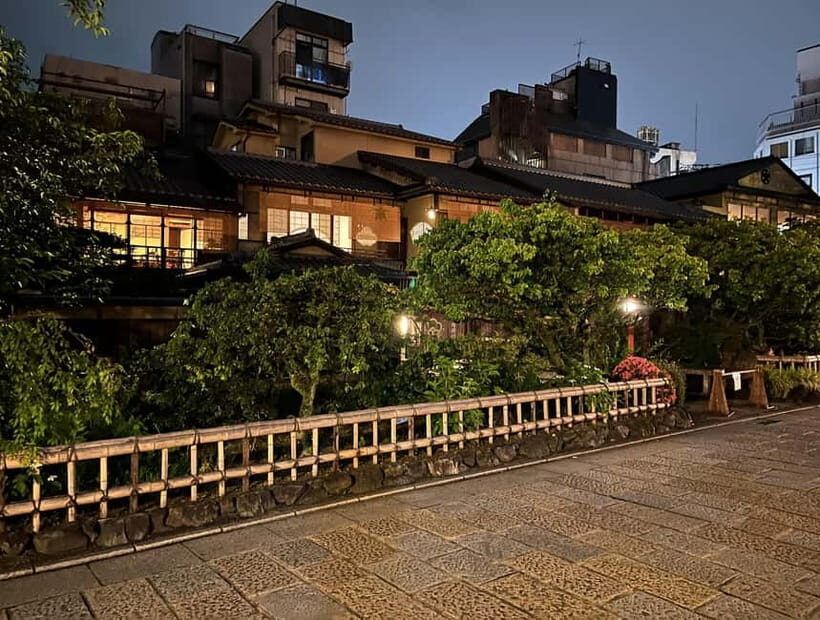
Next comes Gion Higashi, then Yasaka Jinja (Yasaka Shrine). This is one of the tour’s most meaningful stops because the district name comes from here.
Your guide explains that the shrine was formerly known as Gion Shrine—and that’s where the name Gion is said to originate. The tour also connects the shrine to the Gion Festival, one of Japan’s top three major festivals. If time allows, you’ll hear how the festival’s origins tie back to Gion going back more than 1,100 years.
This section is valuable because it changes how you interpret the whole walk. Instead of seeing Gion as a themed neighborhood, you start seeing it as a long-running cultural geography—religion, community identity, and seasonal celebration all feeding into the district’s character.
What to watch for: even if you’re not sure what you’re looking at inside the shrine area, you’ll get the background so you’re not standing there blank. That’s a big deal when you only have two hours.
What’s missing (and how to plan around it)

Two notes can help you decide if this tour matches your expectations:
- Maiko/geiko sightings aren’t guaranteed. Gion is not a controlled set. If you’re lucky, you might see someone in motion, but you shouldn’t count on it.
- Hanamikoji-dori isn’t included. That’s Kyoto-famous for a reason, so if you specifically want that street in your walk, you’ll need to plan extra time on your own.
The good news: the tour still gives you plenty of hanamachi context through the areas it covers. It’s just not built around “geisha spotting at all costs.”
Price and value: $35 for a guided meaning upgrade
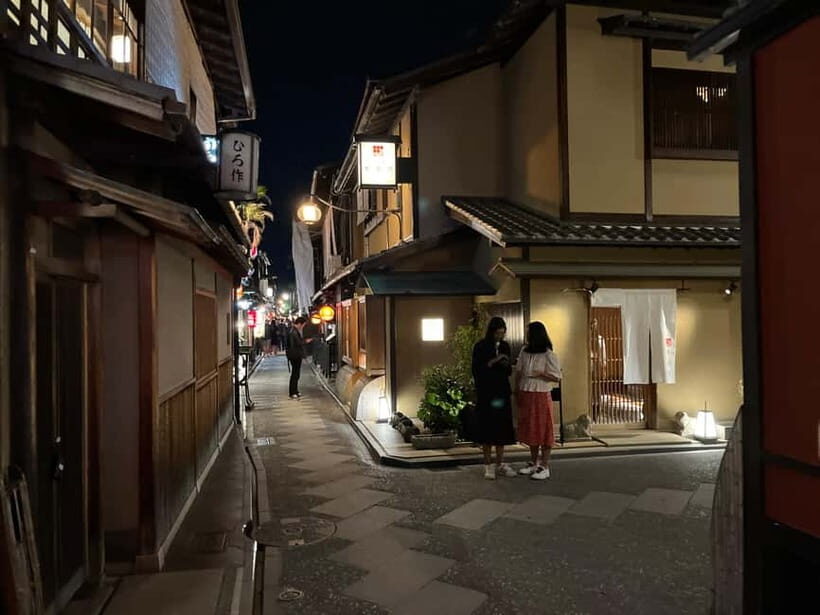
At $35 per person for 2 hours, this is a practical choice if you want value in understanding, not just in movement.
A DIY walk in Gion can be enjoyable, but you’ll spend mental energy decoding what you’re seeing. This tour saves that effort. You get:
- A Spanish-speaking guide who helps you read the district
- A small group (max 6), which makes questions feel normal, not rushed
- A walking route that hits three hanamachi areas instead of just one
The other hidden value is rhythm. With a guide, you don’t have to decide what matters most. You follow a path designed to connect history, district structure, and everyday details.
If you’re comparing this to self-guided time, ask yourself a simple question: do you want to spend your Gion hours taking in a story, or do you want to spend them figuring out the story yourself? For most people—especially those traveling in Spanish with clear explanations—this tour is the easier path.
Small group energy, Spanish guidance, and real Q&A
This experience leans heavily on interaction. You’re encouraged to ask a lot of questions about Japan, Kyoto, and what you’re seeing in the moment.
In past outings with guides like José and Juan, the tone tends to be friendly and adaptable, with detailed answers and a habit of checking in to make sure things make sense. If someone in your group struggles with Spanish, there’s also evidence the guide can switch to help in English when needed.
One practical note: the walk is short, so if you have specific questions (about festival timing, traditions, or what certain street features mean), jot them down beforehand. You’ll get more from the guide if you arrive with curiosity ready to go.
Seasonal tweaks: cherry blossoms and the optional Gion Gallery
If your timing lands in late March to early April, the route may shift slightly to showcase cherry blossoms around Gion. That’s a nice bonus because the district’s visual mood changes fast with the seasons, and a small route tweak can make the walk feel less repetitive.
There’s also an extension idea: the 9:45 and 12:30 departures can include a free visit to the Gion Gallery if you choose to extend your time. If you like museums or want an extra layer after your walk, it’s a smart add-on.
What to bring so the walk feels easy
For this 3.3 km route, pack like you’re walking Kyoto, not sightseeing from a bus.
Bring:
- Comfortable shoes
- Umbrella (weather in Japan can shift)
- Sun hat and sunscreen
- Water
If you don’t bring water, plan to buy it nearby during the tour. The experience doesn’t list extra services, so staying hydrated is on you.
Who this tour fits best
This tour is ideal if you:
- Want a guided explanation rather than only photos
- Like asking questions about culture and daily life in Japan
- Prefer a small group format where conversations happen
- Plan to spend time in central Kyoto and want a focused Gion experience in one block
It’s less ideal if you:
- Only want the exact look of Hanamikoji-dori
- Expect guaranteed encounters with maiko or geiko
- Want long, unstructured wandering with no route shape
Should you book this Gion tour?
Book it if you want your Gion time to come with context. The route hits key areas in a compact walking loop, and the guide’s Spanish explanations plus strong Q&A makes it easier to connect what you see to how the district works.
Skip it (or plan extra time) if your top goal is Hanamikoji-dori specifically or if you need guaranteed performer sightings. Those are outside the control of any responsible guide.
If you’re flexible and curious, this is one of the better ways to understand Gion quickly: short walk, strong storytelling, and enough interaction to make Kyoto feel personal instead of confusing.
FAQ
Is the tour guided in Spanish?
Yes. The live guide speaks Spanish.
How long is the walking tour?
It lasts about 2 hours.
What areas of Gion does the tour cover?
It visits three hanamachi areas: Pontocho, Gion-Kobu, and Gion-Higashi.
Is Hanamikoji-dori included on the route?
No. Hanamikoji-dori is not included, so you’ll want extra time if that street is a must for you.
Can I guarantee seeing a maiko or geiko?
No. Sightings of a maiko and/or geiko cannot be guaranteed.
How far do we walk?
The route is listed as 3.3 km, about 2 miles.
Where do we meet the guide?
Meet in front of the Disney store at Disney – Kyoto Shijo-Kawaramachi. The guide is seated and holding an iPad with the tour image for Spanish/Castellano.
Should I bring anything specific?
Bring comfortable shoes, a sun hat, an umbrella, sunscreen, and water.