REVIEW · TOYAMA PREFECTURE
Lacquer Art in Toyama: Uozu Teaspoon Craft with Gold & Silver
Book on Viator →Operated by 工房ヤマセン辻佛檀 · Bookable on Viator
Gold and silver start with one painted line. In Uozu, Toyama, this Uozu lacquer workshop turns a tiny object into a mini lesson in Japanese craft, using gold and silver powder to finish what you paint by hand.
Two things I really like. First, the instruction is patient and practical, with clear English support alongside Japanese explanations. Second, you get more than just doing your spoon—you also see the shop floor where lacquer and woodcarving skills are applied in the real workflow, tools included.
One thing to think about: you’ll be working with a substitute lacquer (made to be safer), not traditional natural lacquer. If you’re a purist who expects a fully traditional lacquer-only process, this may feel a bit different—though you still use authentic materials for the decorative steps.
In This Review
- Key highlights worth knowing before you go
- Stepping Into a 1913 Buddhist Altar Workshop in Uozu
- Meet the Tsuji Brothers and the 400-Year Uozu Lacquer Tradition
- What You’ll Make: A Keyaki Teaspoon with Maki-e Details
- Hands-On Class: Painting, Then Dusting Gold and Silver
- The Behind-the-Scenes Tour of Brushes and Carving Tools
- How the Use of Substitute Lacquer Changes the Experience
- Price, Group Size, and Timing: Is $55.28 Good Value?
- Good Fit: Who Will Enjoy This 2-Hour Spoon Workshop
- Practical Notes for Visiting the Workshop in Toyama
- Should You Book This Uozu Teaspoon Craft Session?
- FAQ
- What is the experience in Toyama?
- Where does the experience start?
- How long does the session take?
- What is the price per person?
- Is there a tour included or only the hands-on activity?
- What materials are used for the decoration?
- How many people are in a group?
- Is this experience available with English support?
- What if I need to cancel?
Key highlights worth knowing before you go
- A 100+ year Buddhist altar shop: old shop, old techniques, still working
- Uozu lacquer tradition (400 years) explained in plain, hands-on terms
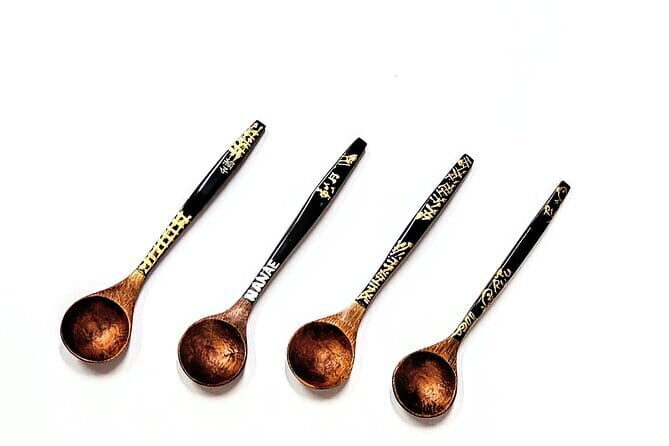
- You make a keyaki teaspoon with a decorated design of your own
- Gold and silver powder are part of the finish, not just a talk-theory demo
- Small group size (up to 8) keeps the class from feeling rushed
- Substitute lacquer safety helps make the class approachable
Stepping Into a 1913 Buddhist Altar Workshop in Uozu
Uozu lacquerware doesn’t live in a museum. It lives in a working craft shop. This experience takes place in a long-established Buddhist altar shop that has been operating since 1913, which means you’re walking into a business built on craft continuity, not a one-off tourist show.
What makes that matter to you is simple: you get context for the skills. Lacquer isn’t treated like a novelty craft here. It’s part of the same world as Buddhist altar work—delicate surfaces, careful finishing, and the kind of process detail you only get when people are making real objects day after day.
Also, the setting feels quietly special because it’s not the kind of place most people casually drop into. You’re stepping into a shop with purpose, where tools and techniques have been carried forward through generations. In my view, that’s the difference between watching a craft lesson and actually learning how craft lives.
You can also read our reviews of more tours and experiences in Toyama Prefecture.

Meet the Tsuji Brothers and the 400-Year Uozu Lacquer Tradition
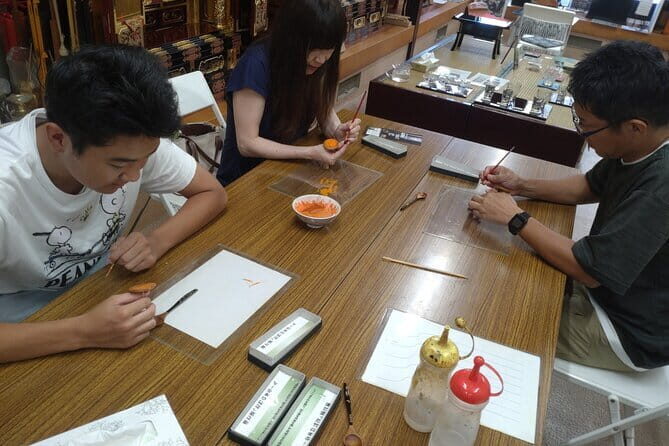
This is a family-run operation, led by 4th-generation brothers: Satoru Tsuji (lacquer artist) and Ryo Tsuji (sculptor). The workshop’s spirit is described as unchanging principles in a changing world. In practice, that means you’ll hear about tradition—and then you’ll see how the shop adapts its approach for real learners today.
You also get the big picture that helps your brain lock onto what you’re doing. Uozu lacquerware has been around for about 400 years, so even if your class is short (about 2 hours), you’re not learning isolated steps. You’re learning techniques inside a craft tradition with a long memory.
One subtle but important point: the workshop uses a mix of tradition and new ideas. That’s not just a slogan. For example, even though you’re doing lacquer decoration, the class uses substitute lacquer for safety—while still keeping other materials authentic (more on that soon). It’s a “learn it now, understand it deeper” approach.
What You’ll Make: A Keyaki Teaspoon with Maki-e Details
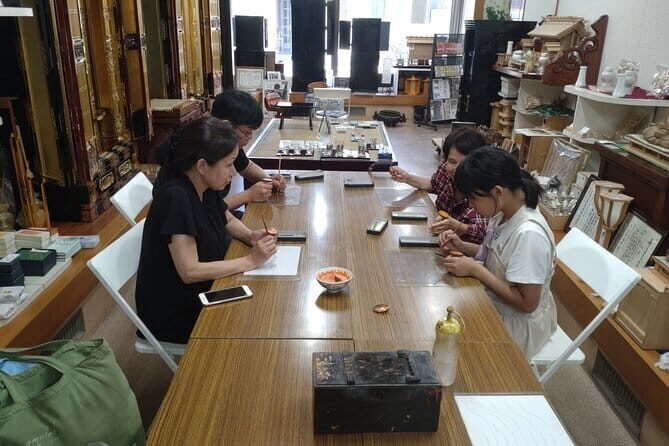
Your final project is a teaspoon made from keyaki (zelkova) wood. That matters because keyaki is known for being used in fine Japanese crafts. Even if you don’t know the wood type going in, you’ll feel the point of the selection once you’re holding a carved, ready-made base and applying delicate decoration.
The design process is straightforward in concept:
1) a picture is painted on the spoon using a lacquer brush, and
2) gold and silver powder is applied to complete the look.
In other words, you’re not trying to invent a design from scratch. You’re learning the technique of getting clean paint strokes and then understanding how the powders are used to create the final effect.
There’s also a key craft term woven into the materials: the workshop uses real maki-e brushes. Maki-e is the classic lacquer-art world where brushwork and fine decoration meet. Even within a short experience, being able to work with proper tools helps you respect what makes the craft look right—not just what makes it shiny.
Hands-On Class: Painting, Then Dusting Gold and Silver
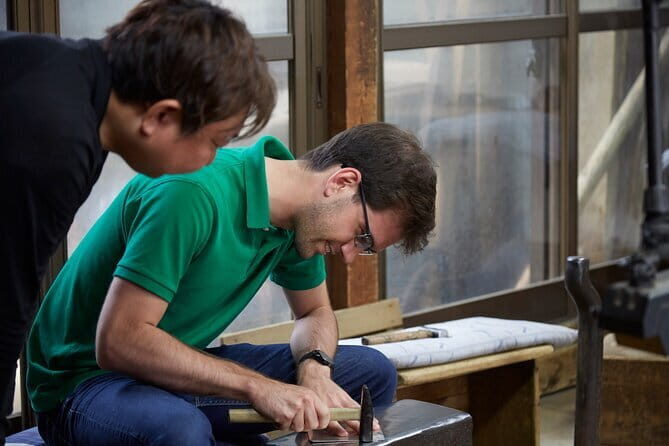
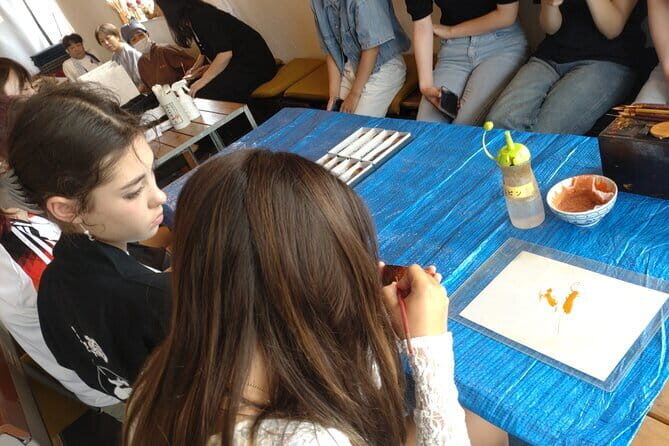
The hands-on part follows a clear rhythm, and that’s good news if you’re worried about being clumsy. The experience is designed so that even people who aren’t naturally steady with a brush can participate.
Here’s what happens, in practical terms:
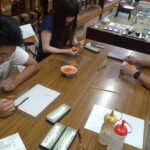
- You’ll paint a picture on the keyaki teaspoon using a lacquer brush.
- After the painted part, you add gold and silver powder as the finishing step.
The useful part isn’t only the end result. It’s how you’re guided through the sequence. Watching the teacher’s approach once, then trying it with guidance, is how you get better quickly. The class also runs with both English and Japanese-speaking support, and the explanations are given in layman’s terms, so you’re not left decoding instructions through gestures.
One more thing I appreciated from the way this class is taught: it’s not rushed. The tone is patient, and the focus is on helping you replicate the teacher’s artistry at your own pace. If you’ve ever had a craft class where you’re scared to make mistakes, this feels less like that. You’re given a method, then supported while you try to copy it faithfully.
The Behind-the-Scenes Tour of Brushes and Carving Tools
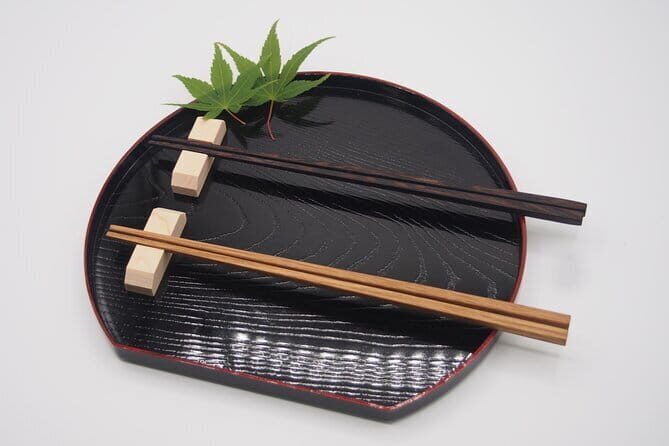
The craft experience includes more than the classroom moment. There’s a workshop tour fee included, and you’ll get a behind-the-scenes look at how the shop works.
What you can realistically expect to see:
- explanations of lacquer tools and processes,
- views of the workshop layout and workstations,
- and attention to details like brush-making and different carving tools used in the broader craft workflow.
In the reviews that describe the experience, the strongest takeaway is how much detail you get about the craft behind the scenes—especially tools. If you like seeing how things are actually made (not just the final product), this part is where you’ll feel like you got more than your money’s worth.
You’ll also likely appreciate the shop’s craft mix. While your hands-on activity is about lacquer decoration on a spoon, the workshop is also a place of woodcarving and sculptural craft. When you understand how those disciplines connect, your spoon becomes more than a souvenir. It’s a small piece of a larger craft ecosystem.
How the Use of Substitute Lacquer Changes the Experience

Here’s the practical compromise the workshop makes to keep the class safe and accessible. Instead of using real lacquer, they use a substitute lacquer so small children can participate without the risk of allergic reactions.
For you, that means two things:
- The experience is more approachable if you’re worried about allergies or sensitivities.
- The class shifts some focus away from “this is the exact same hazardous material production uses” and toward “this is how the technique works, taught safely.”
At the same time, the decorative materials are authentic. Even though the base lacquer is substitute, you still use:
- real maki-e brushes, and
- pure gold and silver powder.
So you’re not giving up the core look. You’re still creating the visual result that makes Uozu lacquer special. You’re just doing it in a format that’s easier for more people to try.
Price, Group Size, and Timing: Is $55.28 Good Value?

The price is $55.28 per person for a session that runs about 2 hours. The value equation is better than it looks at first glance because it includes multiple pieces in one:
- the experience fee (your spoon creation),
- the workshop tour fee,
- and support from an English and Japanese-speaking guide.
Small-group format also matters. The max group size is 8 travelers, so you get real attention while you paint and apply powders. In craft classes, that’s often the difference between “I made something” and “I actually learned how to make it look right.”
Another small detail: confirmations happen quickly (within 48 hours, depending on availability), and you receive a mobile ticket. That reduces friction, especially if you’re building your Toyama day plan around a few different activities.
Finally, bookings are usually made about 13 days in advance on average, which is a hint that slots can go. If you’re set on doing it, don’t wait too long.
Good Fit: Who Will Enjoy This 2-Hour Spoon Workshop
This experience is best for people who want craftsmanship with context. If you like:
- traditional Japanese tools and processes,
- small, hands-on art projects,
- and learning something that’s clearly part of a working shop,
…then you’re in the right place.
It’s also a smart option if you’re traveling with kids or anyone with concerns about allergies, since the workshop specifically uses substitute lacquer for safety. The class is described as something most travelers can participate in, and it’s built to handle beginners.
Who might feel less satisfied?
- If you want a large, complex finished piece, remember your project is a single teaspoon.
- If you’re only interested in pure traditional lacquer chemistry (not substitute approaches), the substitute lacquer choice may feel like a tradeoff.
But for most people, the combination works: you get a real craft moment plus a real workshop tour, in a short time, with bilingual support.
Practical Notes for Visiting the Workshop in Toyama
The meeting point is at 4-10 Kanauramachi, Uozu, Toyama 937-0054, Japan. The activity ends back at the meeting point, so it’s easy to plug into a Toyama schedule without needing a complicated hopscotch of transfers.
You’ll have a guide available in English and Japanese, which is a big deal in craft experiences. Lacquer technique can include vocabulary you won’t guess correctly on your own. Having translation means you spend your energy on the spoon, not on figuring out what step comes next.
If you’re planning your day: allow enough time to enjoy the tour portion. This isn’t just “do it fast, leave fast.” The shop explains tools and processes, and you’ll want those minutes.
Should You Book This Uozu Teaspoon Craft Session?
Book it if you want a short, hands-on craft that comes with genuine workshop context. You’re getting:
- a family-run shop with deep roots since 1913,
- a lesson in Uozu lacquer tradition,
- real materials like maki-e brushes plus pure gold and silver powder,
- and a small-group class designed to support beginners.
Don’t book it if you’re chasing a large end product or you’re set on only traditional lacquer materials in the strictest sense. The substitute lacquer choice is part of the experience design, not a hidden detail.
My take: this is a strong “one afternoon, one skill” stop. You’ll leave with a decorated teaspoon you made, plus a clearer sense of how lacquer and woodcarving craft actually move through a real shop.
FAQ
What is the experience in Toyama?
It’s a lacquer art workshop where you create a teaspoon using a keyaki spoon base, lacquer brush painting, and then gold and silver powder to finish.
Where does the experience start?
The meeting point is 4-10 Kanauramachi, Uozu, Toyama 937-0054, Japan.
How long does the session take?
The duration is about 2 hours.
What is the price per person?
The price is $55.28 per person.
Is there a tour included or only the hands-on activity?
The experience includes both the workshop tour fee and the experience fee, plus a bilingual guide.
What materials are used for the decoration?
The process uses a lacquer brush to paint on the spoon and then applies gold and silver powder. The workshop also uses real maki-e brushes and uses substitute lacquer for the lacquer portion.
How many people are in a group?
The maximum group size is 8.
Is this experience available with English support?
Yes. It includes an English and Japanese speaking guide.
What if I need to cancel?
You can cancel for a full refund if you cancel at least 24 hours before the experience start time. Free cancellation is offered, with the policy based on local time.