REVIEW · ISHIGAKI
Kitesurfing with Unforgettable Views at Ishigaki island
Book on Viator →Operated by Sandy feet kitesurfing · Bookable on Viator
Kitesurfing with wind and mountain views is a real treat. In Ishigaki, the session is built for first-timers, with IKO international kitesurfing certified instructors and a clear safety system before you ever control the kite. I also like that the instruction is set up for beginners regardless of strength, starting at age 8, so you’re not just watching from the shore.
The main thing to consider is that this experience depends on good weather. When the wind isn’t right, your session may shift or be refunded, so I’d avoid locking in rigid plans for that day.
In This Review
- Key highlights you’ll care about
- Ishigaki kitesurfing near Kabira: why the views matter
- Jetto and Shiku run the show with safety you can feel
- Your 1-hour lesson: what the flow usually looks like
- Gear included: what you get and why it’s good value
- Wind power and first-timer confidence
- Lunch after you kite: a local Japanese meal plan (not included)
- Price and value: $70 for an IKO-guided first session
- Logistics that make the day easier
- Who should book this kitesurfing session in Ishigaki
- Should you book Sandy feet kitesurfing on Ishigaki?
- FAQ
- What’s included in the kitesurfing lesson?
- How long is the lesson?
- Is lunch included?
- Do you offer pickup?
- What age can participate?
- Where do we meet, and how does it end?
Key highlights you’ll care about
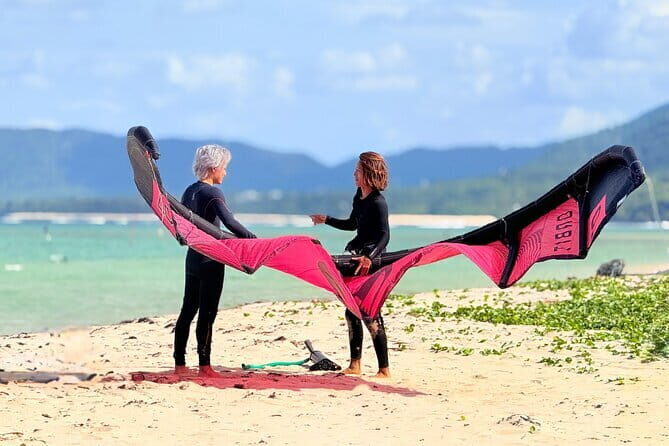
- Two IKO-certified instructors (Jetto and Shiku) for structured, safety-first coaching
- Gear included: wetsuit, life jacket, and helmet, plus the kitesurf equipment
- Beginner-friendly format: learn how it works, then get time to fly and control the kite
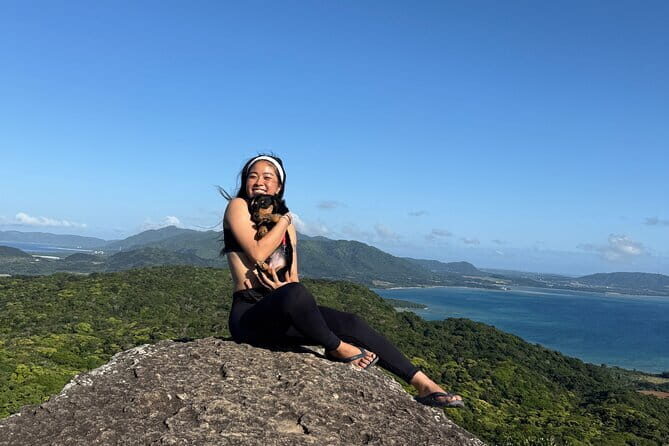
- Kabira-area views: open ocean plus mountain scenery that makes even a short session feel special
- English guide and a private setup for your group
- Optional lunch plan at a local Japanese restaurant nearby (lunch cost not included)
Ishigaki kitesurfing near Kabira: why the views matter
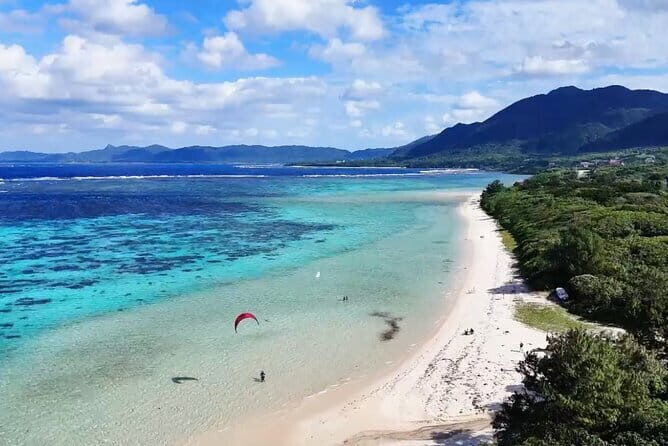
If you’re choosing Ishigaki for anything other than beaches, you’re probably after variety. You get that mix of big open water and mountains in the background, which changes the whole vibe of a watersport lesson. Kitesurfing isn’t just about the board. It’s about timing, wind feel, and confidence. In a place like Ishigaki, those moments feel more memorable because the scenery stays in your peripheral vision the whole time.
And there’s a practical upside too. When you can clearly see what’s happening—kite position, wind direction, the shoreline—learning gets easier. Your guides focus on getting you comfortable fast, so you spend less time second-guessing and more time practicing control.
You can also read our reviews of more tours and experiences in Ishigaki.

Jetto and Shiku run the show with safety you can feel
This is coached by Sandy feet kitesurfing, and the instruction follows IKO (International Kiteboarding Organization) lesson management standards. In the small world of kitesurfing, IKO guidance is a big deal because it pushes instructors to teach the sequence properly: safety first, then skills, then confidence.
In particular, I like that you’re not thrown into the deep end. Expect a briefing that covers how the system works and what safety procedures to follow. One review notes how quickly a total beginner felt like they were making progress, and that usually comes from having the fundamentals explained clearly before you start moving on the water.
Names you may hear on the day: Jetto and Shiku. Both are mentioned as strong guides and instructors, and that matters because good teaching can turn a scary moment into a doable one. Also, your kit includes a helmet and life jacket, which adds comfort right away.
Finally, the age range is broad. You can go at 8 years old and up, and the experience is described as suitable regardless of age or strength. That’s helpful if you’re booking with mixed abilities in your group.
Your 1-hour lesson: what the flow usually looks like
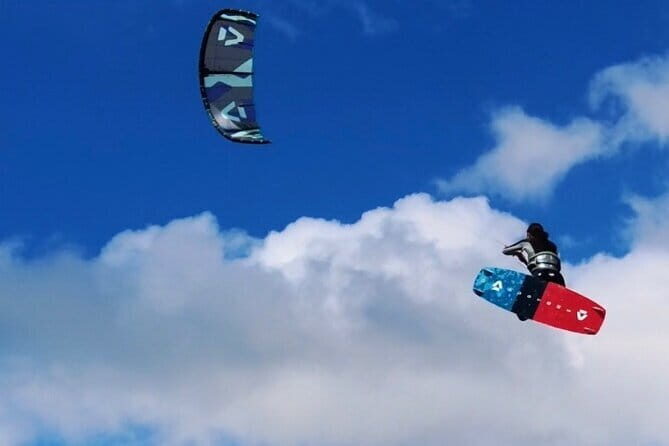
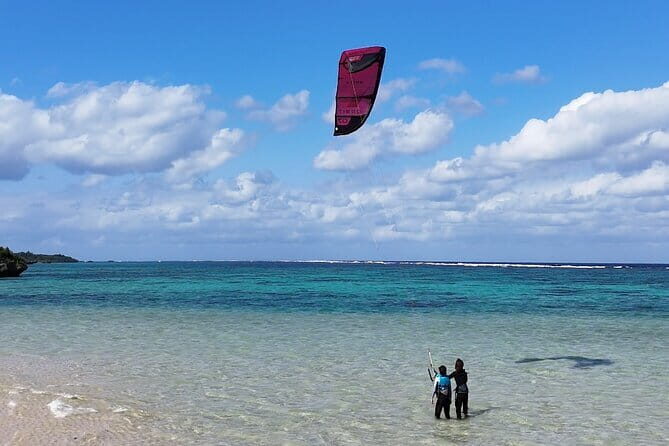
Your session is listed as about 1 hour, and the rhythm is simple. You’ll start on land to understand the kite and the safety steps, then move into actually flying and controlling it.
Here’s the practical breakdown of what to expect:
- Meet and get kitted up
You meet at 1218-146 Kabira, Ishigaki, Okinawa 907-0453, Japan. Then you’ll get the wetsuit, life jacket, helmet, and the kite equipment. Having the gear sorted for you is one less thing to stress about.
- How it works + the safety system
Before you fly anything, you get taught the setup and the safety rules. This is the stage that makes the rest less chaotic, especially if you’ve never tried kitesurfing.
- Learn kite control basics
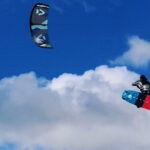
You’ll then practice flying the kite and learning how wind power translates into movement and control. Reviews repeatedly point out that it looks simple until you’re actually doing it—and that’s exactly why this step matters.
- Time to get a real feel
Once you can manage the kite safely, you get your chance to feel the wind power and steer your actions. Even if you only have an hour, the goal is to give you a real first connection, not just a demo.
One interesting detail from reviews: one group started with a 1-hour lesson and decided to extend to a 3-hour session because they got hooked quickly. That suggests the training is engaging and confidence-building enough that longer practice may be possible when conditions work.
Gear included: what you get and why it’s good value
For $70, you’re not just paying for a wake-up-and-go activity. You’re getting the essential safety and comfort gear, including:
- Kitesurfing lessons
- Equipment
- Wetsuit
- Life jacket
- Helmet
- English guide
That matters because with watersports, gear and safety are usually where “cheap” gets expensive fast. Here, you don’t have to hunt rentals, and you don’t have to bargain for basic protection. The wetsuit also helps you stay comfortable while you learn, especially if the water and breeze are cool.
As for what you should wear: plan on bringing basic swimwear underneath. Since the wetsuit is provided, you’ll feel more comfortable if you keep your clothing simple and easy to adjust on arrival.
Wind power and first-timer confidence
Kitesurfing has a reputation for looking effortless on video. In real life, the wind changes the whole equation. One review calls out a powerful wind and emphasizes that what seems easy is actually challenging. That’s a good sign, not a bad one. It means you’re learning the real skill: control under pressure.
In Ishigaki, you’ll also appreciate how the environment supports learning. With open ocean and visible landmarks, you can understand where you are relative to the shoreline and what the kite is doing. When instructors teach control while you can see the bigger picture, you build confidence faster.
The biggest confidence boost isn’t a trick move. It’s knowing you can manage the kite without panicking. When your lesson is structured around safety and proper kite handling first, you end the session feeling like this sport is learnable—not just something for people who were born on a board.

Lunch after you kite: a local Japanese meal plan (not included)
A good lesson can make you hungry fast, and this one comes with a built-in option. After kitesurfing, you can be taken to a local Japanese restaurant for lunch. The lunch itself is not included in the tour price, but the operator can handle the recommendation and transport arrangement (pickup is offered as part of the experience).
Why I think this is smart: once you’ve burned energy and got wind-stirred, you’re usually not in the mood to plan dinner from scratch. Instead of hunting around Kabira right after your session, you can keep things simple and go straight for a real meal.
Practical tip: if you extend your kitesurfing time (some people do), ask your guide how that affects the timing for lunch. Since lunch cost isn’t included, you’re free to pick what you want once you’re seated.
Price and value: $70 for an IKO-guided first session
At $70 per person, this lesson is positioned as a starter experience with real instruction and real gear. For most beginners, the value comes from three places:
- You get safety equipment (life jacket and helmet) included
- You get wetsuit and equipment, not just a lesson lecture
- You get an English guide plus an instructor team working to IKO training standards
The duration is about 1 hour, so the goal is to leave you with a strong first experience, not to make you fully independent on day one. If you know you’re going to love it, look at this as a fast way to find out. One review mentions extending to a longer 3-hour lesson after getting addicted, which is exactly what a good beginner session should enable.
Also, note the booking lead time: on average it’s booked about 13 days in advance. That’s a sign the activity is popular enough that you shouldn’t wait until the last minute, especially if your Ishigaki dates are fixed.
Logistics that make the day easier
This is a private tour/activity, meaning only your group participates. That can matter a lot for beginners because you get clearer instruction and less waiting around.
A few other practical points:
- Pickup is offered, which can reduce stress on arrival
- There’s a mobile ticket for easier check-in
- The meeting point is in Kabira at 1218-146 Kabira
- It’s described as near public transportation, so you’re not completely car-dependent
- Service animals are allowed
There’s also a weather reality check. The experience requires good weather. If conditions are poor, you’ll be offered another date or a full refund—so keep some flexibility in your schedule.
Who should book this kitesurfing session in Ishigaki
This experience is a strong fit if:
- You’re a true beginner or returning after a break
- You want structured learning with safety guidance
- You value coaching that follows IKO standards
- Your group includes different ages or comfort levels (8+ is accepted)
- You’d like a private, low-awkwardness setting with an English guide
It might be less ideal if:
- You’ve scheduled a day with zero flexibility due to weather
- You only want passive sightseeing and don’t want to spend time in wetsuit gear and instruction
If you do book, go in with the right mindset. Expect wind, expect challenge, and expect the first “wow, I did that” moment to come after you learn how to manage the kite safely.
Should you book Sandy feet kitesurfing on Ishigaki?
If your goal is to try kitesurfing in a place with standout water-and-mountain scenery, this is a well-priced way to do it. The instruction is built around safety and IKO standards, and the gear setup is included—so you get a real learning experience without extra rentals or guesswork.
I’d recommend booking if you can handle the weather-variable nature of the sport and you want more than a one-time demo. If you end up loving it, the fact that at least one group extended to a 3-hour session is a strong hint that confidence builds quickly here.
FAQ
What’s included in the kitesurfing lesson?
The package includes kitesurfing lessons, equipment, a wetsuit, life jacket, and helmet, plus an English guide.
How long is the lesson?
The experience is listed as about 1 hour.
Is lunch included?
No. Lunch is not included, but the operator can take you to a good local Japanese restaurant.
Do you offer pickup?
Yes, pickup is offered.
What age can participate?
The experience accepts participants from 8 years old and up.
Where do we meet, and how does it end?
You meet at 1218-146 Kabira, Ishigaki, Okinawa 907-0453, Japan, and the activity ends back at the meeting point.