REVIEW · TAITO CITY
Made from flour in 30min! Ramen-noodle Making Experience!
Book on GetYourGuide →Operated by SOBAGIRI楽常 · Bookable on GetYourGuide
If you like hands-on food, this fits. You’ll cut noodles by hand with a big knife in a bright open studio in Asakusa—fast, clean, and surprisingly fun. I love the 30-minute noodle lesson (no day-ruining time commitment), and I love that it’s real technique, not just watching. One thing to consider: if you need to avoid gluten or have a buckwheat allergy, this experience won’t work for you.
This is built for practical travel schedules. You get reception, wash-up, noodle making, then staff cook your bowl so you can actually enjoy what you made. The small group format keeps it focused, with enough space that it feels like a studio—not a cramped side room.
And yes, you’ll likely get a little flour on your sleeves. That’s part of the deal. The good news is the setup is tidy, and the photo process is handled professionally so you don’t have to worry about ruining your phone.
In This Review
- Quick hits before you book
- 50 minutes in Asakusa: fast, not rushed
- Finding SOBAGIRI-RAKUJYO on Kappabashi Kitchenware Street
- What makes the studio feel doable: space, order, and real instruction
- The 30-minute noodle lesson: from flour to thin strips
- Safety and skills to be aware of
- Turning your noodles into ramen: broth and flavor choices
- One free drink and all-you-can-eat Japanese snacks
- Photo-friendly workshop that doesn’t punish your phone
- Price and what you really get for $57
- Who should go (and who should skip)
- Booking and timing: small-group calm
- Should you book SOBAGIRI-RAKUJYO?
- FAQ
- How long is the ramen making experience?
- What’s included in the price?
- Can I choose different ramen flavors?
- Is there an English guide?
- Is the experience wheelchair accessible?
- Are there allergy restrictions?
- Can I come in just to watch without participating?
- What are the rules for kids?
- Where is the meeting point?
Quick hits before you book
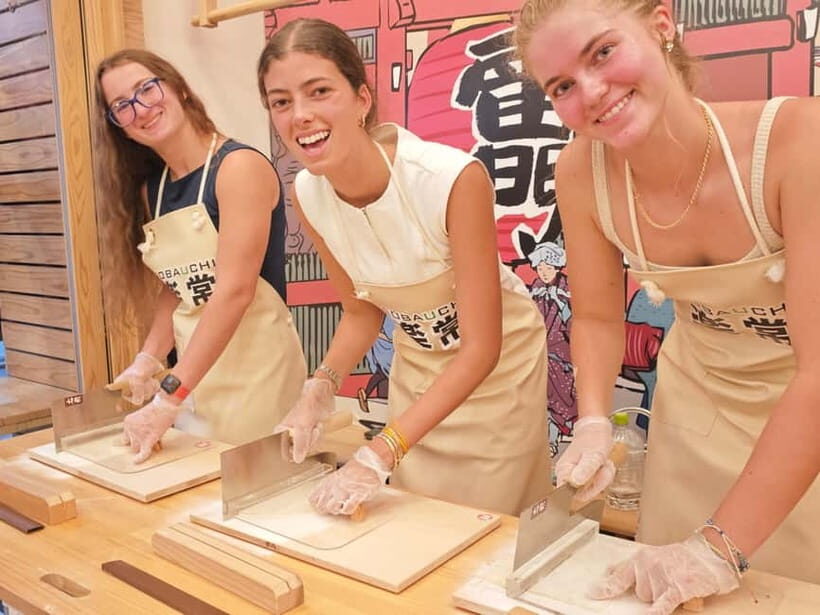
- Manual knife noodle cutting you do one strip at a time, not just press dough in a machine
- 30 minutes to master the basics of mixing, kneading, stretching, and cutting
- Bright, clean open kitchen studio on the first floor in Kappabashi (no grim workshop vibe)
- Multiple ramen styles for your bowl, including soy, miso, shio, and vegan options
- One free drink plus all-you-can-eat Japanese snacks while you eat
- Professional workshop photos via QR code so your phone stays cleaner
50 minutes in Asakusa: fast, not rushed
The class is designed around your sightseeing day. Total time is about 50 minutes, and the core activity is 30 minutes of noodle making. After that, staff cook the broth and assemble your ramen while you relax with the food stage.
I like this pacing because it’s long enough to learn something real. You’re not just doing a quick demo. At the same time, it doesn’t swallow an entire afternoon when Asakusa already has plenty to see.
Plan to arrive early. You’re asked to check in about 10 minutes before your reserved time, then you wash your hands before you start. If you’re the type who runs on transit time, build in a buffer—Kappabashi’s streets are easy to walk, but you’ll want calm when you’re about to handle flour and equipment.
You can also read our reviews of more tours and experiences in Taito City.

Finding SOBAGIRI-RAKUJYO on Kappabashi Kitchenware Street
This experience is in Kappabashi, the tool-and-kitchenware district near Asakusa. The meeting point is specific: it’s diagonally across from a food sample specialty store with a large beetle objet d’art on Kappabashi Kitchenware Street.
It’s also about a 25-minute walk from Sensoji Temple, depending on your route and how often you stop for snacks. If you’re already planning a Kappabashi stroll, this slots in nicely without requiring special transportation.
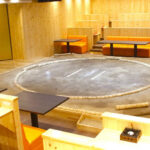
Inside, the vibe matters. The studio is described as spacious and open on the first floor, with a bright, clean, stylish look. You won’t feel like you’re in a dim, dusty back room. The space is said to accommodate up to 30 people at once, but your actual experience is in a small group capped at 6 participants, which helps keep the instruction personal.
What makes the studio feel doable: space, order, and real instruction
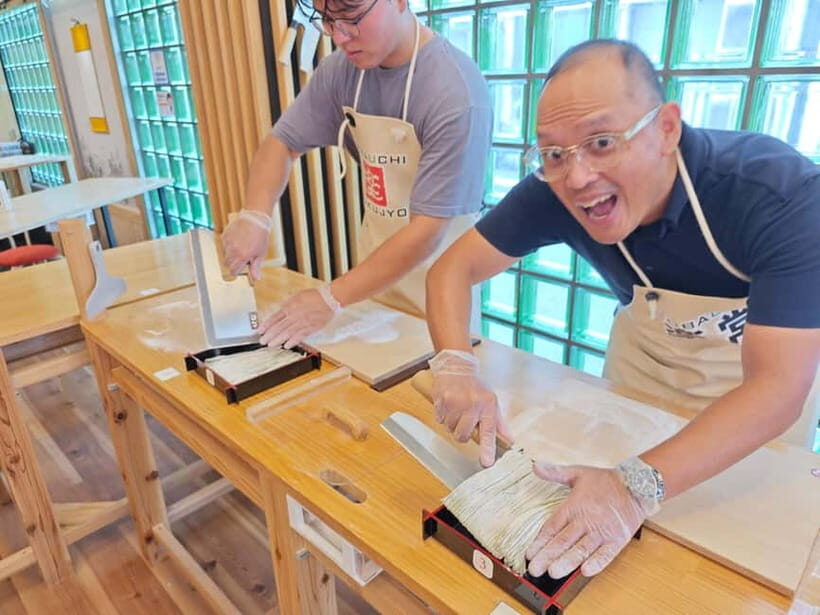
A hands-on food class can go one of two ways: either it’s organized, or it feels chaotic. Here, the setup is built for control. You work in a system table environment, and the experience emphasizes safe, careful technique—especially because you’ll be handling a large knife.
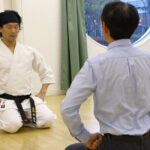
The instruction is led by staff who use Japanese and English. An English audio guide is included too, so if you miss a step, you have another way to catch up. In practice, that means you spend less time guessing and more time doing.
One detail I appreciate: they’re not just teaching you how to cut. They teach the safe, delicate way to cut noodles manually, and they do it with a tone that’s described as gentle and slightly humorous. That matters when you’re holding something heavy and you’re not used to noodle dough.
The 30-minute noodle lesson: from flour to thin strips
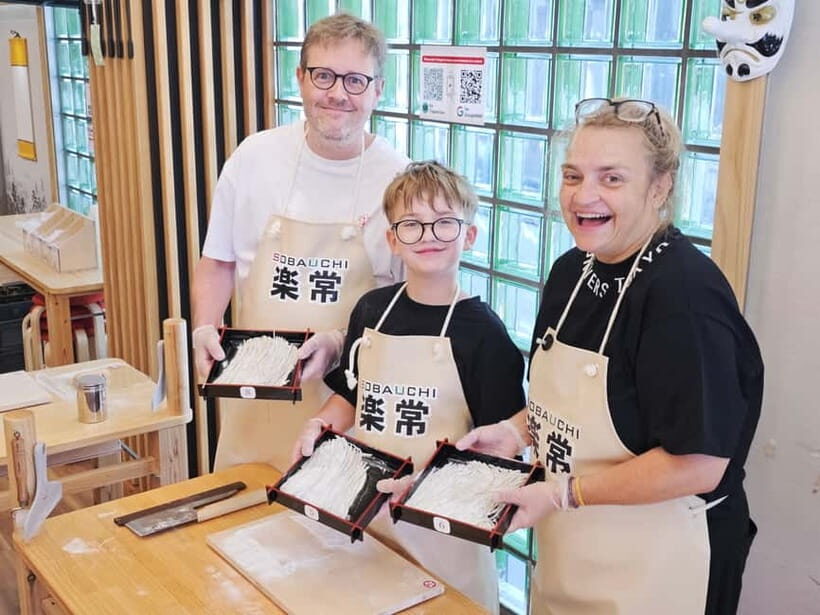
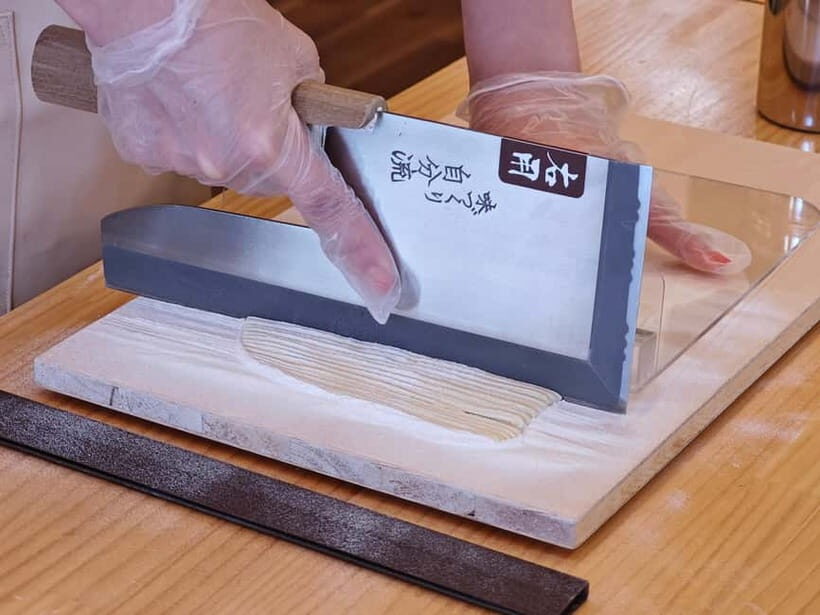
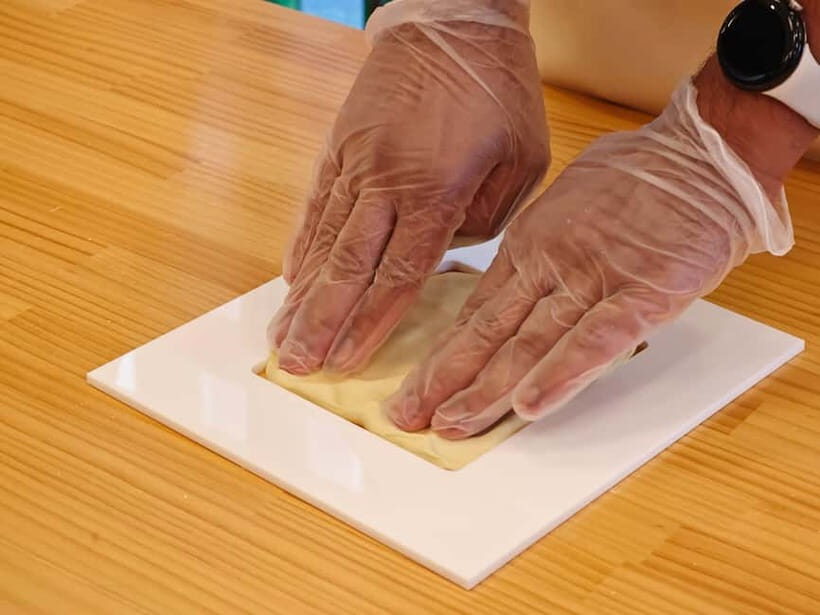
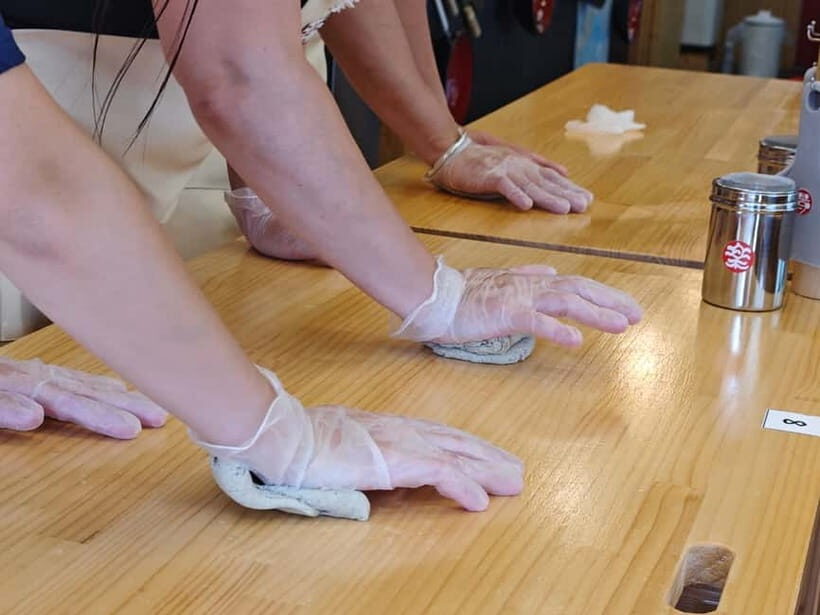
This is the heart of the experience. You’ll practice the full workflow: mixing flour with water, kneading, stretching the dough flat, then cutting thin strips using a specially designed knife for noodle cutting.
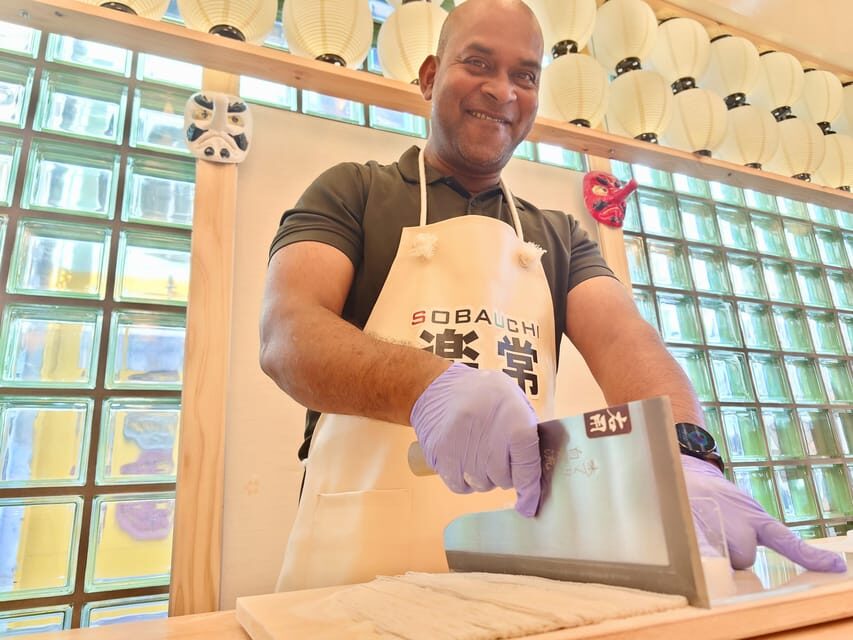
What’s different here is the method. You might have seen ramen made with a pasta machine. This one is manual: cutting noodles one by one, which is why it feels more like a skill than a gimmick.
You learn under guidance in an open kitchen studio. The goal is not perfection on your first try. The goal is the correct feel and technique—how to control thickness, keep the cuts even, and handle the dough safely. The class description also notes a newer method that helps fit the whole process into 30 minutes, which is why kids also aren’t expected to sit through a long wait.
If you’re worried about getting overwhelmed, don’t. The structure is straightforward:
- Reception and wash hands
- Noodle making (about 30 minutes)
- Cooking by staff
- Then you eat
That separation is practical. Your hands do the work, then you switch to the “I made this” part.
Safety and skills to be aware of
You are responsible for yourself during the experience, including any injuries. So go in with normal common sense: keep your focus on the task, don’t rush, and follow the staff instructions.
Also note a key rule for kids: solo child participation requires the ability to knead and to use a large, heavy knife by themselves. If that’s not realistic, kids can be paired with a parent so they can participate within the safety structure.


Turning your noodles into ramen: broth and flavor choices
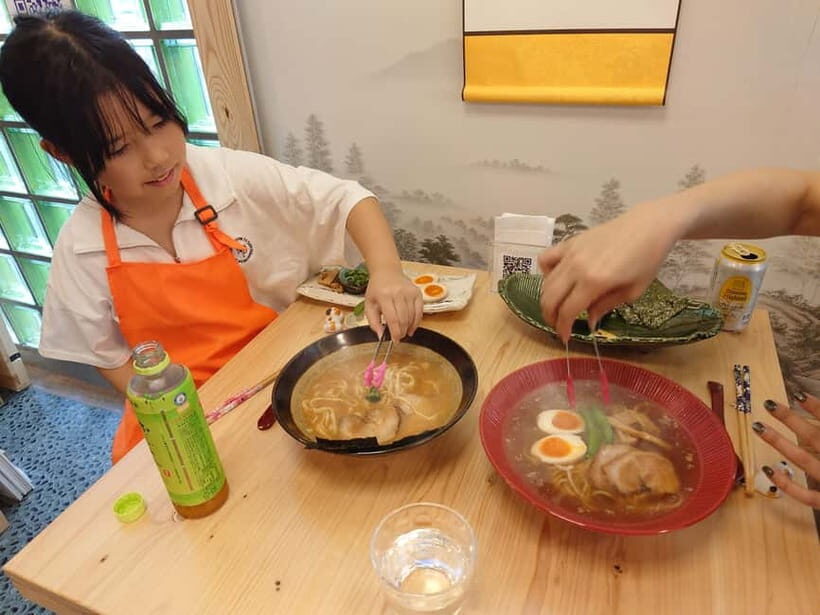
Once your noodles are cut, staff cook them. The class is designed so you can enjoy what you made in a fresh bowl rather than taking raw noodles home. The descriptions also emphasize that you’ll eat ramen made with your own noodles.
Your ramen options include:
- Soy sauce ramen
- Miso ramen
- Shio ramen
- Vegan ramen
- Vegan soup curry ramen
- Plus other choices depending on the menu day
The broth recipe is described as a trade secret, which is classic in Japan. You don’t need the exact formula to enjoy it, though. What you need is the experience of tasting the result of your cutting.
In one detailed account of the experience, the diner chose soy sauce and was impressed not just by the broth, but by the toppings like egg and pork. Even better, they said the noodles they made tasted surprisingly good—which is the real test of a hands-on class.
One more practical point: the noodles are cooked by staff after you finish cutting. That means you don’t have to fight with timing and boiling water while also trying to manage a new knife skill.
One free drink and all-you-can-eat Japanese snacks
This is where the value becomes easy. Your ticket includes one free drink, with options listed such as beer, highball, lemon sour, juice, and non-alcoholic beer. If you want something specific, scan the choices when you sit down and pick early, since refills aren’t included.
Then there are all-you-can-eat snacks from Japanese manufacturers at the eating space. That turns the meal into more of a relaxed food break than a strict “class and leave” setup.
If you’re pairing drinks with ramen, think simple. Choose your drink first, then treat snacks like a pre-bowl nibble or a small side while you wait for your ramen to be cooked.
Photo-friendly workshop that doesn’t punish your phone
Flour + phones is a classic problem. Here, the workshop includes professional-style photos taken during the session. They’re shared by QR code, and one account even mentions ingenious edits.
That’s a big quality-of-life detail. It means you don’t need to balance filming with flour handling. You also end up with photos that actually look like a workshop moment, not just a shaky video of someone holding dough.
If you care about travel memories, this is worth noting. You’re going to have fun during the cutting, but the photos let you capture the moment without ruining your device.
Price and what you really get for $57
The price is $57 per person for a 50-minute experience. That can sound steep until you break down what’s actually included.
You’re paying for:
- Instruction in manual noodle cutting with a specialized knife
- A hands-on 30-minute process that ends in a bowl of ramen you eat
- Staff cooking after your cutting
- One drink
- All-you-can-eat Japanese snacks
Also, it’s a small-group format (limited to 6 participants). Small group teaching is often the difference between learning and merely participating.
Two cost notes to keep in your pocket:
- Drink refills are not included
- Cost of meal for attendants isn’t included
So if you’re traveling with someone who won’t take the class, plan on that person either ordering separately or deciding if they’ll join the activity.
Who should go (and who should skip)
This class is a good match if you want a hands-on food skill you can actually picture yourself repeating later. It’s also a strong fit for families when kids can handle the safety requirements and time commitment.
It’s also wheelchair accessible, so physically getting in shouldn’t be an issue based on the provided info.
On the other hand, skip this if any of these apply:
- You have a gluten intolerance (not suitable)
- You have a buckwheat allergy (not allowed to participate)
- You have a cold (not suitable)
- You’re bringing very young children: the experience lists not suitable for babies under 1 year, and it also flags children under 2 years and under 3 years
A final practical fit check: this is not an observation-only workshop. You generally can’t enter just to watch. If you want the atmosphere without participating, you’ll be disappointed unless you also plan to order the meal.
Booking and timing: small-group calm
The class runs at starting times based on availability, and you select a schedule when you book. The experience also offers free cancellation up to 24 hours in advance for a full refund, and a reserve-and-pay-later option to keep plans flexible.
While the “paper rules” are one thing, what matters on the day is showing up ready. Arrive 10 minutes early, wash your hands, and go into it with the right mindset: you’re learning a new technique, not trying to win a noodle competition.
One outlier note from an arrival story: there was a report of a schedule being canceled by the owner when someone arrived. That’s not the overall pattern from what’s shared here, but it does underline a simple rule: keep your booking confirmation handy, and be early enough to handle any last-minute adjustments calmly.
Should you book SOBAGIRI-RAKUJYO?
Book it if you want an Asakusa food experience that’s active, structured, and time-friendly. 30 minutes of real noodle cutting plus a bowl you actually eat, along with a free drink and snacks, makes the ticket feel practical rather than performative.
Skip it if you’re not able to eat gluten or you have a buckwheat allergy. Also skip if you’re hoping for a pure spectator experience—this is built for participation, with enough equipment handling that observation-only doesn’t fit the model.
If you’re traveling as a couple or small group, it’s especially workable because the class is limited to 6 participants. Families can also do well, as long as the kid requirements for kneading and knife handling are met, or a parent can pair in a way that fits the rules.
FAQ
How long is the ramen making experience?
The experience runs for about 50 minutes total, including about 10 minutes for reception before the activity and 30 minutes for ramen noodle making, followed by cooking and meal time.
What’s included in the price?
Your ticket includes the ramen noodle making experience, a meal of ramen cut by yourself, one free drink, and all-you-can-eat Japanese snacks.
Can I choose different ramen flavors?
Yes. The experience lists multiple options such as soy sauce ramen, miso ramen, shio ramen, vegan ramen, and vegan soup curry ramen.
Is there an English guide?
Yes. The instructor works in Japanese and English, and an English audio guide is also included.
Is the experience wheelchair accessible?
Yes, it’s described as wheelchair accessible.
Are there allergy restrictions?
Yes. If you have buckwheat allergies, you’re not allowed to participate. The experience is also listed as not suitable for gluten intolerance.
Can I come in just to watch without participating?
No. It’s stated that it’s not possible to enter for observation only, so you should plan to order your meal and participate.
What are the rules for kids?
Children who want to participate solo need the ability to knead and use a large, heavy knife by themselves. If that seems difficult, kids can be paired with a parent, and an adult must accompany each child.
Where is the meeting point?
Meet diagonally across from a food sample specialty store with a large beetle objet d’art on Kappabashi Kitchenware Street. The experience is in the open kitchen studio on the first floor of the store in Kappabashi, Asakusa.