REVIEW · TAITO CITY
Tokyo Asakusa sightseeing and history walking tour
Book on GetYourGuide →Operated by 廣瀬和雄 · Bookable on GetYourGuide
Asakusa clicks fast in just 90 minutes. You’ll meet at Kaminarimon, then walk past Nakamise Street and into the big spiritual landmarks with clear, human explanations of how the neighborhood works. Expect storytelling that connects temple routines, festival origins, and the everyday food culture you’ll actually notice as you wander.
I especially like two things: the way the tour keeps the religious contrast straight (Sensō-ji vs Asakusa Shrine) and the way it feeds you practical guidance on what to eat and where to shop. With a guide like Hirose-san (廣瀬和雄), you also get help with photos and small etiquette details, not just stop-and-snap sightseeing.
One drawback to consider: language quality can vary. One German-speaking booking reported limited German and more broken English than expected, so if you’re traveling with kids or you need German for every key moment, it’s smart to be a little flexible or double-check expectations when you book.
In This Review
- Key highlights worth your attention
- Why this 90-minute Asakusa walk feels more personal than a checklist
- Meeting at Kaminarimon: how to find the group quickly
- Nakamise Street: where food culture becomes a map
- Sensō-ji Temple: the Buddhism side, explained so you don’t feel lost
- Asakusa Shrine: Shinto rituals and the story behind Sanja Matsuri
- Asakusa Kingyo and Hogei-sen: short photo moments that still teach the area
- The food and shopping guidance that actually saves time
- Photography help: more than pointing at landmarks
- Price and value: $19 for what you actually get in 90 minutes
- What to bring and how to set yourself up for a smooth walk
- Who should book this Asakusa tour, and who might want something else
- Should you book this Tokyo Asakusa sightseeing and history walking tour?
- FAQ
- How long is the Tokyo Asakusa sightseeing and history walking tour?
- Where do I meet the guide?
- How much does the tour cost?
- Is this a private tour?
- What languages are offered?
- What should I bring?
- Can children join?
- What’s included, and what isn’t?
Key highlights worth your attention
- Buddhism vs Shinto explained on the ground at Sensō-ji and Asakusa Shrine
- Festival backstory that makes Sanja Matsuri easier to understand
- Photo stops plus free time built into the walk, so you can breathe without rushing
- Local back lanes and alley-level “how to find stuff” tips
- Gourmet recommendations and snack guidance, not just sightseeing
- A guide who knows etiquette and how to get good shots, including patient photo help
Why this 90-minute Asakusa walk feels more personal than a checklist
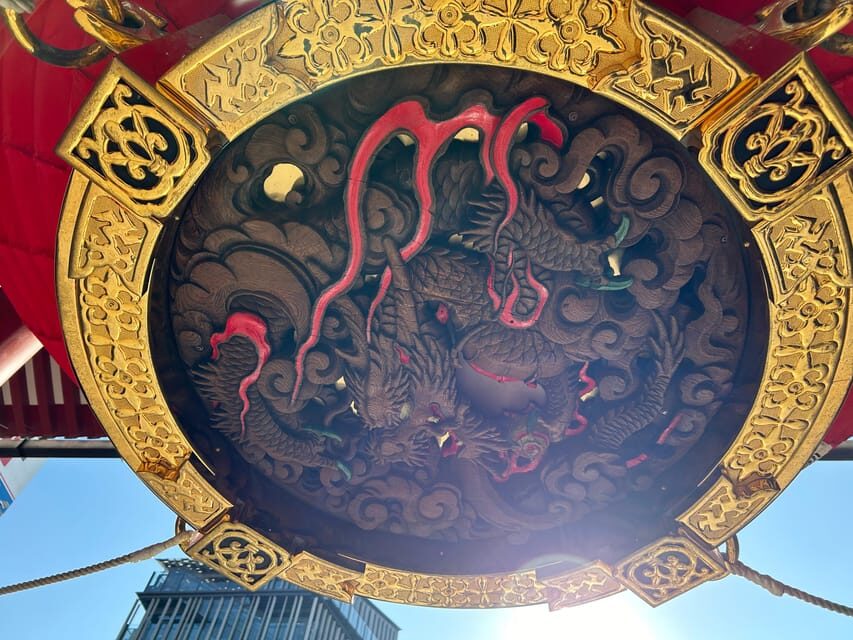
Asakusa is one of those Tokyo areas where you can get lost in the crowd and still feel like you barely learned anything. This tour aims to fix that with a tight 90-minute loop that focuses on meaning, not just landmarks.
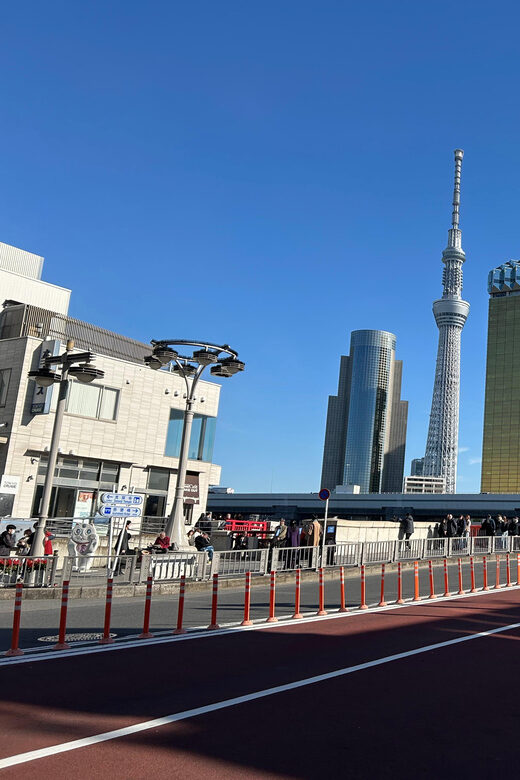
You start right by Kaminarimon, so you get oriented in minutes. Then the tour moves from the loud shopping strip (Nakamise) into the calmer, ritual-focused spaces of Sensō-ji and Asakusa Shrine. The payoff is that you start reading Asakusa differently by the end.
And yes, it’s a walking tour, but it’s not “workouts only.” There are short photo stops and breaks where you can reset your brain and take your time.
You can also read our reviews of more walking tours in Taito City

Meeting at Kaminarimon: how to find the group quickly
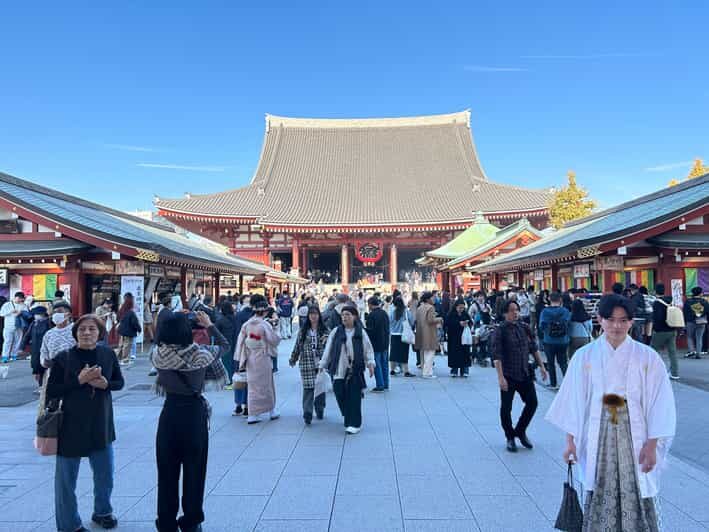
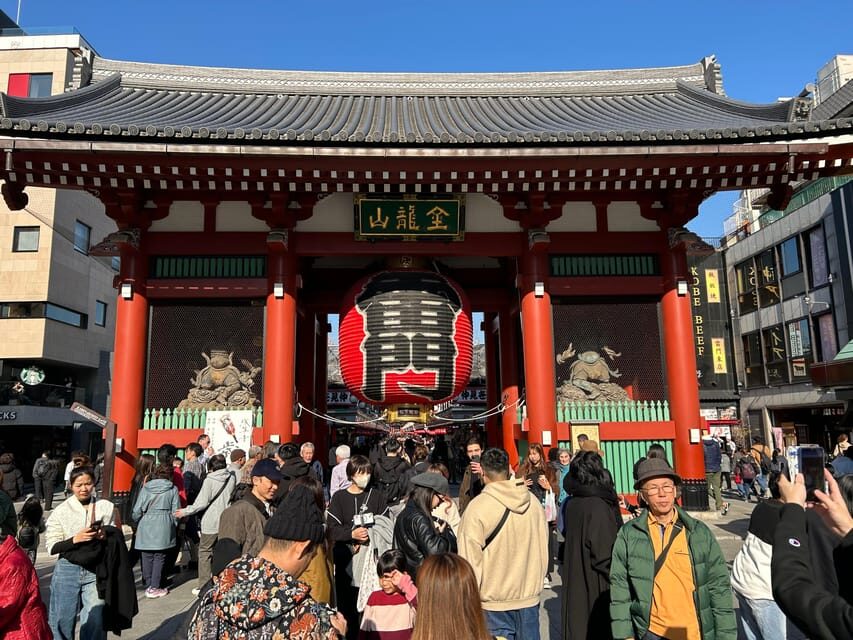
Your meeting point is at the 雷門 (Kaminarimon Gate). You’ll meet on the left side of the gate, with a GetYourGuide sign.
The practical advantage of this setup is timing. Kaminarimon is a landmark that’s easy to spot even if you’ve just arrived in Tokyo and your bearings are still loading. If you arrive 5–10 minutes early, you’ll have time to locate the sign and settle into comfortable shoes.
Also, bring water. You’re walking through a dense tourist core, and even a short tour feels longer when you’re thirsty.
Nakamise Street: where food culture becomes a map
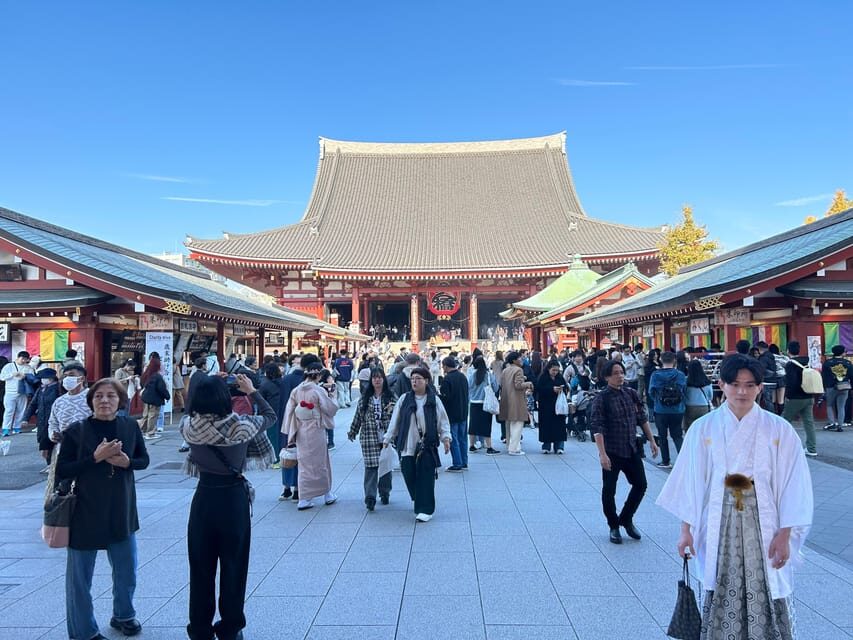
The tour takes you along Nakamise Street with time for shopping and photos. This is where Asakusa shows its everyday face: snack counters, gift shops, and the kind of impulse browsing that turns into real memories later.
What you should look for here is not just the “famous stuff.” Ask your guide what’s good today and what’s worth the extra yen. The tour explicitly includes a gourmet restaurant guide and souvenir shop information, so you’re not just wandering blindly—you’re getting recommendations that fit the area.
If you like learning through eating, this part is satisfying. Even if you don’t buy much, you’ll come away with a better sense of what Asakusa locals reach for.
Sensō-ji Temple: the Buddhism side, explained so you don’t feel lost
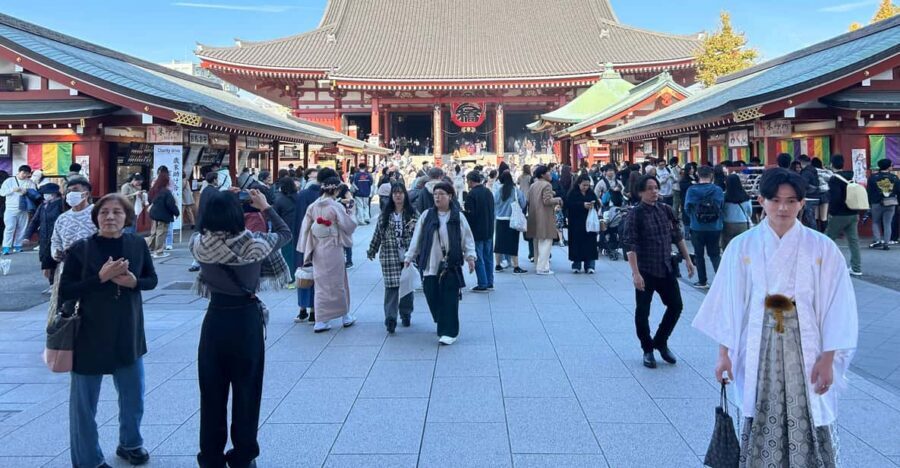
Sensō-ji Temple is the big spiritual anchor of Asakusa, and the tour spends meaningful time there with free time plus guided context. The guide also explains the difference between the two major religious sites you’ll see: Sensō-ji as Buddhism and Asakusa Shrine as Shinto.
That contrast matters. Without it, temple and shrine rituals can look like the same thing with different signs. With it, you notice the differences fast—how people behave, what the space is trying to communicate, and why certain gestures show up.
One very practical detail from the experience: you’ll learn how you’re supposed to bow and clap at the temple. Those small etiquette cues can feel awkward if you’re guessing. Having someone show you reduces the guesswork and helps you enjoy the moment instead of worrying you’re doing it wrong.
Photo-wise, Sensō-ji also gives you strong angles—especially around the main worship areas. And because the guide is experienced with photos, you’re more likely to get shots that look like you know where you’re standing.
Asakusa Shrine: Shinto rituals and the story behind Sanja Matsuri
After Sensō-ji, you move to Asakusa Shrine with a break and guided time. This is where the religion switch really clicks in your head: Shinto at the shrine, Buddhism at the temple.
The tour also focuses on the origin of the Asakusa Sanja Festival, one of Japan’s major festivals. You’ll hear the story tied to brother fishermen who used nets to pull up the Kannon statue, plus the origin connected to the shrine’s dedication. Whether you’re a festival person or not, the story turns the area’s famous traditions into something you can picture.
You’ll also get explanation about Asakusa’s architecture and changes in the cityscape. The practical value here is that old Tokyo doesn’t always look old. When you understand what changed and why, you stop treating the area like a museum backdrop and start seeing it as a living neighborhood that evolved.
If you’re visiting during Sanja Matsuri season, this added context helps you interpret what you’re seeing instead of just watching floats and costumes pass by.

Asakusa Kingyo and Hogei-sen: short photo moments that still teach the area
Not every stop here is “major landmark big.” You’ll have photo stops at Asakusa Kingyo and Hogei-sen (Whaling Ship), with guided time and then a little free time.
These sections are short by design. Their job is to deepen your sense of place beyond the headline attractions. Think of them as bookmarks—places where the guide helps you notice how Asakusa connects everyday streets to historic themes.
The key benefit: you don’t leave with only one kind of memory. You get a blend of spiritual stops and character stops, so the whole area feels like a neighborhood instead of a single photo location.
The food and shopping guidance that actually saves time
A sightseeing tour is only half the job in Tokyo. The other half is figuring out where to eat without turning your day into a guessing game.
This tour is built to help with that. It includes souvenir shop information and a gourmet restaurants guide. In real terms, that means you leave knowing what to look for after the walk ends—what to buy, where to sit, and what to try for your next meal.
The guide’s recommendations can be very specific. For example, you might be guided toward places like miso-don katsu, plus other classic Japanese options such as soba, sukiyaki, yakiniku, sushi, tempura, and eel. The point isn’t that you have to eat everything. It’s that you’ll understand what traditional meals fit the area and when they’re the right choice.
There’s also a strong “side street advantage.” One experience description highlights how the guide knows back lanes and alley-level snack spots—places tourists often skip because they can’t find them quickly. If you like Asakusa because it feels human-scale, that matters.
And yes, you may even pass by small, older-style shops. One described moment was a 100-year-old cosmetics shop connected to sake-based beauty products. Even if you don’t plan to shop, those details add texture to your walk.
Photography help: more than pointing at landmarks
One repeated theme is the guide’s ability to help with photos. This isn’t “stand here and hope.” It’s patient picture-taking and guidance on where to stand.
If you care about getting photos that look like you planned your trip, it’s a real perk. It also makes the tour easier if you’re traveling with kids or anyone who needs breaks, since the guide can adjust the pace.
There’s also a fun personal touch mentioned in the experience: the guide is a fan maker. That kind of creative local skill is a reminder that you’re spending time with a real neighborhood person, not a scripted guide reading off an app.
Price and value: $19 for what you actually get in 90 minutes
At about $19 per person for a 90-minute private-group walking tour, the biggest value isn’t the temples themselves. You can stand at those places on your own.
The value is what you’re paying for:
- a guide who explains how the rituals and festival story connect
- practical etiquette help (like bowing and clapping)
- photo support so you don’t waste your time trying to self-direct
- local food and shop recommendations so the rest of your Asakusa day runs smoother
Also, “private group” is important. Even if you end up moving with just a small group size, the experience is less rigid. You can ask questions and adjust your pace around what you care about.
What’s not included matters too. Shopping costs are on you, and transportation is self-pay. But since the tour is a focused walk, you’re not paying for rides just to see the basics.
If you want a simple, low-cost way to understand Asakusa beyond photos, this is a sensible deal.
What to bring and how to set yourself up for a smooth walk
You don’t need special gear, just the basics that make city walking pleasant.
Bring:
- Comfortable shoes (you’ll be on foot for the full experience)
- Water
- Weather-appropriate clothing
If you’re sensitive to crowds, start with a calm mindset. Asakusa is always popular around the main gates and shopping areas. The good news is that the tour’s timing and breaks help you manage it.
Also, since there’s some free time at Sensō-ji and Asakusa Shrine, you can step aside, rehydrate, and take photos without feeling like you’re constantly falling behind.
Who should book this Asakusa tour, and who might want something else
This fits best if you:
- want temple and shrine context that’s easy to follow
- enjoy food guidance and want a next-meal plan
- like photo help and short breaks built into the walk
- prefer a local perspective over a strict script
It may be less ideal if:
- you’re extremely language-dependent and need fully consistent interpretation in a specific language for every sentence
- you’re already deep into Asakusa lore and want long museum-level detail (this is designed to be efficient, not exhaustive)
If you’re traveling with kids, the tour includes child pricing (children under 3 join free; children from 3–12 get a 50% discount). And one described experience notes the guide was understanding when a child needed rest.
Should you book this Tokyo Asakusa sightseeing and history walking tour?
If your goal is to understand Asakusa fast—what to notice, how to behave, and what to eat right after—you’ll likely appreciate this tour. The mix of religious explanations, festival origin storytelling, and real guidance on food and shopping is exactly what makes a short walk feel worth your time.
I’d especially recommend it if you want a guide who can explain the differences between Sensō-ji and Asakusa Shrine without turning it into a lecture. And if photos matter to you, the guidance and patience are a genuine bonus.
FAQ
How long is the Tokyo Asakusa sightseeing and history walking tour?
It’s 90 minutes.
Where do I meet the guide?
You meet at 雷門 (Kaminarimon Gate), on the left side, with a GetYourGuide sign.
How much does the tour cost?
The price is $19 per person.
Is this a private tour?
Yes, it’s a private group tour.
What languages are offered?
The live guide speaks English, German, and Japanese.
What should I bring?
Wear comfortable shoes and bring water. Dress for the weather.
Can children join?
Yes. Children under 3 can join free of charge, and children from 3–12 years old get a 50% discount.
What’s included, and what isn’t?
Included are the tour guide, a walking tour, free photos, classic sightseeing spots, souvenir shop information, and a gourmet restaurant guide. Shopping costs and transportation expenses are not included.