REVIEW · MATSUMOTO
Matsumoto Castle Tour & Soba Noodle Experience
Book on Viator →Operated by Welcome Matsumoto · Bookable on Viator
Castle walls and noodles you cut yourself. This Matsumoto combo blends a visit to Matsumoto Castle with hands-on soba-making guided by a soba master, ending with you eating the noodles you made. It is a simple plan, but it feels big because you get both the story and the flavor in one go.
I really like two things here: first, the chance to visit Matsumoto Castle (a National Treasure) without you having to sort out entry details on your own. Second, you do the work—kneading, using tools, cutting soba—and then you taste hot and chilled versions right after, including options like tempura with the meal.
One thing to consider: the soba-making part uses a shared portion based on a minimum 500 grams, so you are not getting an entirely solo dinner experience. Also, drinks and extra snack-type sides like oyaki are not included, so you may want to budget a little extra if you get hungry.
In This Review
- Key Things to Know Before You Go
- Matsumoto Castle Entry You Can Pair With Real Hands-On Food
- How the Soba-Making Workshop Moves From Dough to Cut Noodles
- Why Using the Soba Tools Matters More Than It Sounds
- Tasting Your Own Soba: Hot, Chilled, and With Side Options
- What the Group Size Feels Like in Real Life
- Timing That Works: A Castle Hour, Then a Soba Hour
- Price Check: Is $93.93 Worth It?
- Who Should Book This Tour (And Who Might Skip It)
- Should You Book Matsumoto Castle & Soba Noodle Experience?
- FAQ
- How long is the Matsumoto Castle and soba experience?
- What is included in the tour price?
- What is not included?
- Where do I meet for the tour?
- How big is the group?
- Is the ticket digital?
- What soba tasting options are available?
- Is free cancellation available?
Key Things to Know Before You Go
- National Treasure time first: Castle entry is built into the experience, so you start with the main historic stop.
- A two-stage format: about an hour to prepare and cut soba, then about an hour to eat what you made.
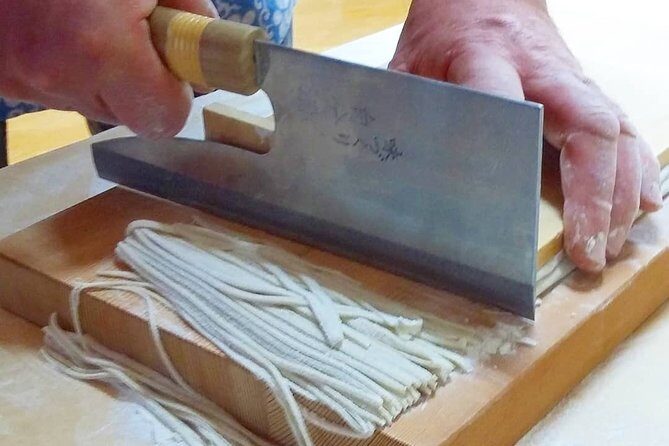
- Real tools and real cutting: you learn the process fast, step-by-step, with a soba-making master.
- Hot or chilled tasting: you can sample soba in different styles, not just one bowl.
- Small group size: maximum 15 people overall, plus hands-on work organized around pairs.
Matsumoto Castle Entry You Can Pair With Real Hands-On Food
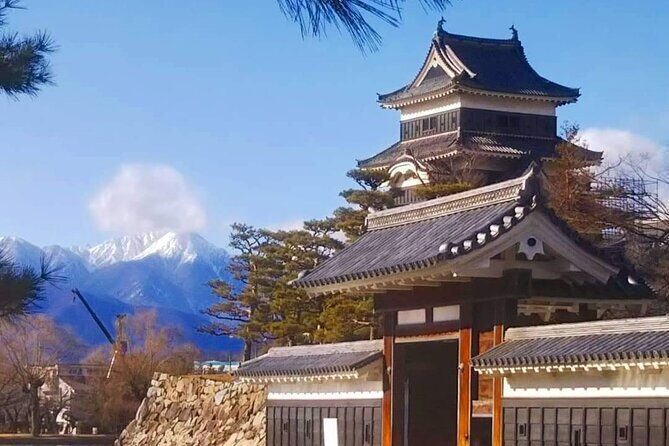
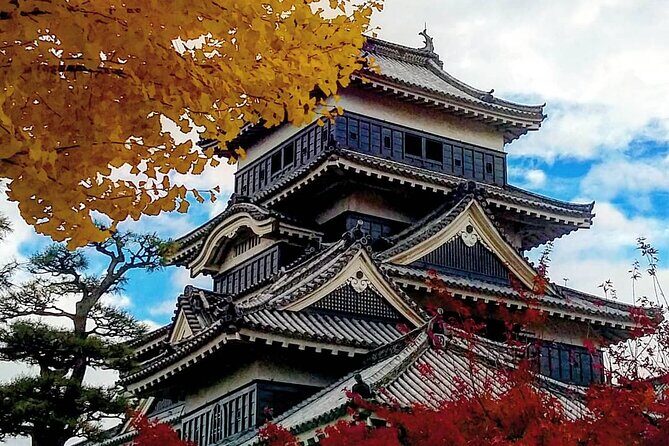
If you are building a Matsumoto day, this tour is a smart one because it ties together two kinds of culture: the feudal past and everyday food craft. You start at the Matsumoto Castle Admission Ticket Counter near public transportation, then you head into the castle before the cooking starts.
Matsumoto Castle has the kind of presence you notice from across the area, but the payoff is getting inside and seeing the layout. Even if you are not the type to read every label, you still come away with a better sense of how this kind of stronghold was designed and used. The whole point is timing: you do the sightseeing part first (about an hour), when you are fresh, and then you switch gears to something practical and hands-on.
Also, the tour format helps. Because the castle entry is included, you do not waste time figuring out tickets or timing once you arrive. It is one less moving part—especially useful if you are juggling other stops in Nagano.
You can also read our reviews of more tours and experiences in Matsumoto.
How the Soba-Making Workshop Moves From Dough to Cut Noodles
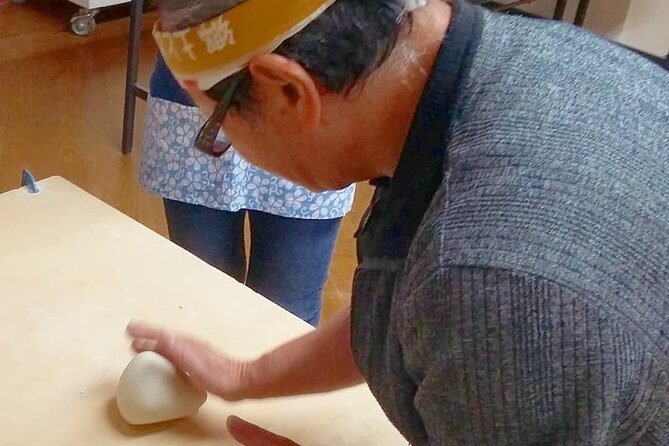
After the castle visit, the activity switches into two clear stages. Plan for about 3 hours total, with roughly one hour on making and cutting soba, then roughly one hour eating it.
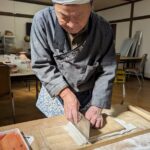
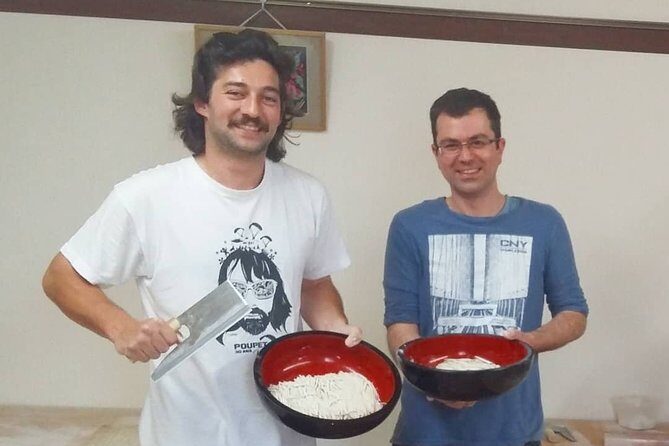
First stage: Preparing and cutting the soba. You start with a short video intro that explains the steps from dough prep to cutting the noodles. Then you get moving quickly. A soba master guides you through the stages, including how to use the tools properly. This is not a talk-only demo. You learn by doing.
You should expect the session to feel focused and paced. That is not a bad thing. Soba-making is a craft with a few key movements, and the class is built around helping you get the core technique without stretching it into a half-day hobby. You get the practical sequence, then you move on to tasting, so the experience ends with a payoff.
Why Using the Soba Tools Matters More Than It Sounds
A lot of cooking classes tell you what to do. This one makes you use the equipment. That matters because soba is partly about texture and handling. Tools help you keep consistency and rhythm, and that is what separates good homemade noodles from a clumsy experiment.
The class is designed around a shared setup for pairs, and there is a minimum amount needed for soba preparation: 500 grams is required, and the soba-making experience includes a shared serving suitable for 2 or 3 people (described as a bucket for 2 people). Translation: you will not be cooking a lone basket of noodles by yourself. Instead, you work through the process together, then split the meal.
This arrangement is actually useful for most people. You get the hands-on learning, you still get to taste, and the shared format keeps the class portion sensible. If you are traveling as a couple, it is especially convenient. If you are solo, you might need a quick mindset shift: you are there to learn the craft and eat together with your shared group setup.
Tasting Your Own Soba: Hot, Chilled, and With Side Options
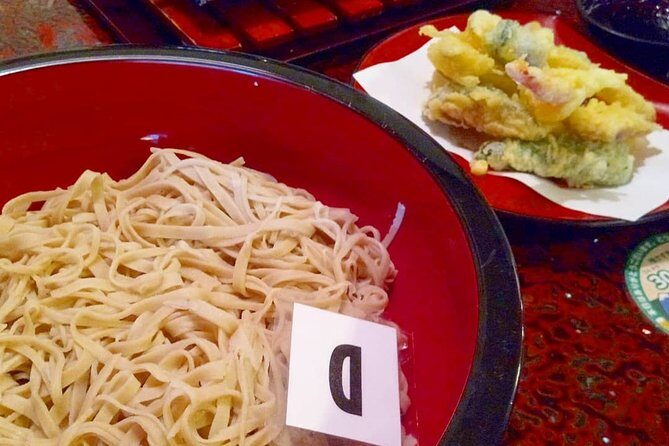
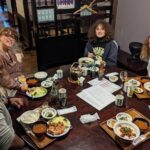
Once the noodles are cut, you head to the restaurant where the soba master cooks them. This is where the tour earns its keep. You are not just “watch and snack.” You get to see how your work becomes dinner.
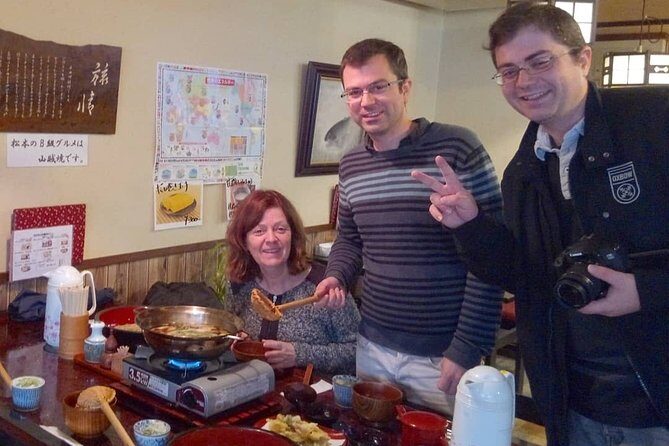
The tasting portion is built for variety. You can enjoy soba in different forms—hot or chilled—and it can come with side options such as tempura and other side dishes. That variety is a smart way to learn. You taste the same core ingredient (buckwheat soba), but different serving styles show you how texture and flavor perception change with temperature and pairings.
One practical tip: if you are sensitive to timing, arrive ready to eat soon after making. In classes like this, the cooking is scheduled right after your cutting session. If you wait too long or wander off during the transition, you may miss the best part of the tasting flow.
What the Group Size Feels Like in Real Life
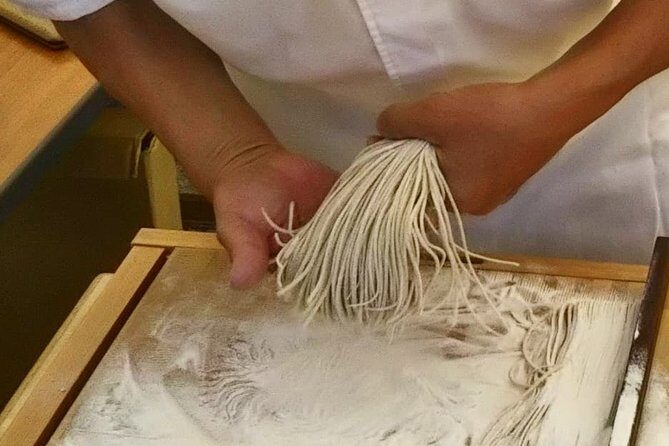
The tour caps at 15 travelers, which helps keep things from turning into a crowded zoo. And the soba activity itself is organized in small hands-on pairs, which is where you get your time with the master and the tools.
Smaller groups also usually mean fewer awkward bottlenecks while you are cutting and handling dough. You are more likely to get corrections when your technique needs it—something you can feel immediately when you are the one using the tools.
From the guide side, you may get different leaders. Some groups have described being met by Tom at the station and then guided through the way to the castle. Others have mentioned guides like Kai/Kei, as well as names like Kentaro and Carol in the broader experience. What stays consistent is that the experience is guided, not self-guided.
Timing That Works: A Castle Hour, Then a Soba Hour
This tour is about rhythm. You get roughly an hour at Matsumoto Castle, then you move into the soba workshop and tasting for the final two hours.
That structure is practical for your itinerary. It means you can pair this with other Matsumoto sights without needing to reserve a huge chunk of your day for one activity. It is also a good use of energy: castle walking tends to be straightforward; then the soba stage becomes a break from sightseeing because your focus turns to the steps in front of you.
If you are visiting in cooler months, hot soba is an obvious comfort. If it is warmer, chilled soba can feel lighter. Either way, you get choices built into the meal rather than being stuck with one bowl.
Price Check: Is $93.93 Worth It?
At $93.93 per person, this is not a budget class, but it also is not a money-spinning souvenir stop. You are paying for three real components:
- Matsumoto Castle entry/admission, which is a big part of the value
- A guided soba-making workshop with a soba master and tool instruction
- A tasting meal that includes soba prepared from the noodles you made, with options like hot/chilled and side pairings such as tempura
So the “cost per activity” lands more fairly than you might think. Many food classes charge heavily for just the lesson, while here you also get the castle component and the meal outcome.
The only caution is what is not included. Side dish items like oyaki/snacks and drinks are not included, and there can be miscellaneous expenses for snacks or souvenirs. Also, travel insurance is not included. So if you like to order drinks or add snack-style extras, plan a little buffer.
Who Should Book This Tour (And Who Might Skip It)
You should seriously consider this if you want a day that mixes history with something your hands actually do. This tour is a good fit for:
- People who like hands-on cooking more than watching
- Visitors who want a structured introduction to Matsumoto and its signature buckwheat noodles
- Couples or small groups who can enjoy the soba portion shared setup
You might skip it if you are the type who wants totally independent pacing. Because the experience is time-boxed—castle first, then making, then tasting—you do not have the freedom to linger at the castle indefinitely or decide to extend the meal on your own schedule. And if you are expecting a fully individual dinner portion, remember the workshop portion is organized around shared prep needs and a minimum amount of soba.
Should You Book Matsumoto Castle & Soba Noodle Experience?
I would book it if your idea of a great trip includes both a meaningful historic stop and a tangible food skill. The castle gives you context fast, and the soba workshop turns that context into something you can taste and remember. For the price, the best part is that you are not just learning a technique in theory—you leave with noodles you made and ate as part of the same plan.
If you book, come hungry but also bring a flexible mindset. You are working on a shared setup, and extra sides and drinks cost extra. Once you accept that, this tour makes a clean, enjoyable block in a Matsumoto itinerary.
FAQ
How long is the Matsumoto Castle and soba experience?
The experience is about 3 hours.
What is included in the tour price?
You get Matsumoto Castle entry/admission, a soba noodle making class with a soba master, and soba noodle tasting plus 1 extra.
What is not included?
Side dish items like oyaki and snacks, as well as drinks, are not included. Miscellaneous fees (like snacks or souvenirs) and travel insurance are also not included.
Where do I meet for the tour?
Meet at the Matsumoto Castle Admission Ticket Counter, 4-1 Marunouchi, Matsumoto, Nagano 390-0873, Japan.
How big is the group?
The tour has a maximum of 15 travelers. The soba-making part is organized with a shared serving suitable for 2 or 3 people.
Is the ticket digital?
Yes. The experience uses a mobile ticket.
What soba tasting options are available?
The tasting includes soba in different forms, including hot or chilled, with options such as tempura and other side dishes.
Is free cancellation available?
Yes, free cancellation is available. You can cancel up to 24 hours in advance for a full refund.