REVIEW · SHIZUOKA
Mount Fuji Full-Day Private Tour from Shimizu Port (Customizable)
Book on Viator →Operated by Xplor Japan · Bookable on Viator
A Fuji day without the chaos of group buses.
This private Mount Fuji tour from Shimizu Port strings together the classic stops that many people only ever hit one at a time, plus you get an English-speaking driver to smooth out timing and questions. I love how the day is built around view power (Chureito Pagoda area, Oishi Park, and Lake Kawaguchiko) and how the guide’s on-the-road conversation adds culture context, not just directions.
The main thing to consider is money creep: lunch isn’t included, and a couple of sights have optional or paid add-ons like Yashi no Sato and the Oshino Hakkai museum.
In This Review
- Key highlights you’ll care about
- Why Shimizu Port is the smart start for a Mount Fuji day
- First stop: Oshino Hakkai ponds, koi fish, and the view from above
- Kitaguchi Hongu Fuji Sengen Shrine: quiet time at Fuji’s base
- Lake Kawaguchiko: the water, the boats, and the best chance for big Fuji views
- Oishi Park: flower views plus that ice cream moment
- Saiko Iyashi no Sato Nemba: walking through the Healing Village
- Chureito Pagoda area: why it matters even when it’s brief
- The driver experience: why Ryu is the difference-maker
- Price and value: $800 for a group that avoids wasted time
- Getting the most from a 10-hour schedule (what to prep)
- Weather and Mount Fuji visibility: you’re planning for clouds too
- Who this private tour is best for
- Should you book this Mount Fuji tour from Shimizu Port?
- FAQ
- How long is the Mount Fuji tour?
- What’s the price and group size?
- Where do we meet and when does the tour start?
- Is pickup and drop-off included?
- Is lunch included in the price?
- Are entrance fees included for all stops?
- Does the tour depend on weather?
Key highlights you’ll care about
- Private, up to 5 people, so you can move at your pace instead of waiting in a crowd.
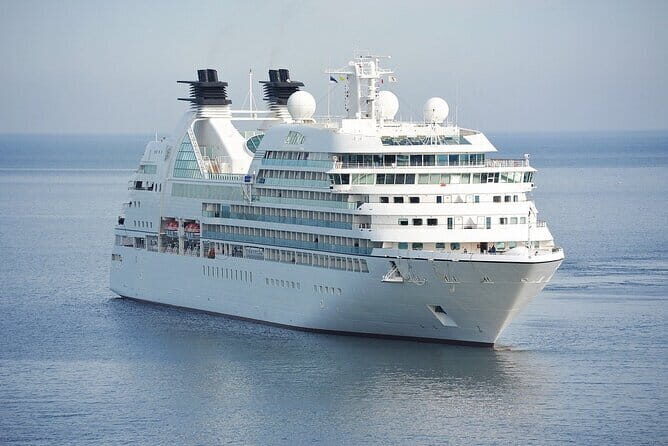
- Shimizu Port pickup and drop-off, which is a big deal if you’re on a tight port schedule.
- Oshino Hakkai ponds + rare koi fish, plus an optional museum if you want extra context.
- Lake Kawaguchiko water views, with a choice between a speed boat ride or a slower cruise.
- Oishi Park flower-season viewpoints, including a famous local ice cream stop.
- Saiko Iyashi no Sato Nemba, a reconstructed traditional village at Lake Saiko.
Why Shimizu Port is the smart start for a Mount Fuji day
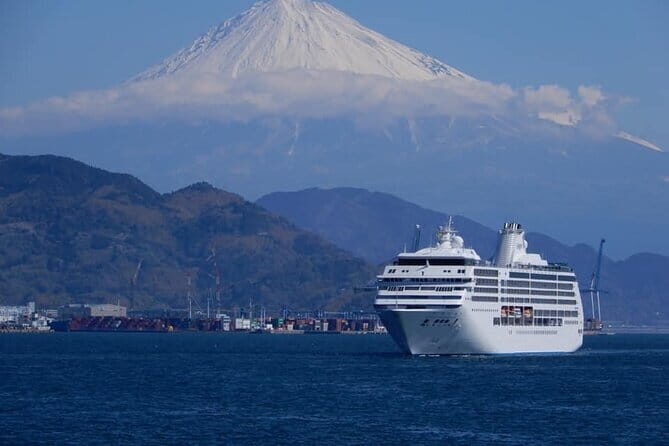
Most Mount Fuji itineraries assume you’re already closer to the Fuji Five Lakes. Starting from Shimizu Port changes the math in your favor, especially if you’re arriving by cruise or train and don’t want to waste half the day commuting. Pickup is included, and you also get the relief of being dropped back at the port when the tour ends.
This is a private setup for up to 5 people, which matters more than it sounds. You’re not stuck with a “everyone needs to be back in 10 minutes” vibe. You can ask quick questions, pause for photos, and generally keep the day moving in a sane way.
The tour runs about 10 hours, starting at 8:00 am at Shimizu Port. That length is long enough to hit several key Fuji-area sites, but it still feels like one coherent day instead of a rushed checklist.
You can also read our reviews of more private tours in Shizuoka
First stop: Oshino Hakkai ponds, koi fish, and the view from above
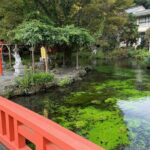
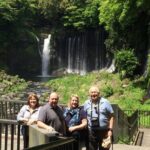
You start at Oshino Hakkai, a World Heritage Site known for eight clear ponds fed by mountain waters. If you like “wait, that’s actually this clear” water, this is your moment. The ponds also have rare koi fish, which gives the area an extra layer of life beyond scenery.
Plan for about one hour here. Admission to the main area is free, so your time is mostly spent wandering, taking photos, and spotting how the water and Fuji views line up from different angles. There’s also a museum within the complex, but it’s paid as an add-on, and you can treat it as optional.
A practical tip: Oshino Hakkai is one of those places where your first photo is never your best one. Move a bit. Watch for different sightlines toward Fuji as your position changes. That’s the kind of detail a good driver helps you with, and this tour includes an English-speaking guide who can point you toward efficient spots for pictures.
Kitaguchi Hongu Fuji Sengen Shrine: quiet time at Fuji’s base
Next comes Kitaguchi Hongu Fuji Sengen Jinja, a shrine at the mountain’s base with a calm, green feel. The schedule gives you about 30 minutes. That’s enough time to walk the grounds, look at the main hall and torii gates, and feel the shift from “photo mode” to “slow down and notice” mode.
Admission is free here, so the shrine cost is not a concern. The value is in the pacing. This stop breaks up the day so the Fuji scenery doesn’t become just another photo dump.
If you care about culture, this is also where your guide can add context. A strong guide doesn’t just say what you’re seeing. They help you understand why this kind of place matters in Japanese life and belief.
Lake Kawaguchiko: the water, the boats, and the best chance for big Fuji views
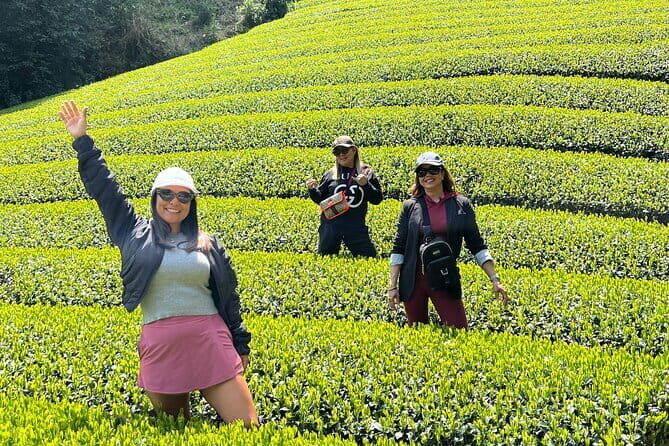
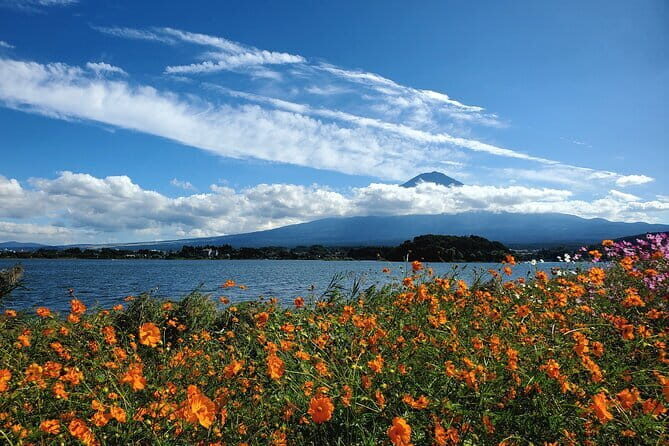
Then you move to Lake Kawaguchiko, one of the Fuji Five Lakes. It’s the “big viewing platform” type of place, with lakeside hotels and boat activity. The tour gives you about one hour on the water and nearby areas.
One of the smartest parts here is the boat choice: you can pick between a speed boat ride or a more relaxing cruise. Even if you only have an hour, the option helps you match your mood. Want motion and thrill? Go faster. Want slower photos and less rush? Choose the cruise.
Boat-related costs are not included, but the experience is built around getting you those wide Fuji angles from the lakeside. And this is where weather matters. If you get clear sightlines, Lake Kawaguchiko delivers. If you don’t, you’ll still get the lake atmosphere, just with less “Fuji poster” impact.
Oishi Park: flower views plus that ice cream moment

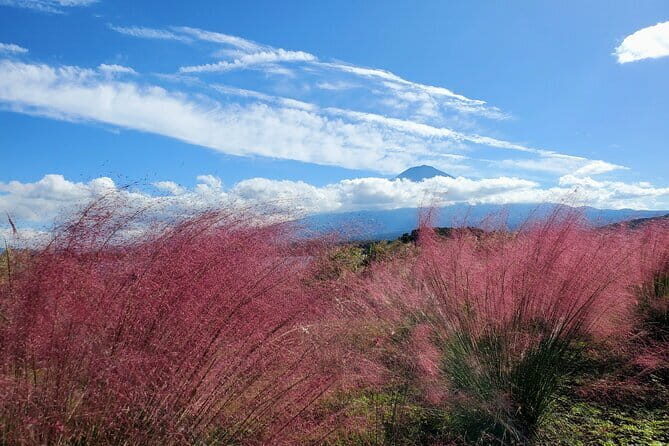
After the lake, you head to Oishi Park for about one hour. This is where you get the classic “Fuji in the background” look paired with seasonal flowers. The park is especially strong in periods when the blooms are at their best, and the timing can change what you see.
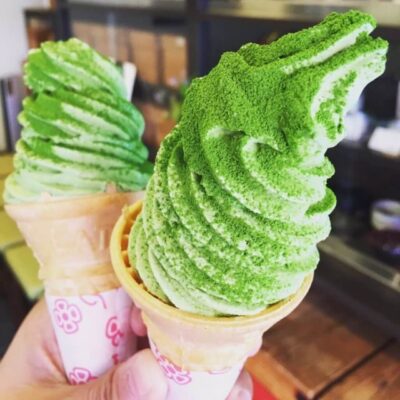
Oishi Park is also known for the ice cream in town. It’s a simple pleasure, but it’s also a smart scheduling break: you’re not sitting on a bus waiting for lunch later. You get a treat while the views are still on.
If you’re the kind of person who likes to take photos but hates standing in the same spot for 40 minutes, Oishi Park is ideal. You can reposition and get different angles quickly without losing the feeling that you’re actually exploring.
A few more Shizuoka tours and experiences worth a look
Saiko Iyashi no Sato Nemba: walking through the Healing Village
Next up is Saiko Iyashi no Sato Nemba, often described as the “Healing Village.” It’s a reconstructed traditional Japanese village on the shores of Lake Saiko. The tour gives you 45 minutes, which is a good length for absorbing the vibe without turning it into museum fatigue.
Admission for this stop is not included. You should expect an entrance fee on site (the tour notes Yashi no Sato specifically with a 500 yen charge, which is the amount you’ll want to plan for). If you’re into traditional architecture, small lanes, and the feeling of stepping into a different era, this is the stop that adds more than scenery.
If you’re more into views than culture, you can still enjoy it as a change of pace. The key is to walk with a light plan: look at the buildings, take a few photos, and don’t overthink it. The payoff is in the atmosphere.
Chureito Pagoda area: why it matters even when it’s brief
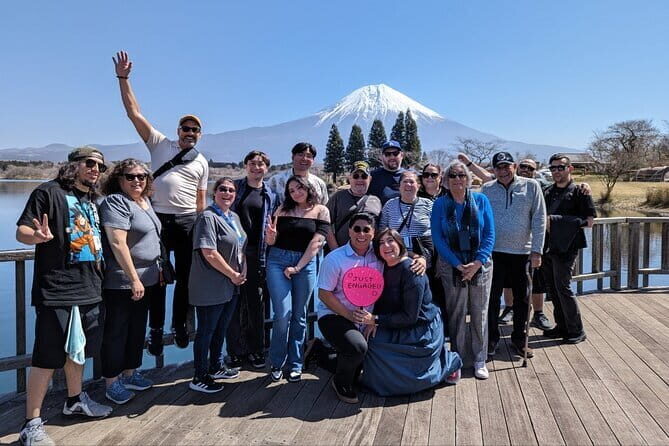
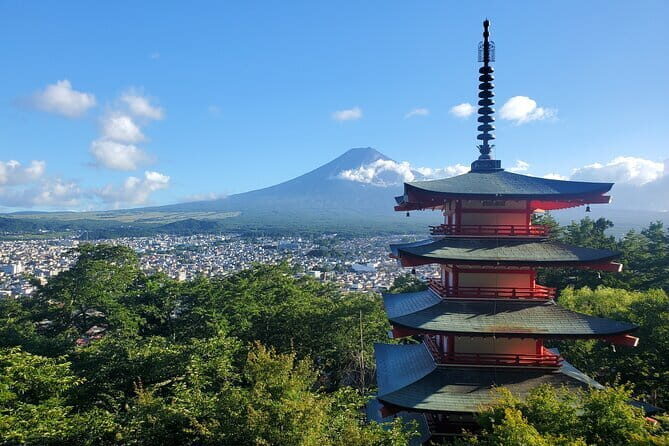
The tour’s overview mentions starting near the Chureito Pagoda area, famous for iconic Fuji compositions. Even if you don’t spend long there, it’s a useful anchor point for the day because it sets the visual theme early.
This kind of viewpoint also helps later stops make sense. Once you see the classic framing at the beginning, the day’s other Fuji spots feel like variations on the same song: different distances, different layers, different ways to line up the mountain with foreground details.
If you’re visiting on a day when Fuji is partially hidden, timing can matter even more than usual. A good guide can help you focus your effort where you’re most likely to get a clear moment rather than wasting your best light everywhere.
The driver experience: why Ryu is the difference-maker
This tour’s reviews highlight a specific strength: the driver, Ryu. What comes through is more than “knows the route.” Ryu is described as professional, attentive, and capable of explaining what you’re seeing in a way that connects to Japanese history and daily life.
That shows up in two practical ways. First, you spend less time figuring out logistics and more time enjoying the stops. Second, the explanations help you understand why a shrine, a village, or a pond system is where it is and what it represents.
Safety also comes up. Clear thinking and steady driving matter on a full day like this, especially when weather shifts. In the Fuji region, you can go from “bright and crisp” to “clouds roll in” fast, and you want a driver who keeps the day organized.
If you like your travel days to feel like a conversation with a helpful local rather than a silent taxi ride, this is a strong fit.
Price and value: $800 for a group that avoids wasted time
The price is $800 per group, up to 5 people. That means it’s not cheap if you’re traveling solo, but the value changes quickly once you split it among friends, family, or a small group.
Think about what you’re buying:
- Private transportation for a long day (about 10 hours).
- Port pickup and drop-off at Shimizu, which can be the hardest part to get right independently.
- English-speaking driver, which saves time and prevents the “which stop do we skip” stress.
- A schedule that hits multiple Fuji-area highlights without forcing you to transfer between different local bus routes.
Also, the tour includes several items that can otherwise become hidden costs or time sinks: air-conditioned vehicle, admission to key areas like Oshino Hakkai’s main entry, and free admission at the shrine and Oishi Park.
What’s not included matters too. Lunch is not included, and you’ll want to budget for:
- Yashi no Sato entrance fee: 500 yen per person on site.
- Oshino Hakkai museum: 300 yen per person, optional on site.
Lake Kawaguchiko boat costs are not listed as included, so treat boating as a choose-your-own-adventure add-on.
My take: if you want to maximize Fuji-area sights from Shimizu without spending your day in transit, private value can be real. If your priority is staying flexible and you’re comfortable planning transport and entrances yourself, you might pay less by DIY. But you’ll likely pay back the savings in time and stress.
Getting the most from a 10-hour schedule (what to prep)
A full day like this is very doable, but it only feels smooth if you come prepared. Start by planning for walking. Most of the stops are short and manageable, but you’ll be on your feet for viewing areas, paths, and village lanes.
Wear shoes you trust. Many of the best photo spots involve stepping off the main walkway for a better angle. Bring a light layer too, even in warmer months, because lakeside areas can feel cooler than you expect.
If you’re sensitive to meal timing, plan ahead. Lunch is not included, and the day’s flow gives you a few moments where you can grab food, but you shouldn’t assume a restaurant stop will happen at the perfect time for you.
For camera people: the day is built around viewpoints, so your battery and storage matter. If you’re shooting video, keep an eye on heat and wind near the lake.
Weather and Mount Fuji visibility: you’re planning for clouds too
This is a weather-dependent experience. The tour notes that if it’s canceled due to poor weather, you’ll be offered a different date or a full refund. That’s the right kind of policy for a mountain-view day.
Even with acceptable weather, Fuji can still be partially obscured by clouds. The good news is the itinerary still works as a pleasant day out: you’ll see clear ponds at Oshino Hakkai, a tranquil shrine setting, and the lakeside area even when the mountain is less visible.
The smart strategy is to treat “seeing Fuji clearly” as a bonus, not the only goal. When Fuji does show, great. When it doesn’t, you’ll still have scenery, culture, and a well-run route.
Who this private tour is best for
This tour is a strong match if:
- You’re starting from Shimizu Port and want a one-day Fuji plan without juggling transfers.
- You value a private group format for timing and comfort.
- You want a guide who can explain what you’re seeing, including cultural context.
- Your group is around 2 to 5 people, where the per-person value becomes more reasonable.
It’s also a good fit for people who like variety: shrine calm, pond clarity, lake water time, park views, and a traditional village.
If you love ultra-lingering stops and want hours at each place, this schedule might feel snug. But if you like a full, balanced day with clear highlights, you’ll probably feel satisfied.
Should you book this Mount Fuji tour from Shimizu Port?
Book it if you want a stress-light day with pickup handled, a logical sequence of Fuji highlights, and an English-speaking driver who can guide both the route and the context. The private format makes a real difference when you’re spending about 10 hours away from your starting point.
I’d skip it (or at least rethink) if you’re traveling solo and price sensitivity is high, or if you prefer DIY planning to fully customize timing and stops. Also, if you’re extremely fixed on a specific boat time or a specific photo spot, remember this is still a mountain region where weather changes fast.
For most small groups starting from Shimizu, this is a clean, efficient way to get serious Fuji-area value without turning your trip into a logistics project.
FAQ
How long is the Mount Fuji tour?
It runs for about 10 hours.
What’s the price and group size?
It costs $800 per group, and it’s designed for up to 5 people.
Where do we meet and when does the tour start?
You meet at Shimizu Port (Shinminatocho, 424-0824, Japan), with a start time of 8:00 am.
Is pickup and drop-off included?
Yes. The tour includes pick-up and drop-off at the port.
Is lunch included in the price?
No. Lunch is not included.
Are entrance fees included for all stops?
Not all of them. Yashi no Sato entrance fee (500 yen per person) is paid on site, and the Oshino Hakkai museum fee (300 yen per person) is optional and paid on site.
Does the tour depend on weather?
Yes. It requires good weather. If it’s canceled due to poor weather, you’ll be offered a different date or a full refund.