REVIEW · SHIZUOKA
Mt.Fuji area Tour from Shimizu Port /Small Bus
Book on Viator →Operated by Local Travel Partners,Inc · Bookable on Viator
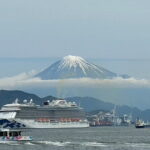
Mt Fuji feels close today. This 5.5-hour small-bus outing from Shimizu Port pairs Lake Tanuki with the Shiraito and Otodome Falls so you get Mt. Fuji views without the usual crowd. The catch: if weather turns cloudy, Mt. Fuji might be harder to see, so don’t plan your day on guaranteed skyline perfection.
What I like most is the balance. You get quiet nature at Lake Tanuki (a place local people actually camp and holiday), then you jump into the dramatic waterfall scenery tied to Mt. Fuji World Heritage. And you still make time for the spiritual side at Fujisan Hongu Sengen Taisha, known for protecting people from volcanic eruptions and as the head shrine for more than 1,300 Sengen shrines across Japan.
The logistics are built for cruise timing. This tour runs from Shimizu Marine Terminal and returns there, with an English-speaking guide and mobile ticket. In past trips, guides like Hero and Hirokane have been praised for clear communication, including ways to help you find them easily.
In This Review
- Key things to know before you go
- Price and value: what the money really buys
- Shimizu Marine Terminal start: built for cruise passengers
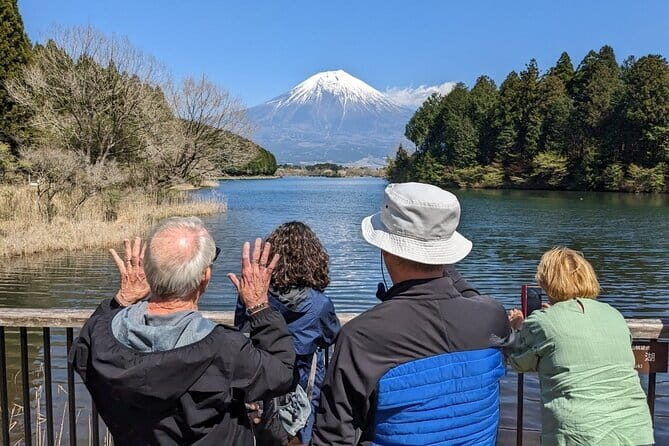
- Stop 1: Lake Tanuki—quiet Mt. Fuji views without the crowd
- Stop 2 and 3: Shiraito Falls and Otodome Falls (Mount Fuji World Heritage)
- Stop 4 and 5: Fujisan Hongu Sengen Taisha—faith tied to volcanic protection
- The guide factor: how communication shapes the day
- Group size and comfort: up to 15 people
- What’s included (and what’s not)
- Timing breakdown: how the day fits together
- Weather reality: when Mt. Fuji is hidden
- Who should book this tour
- Should you book the Mt. Fuji area small-bus tour from Shimizu Port?
- FAQ
- FAQ
- How long is the Mt. Fuji area tour from Shimizu Port?
- Where does the tour start and end?
- What sights are included?
- Is lunch included?
- How many people are on the tour?
- Is this tour only for cruise passengers?
Key things to know before you go
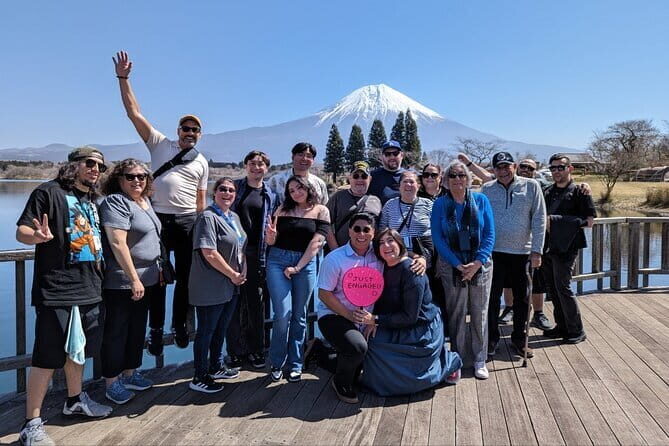
- Lake Tanuki is a quieter Mt. Fuji photo stop where cruise-ships often don’t go.
- Shiraito and Otodome Falls are close together, so you can do both without wasting time.
- Fujisan Hongu Sengen Taisha connects you to 1,300+ Sengen shrines and the shrine’s volcanic-protection legend.
- Private small-bus transport keeps the day efficient with fewer logistical headaches from stop to stop.
- You’re limited to 15 people, which makes the guide’s attention feel more personal.
- Mt. Fuji visibility depends on conditions, so come with a Plan B mindset for photos.
Price and value: what the money really buys
This tour costs $1,303.05 per group (up to 15), which means the per-person value changes a lot depending on how full the bus is. If you fill the group, it works out to roughly $87 per person; if you’re a small group, expect the effective per-person cost to be higher.
So is it worth it? For me, the value comes from three things you don’t usually get in rushed tours:
- Private transportation and parking plus highway tolls are included, so you’re not playing “guess what costs extra.”
- Admissions at each stop are listed as free, which helps keep the trip predictable.
- The itinerary is tight but not chaotic, hitting three major Mt. Fuji–area highlights in about 5 hours 30 minutes.
The main thing to plan around is that lunch is not included. You’ll want to eat either before you depart or be ready to grab something after you return to Shimizu Port.
You can also read our reviews of more tours and experiences in Shizuoka.
Shimizu Marine Terminal start: built for cruise passengers
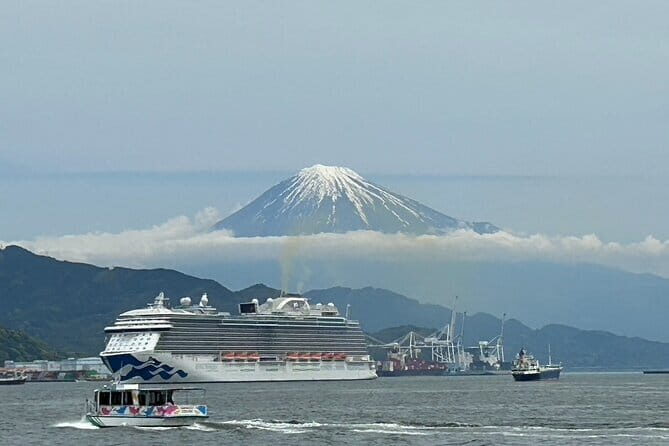
The meeting point is Shimizu Marine Terminal (Shimizu Ward, Hinodechō, 10-1080). The tour ends back at the same place, which matters a lot if you’re on a cruise schedule and can’t risk getting stuck in traffic or far from the port.
From a practical standpoint, this kind of day works best when:
- you want scenic stops without figuring out transit
- you prefer an English-speaking guide to explain what you’re seeing (especially at the shrine)
- you need a plan that fits inside a tight shore-excursion window
Also, this is designed for cruise visitors who can spend about 5.5 hours for a private tour from Shimizu Port.
Stop 1: Lake Tanuki—quiet Mt. Fuji views without the crowd
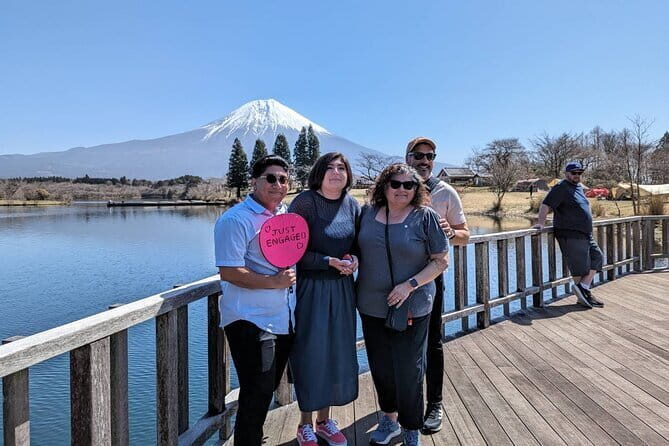
Lake Tanuki is your first big visual payoff. You travel from Shimizu Port by small bus, and you get about 1 hour 40 minutes on site. Admission is free.
Why this stop feels different: it’s described as one of the popular Mt. Fuji photo spots for photographers, but it’s still peaceful and not as tour-busy as places like Lake Kawaguchi. The best part is that it’s a local-life kind of place—people enjoy holidays and camp by the lake—so the vibe feels calmer and more “real Japan” than a curated tourist loop.
Practical tips for Lake Tanuki:
- Treat it as a photo-first stop, since the whole point is the Mt. Fuji framing and reflections.
- If you’re chasing the classic view, timing and weather matter. Even in a good day, clouds can soften the skyline.
Stop 2 and 3: Shiraito Falls and Otodome Falls (Mount Fuji World Heritage)
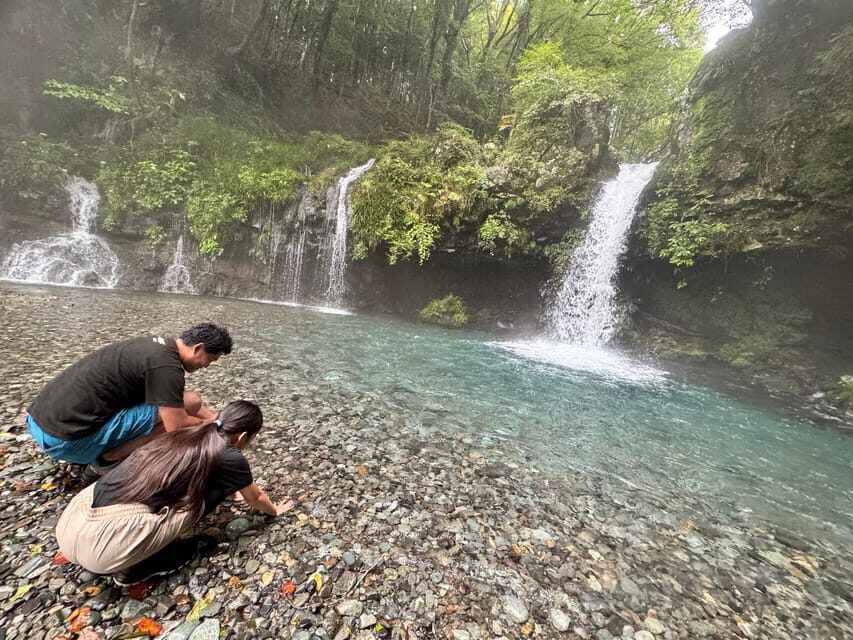
Next you head to Shiraito Falls. The timing is short at first—about 15 minutes—then you’ll spend about 50 minutes total at the falls area.
Here’s what makes this part worth your time:
- Shiraito Falls is described as part of Mt. Fuji World Heritage.
- You can visit Shiraito Falls and Otodome Falls close together, so you don’t lose your day to “transfer time.”
- It’s one of Japan’s most beautiful and popular waterfalls, with the water mostly coming from Mount Fuji snowmelt (as described in the tour notes you have).
Even if you don’t get spectacular Mt. Fuji views today, the falls themselves usually deliver. Rain can change the sound and force of the water, and the short walking between viewpoints keeps things moving.
The drawback? Because this is a concentrated stop (and your total day is timed), you won’t have hours and hours for wandering like you would on a land-based trip. Think of this as see it well and move on, not “linger all afternoon.”
Stop 4 and 5: Fujisan Hongu Sengen Taisha—faith tied to volcanic protection
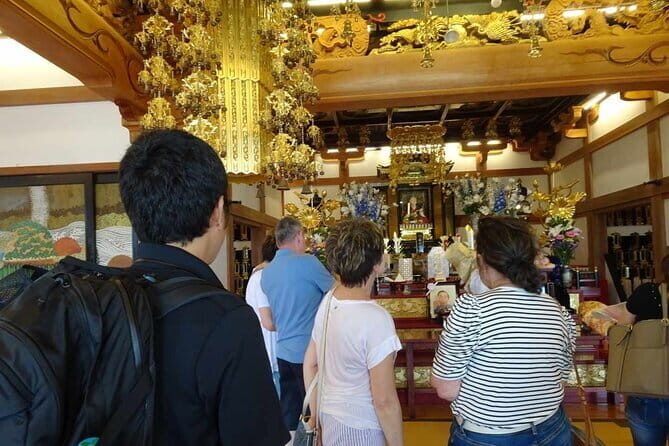
After the falls, you head to Fujisan Hongu Sengen Taisha by small bus. You’ll have about 30 minutes for the travel segment, and then about 45 minutes on-site.
This shrine is part of Mt. Fuji World Heritage, and it has a specific story that makes it more than just pretty architecture:
- It was revered for the divine virtue of quelling the eruption of Mount Fuji.
- As faith in Mount Fuji spread, it became known as the head shrine for more than 1,300 Sengen shrines throughout Japan.
- The shrine’s roots are described as going back to the 9th century, originally built for volcanic protection.
What I’d tell you to do at this stop: slow down for the explanation. In shrine settings like this, the meaning is in the details—especially when the whole identity of the shrine is tied to Mt. Fuji’s power. A good guide makes a big difference here, and the tour’s English-speaking guides have gotten strong praise for their explanations.
Also, admission is listed as free, so the value is mostly in your time and attention.
The guide factor: how communication shapes the day
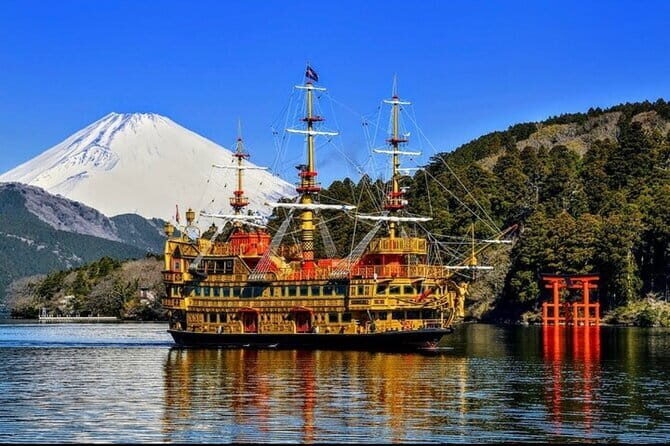
This tour includes an English-speaking guide, and the reviews in your info point to a consistent theme: guides are organized and easy to find.
One review notes that Hirokane was praised for structured communication, including sending photos so you can identify the guide and tour group quickly. Another mentions Hero as kind and detailed in explanations, and others highlight Hiroko with an amazing, knowledgeable-feeling flow.
Why that matters: when you’re touring around waterfalls and a shrine on a timed schedule, you don’t want to spend your energy figuring out where to stand, where to wait, or what to look for next. Good guidance lets you enjoy the day instead of managing it.
Group size and comfort: up to 15 people
You’ll be capped at 15 travelers per tour. That’s a sweet spot for this itinerary:
- big enough to make transport costs efficient
- small enough that you’re not lost in a crowd
- comfortable for photo timing, since the guide can help the group move in a controlled way
If you’re traveling with wheelchairs or strollers, the tour info asks you to tell them the number and the size. That’s smart, because it helps operators plan seating and access in advance.
What’s included (and what’s not)
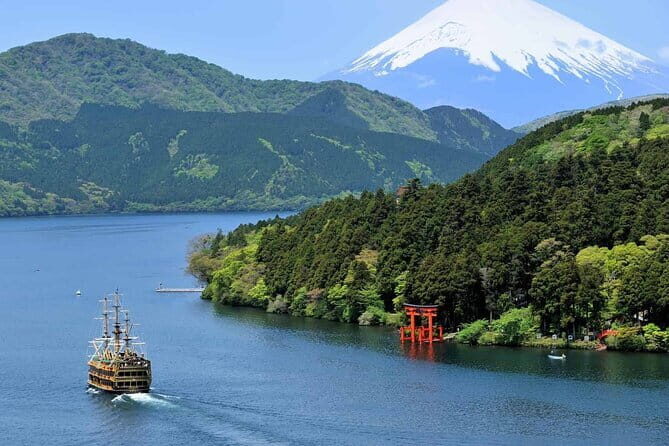
Included:
- English-speaking guide
- Private transportation by small bus
- Highway toll road fee
- Parking fees
- Admission tickets are free at each listed stop
- Mobile ticket
- The tour returns back to Shimizu Port
Not included:
- Lunch
A note from one review: in one case, the group appreciated an extra taste of yakisoba as lunch, even though lunch isn’t listed as included. Treat that as a bonus, not something you should count on.
Timing breakdown: how the day fits together
You’re looking at about 5 hours 30 minutes total. The structure is:
- Shimizu Port → Lake Tanuki (about 1h40 on site)
- Lake Tanuki → Shiraito Falls (short drive, about 15 minutes)
- Falls area time (about 50 minutes, covering Shiraito and Otodome)
- Falls → Fujisan Hongu Sengen Taisha (about 30 minutes travel), then about 45 minutes there
- Back to Shimizu Port (about 50 minutes total for the return segment)
This is ideal for cruise visitors because it’s tight enough to respect departure times, but not so rushed that you only see each stop from one angle.
Weather reality: when Mt. Fuji is hidden
One review in your info mentions a rainy day when Mt. Fuji couldn’t be seen, but the group still found the falls and the temple enjoyable. That’s a useful expectation to carry.
If Mt. Fuji is obscured, your best move is to shift focus:
- enjoy the falls sound and power
- explore shrine details and the meaning of Sengen worship
- take photos of the water and local surroundings, not just the mountain
Mt. Fuji days are never fully in your control. But a well-planned itinerary still delivers.
Who should book this tour
This is a strong fit if you:
- are on a Shimizu cruise and need a shore excursion that returns on time
- want a small group with an English-speaking guide
- like getting Mt. Fuji-area “greatest hits” without spending the day in transit
- prefer quieter nature moments like Lake Tanuki instead of only the busiest lakes
It might be less ideal if you:
- want a long, slow hiking day (this is more “stops with good viewing time”)
- are extremely sensitive to changing plans when clouds roll in (views can vary)
Should you book the Mt. Fuji area small-bus tour from Shimizu Port?
If you’re choosing between a generic big-bus tour and something more focused, I’d lean toward booking this one. The itinerary is compact and built around high-value stops: Lake Tanuki (quiet and less tour-frequent), Shiraito/Otodome Falls (World Heritage and visually powerful), and Fujisan Hongu Sengen Taisha (meaningful and historically tied to Mt. Fuji’s eruptions).
Book it if you want a smooth, guide-led day that works from a cruise port and doesn’t make you wrestle with logistics. Just set your expectations on Mt. Fuji visibility, because the mountain doesn’t always cooperate—even on well-run tours.
FAQ
FAQ
How long is the Mt. Fuji area tour from Shimizu Port?
It’s approximately 5 hours 30 minutes total.
Where does the tour start and end?
The tour starts at Shimizu Marine Terminal and ends back at the same meeting point in Shimizu Port.
What sights are included?
You’ll visit Lake Tanuki, Shiraito Falls and nearby Otodome Falls, and Fujisan Hongu Sengen Taisha Shrine.
Is lunch included?
No. Lunch is not included.
How many people are on the tour?
The tour has a maximum of 15 travelers.
Is this tour only for cruise passengers?
Yes. This tour is specifically described as for cruise ship passengers who can spend about 5.5 hours for a private tour from Shimizu Port.