REVIEW · SHIZUOKA
All-about Mt.Fuji Short Tour from Shimizu Port
Book on Viator →Operated by ファンストライド · Bookable on Viator
Mt. Fuji in half a day can work. I really like that this small-group tour (max 8) uses a proper English-speaking guide and air-conditioned vehicle, and you get two big scenic chances plus a hands-on wagashi make-your-own Mt. Fuji moment. The one thing to watch is the cruise-day timing: it runs about 4 hours, and you must be back at the port early.
You’ll start at Hinode Pier and end right there, so you’re not playing bus-ride roulette with your cruise schedule. I also like that you can choose between course routes, depending on what you want most: train-and-Fuji views, Suruga Bay panoramas, or Miho Shrine and UNESCO pine trees.
One consideration: winter or cold-weather timing can make outdoor viewing spots feel brisk, even when the wagashi and matcha part is cozy.
In This Review
- Key highlights to know before you go
- A tight 4-hour Mt. Fuji plan from Shimizu Port
- Small-group comfort: what the max 8 travelers really means
- Seikenji–Yui Course: Satta Pass and the Shinkansen-Fuji frame
- Satta Pass: the ukiyo-e spot that adds motion
- Seikenji Temple: Suruga Bay plus city below
- Nihondaira–Pine Tree Course: plateau views and UNESCO pine trees
- Nihondaira Plateau: wide views over Shimizu and Suruga Bay
- Miho no Matsubara (UNESCO): pine trees tied to Fuji
- Miho Shrine grounds: a quieter finish
- Wagashi Tea Time: make your own Mt. Fuji with matcha
- Why the wagashi workshop fits a short cruise day
- Getting back to your cruise early: how the timing is built
- Price and logistics: is $130.31 good value?
- Who this Mt. Fuji short tour is best for
- Should you book this Mt. Fuji short tour from Shimizu Port?
- FAQ
- Where is the meeting point for the tour?
- How long is the Mt. Fuji tour?
- Will the tour return to the port before my cruise departs?
- What courses can I choose from?
- What’s included in the price?
- How many people are in the group?
- Do I receive a mobile ticket?
- Is free cancellation available?
- Are service animals allowed?
Key highlights to know before you go
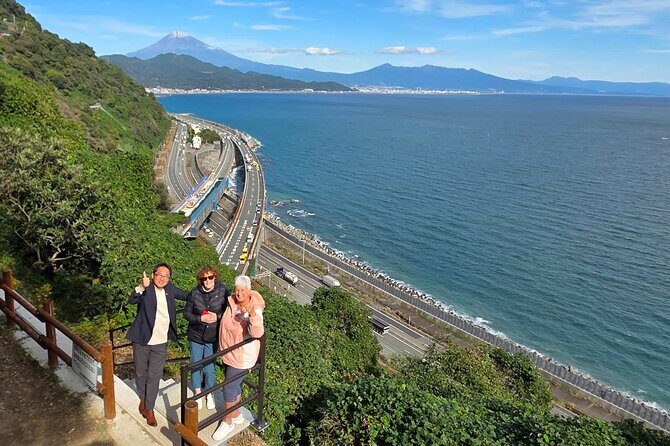
- Pick your course route: Seikenji–Yui for Satta Pass and temple views, or Nihondaira–Pine Tree for plateau views and Miho no Matsubara.
- Satta Pass pairs Fuji with Shinkansen: a famous artistic composition you can see in real life.
- Miho no Matsubara is UNESCO: and the nearby Miho Shrine grounds give you a calmer pace after the viewpoints.
- Make wagashi shaped like Mt. Fuji: including a special winter version, finished with matcha.
- Plan for the cruise buffer: you return at least 2.5 hours before departure, which matters on busy port days.
A tight 4-hour Mt. Fuji plan from Shimizu Port
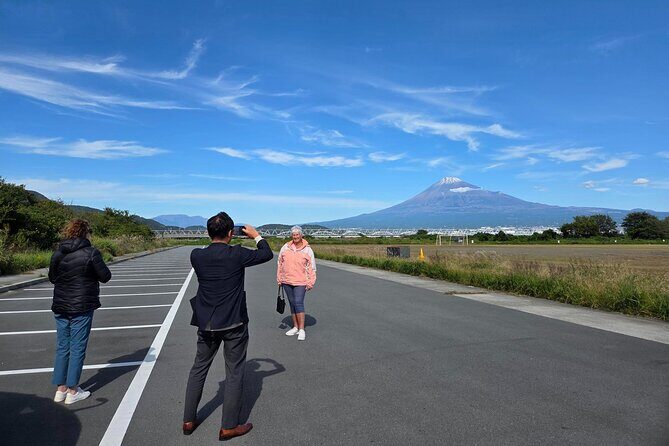
This is the kind of excursion that fits real cruise logistics. You’re looking at about 4 hours, starting and ending at the same place: Hinode Pier in Shimizu (Shizuoka). The tour is designed for visitors who want a strong dose of Mt. Fuji without losing the whole day to transfers.
The price is $130.31 per person, and the tour tries to justify that by packing in both scenic viewpoints and an activity you can’t just DIY at the port. Also, it’s a mobile-ticket experience, so you’re not scrambling with paper confirmations.
The other practical win is the early return. The itinerary brings you back to the port at least 2.5 hours before your cruise ship leaves, giving you time for security lines, boarding procedures, and the usual port delays.
You can also read our reviews of more tours and experiences in Shizuoka.
Small-group comfort: what the max 8 travelers really means
A maximum group size of 8 travelers is not a luxury detail. It affects everything from pace to attention.
With a smaller group, you’re less likely to be stuck at the back during viewpoint breaks. It also helps the guide manage timing when road conditions or passenger flow changes near the stops. On a short tour like this, smooth timing matters more than squeezing in one extra photo stop.
You’ll also have an English-speaking guide and an air-conditioned vehicle, which is a big deal in Japan when you’re switching between coastal views, plateaus, and city areas. On top of that, there’s basic insurance included, which is reassuring when you’re booking a short, active excursion.
Seikenji–Yui Course: Satta Pass and the Shinkansen-Fuji frame
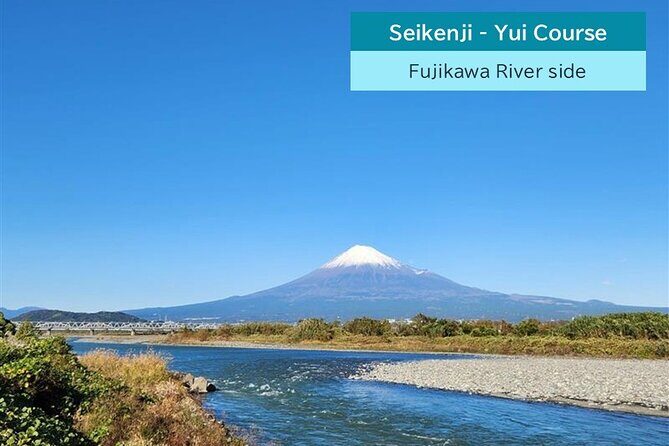
If you like your Mt. Fuji with a story, this route is built for you. The Seikenji–Yui Course connects two distinct types of views: the iconic ukiyo-e inspired angle at Satta Pass, and then a more expansive Suruga Bay-and-city panorama from Seikenji Temple.
Satta Pass: the ukiyo-e spot that adds motion
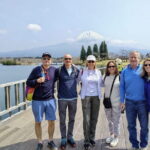
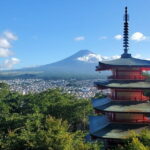
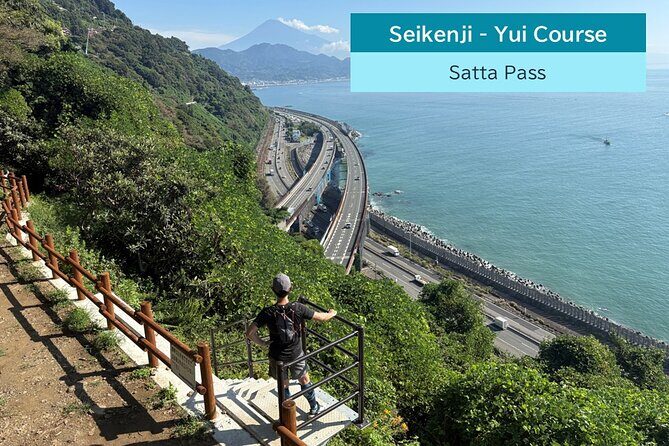
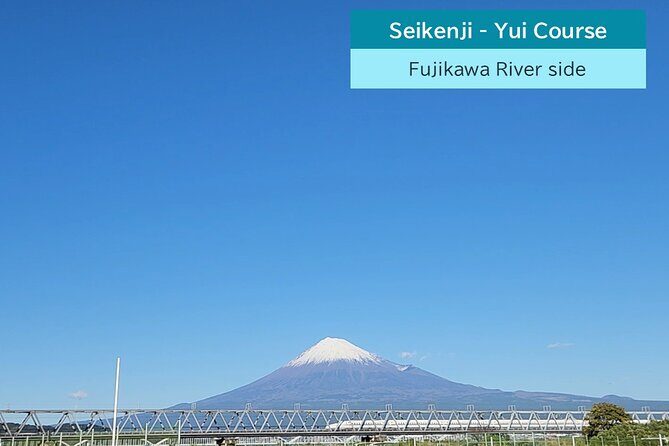
You’ll be guided to Satta Pass, a place famously depicted in ukiyo-e art. The tour description also calls out Mt. Fuji with Japan’s Shinkansen in the foreground, which is exactly the kind of visual contrast that makes Mt. Fuji feel like a living part of modern Japan, not just a postcard mountain.
The practical value here is composition. Even if the sky has light cloud, Satta Pass is known as a view angle, so you’re not hunting randomly for a good shot. The guide’s job is to get you positioned for the view theme the route is aiming for.
A small consideration: this is a photo-driven stop. If you prefer long, slow wandering time at one place, you may want to mentally budget for a more “find the angle, look, move” rhythm.
Seikenji Temple: Suruga Bay plus city below
Next comes Seikenji Temple, with a panoramic view stretching over Suruga Bay and the city below. This is a different kind of satisfaction from Satta Pass. Instead of focusing on the Fuji-and-train picture, you get a wider sense of how the coast and city relate to the mountain.
Temple grounds also tend to slow people down a bit. That’s helpful on a short tour because it balances the earlier photo-heavy moment with something calmer and more scenic.
If you’re the type who likes seeing Fuji as part of the whole region—water, roads, and buildings—this temple stop gives you that context fast.
Nihondaira–Pine Tree Course: plateau views and UNESCO pine trees
Want maximum scenery per hour? The Nihondaira–Pine Tree Course leans hard into big viewpoints, then brings you to a UNESCO site tied to the Fuji cultural setting.
Nihondaira Plateau: wide views over Shimizu and Suruga Bay
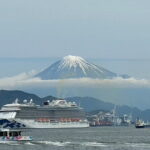
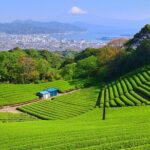
From Nihondaira Plateau, you get panoramic views of Mt. Fuji, Shimizu City, and Suruga Bay. The tour description specifically notes that Nihondaira is one of Japan’s best view spots, and you can see why: it’s a plateau perspective, which naturally gives you more room for the mountain to sit within the broader scene.
This kind of stop is excellent when the weather is mixed. Even if you can’t get a dramatic, crystal-clear Fuji, you still get the geographic story—coastline, city scale, and that big mountain silhouette working together.
A consideration: plateau stops can be windy. If you’re visiting in cooler months, I’d plan on layers even if the matcha and wagashi part warms you up later.
Miho no Matsubara (UNESCO): pine trees tied to Fuji
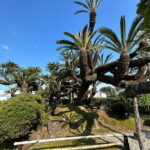
Next, you’ll visit Miho no Matsubara, a UNESCO World Heritage site connected to Mt. Fuji’s cultural heritage. The pine trees here are not random scenery. They’re part of the way Fuji has been viewed and valued across time, which is why this stop feels more meaningful than a standard viewpoint.
After the plateau, this is a nice change of pace. Instead of standing at a wide-open overlook, you’re in an environment with structure—trees, pathways, and calmer spaces.
Miho Shrine grounds: a quieter finish
The course also includes exploring the Miho Shrine grounds. That matters because it gives the trip a “soft landing” after the big panoramic viewing.
If you like taking a breath before heading back to the ship, shrine grounds are often the right kind of pause: reflective, less hurried, and easier on the senses after a couple of active lookouts.
Wagashi Tea Time: make your own Mt. Fuji with matcha
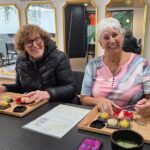
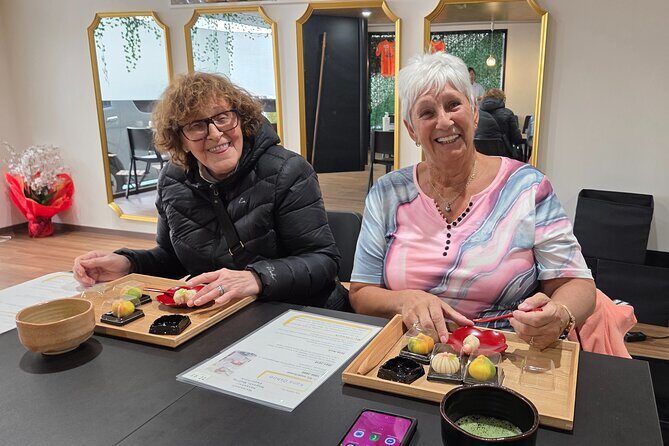
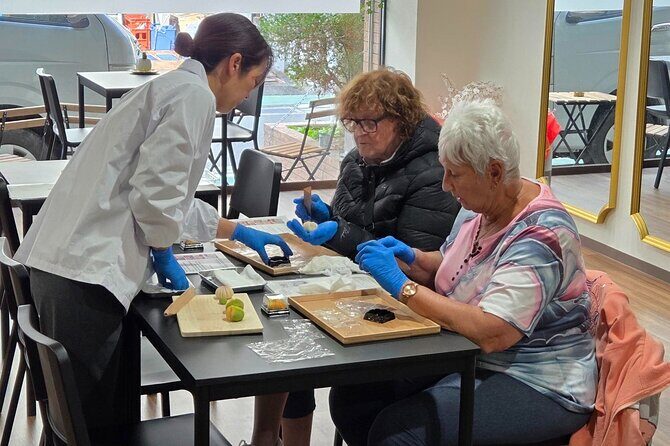
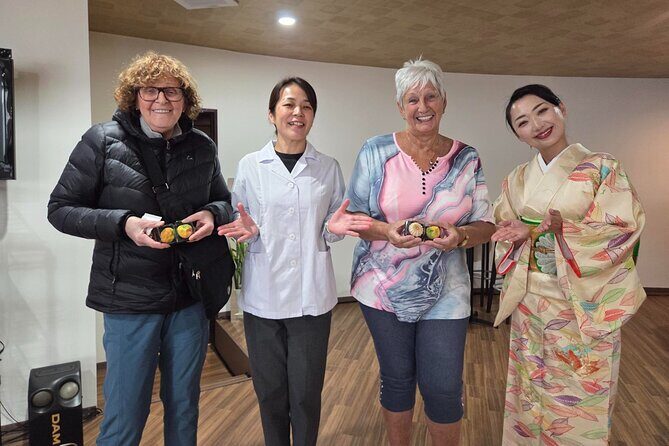
Here’s the part that makes this tour more than just a scenery run. You’ll do Wagashi—Japanese traditional sweets—shaped into your own Mt. Fuji. The experience includes a special winter version, and you’ll enjoy what you make with a cup of matcha.
This is valuable because it gives you a take-home souvenir that isn’t just packaging. You’ll also have the option to take your finished wagashi home, which turns the stop into something personal rather than purely visual.
Why the wagashi workshop fits a short cruise day
In a short 4-hour window, it’s tempting to think the best use of time is only viewpoints. But wagashi is time well spent because:
- It’s indoors or controlled enough that weather matters less.
- It creates a memory you can revisit when you’re back home.
- It adds variety to your Fuji experience, since most people only see pictures.
Also, this is a good option if you’re traveling with people who want Fuji but don’t love standing outside for long stretches. The workshop gives them a structured activity that feels distinctly Japanese.
One small note for expectation-setting: your final wagashi results depend on the session flow and the tools provided. It’s more about the experience and the Fuji-shaped theme than some master-level pastry outcome.
Getting back to your cruise early: how the timing is built
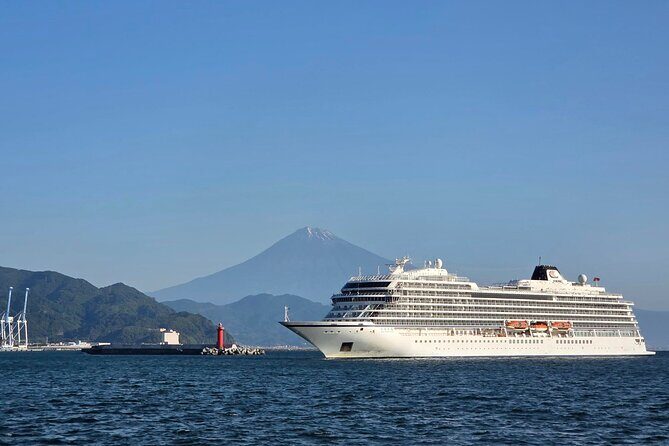
The tour is designed specifically for cruise passengers. It returns to the port at least 2.5 hours before your ship’s departure, and you end back at the meeting point.
That buffer matters because port timelines get tight fast. By building in time, the tour reduces your stress about transit, last-minute shopping detours, and the classic rush back to the gangway.
This is also why I like that the tour ends where it starts. You’re not dealing with “meet somewhere else” risk right before boarding. You can plan your own wrap-up—restroom breaks, snacks, or just checking the correct terminal—without guessing.
Price and logistics: is $130.31 good value?
For a short tour, $130.31 per person sounds simple, but the real question is what you’re buying for that money.
You’re paying for:
- An English-speaking guide
- Air-conditioned vehicle transport
- Entry/experience fees for the wagashi activity
- Green tea
- Basic insurance
- A structured route option (you choose a course)
- A small group size capped at 8
- A schedule built around returning early to the cruise
Where the value really comes through is that it’s not just “drive by Fuji and go.” You get multiple viewing themes depending on your selected course, plus a hands-on cultural activity with matcha and a take-home element.
The main drawback risk isn’t price. It’s fit. If you’re the type who wants a slower, more open-ended day and lots of independent wandering, a four-hour schedule will feel strict. But if you want high-impact Mt. Fuji moments without missing your ship, this is priced like a practical cruise excursion.
Also, the mobile ticket can save you time. You’re less likely to waste minutes sorting documents at the start.
Who this Mt. Fuji short tour is best for
This tour works best if you match one of these travel moods:
- You want Mt. Fuji views from multiple angles without a full-day commitment.
- You care about a Fuji experience that includes both modern Japan cues (Shinkansen viewpoints) and cultural stops (temples and shrine grounds).
- You’d like a structured activity to break up sightseeing, especially the wagashi with matcha portion.
- Your priority is returning on time for a cruise. The early return plan is the point.
It’s also a solid choice for small parties who appreciate not being packed into a big coach. With a group size limit of 8, the pace feels less chaotic.
If you’re someone who hates any indoor activity, then the wagashi workshop might feel like “less time outside.” But for most people, it’s exactly the balance that makes a short Fuji day feel complete.
Should you book this Mt. Fuji short tour from Shimizu Port?
I’d book it if you want an efficient, cruise-friendly Mt. Fuji hit with real cultural variety. The combination of multiple viewpoint themes and a make-your-own Mt. Fuji wagashi workshop is a strong pairing for a 4-hour excursion. And the small group size plus the built-in early return makes it feel designed for stress-free boarding.
I wouldn’t book it if you’re hoping for a slow, long day of independent exploration. This tour is structured, timed tightly, and focused on specific lookouts. For that kind of traveler, a longer stay in the area might suit better.
Still, for many cruise visitors, this is the kind of plan that turns a short stop into something you remember: views from known Fuji angles, plus a edible souvenir that looks like your mountain.
FAQ
Where is the meeting point for the tour?
You’ll meet at Hinode Pier, at 10-10 Hinodechō, Shimizu Ward, Shizuoka, 424-0922, Japan.
How long is the Mt. Fuji tour?
The duration is approximately 4 hours.
Will the tour return to the port before my cruise departs?
Yes. The tour is scheduled so you return to the port at least 2.5 hours before your cruise ship’s departure.
What courses can I choose from?
You can choose among the Seikenji–Yui Course, the Nihondaira–Pine Tree Course, and the Tea Time wagashi experience.
What’s included in the price?
The tour includes an English-speaking guide, basic insurance, an air-conditioned vehicle, the experience fee, green tea, and the wagashi/matcha experience.
How many people are in the group?
The tour has a maximum of 8 travelers.
Do I receive a mobile ticket?
Yes. The tour includes a mobile ticket.
Is free cancellation available?
Yes. You can cancel for a full refund up to 24 hours in advance of the experience’s start time.
Are service animals allowed?
Yes, service animals are allowed.