REVIEW · TOKYO
Tokyo: Calligraphy on Kanji Fan & Scroll with Drink
Book on GetYourGuide →Operated by Shodocafe7557 – Kanji & Calligraphy Tokyo · Bookable on GetYourGuide
A brushstroke turns Tokyo quiet. At Shodo Cafe 7557 in Roppongi, what I like is how the instructors help you write your name or a favorite kanji on a kanji fan and a hanging scroll. It’s art, yes, but it also feels like a break from city noise.
The second thing I really enjoyed is the teaching style. Kana (and her team) keep things calm and practical, working with your grip, stroke direction, and pressure until your work looks right. You also take home a custom hanko stamp in hiragana, plus a stack of calligraphy items you actually use.
One drawback to plan for: if you want the extra animated video of your names in kanji, you’ll need to provide the participants’ names in English when you book. And yes, kanji can feel tricky at first, but the class is designed for beginners as well.
In This Review
- Key highlights to know before you go
- Finding Shodo Cafe 7557 near Roppongi Station
- Matcha and the shodō mindset: calm, focused, beginner-friendly
- Brush strokes and character meaning in plain English
- Writing on your kanji fan and kakejiku hanging scroll
- Your hiragana hanko stamp plus the souvenir bundle
- Price and value for an 80-minute Tokyo workshop
- Who this calligraphy class is best for (and a quick reality check)
- Should you book this kanji calligraphy workshop?
- FAQ
- How long is the calligraphy workshop?
- What drinks are included?
- What will I take home from the workshop?
- Can the workshop personalize the calligraphy with my name?
- Is the lesson taught in English?
- Is it wheelchair accessible, and is there any age limit?
Key highlights to know before you go
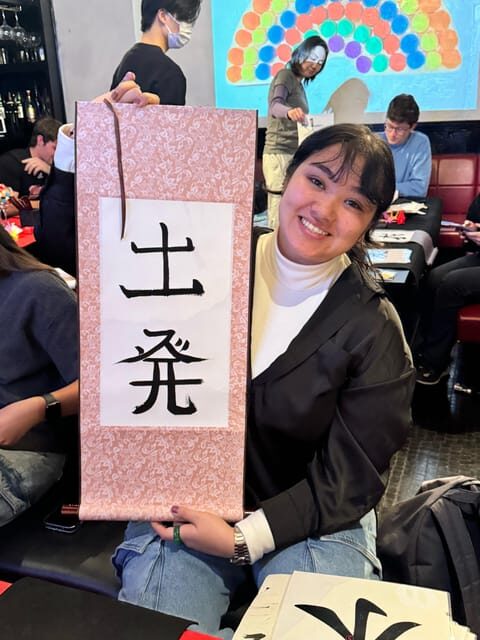
- Roppongi location with easy directions near the National Art Center, about a short walk from Roppongi Station
- Matcha included: choose matcha latte, green tea, coffee, soda, or beer
- Two big artworks you create: a kakejiku hanging scroll and a traditional uchiwa paper fan
- Personal hanko in hiragana plus a souvenir bundle with kanji items
- English instruction with hands-on guidance for all ages and skill levels
- Name-based extras: you can get an animated kanji-name video if you submit names in English
Finding Shodo Cafe 7557 near Roppongi Station
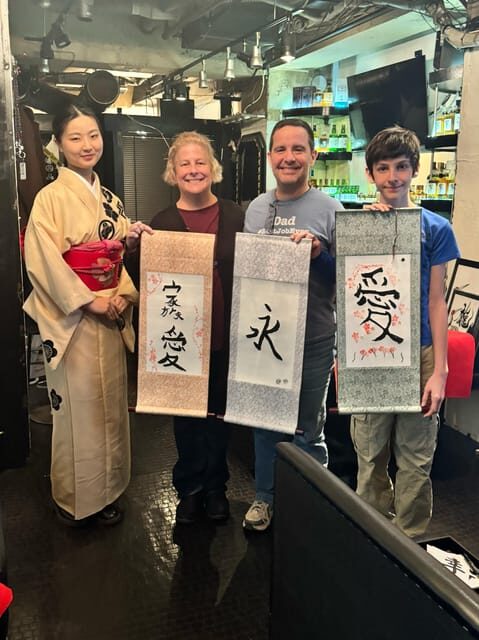
This class is in central Tokyo, and the location makes a huge difference. From Roppongi Station on the Toei Oedo Line, take Exit 7, cross toward FamilyMart, and keep right as you walk toward the National Art Center. You’ll see a large crane sign on your left, and the studio is on the 2nd floor of the Crest Roppongi Building.
I like that this doesn’t feel like a scavenger hunt. The directions are straightforward, and you can also search Shodocafe7557 on Google Maps for the smoothest route. Once you arrive, you’re not wandering in a big maze—you’re going straight into a workshop space where you’ll use the tools and get started.
Also worth noting: it’s listed as skip the ticket line. That matters because you don’t want your craft time eaten by waiting around. With an 80-minute session, the smoother the start, the better the experience.
You can also read our reviews of more tours and experiences in Tokyo.



Matcha and the shodō mindset: calm, focused, beginner-friendly
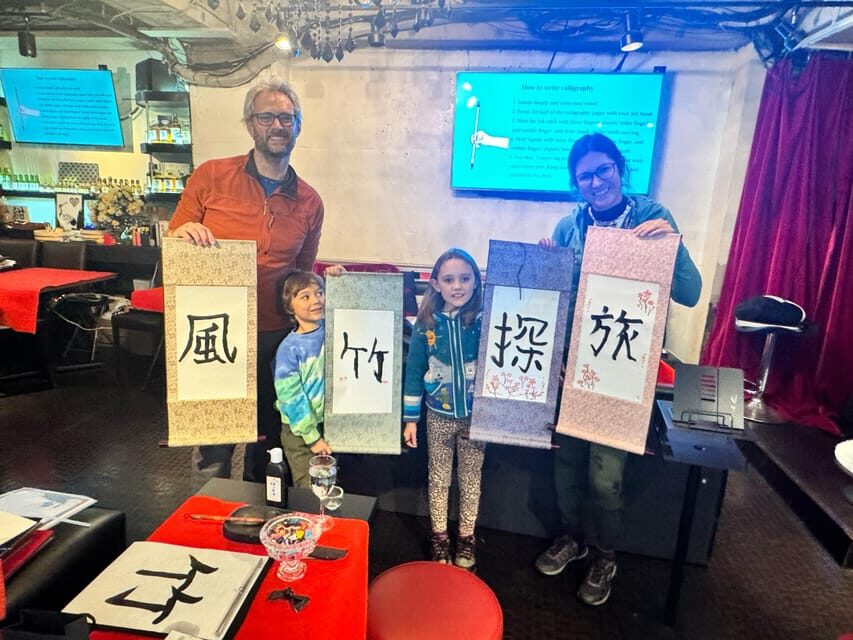
Even if you’ve never written a single character, you’ll get into the rhythm fast. The workshop frames calligraphy (shodō, 書道) as more than writing—it’s a meditative art form. You’ll get guided instruction, but it’s not about being perfect. It’s about learning the basics and making something you’re proud to take home.
Your included drink helps with that tone. You can choose matcha latte, green tea, coffee, soda, or beer. I like this mix because it makes the class feel relaxed rather than overly formal. Sip your drink, watch a stroke example, then try again.
If you’re the type who usually gets anxious about crafts, this setting helps. The instruction is patient and step-by-step, with teachers staying engaged as you practice. You’re learning brushwork technique and also learning what each stroke is doing, which makes your work feel less random.
Brush strokes and character meaning in plain English
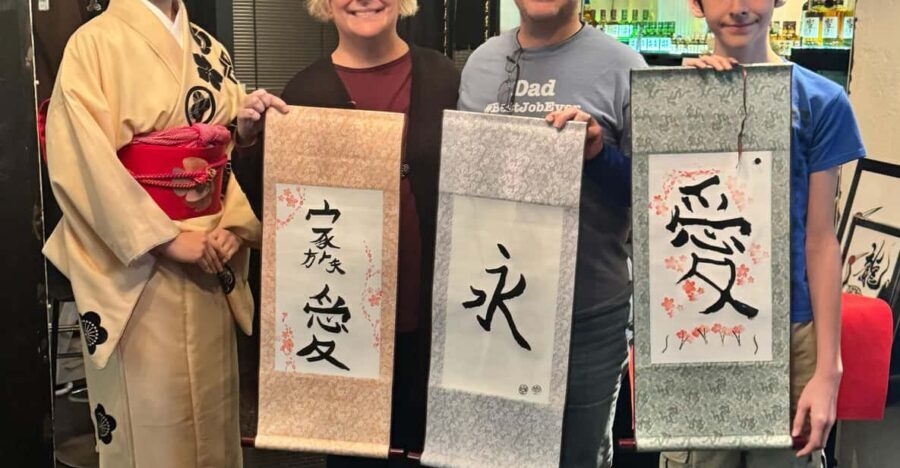
This is where the class pays off. You don’t just copy a finished sample and go home. You learn basic brush strokes, and you’re also taught the meaning behind each character and stroke structure.
In Japanese calligraphy, the brush isn’t a pen. Pressure, direction, and timing change the look of the character. The teachers explain what to pay attention to, then guide you through practicing until you can repeat the stroke correctly. The good news: you don’t need prior experience. The workshop is built for beginners and kanji lovers alike.
A helpful detail from how the class is run: they encourage practice attempts, not just one try. That’s big because calligraphy gets better through repetition. Once you see how the stroke should move, your second or third attempt often looks noticeably cleaner than the first.
And if you’re a kanji enthusiast, this isn’t shallow. You’ll hear about the logic behind the writing system and how strokes come together. You walk out with a new respect for why Japanese calligraphy looks the way it does.
Writing on your kanji fan and kakejiku hanging scroll
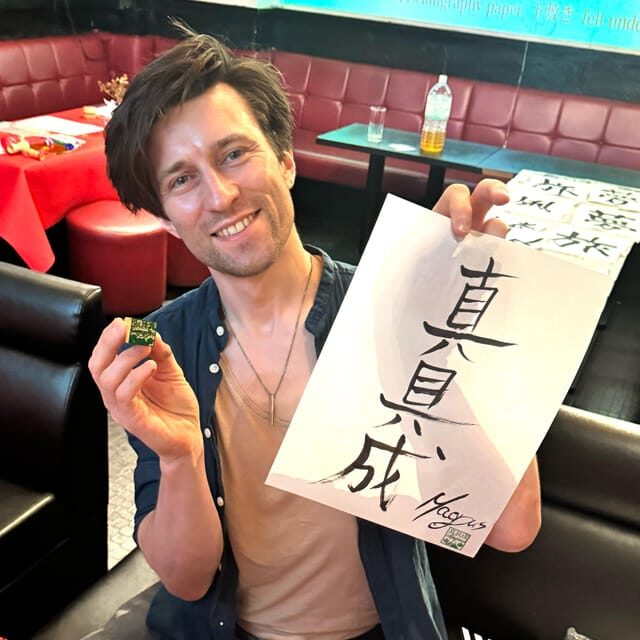
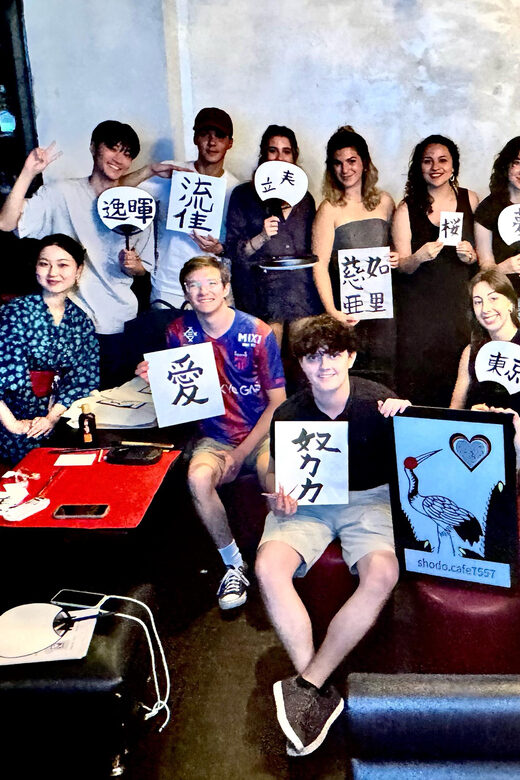
Your two main creations are the uchiwa (traditional paper fan) and the kakejiku (hanging scroll). That’s a nice combo because it gives your calligraphy two different vibes: one practical and playful, one classic and display-ready.
You’ll choose what you write. The workshop supports writing your favorite kanji character or a translated version of your name. Then the teachers guide you through the writing process on your chosen materials.
What you’ll do on the fan:
- Learn how to handle the brush and place the character in a way that looks balanced on the fan shape
- Practice strokes before committing to the final version
What you’ll do on the hanging scroll:
- Focus on the overall composition so the character sits correctly for display
- Re-check stroke direction and pressure so the brush marks look intentional rather than shaky
One thing I’d tell you to do before you start: decide what matters most to you—your name in kanji, or one meaningful kanji character. If you already know your favorite word, you’ll probably feel more confident once you start writing. If you’re unsure, the teachers will help you land on something that makes sense for your souvenir.
Within the 80-minute pace, you’ll still have time to practice. That’s key, because calligraphy is one of those activities where your hand learns by doing, not by watching.
Your hiragana hanko stamp plus the souvenir bundle
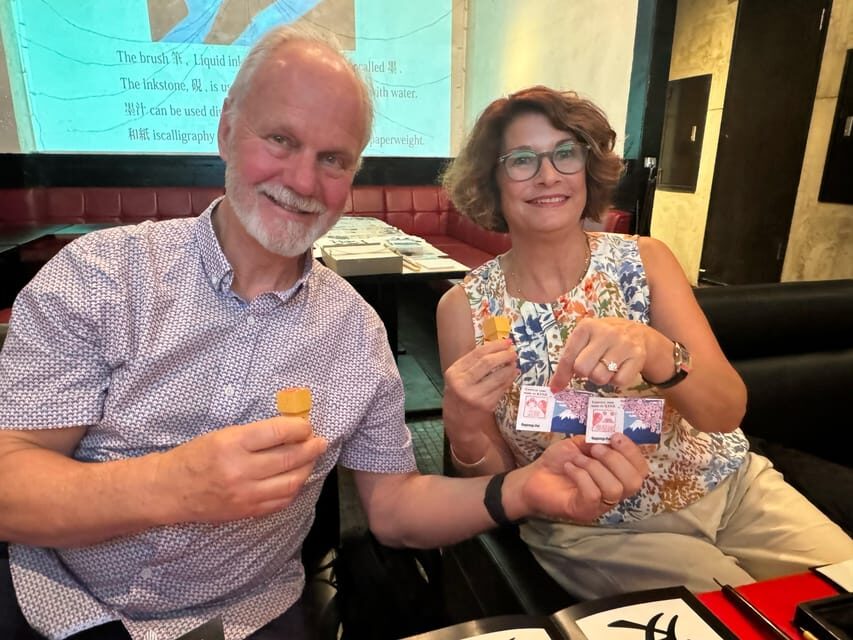
The workshop doesn’t stop at art-on-paper. You also make a hanko stamp. In this class, it’s a Japanese Hiragana hanko stamp of your name. That’s a great choice for two reasons.
First, it’s personalized in a way you can use. Second, hiragana is often easier for beginners than kanji, so the experience still feels approachable even if kanji is new to you.
You’re also set up with a full calligraphy souvenir package. Included items are:
- Kanji tote bag(s)
- Kanji keychain
- Kanji coaster
- Kanji pouch
- Your original kakejiku and uchiwa
And there are name-based extras if you plan ahead. When you provide participants’ names in English during booking, the studio can prepare a special animated video of your names in kanji. That video is shared during the workshop or delivered afterwards.
I like this because it turns your calligraphy class into a memory you can revisit. It’s not just a one-time craft project—you get a deeper connection to what your name means visually in Japanese writing.






Price and value for an 80-minute Tokyo workshop
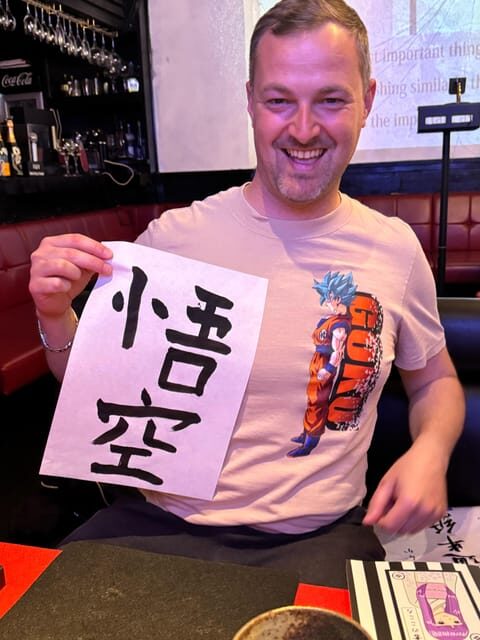
At $53 per person for about 80 minutes, you’re paying for more than a lesson. You’re paying for guided brush instruction, tools, an included drink, and a large take-home set.
Here’s why that price feels fair:
- You get multiple finished items, not just one artwork
- Tools and materials are included, so you’re not adding supply costs
- The drink is included (matcha latte, tea, coffee, soda, or beer)
- Personalization is part of the experience: your name and/or a specific kanji character
If you’ve priced other short workshops in Tokyo, you’ll notice many charge similarly but leave you with just one final piece. Here, you walk out with a fan, a hanging scroll, and functional calligraphy souvenirs like a hanko stamp and items you can actually carry.
Is there any cost-risk? The main risk is your own expectation. If you’re hoping for a long art lecture or a full-day studio session, this is a compact workshop. But if you want meaningful, guided practice plus take-home results, the value is strong.
Who this calligraphy class is best for (and a quick reality check)
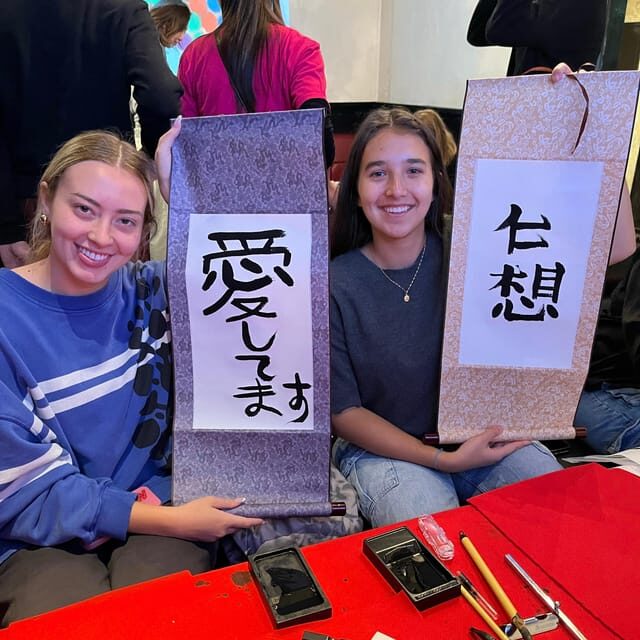
This class is designed for all ages and skill levels, including beginners. That matters because Japanese calligraphy can intimidate people who think they need perfect handwriting. Here, the whole setup is about guiding you through brush strokes and character meaning while you practice.
It also works well if you’re traveling with different experience levels. One person can write a name, another can pick a kanji word, and everyone follows the same teaching rhythm.
A reality check: calligraphy is challenging in the moment, even for motivated people. The brush demands a steady hand and attention to pressure and direction. The good part is that the teachers give you patient, hands-on guidance so your attempts improve quickly.
One more suitability note: it’s listed as not suitable for people over 95 years. It’s also described as wheelchair accessible, so mobility needs can generally be accommodated.
If you’re the type who wants one practical Tokyo craft experience that feels authentic and not tourist-y, this hits the mark. You’ll leave with objects that still look like you made them, not like generic souvenirs from a shop.
Should you book this kanji calligraphy workshop?
If you want a calm, hands-on introduction to Japanese calligraphy with real personalization, I’d book it. You’re getting an English-taught lesson, a drink, guided brush practice, and multiple finished take-home items—especially the hanko stamp and your own kakejiku and uchiwa.
Book it if:
- You want a meaningful souvenir beyond a postcard
- You like crafts where practice matters
- You’re okay with a beginner-friendly pace for kanji
Consider skipping if:
- You’re only interested in kanji theory with no practice
- You want a full sightseeing day instead of a focused workshop session
If you do book, send the participant names in English ahead of time when possible. It unlocks the extra animated kanji-name video, which adds a neat layer to the whole experience.
FAQ
How long is the calligraphy workshop?
The duration is listed as 80 minutes. The activity can last between 60 minutes and 2 hours.
What drinks are included?
You can choose matcha latte, green tea, coffee, soda, or beer. Additional drinks and food are not included.
What will I take home from the workshop?
You’ll make and take home a kakejiku (hanging scroll) and an uchiwa (traditional paper fan). You also receive a personalized hiragana hanko stamp, plus kanji items like a keychain, coaster, pouch, and tote bag.
Can the workshop personalize the calligraphy with my name?
Yes. You’ll write your favorite kanji character or a translated name, and you’ll receive a hiragana hanko stamp of your name. If you provide participants’ names in English when booking, you may also receive an animated video of your names in kanji.
Is the lesson taught in English?
Yes. Instruction and guidance are provided in English.
Is it wheelchair accessible, and is there any age limit?
The activity is listed as wheelchair accessible. It is not suitable for people over 95 years.