Twilight turns Kichijoji into a real photo set. This guided, 2-hour evening walk is all about nailing the best sunset-to-night scenes, starting with Inokashira Park and ending in a glowing alley world near Harmonica Yokocho. You’re moving through the places where the light changes fast, and the guide helps you aim your photos instead of wandering lost.
I especially love the pond reflections at Inokashira Park—when the sky softens and the water starts acting like a mirror. Another high point is the switch from modern shopping streets to old-school lantern vibes in Harmonica Yokocho, where even a quick stop makes you feel like you found Tokyo at its slow, local pace. One possible drawback: it’s a walking tour with limited time per stop, so if you’re shopping-first, you may wish you had more minutes inside the stores.
In This Review
- Key highlights
- Kichijoji at 5 pm: why this timing feels right
- Inokashira Onshi Park: pond reflections you can frame fast
- Kichijoji Station south exit: neon movement without the giant-city crush
- UNIQLO Kichijoji: the store stop that feels smarter than it sounds
- Tokyu Department Store rooftop garden: city lights with a quieter mood
- Harmonica Yokocho: lantern-lit alleyways for your night finale
- Guides who steer your photos and your evening
- Price: what $39.02 buys you in real value
- What to bring for a twilight photo walk
- Who this tour is best for
- Should you book Tokyo Kichijoji Twilight?
- FAQ
- What time does the Tokyo Kichijoji Twilight tour start?
- Where do I meet the guide?
- Where does the tour end?
- Is the tour ticket mobile?
- How many people are in the group?
- Is cancellation free?
Key highlights
- Inokashira Park at golden hour for pond reflections and sky color shifts
- Kichijoji Station south exit for neon signage, street movement, and quick framing
- UNIQLO architecture angles that work better at dusk than you’d expect
- Tokyu rooftop garden views with city lights and cozy corners
- Hamonika Yokocho lantern lanes for intimate, night-photo atmosphere
- Small group size (max 6) so you can actually hear and follow direction
Kichijoji at 5 pm: why this timing feels right
This tour starts at 5:00 pm, which is a sweet spot for photography in Tokyo. You get daylight long enough to set up your shots, then you’re already in position when street lighting and shop signs begin to pop. That matters, because twilight is when Kichijoji looks like it has two personalities: daytime Japan and night Japan, both showing up at once.
The walk is about 2 hours, so the route is designed to move efficiently. You’ll cover several distinct areas without the heavy “commute time” you can get on longer city tours. The group is capped at 6 people, which keeps it less crowded and easier for the guide to pace you and answer questions.
Also, you’ll use a mobile ticket, which is handy when you’re juggling phones, camera settings, and snacks. And since the meeting point is inside Atre Kichijoji, you start in a place that’s easy to find and comfortable while you wait for the light to drop.
You can also read our reviews of more tours and experiences in Musashino.


Inokashira Onshi Park: pond reflections you can frame fast
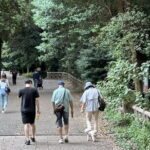
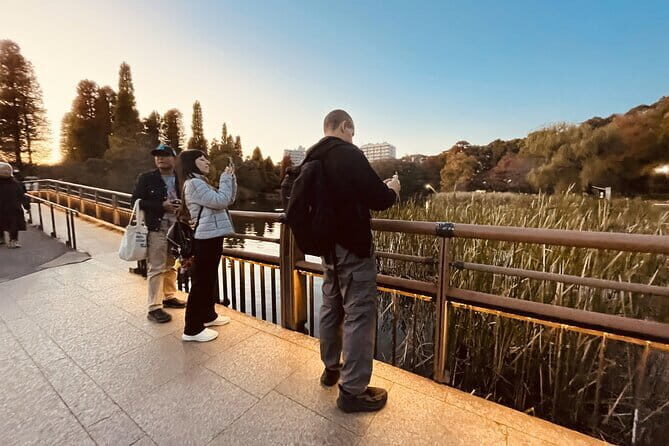
Inokashira Onshi Park is the tour’s first stop, and it’s a strong one. You spend about 40 minutes here, with the big focus on Inokashira Pond. In plain terms: this is where you learn how to photograph water + sky together, and you can do it without feeling like you’re competing for space.
If you visit in different seasons, the park changes the rules. In autumn, you might catch autumn leaves near the pond, while spring brings cherry blossom moments. Even if you’re not chasing a specific flower, the real win is the timing: you’re there as the sun drops, so reflections start showing up, then deepen as the light softens.
Here’s the practical part. Bring your phone or camera, stand where the guide indicates, and take a few shots at different angles before you rush off. At dusk, small shifts in position make a big difference: one step can mean skyline reflections instead of dark water. You don’t need fancy gear, just a willingness to pause and compare.
One note: this is a park, not a studio. Weather and cloud cover will affect the sky colors. The upside is that clouds can also make twilight look dramatic, so you’re not doomed if the evening isn’t perfectly clear.
Kichijoji Station south exit: neon movement without the giant-city crush
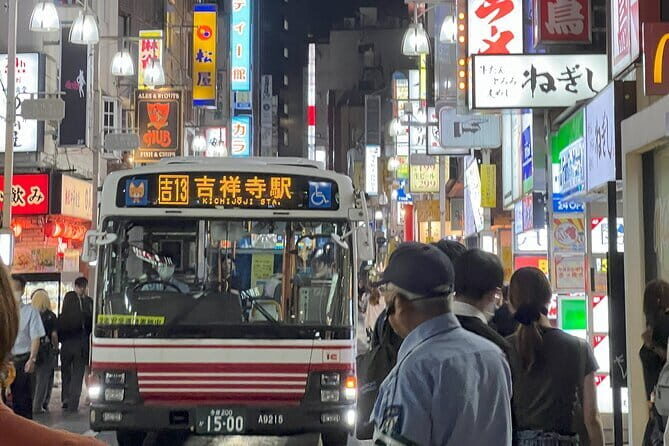
After the park, you’ll move to Kichijoji Station’s south exit area for about 10 minutes. This part of Kichijoji is more street-level than sightseeing-bus stop, with shops, cafés, and constant movement around the station. For photos, that translates into a useful mix: signage to frame, people to add scale, and buses or street traffic to bring motion.
The guide’s job here is underrated. Night photography isn’t just about settings—it’s about choosing a spot where your subject doesn’t get swallowed by chaos. In a station commercial area, the trick is to find a clean line: a doorway, a sign edge, or a corner where you can hold your composition while the crowd flows through.
If you’re shooting with a phone, this is a good place to test what works for you before you hit darker alleys. Try a few quick frames, check your results, then commit to the shots you actually like. Ten minutes is short, so treat it like a warm-up lap.
UNIQLO Kichijoji: the store stop that feels smarter than it sounds
Yes, there’s a stop for a large UNIQLO in Kichijoji. But the point isn’t shopping. It’s photography. Department store or fashion-store architecture can be surprisingly useful after dark because of glass, lighting, and clean lines.
What you’re looking for here are angles. Think edges of the building, the way indoor light spills onto the street, and how the signage reads at night. The advantage vs. a random street corner is that you’re working with a clear structure, which makes it easier to get sharp results even when the surrounding area gets noisy visually.
If you love street-style photography or you like geometric compositions, this stop can be a fun breather. If you don’t care about the store visuals, you can still benefit from the pause: it’s a chance to regroup and reset your camera settings before the rooftop view and lantern alley finale.
Tokyu Department Store rooftop garden: city lights with a quieter mood
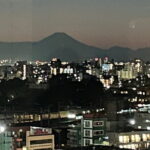
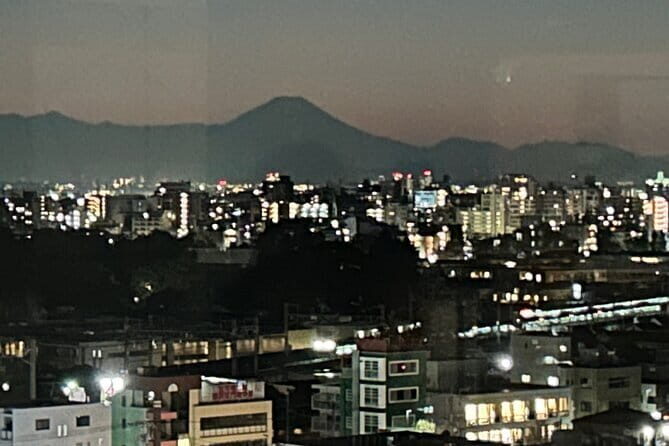
Next up is Tokyu Department Store Kichijoji, with about 10 minutes at the rooftop garden. This part of the route does something important: it gives you a break from the street energy. Instead of chasing neon at ground level, you get a higher viewpoint where city lights start looking like a pattern.
The rooftop garden is also where you can shoot both the skyline and the softer glow of the rooftop lighting. You’re not just taking one type of photo; you’re switching between wide night views and cozy details. That variety is great if you’re trying to build an Instagram set that doesn’t look repetitive.
Here’s how I’d use your time efficiently. Before you step out for photos, take a second to identify your two favorites: one direction for city lights, and one direction for the more intimate rooftop corners. Then commit to that plan so you don’t waste your limited minutes wandering.
This stop also helps with the pace of the tour. After a commercial area and a store-focused photo moment, it’s a calmer segment that lets you enjoy the atmosphere for a few minutes, not just capture images.



Harmonica Yokocho: lantern-lit alleyways for your night finale

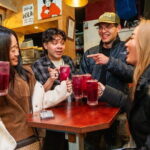
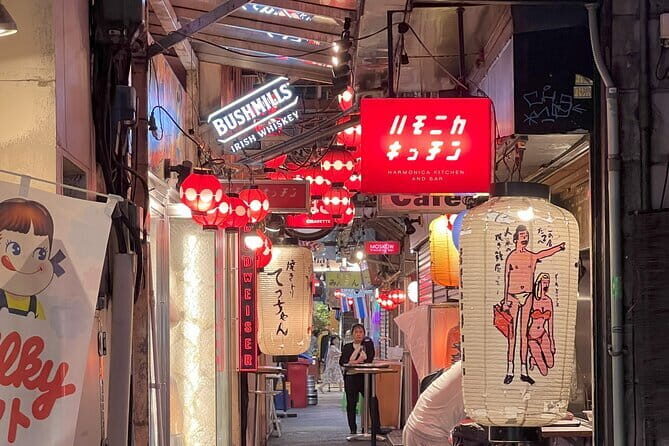
The last stop is Harmonica Yokocho, about 20 minutes of retro alley exploring. If you want a payoff, this is the place. The alleyways feel old-school—glowing lanterns, cozy izakayas, and colorful shopfronts. For photos, it’s a gift: compact scenes, warm light, and a sense of Tokyo intimacy that you usually don’t get in big tourist streets.
This is also a good spot to slow down. The alley vibe rewards attention to small details—doorways, sign lighting, the contrast between dark walls and warm interior illumination. If you’ve been rushing through the evening, this is where you can start making photos that look like you were in the scene, not just passing by.
After the tour ends, you’re encouraged to keep eating and drinking in the area. The tour does not include restaurant costs, but you can ask your guide for recommendations that match what you’re in the mood for—simple comfort food, beer and small plates, or something a bit more filling.
Guides who steer your photos and your evening

A big reason this tour works is the guiding. In Kichijoji, it’s easy to think you can just “walk around and take pictures.” You can—but you’ll get better results when someone points you to the right stance and timing.
I’ve heard accounts of guides bringing both practical direction and fun local flavor. Names you might run into include Suzuki, Hiro, and Sky, each described as confident about the area and willing to share small bits of context while you’re walking. The best guides in a photo tour do two things: they keep you on schedule, and they make you feel like your photos are improving in real time.
If you care about photography, don’t be shy about asking quick questions about what setting to use on your device or where to stand for reflections. With a group size of up to 6, you’re not lost in the crowd, so you actually get a response.
Price: what $39.02 buys you in real value
The price is $39.02 per person for roughly 2 hours, and the included parts are the guide and the walking tour. Most admission at the stops is free, which matters because it keeps the total cost predictable.
Where you get value is in time and direction. Without a guide, you’d spend more effort figuring out where to stand for sunset reflections, how to move from park light to station neon, and where the rooftop viewpoint fits into the evening. Paying for a guided photo route can save you from the classic problem: you take lots of shots but don’t know which ones worked and why.
Also, the small group size helps. You’re not dealing with a large pack that forces you to move faster than you want. You can stop, adjust, and actually look at what you’re photographing instead of speed-walking past your own ideas.
If you’re already staying in Kichijoji and you want a structured evening plan, this tends to feel like a fair deal. If you’re only in the area for one hour total, it’s harder to justify—because the tour is timed to lighting changes, and those take time.
What to bring for a twilight photo walk
You don’t need special gear, but you do need a few smart essentials.
- A fully charged phone or camera battery, since night shooting drains power faster
- A small layer for the evening, especially near open park areas and rooftop spots
- A power-efficient habit: take short bursts, then check your framing before moving on
- Comfortable shoes, because it’s a walking tour with multiple stops and you’ll be on your feet
If you’re using your phone, give yourself permission to test. The tour has several light styles: reflective pond light, shop-sign neon, indoor-to-outdoor glow, rooftop city lights, and warm alley lanterns. Each one behaves differently, so you’ll get better photos if you treat the evening like a guided lighting practice session.
Who this tour is best for
This fits you best if you like a plan that still feels local. You’ll be moving through Kichijoji’s park-meets-shopping vibe, with a final walk into a nostalgic alley scene. It’s also a solid option if you want to do night photos without building a route from scratch.
You’ll probably enjoy it most if:
- You’re staying in or near Kichijoji and want an easy, evening activity
- You like street scenes, signage, and lighting more than big-ticket monuments
- You want your photos to look intentional, not just accidental snapshots
- You’re the type who actually likes walking a bit, stopping often, and rechecking shots
If you’re the kind of person who wants a long sit-down meal right at the start, this route might feel a bit too photo-and-walk focused. The tour is short per stop by design.
Should you book Tokyo Kichijoji Twilight?
I’d book it if you want an evening that’s built around timing and light, not just passing landmarks. The combination of Inokashira Park, station streets, rooftop views, and Harmonica Yokocho gives you multiple night textures in a compact route. And because the group is small, your guide can keep you moving while still helping you get the shot.
I’d skip it if you mainly want shopping time or you’re only curious about one single area. This tour is about transitions between places at twilight, and that takes its own shape.
If you do book, plan to arrive with a photo goal in mind. Pick one: reflections, neon street frames, rooftop skyline, or lantern-alley mood. Then let the route do the heavy lifting for you.
FAQ
What time does the Tokyo Kichijoji Twilight tour start?
It starts at 5:00 pm and runs for about 2 hours on foot.
Where do I meet the guide?
You meet at les mille feuilles de liberte Atre Kichijōji (Atre Kichijoji), 1F, 1-chōme-12-4 Minamichō, Musashino, Tokyo.
Where does the tour end?
The tour ends at Harmonica Yokocho in Kichijōji (Harmonica Yokocho, 1-chōme-13 Honchō, Musashino, Tokyo).
Is the tour ticket mobile?
Yes. It uses a mobile ticket.
How many people are in the group?
The tour has a maximum of 6 travelers.
Is cancellation free?
Yes. You can cancel for a full refund up to 24 hours before the experience starts. If you cancel less than 24 hours before, the amount paid will not be refunded.