REVIEW · NARITA
Tokyo Layover Tour with Licensed Guide:Narita Airport Dep
Book on Viator →Operated by Japan Guide Agency · Bookable on Viator
Tokyo with a layover can be chaos. This tour turns that chaos into a clear plan with a licensed English guide, timed for one day and built around your choice of 3 to 4 sights. You start right at Narita International Airport, move into Tokyo by train, and finish with guidance for your ride back.
I particularly like how flexible the day is. You’re not stuck with a rigid “see everything” loop, and you can shape the stops around what you care about most.
One thing to keep in mind: even with only a few chosen sights, it’s still a walking tour. If you pick several sites that require lots of moving around, you may feel rushed, especially with limited time in each area.
In This Review
- Key points worth knowing
- A one-day Tokyo hit, designed for a Narita layover
- Price and logistics: what’s included, what’s extra
- Meeting your licensed guide at Narita (and staying calm)
- Choosing 3-4 sights without burning your day
- Classic Tokyo corner: Imperial Palace, Shibuya Crossing, Tsukiji, and Meiji Jingu
- Imperial Palace (outside only)
- Shibuya Crossing
- Tsukiji Fish Market
- Meiji Jingu Shrine
- Old Tokyo without the full museum day: Asakusa, Senso-ji, Shibamata, and Nezu
- Asakusa
- Senso-ji Temple
- Shibamata
- Nezu
- Gardens, parks, and museums: choosing a breather on a tight day
- Koishikawa Korakuen Garden
- Hama Rikyu Gardens
- Tokyo National Museum
- Rikugien Garden
- Yoyogi Park
- Tech, fashion, and after-hours Tokyo: Akihabara, Takeshita Street, Golden Gai
- Akihabara
- Takeshita Street (Harajuku)
- Shinjuku Gyoen National Garden
- Shinjuku Golden Gai
- Roppongi Hills and Odaiba for big-city views
- Roppongi Hills
- Odaiba
- Getting back to Narita by train: the guide’s end-of-day job
- Should you book this Narita layover tour?
- FAQ
- FAQ
- How long is the Tokyo layover tour from Narita?
- Where do we meet the guide?
- Is this tour mostly walking?
- Can I choose which sights to see?
- Are entrance tickets included for all sights?
- Does the tour include access inside the Imperial Palace?
- Is the Narita Express round-trip ticket included?
- How does the tour end?
- Is this tour private?
- Are service animals allowed?
Key points worth knowing
- Licensed English-speaking guide at Narita: You’re met at NRT and moved into Tokyo by train.
- Pick 3-4 sights to match your taste: You customize from the provided list rather than taking a preset route.
- Many stops have free admission: Several top attractions are listed as admission ticket free when chosen.
- Imperial Palace is outside-only: The tour explicitly does not include access to the inside.
- Some places require tickets you buy yourself: Gardens and museums marked Not Included mean you’ll pay on your own.
- You get help returning to Narita: The guide brings you to the nearest station for your train back to the airport.
A one-day Tokyo hit, designed for a Narita layover
A Tokyo layover can feel like a dare: you’re on a clock, you’re juggling jet lag, and Japan’s rail system can look intimidating at first. This tour’s setup is meant to solve the hardest parts for you. You don’t have to figure out where to meet, how to get from Narita into the city, or how to link up the end of your day back to your flight.
The big idea is simple: in one day, Tokyo is too big to “do everything.” So this format focuses on one cluster of sights and keeps your movement efficient. When you pick your 3-4 stops, you’re effectively choosing your Tokyo “slice,” whether that slice is old-school temples and neighborhood streets or modern city energy near Shibuya and Harajuku.
You’ll also get an English-speaking guide who’s there to interpret what you’re seeing, not just point at it. The tour notes that the guide is government-licensed, and that matters in Tokyo where “what you’re looking at” often has rules, symbolism, and etiquette.
Who this suits best: travelers who want a high-value day without stress. If you’re comfortable with trains but hate planning, this can be a smart use of time.
You can also read our reviews of more guided tours in Narita



Price and logistics: what’s included, what’s extra
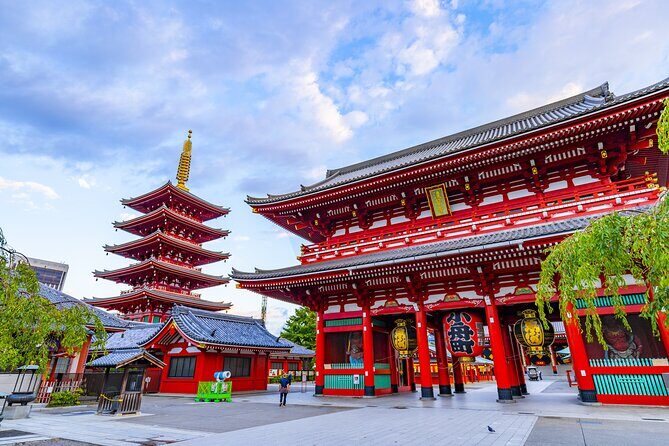
The price is $435.74 per person for an approximately 8-hour day. That’s not “cheap,” but it’s also not just paying for sightseeing. You’re paying for a licensed local guide, a Narita meeting at the airport, and a guided train day with help getting back to your departure area.
Here’s what you should mentally budget beyond the base price:
- Transportation fees in Tokyo are not included.
- Lunch is not included.
- Entrance fees are not included for sights marked Not Included.
- The Narita Express round-trip ticket is not included. The listing shows ¥6,140 for adults and ¥3,060 for children, with prices varying by destination.
That Narita Express detail is important. Your tour plan includes getting you back to Narita by train, and the guide will take you to the nearest station to access that train. But you still need to buy the rail ticket. If you’re cost-sensitive, this is where the “total price” can creep up.
Value check: if you would otherwise spend time researching rail routes, decoding station layouts, and worrying about timing, the guided piece is doing real work. For a layover, time is the currency you can’t re-earn.
Meeting your licensed guide at Narita (and staying calm)
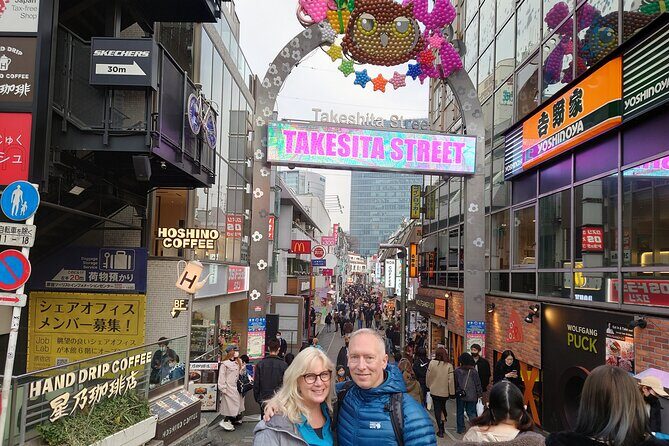
The meeting point is Narita International Airport (NRT), at 1-1 Furugome, Narita, Chiba 282-0004, Japan. The tour is designed for you to start immediately, not at some distant station where you’d have to navigate first.
One small but meaningful detail: the tour is described as a walking tour, and it says pick-up is on foot. That usually means you’ll connect with your guide in the airport area and then get moving, instead of waiting for a vehicle or a complicated transfer.
You’ll travel from Narita to Tokyo by train with the guide. For many first-timers, that’s the toughest step. You’re not just going from A to B; you’re learning the most practical way to move with minimal friction.
In prior guest feedback, guides named Masa, Shuji, and Yoshi were praised for punctuality and for helping with navigating the bullet train and subway system as needed. I’d treat that as a strong sign that you’re likely to get real “how to use the system” help, not just narration at each stop.
Choosing 3-4 sights without burning your day
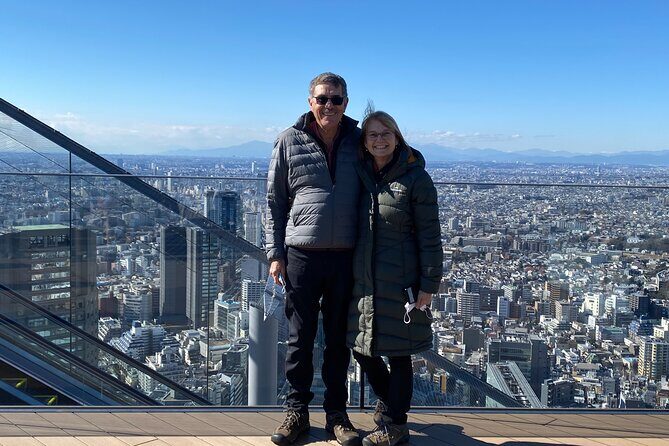
The customization is the heart of the experience. Your guide works with you to pick 3-4 spots from the list, and they plan the day around those choices. That means you should treat selection like strategy, not like a buffet.
Here’s the practical rule I’d follow: pick options that group well geographically and emotionally.
- If you’re into traditional Tokyo, bundle temple/shrine + old neighborhood stops.
- If you want modern Tokyo, cluster Shibuya/Harajuku + one tech or city view stop.
- If you want a slower rhythm, include one garden or park so you’re not sprinting between crowds.
Also note the time windows listed for each option. Some are quick touchpoints (like 5 to 15 minutes). If you select too many “fast stops,” you might feel like you’re arriving just as you should be leaving.
A good way to avoid that forced-feeling issue: choose fewer “quick hit” places and prioritize just one or two that you want to take photos in and actually absorb.
Classic Tokyo corner: Imperial Palace, Shibuya Crossing, Tsukiji, and Meiji Jingu
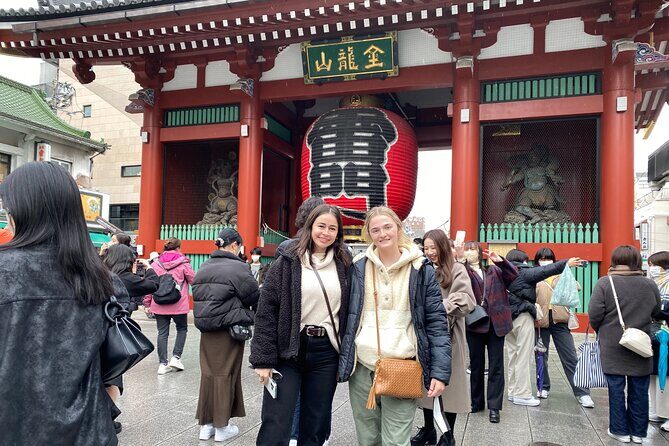
If you want postcard Tokyo mixed with one or two grounding moments, this is a strong combo set.




Imperial Palace (outside only)
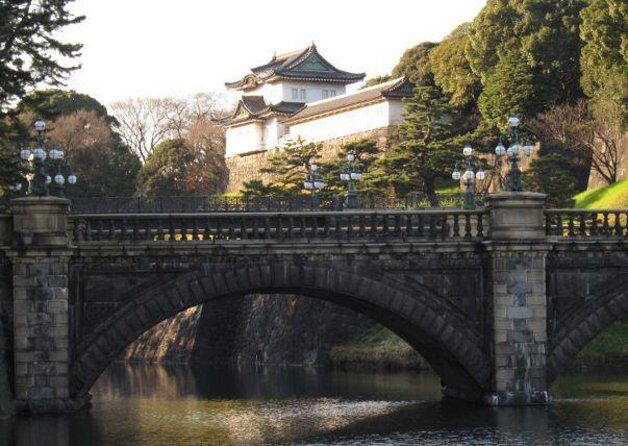
The Imperial Palace is a major “big history” sight, but this tour has a clear limit: it does not include access to the inside. You’ll still get the setting—moats and massive stone walls around the park area—plus the sense of scale that comes with Edo Castle’s former footprint.
Why I’d pick it: it’s a powerful way to anchor Tokyo’s present in its historical geography, even without entering the grounds.
Drawback: if you’re expecting a full palace interior visit, you’ll be disappointed. This one is for the outside view and walking around the surrounding area.
Shibuya Crossing
Shibuya Crossing is listed as an iconic stop and, in practice, it’s all about energy and people-watching. It’s also a great “reset moment” after rail travel because you’ll quickly feel like you’ve landed in Tokyo.
Why it works on a layover: it’s recognizable fast, and you can get photos without needing museum hours.
Drawback: Shibuya can be crowded. If your priority is calm, you may want a quieter stop nearby instead of stacking multiple high-traffic districts.
Tsukiji Fish Market
Tsukiji is described as exploring the old fish market, and the time window shown is about 30 minutes. This is shorter than a full market morning, but it’s enough to experience the vibe and see how the market identity still shapes the area.
Why I’d choose it: you get Tokyo’s food culture in a focused way. Even if you don’t buy anything, it’s a sensory snapshot.
Possible drawback: 30 minutes disappears quickly in busy areas. If you want time to snack and browse, you’ll need to move efficiently.
Meiji Jingu Shrine
Meiji Jingu is near Harajuku Station, and the tour lists it as about 20 minutes. This shrine is a natural contrast to the loud city outside the gates.
Why it works: it’s a mental breather. After Shibuya energy or Tsukiji crowds, a shrine visit can feel like you turned the volume down.
Drawback: since time is short, you’ll want to decide early if you’re there mainly for the main paths and photos, or for a slower “stand and watch” experience.
Old Tokyo without the full museum day: Asakusa, Senso-ji, Shibamata, and Nezu
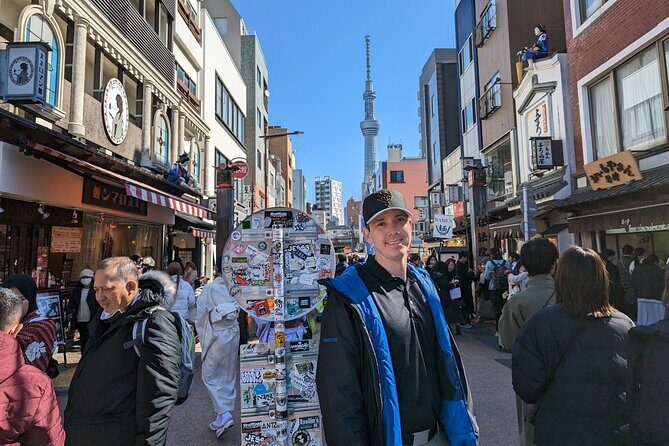
If you’re aiming for Tokyo’s older soul—temples, neighborhood streets, and that “walk and discover” feeling—this is the section I’d build around.
Asakusa
Asakusa is a broader area stop, and the listed time is about 30 minutes. Think of it as your gateway neighborhood where you can align your day with whatever pulls you in at street level.
Why I’d pick it: it gives you classic Tokyo visuals and a sense of place beyond the major skyline areas.
Drawback: Asakusa can be busy, especially around popular photo points. If you’re traveling off-peak, you’ll likely enjoy it more.
Senso-ji Temple
Senso-ji (also known as Asakusa Kannon Temple) is listed as about 15 minutes and is one of Tokyo’s most popular temples. This is the stop where Tokyo’s religious history becomes visible in details like gate architecture and crowd flow.
Why it’s worth it: you get an instant “this is Japan” feeling, fast.
Drawback: crowds. To make the most of a short visit, aim for a clear route: main approach, key views, then move on.
Shibamata
Shibamata is described as an area on Tokyo’s eastern end with old-school charm, not far from the Edogawa River border. The listed time is about 15 minutes.
Why it’s interesting: it feels less like a theme park and more like a lived-in neighborhood choice.
Drawback: because it’s a short stop, you’ll need to treat it like a sampler rather than a deep neighborhood immersion.
Nezu
Nezu is part of shitamachi, old downtown Tokyo, and the tour lists about 15 minutes. It’s noted for having avoided major damage during world wars and natural disasters, so the area retains a last-century feel.
Why it’s valuable: it’s Tokyo’s continuity—architecture and streets that communicate history without being inside a ticketed museum.
Drawback: you may want more time than 15 minutes if you like walking slowly and noticing side streets.
Gardens, parks, and museums: choosing a breather on a tight day

When your layover plan is intense, you need at least one spot that lets you slow down. The tour includes several options that can act like a “time buffer” when crowds and walking add up.
Koishikawa Korakuen Garden
Koishikawa Korakuen is listed at about 10 minutes, and it’s Not Included for admission. Still, it’s one of Tokyo’s oldest and best Japanese gardens. If you choose it, the value is the quick, calming contrast to urban intensity.
Why I’d pick it: it’s a strong change of pace without requiring a full half-day commitment.
Drawback: 10 minutes won’t let you experience the garden at a leisurely pace. You’ll likely be doing highlights only.
Hama Rikyu Gardens
Hama Rikyu is listed at about 5 minutes and Not Included. It’s along Tokyo Bay and includes seawater ponds that change level with the tides, plus a teahouse.
Why it can be a good selection: the bay setting and the tide detail are interesting even if you keep it short.
Drawback: if you’re expecting a longer walk, 5 minutes is more like a viewpoint stop.
Tokyo National Museum
The Tokyo National Museum is listed at about 5 minutes and Not Included. It’s described as the oldest and largest of Japan’s top-level national museums.
Why I’d consider it anyway: if you already know you’ll return to museums later, a quick orientation can help you decide what you want on a future trip.
Drawback: 5 minutes doesn’t do a museum justice. If museums are your priority, you’d need a different kind of day.
Rikugien Garden
Rikugien is listed at about 30 minutes and Not Included. It’s often considered one of Tokyo’s most beautiful landscape gardens along with Koishikawa Korakuen, built around 1700.
Why it’s a smart pick: 30 minutes is enough time to actually walk and enjoy rather than rush.
Drawback: admission is on you, so check pricing and decide if the garden time matches your budget.
Yoyogi Park
Yoyogi Park is listed at about 30 minutes and is admission ticket free. It features lawns, ponds, and forested areas and is good for jogging and picnicking.
Why I like it for layovers: it gives you a reset without paying for anything.
Drawback: you’ll want to enjoy the walking pace here; if you’re carrying heavy bags or hate uneven footpaths, factor that in.
Tech, fashion, and after-hours Tokyo: Akihabara, Takeshita Street, Golden Gai
This is the section for Tokyo’s personality—electronics, youth fashion, and the small-bar side of the city.
Akihabara
Akihabara is listed as about 5 minutes and admission ticket free. It’s famous for electronics shops and is described as the center of Japanese anime and related subculture.
Why it’s efficient: even a short stop helps you understand what the district is “about” without requiring a full shopping day.
Drawback: 5 minutes is barely time to scratch the surface. Choose it if you want a quick flavor and photo moment.
Takeshita Street (Harajuku)
Takeshita Street is listed around 30 minutes and admission ticket free. It’s part of Harajuku, centered between Shinjuku and Shibuya on the Yamanote Line, known for teenage fashion culture.
Why it’s fun: it’s instantly different from traditional areas. It’s also easy to wander within a limited time frame if you pick your route.
Drawback: crowds can be intense. If you’re sensitive to noise and pushing through lines, you might want a shorter, smarter pass.
Shinjuku Gyoen National Garden
Shinjuku Gyoen is about 15 minutes and Not Included. The listing includes ticket pricing: adults ¥500 with a group discount of ¥400, and reduced rates for seniors and students with valid ID. Tickets are purchased at a staffed counter.
Why it can be worth it: for many people, this is Tokyo’s “proper garden” option that still feels central.
Drawback: since admission is not included and the visit time is short, you’ll need to decide if you want to pay for a quick taste or save it for a full garden day.
Shinjuku Golden Gai
Golden Gai is listed at about 15 minutes and admission ticket free. It’s known for a cluster of small eating and drinking places and narrow lanes around Shinjuku Station.
Why it’s a good layover stop: it’s Tokyo nightlife texture, even if you’re not planning a full evening out.
Drawback: a 15-minute walk is mostly for views and atmosphere. If you want a meal, build time accordingly.
Roppongi Hills and Odaiba for big-city views
If your layover days are heavy on walking through crowds, adding one “city scale” viewpoint can balance things out.
Roppongi Hills
Roppongi Hills is listed at about 15 minutes and admission ticket free. It’s described as a city-within-a-city complex opened in 2003, with shops, restaurants, offices, apartments, and more.
Why I’d pick it: it’s modern Tokyo in a clean, organized setting.
Drawback: this is more about district feel than deep cultural stops. If you want temples and tradition, it may not match your mood.
Odaiba
Odaiba is listed at about 15 minutes and admission ticket free. It’s a shopping and entertainment district on an artificial island in Tokyo Bay, with origins tied to small fort islands.
Why it works: bay-adjacent Tokyo tends to feel different from the inner-city vibe.
Drawback: again, 15 minutes is short. Treat it as a taste, not a full district exploration.
Getting back to Narita by train: the guide’s end-of-day job
The tour ends after your Tokyo time with support for your return trip. You’ll go back to Narita by train (Narita Express or otherwise), and the guide will take you to the nearest station for your direct ride to the airport.
This part matters more than you might think. Many layovers fail because the return plan is the stressful part. Having a guide bring you to the right station reduces the chance you’ll be sprinting through terminals late.
Also note the structure: the tour includes time for the return leg (listed as about 1 hour back at Narita). While rail timing depends on the day, the guide’s role is to keep your end-of-day moving.
Should you book this Narita layover tour?
I’d book it if you meet all three of these conditions:
- Your goal is a fast, guided Tokyo sample with 3-4 sights chosen by you.
- You want a licensed English-speaking guide handling the hardest planning steps, starting at Narita.
- You’re okay paying extra for transport and any sights marked Not Included.
I wouldn’t book it if:
- You hate walking or you aren’t comfortable using public transportation, since the tour is explicitly a walking day and you may have trouble if mobility or transit is hard.
- You want “inside the Imperial Palace” or full museum time, because key experiences here are limited to outside-only or short orientation windows.
If you’re optimizing for sanity on a layover, this tour is one of the more practical ways to do Tokyo without turning your day into a stress test.
FAQ
FAQ
How long is the Tokyo layover tour from Narita?
The duration is approximately 8 hours.
Where do we meet the guide?
You meet at Narita International Airport (NRT) at 1-1 Furugome, Narita, Chiba 282-0004, Japan.
Is this tour mostly walking?
Yes. It’s described as a walking tour, and pick up is on foot.
Can I choose which sights to see?
Yes. The tour is customizable so you choose 3 to 4 spots from the provided list and plan the itinerary with your guide.
Are entrance tickets included for all sights?
Many listed options are marked admission ticket free, but some are marked Not Included. For those, you’ll need to pay the entrance fee yourself.
Does the tour include access inside the Imperial Palace?
No. The tour explicitly does not include access to the inside of the Imperial Palace.
Is the Narita Express round-trip ticket included?
No. The Narita Express round trip ticket is not included. The listing shows example prices for adults and children.
How does the tour end?
After your Tokyo portion, the guide takes you to the nearest station so you can ride the train back to Narita.
Is this tour private?
Yes. It’s private, meaning only your group participates.
Are service animals allowed?
Yes, service animals are allowed.