REVIEW · TOKYO
Tokyo Family Culture Workshop: Calligraphy, Origami &Yukata Photo
Book on Viator →Operated by Rie's Tokyo Japanese Family Culture & Exchange Workshop · Bookable on Viator
Handmade art in Tokyo, under one roof. This family-friendly workshop in Hiroo strings together three “learn-it-now” experiences: calligraphy, origami, and a yukata photo using your own creations. It’s the kind of calm, hands-on break that doesn’t feel like another performance you watch and forget.
Two things I really like: you write your own favorite kanji (on a shikishi board) and you get step-by-step help that works for adults and kids. One thing to consider is that yukata sizes are limited, though the team says they have options for most guests.
In This Review
- Key highlights you should know before you book
- Why this Hiroo studio setup feels different from typical Tokyo tours
- The calligraphy session: shikishi board, brush control, and meaningful kanji
- Origami that works for beginners and kids, without turning it into babysitting
- Yukata fitting and photos: turning your artwork into a real memory
- Seasonal craft options: what might change on your dates
- Price and value: why $32.52 is more than just a craft class
- Who should book this workshop (and who might want to skip it)
- Practical tips to enjoy the full 2.5–3 hour flow
- Should you book the Tokyo Family Culture Workshop in Hiroo?
- FAQ
- How long is the workshop?
- Is this a private experience or a group class?
- What activities are included?
- Is the workshop family-friendly for children?
- Do I get materials and tools?
- Do I get a yukata to wear for photos?
- Do adults and children do the same calligraphy activity?
- What souvenir do I take home?
- What’s the meeting point address?
- What is the cancellation policy?
Key highlights you should know before you book
- Private, one-group-only studio time in Hiroo, so you’re not squeezed into a large class
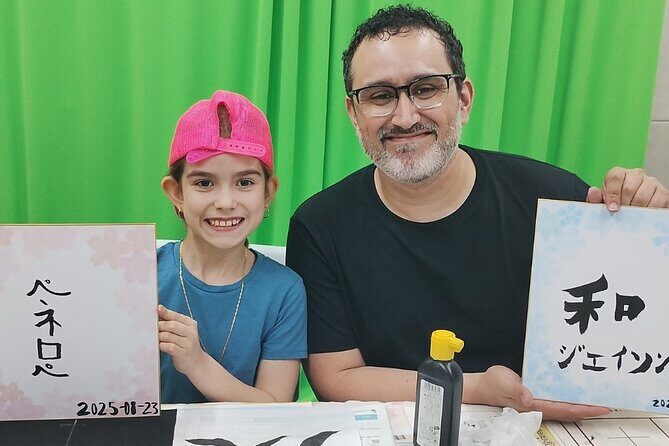
- Shikishi board calligraphy where you can write your name or a meaningful kanji word
- Origami training for beginners and kids, with a paced demo and plenty of guidance
- Yukata fitting plus photo time that turns your art into a take-home memory
- Kid-friendly cultural exchange, with easy Japanese games and a local Japanese kid when available
- Possible seasonal craft add-on, like daruma painting or washi-paper art, depending on your dates
Why this Hiroo studio setup feels different from typical Tokyo tours
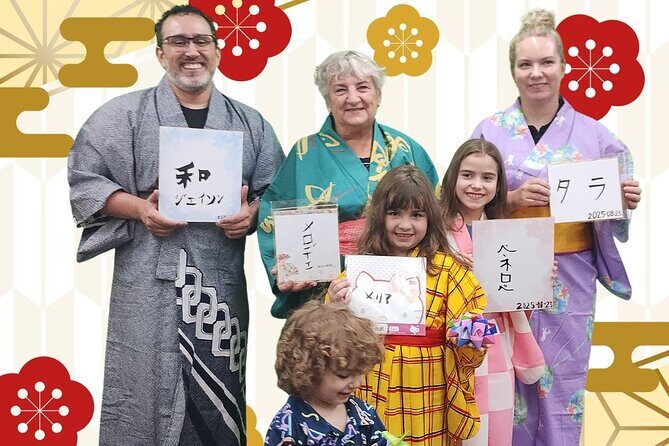
Tokyo can be noisy and fast. This workshop is built to slow you down on purpose. Instead of hop-on/hop-off sightseeing, you get a cozy, private-studio experience in Hiroo where the focus stays on making something with your hands.
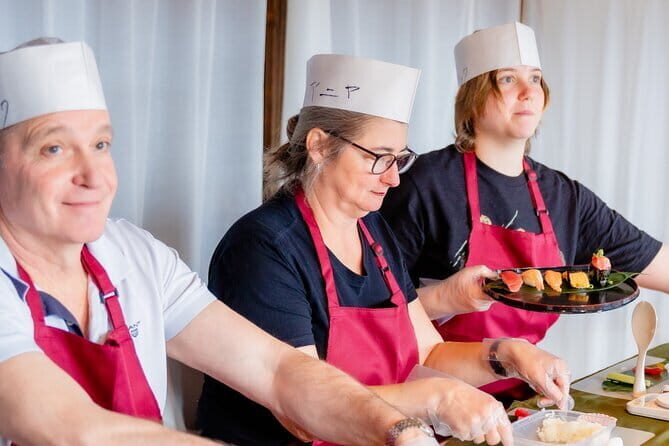
The value is in the mix. You’re not just learning one craft. You’ll do origami, then shift to calligraphy, then finish by dressing up in a summer kimono for photos. That makes it a great fit for families because kids usually like the folding and adults often enjoy the brush-and-ink part. You also get a souvenir to take home, so you’re leaving with something real instead of another fridge magnet.
Also, because it’s private group only, the pace doesn’t feel like it’s designed for speed. The sessions are timed (welcome, demo, origami, calligraphy, then yukata photo time), and that structure helps when you’re traveling with kids or you just want to know what comes next.
A few more Tokyo tours and experiences worth a look


The calligraphy session: shikishi board, brush control, and meaningful kanji
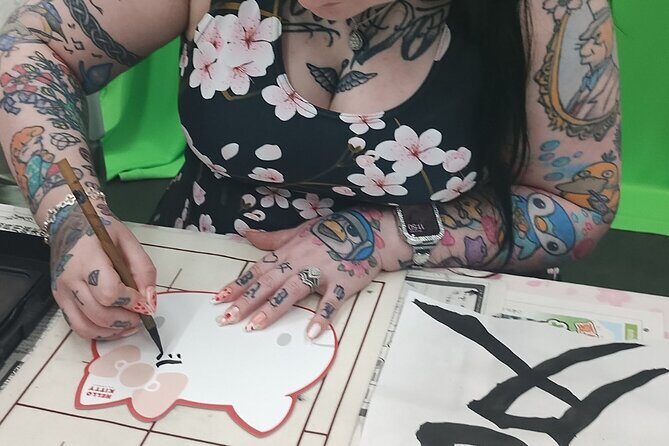
Calligraphy sounds intimidating. It’s not—at least not here. You’ll start with a quick intro and then move into a calligraphy session (about 45 minutes) where you write your favorite kanji. Your options include writing your name or a meaningful word.
What makes this practical is that you’re working on a shikishi board, a traditional writing surface used for practicing and displaying calligraphy. That matters because it keeps the experience grounded in real tools and real Japanese craft culture. You’re not just tracing letters. You’re learning how brush, ink, and board work together.
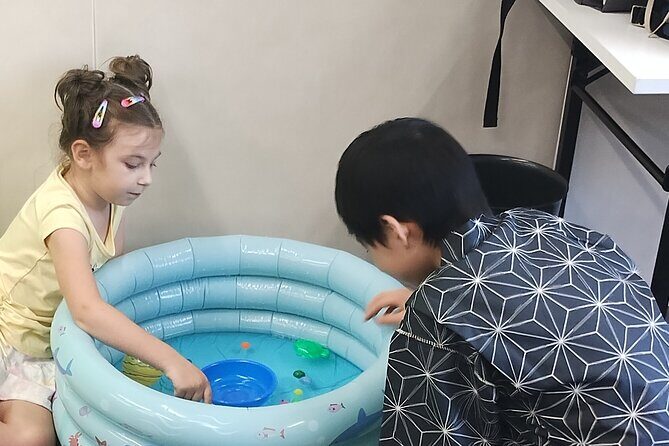
Adults typically focus on their calligraphy artwork during this part, while kids get alternate activities. The workshop includes Japanese games for children, and when a local Japanese kid is available, you can get that extra layer of casual cultural exchange that doesn’t feel stiff.
A small consideration: even when it’s beginner-friendly, calligraphy still takes patience. If your “vacation mode” is rushing, you may need to gently reset expectations. The payoff is that you’ll have a personal piece you can actually show.
Origami that works for beginners and kids, without turning it into babysitting
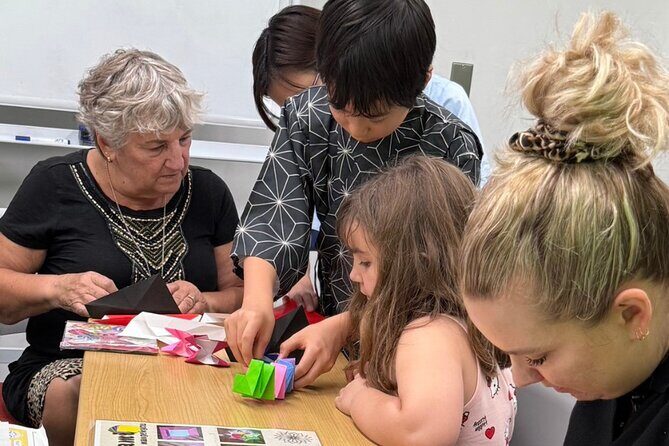
Origami is the craft most families can start enjoying immediately. Here, you get a dedicated origami workshop (about 45 minutes) after a brief craft demo.
The session is designed so beginners can keep up. The team explains the folds and then helps during the activity. That’s a big deal because the tricky part of origami is often the moment you think you did everything right, but it doesn’t fold the way you expected. With guided support, you don’t waste half the class staring at a stubborn piece of paper.
For kids, origami tends to be a confidence builder. One good fold can turn into a whole little creation, fast. For adults, it’s a nice change from screens and lines and subway maps. You get to slow down and concentrate on one small, solvable task.
If you’re traveling with younger kids, expect that the instructors keep things friendly and paced. This isn’t a “watch the master, good luck” setup. You’ll be making folds, not just listening.
Yukata fitting and photos: turning your artwork into a real memory
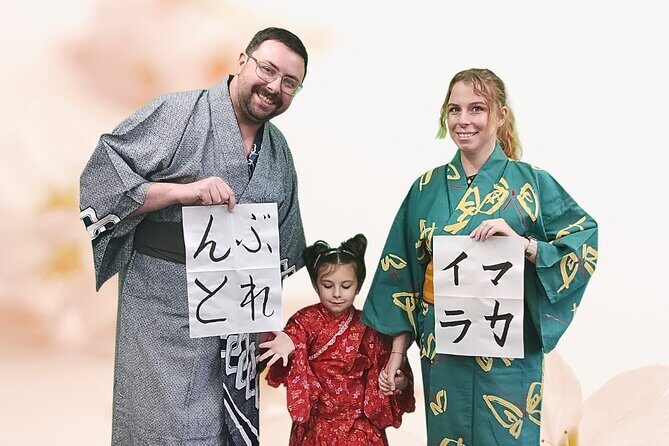
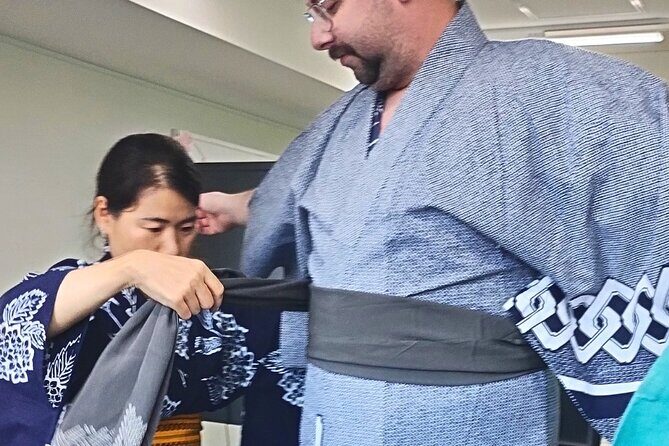
The last third of the workshop is where it gets fun in a visual way. You’ll do yukata fitting and photo time (about 40 minutes) and wear a summer kimono while holding or showing your creations.
This is the moment you can use your effort. Your calligraphy and origami become part of the photo story, not just something that sits on a table. For many people, that’s the best souvenir: you get images you’ll actually want to revisit later.
Here’s the honest consideration: yukata sizes are limited. The good news is the workshop notes that they have options for most guests. Still, if you’re very tall, have unusual proportions, or are worried about fit, it’s worth going with a flexible mindset and letting the staff guide you to what works.
Also, remember that this part is scheduled. You’re not doing a full kimono makeover experience that runs for hours. You’ll have enough time to get dressed and get photos, then the workshop wraps.
Seasonal craft options: what might change on your dates
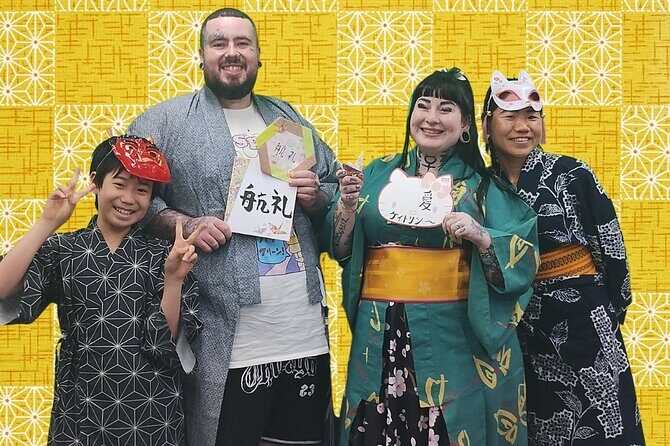
A neat detail in this workshop is that you may get seasonal crafts instead of—or in addition to—the standard calligraphy and origami flow. The information provided mentions possible options like daruma painting or washi-paper art.
How to handle this as a traveler: if seasonal crafts matter to you, check what’s available during your dates (the provider suggests checking Instagram or messaging them). That’s especially useful if you’re visiting during a time when daruma or paper art themes are popular.
Even if your session stays with calligraphy and origami only, the workshop is still built to deliver three memorable outcomes: writing, folding, and dressing up for a photo.





Price and value: why $32.52 is more than just a craft class
At $32.52 per person, this isn’t priced like a generic “activity ticket.” The value comes from what’s included.
You get:
- All necessary materials for the workshop
- Tools and equipment used during the activity
- A yukata (summer kimono)
- A take-home souvenir
- Guidance by a licensed teacher
That combination matters because craft workshops often nickel-and-dime you for supplies. Here, you’re paying for instruction plus the stuff you need to finish something. You also don’t have to arrange separate experiences for calligraphy, origami, and a photo in traditional clothing.
Duration also supports the price. You’re in there for about 2.5 to 3 hours, with multiple hands-on segments rather than a quick demo and out the door.
One more value point: it’s near public transportation and meets in Hiroo, Shibuya. You’ll still need to handle your own transit to the meeting point, but you’re not signing up for something isolated.
Who should book this workshop (and who might want to skip it)
This workshop is a strong match if you want:
- A family-friendly cultural break that isn’t exhausting like constant sightseeing
- Something creative you can actually take home
- An experience that includes kids without feeling like kids are off to the side
- A chance to do kanji calligraphy and not just buy calligraphy-themed souvenirs
It’s also great for couples. You get shared activities, plus the final yukata photo time makes it feel special without needing a separate photoshoot.
You might want to skip it if:
- You only want to photograph Japan from the outside and aren’t interested in hands-on making
- Your group has very limited patience for seated craft time (even though it’s paced well)
- You’re worried about yukata fitting and don’t like any possibility of size constraints
Practical tips to enjoy the full 2.5–3 hour flow
A few small moves can make this smoother.
- Arrive with time buffers. The workshop includes check-in and introductions, then structured segments. Being slightly early helps you start relaxed.
- Pick a meaningful kanji word ahead of time. If you already have an idea for your name or theme word, you’ll spend less time thinking and more time writing.
- Expect a shift in focus. Calligraphy and origami use different hands and attention styles. That change is part of why the workshop works, especially with mixed-age groups.
- Be flexible about the yukata. Sizes are limited, but options exist for most guests. When you trust the staff, it goes smoothly.
- Bring curiosity, not skill. The workshop is built for beginners and kids. You don’t need prior experience to get a satisfying result.
Should you book the Tokyo Family Culture Workshop in Hiroo?
Yes, if you want a calmer, more personal slice of Tokyo culture. This is one of those activities that feels like you actually spent time learning something, not just buying time in a city. The strongest reasons to book are the three-part structure (calligraphy, origami, yukata photo) and the fact that everything needed is included, from materials to guidance to the yukata.
If your family likes crafts, or you want a break from crowded attractions, this is a smart use of a half-day. The only real caution is the yukata sizing limits. If that concerns you, message ahead and plan to be flexible.
FAQ
How long is the workshop?
It runs about 2.5 to 3 hours total, including welcome, instruction time, the craft sessions, yukata fitting and photos, and the farewell.
Is this a private experience or a group class?
It’s private group only. Only your group participates.
What activities are included?
You’ll do calligraphy on a shikishi board, an origami workshop, and then a yukata fitting and photo session with your artwork.
Is the workshop family-friendly for children?
Yes. Kids participate with easy Japanese games during the calligraphy portion, and the workshop is designed so beginners and kids can join the origami.
Do I get materials and tools?
Yes. All necessary materials and the tools/equipment used during the activity are included.
Do I get a yukata to wear for photos?
Yes. Yukata (summer kimono) is included. Sizes are limited, but options are available for most guests.
Do adults and children do the same calligraphy activity?
Adults focus on creating calligraphy artwork, while children have games during that calligraphy time.
What souvenir do I take home?
You receive a protected souvenir to take home after the workshop.
What’s the meeting point address?
The workshop starts at Japan, 150-0012 Tokyo, Shibuya, Hiroo, 5-chōme412 大成ビルディング.
What is the cancellation policy?
You can cancel for a full refund if you cancel at least 24 hours before the experience starts. Free cancellation is offered, based on local time.