REVIEW · TOKYO
Free Choice of Itineraries Tokyo Private Tour
Book on Viator →Operated by Fulfilling Inc. · Bookable on Viator
Tokyo is better with a plan. This private tour lets you pick four must-see spots and spend about 8 hours getting from highlight to highlight without the stress of route math. I like that it covers both big icons and fun side trips (think owl and hedgehog cafés), and I like that you start with hotel pickup and an English-speaking guide who keeps the day moving. One thing to keep in mind: several of the most famous stops require you to pay admissions separately.
The structure is straightforward: you choose your destinations by replying to an email after booking, then your guide meets you in the hotel lobby and uses public transport to connect the dots. It’s only for your group, so you can move at a pace that fits kids, older legs, or just your own curiosity. If you’re the type who loves flexibility more than checklists, this is a practical way to do Tokyo in one day.
In This Review
- Key highlights at a glance
- A 4-stop Tokyo day with a guide who handles the hard parts
- How to choose your four destinations without regret
- Tsukiji Outer Market: start with real Tokyo food energy
- Senso-ji and Meiji Jingu: two very different kinds of calm
- Shibuya Crossing for a photo-and-feel moment
- Skytree and Tokyo Tower: pick the one that matches your view style
- Ueno Zoo: animal time that fits into a Tokyo day
- Shinjuku Gyoen, Hamarikyu, and Imperial Palace East Gardens: three kinds of green
- Owl cafés, hedgehogs, and the maid café option: playful stops with real tradeoffs
- What makes this tour feel smooth: public transport with a private guide
- Price and value: where the $191.14 really lands
- Tips to make your four stops actually work as a day
- Who this Tokyo private tour suits best
- Should you book this Tokyo private tour?
- FAQ
- How many destinations can I choose?
- Is hotel pickup included?
- Is this tour private or shared?
- Is the tour done using public transport?
- Are admission fees included?
- What language is the guide?
Key highlights at a glance
- Pick 4 destinations from a menu of classics, gardens, viewpoints, and animal or themed cafés
- Hotel lobby meeting plus hotel pickup included, so you start the day ready to go
- English-speaking professional guide who handles the day’s flow on public transport
- Free-to-enter icons like Tsukiji Outer Market, Senso-ji, Shibuya Crossing, and Meiji Jingu (admissions not needed there)
- Paid attractions are optional (Skytree, Tokyo Tower, Ueno Zoo, and more), so you control your budget
- Guide routing + pacing means less time asking questions, more time looking around
A 4-stop Tokyo day with a guide who handles the hard parts
This tour is built around one simple idea: Tokyo is huge, so you shouldn’t waste a day figuring out logistics. You’ll choose four destinations from the options offered, and your guide will design the walking-and-transit flow around them using public transport. With hotel pickup and a meeting point in your hotel lobby, you avoid the early-day scramble that often eats up half a morning.
What I like most is the balance. You’re not locked into a “see everything” package. Instead, you pick your mix: market + temple, viewpoints + garden, or even an icon stop paired with an animal café moment. It’s also private, meaning it’s just your group, not a seat-filling crowd that forces you to rush.
The price is $191.14 per person, which becomes more meaningful when you remember what’s included: the private English-speaking guide, the meet-up in the hotel lobby, and the guide’s public-transport to/from. If you’re traveling as a couple or small family, it’s a solid way to buy time and reduce friction—especially on a first visit.
You can also read our reviews of more private tours in Tokyo



How to choose your four destinations without regret
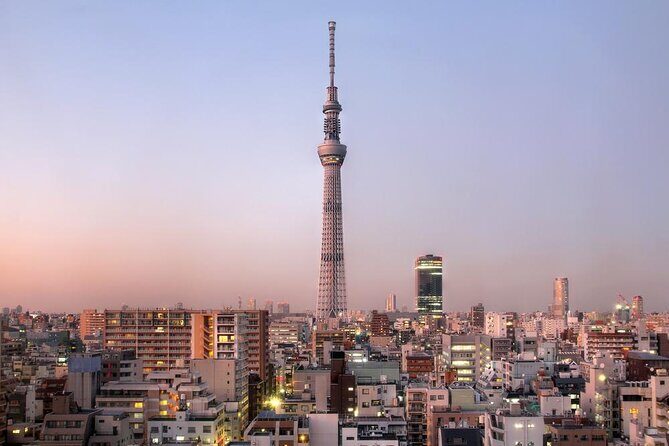
Choosing four stops sounds easy until you’re staring at a list that includes both Tokyo icons and quirky cafés. The trick is to pick destinations that complement each other instead of repeating the same vibe.
Here’s an easy way I’d sort your options:
- Food and old-school Tokyo: Tsukiji Outer Market
- Sacred and iconic temples: Senso-ji and Meiji Jingu
- Sky views: Tokyo Skytree and Tokyo Tower
- Green breaks and palace-era sites: Shinjuku Gyoen, Hamarikyu Gardens, and the Imperial Palace East Gardens / Edo Castle Ruin area
- Animals and playful stops: Ueno Zoo and the owl/hedgehog/maid cafés
Now, budget reality. Several stops are free to enter, while others are not included. Tsukiji Outer Market, Senso-ji, Shibuya Crossing, and Meiji Jingu are listed with admission as free. Skytree, Ueno Zoo, Tokyo Tower, Shinjuku Gyoen, Hamarikyu Gardens, and the Imperial Palace East Gardens area are marked as not included for admission. The animal/theme cafés are also not included.
So when you build your four, think like this:
- Want the day to feel “big and famous” with predictable costs? Add Skytree or Ueno Zoo.
- Want to keep spending tighter? Stack your day with the free icons plus one paid experience.
Tsukiji Outer Market: start with real Tokyo food energy
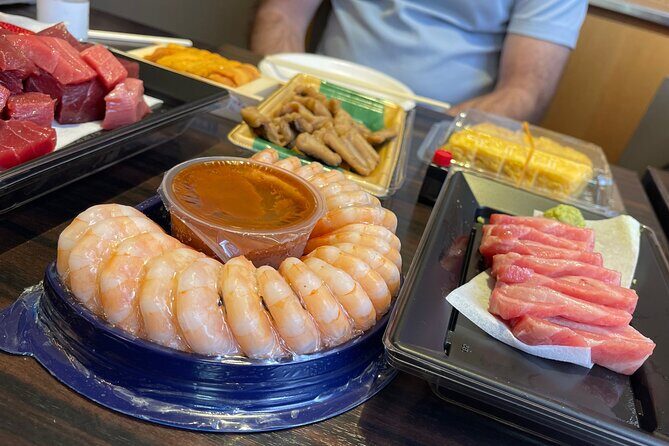
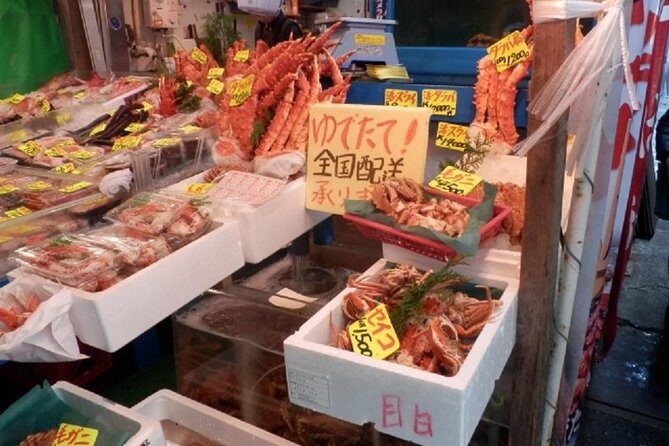
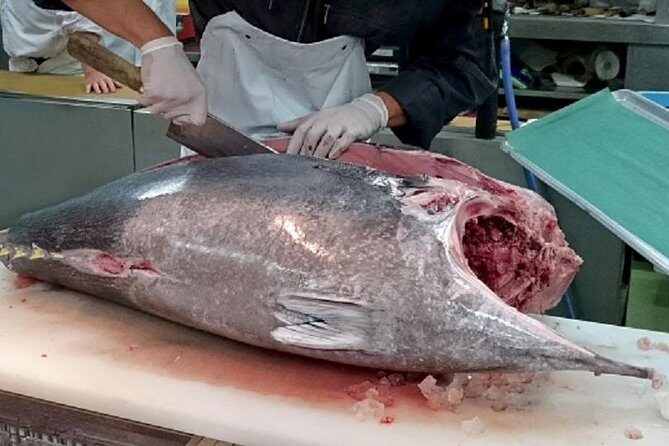
Tsukiji Outer Market is the kind of place where Tokyo wakes up early. The streets mix wholesale and retail shops with restaurants, which gives you more than just shopping—there’s a constant food-busyness to watch and smell. Your guide plans for a 1-hour stop, and the emphasis here is on trying fresh seafood and traditional Japanese food. That’s ideal timing for breakfast or a light early lunch.
Practical tip: even if you’re not a heavy “snack all day” person, go with a sense of curiosity. This is where you see what Japanese daily food looks like close up—ingredients, packaging, and the rhythm of vendor life.
If you like food markets, this stop is a high-value choice. If you’d rather skip crowds, you can still pick it, but treat it as a quick taste-and-look, not a full shopping binge.
Senso-ji and Meiji Jingu: two very different kinds of calm
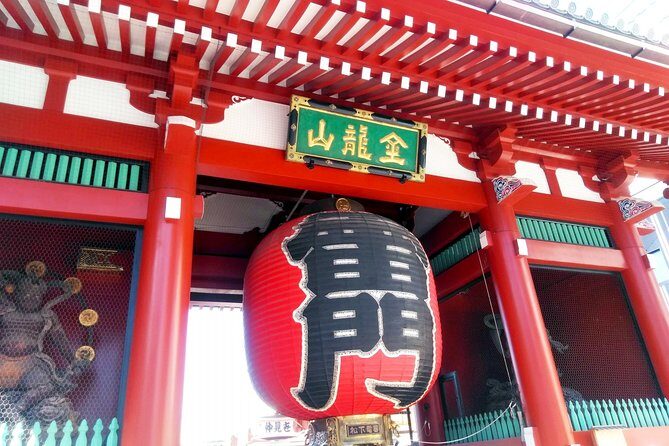
Senso-ji Temple is one of Japan’s biggest tourist draws for a reason. You’ll spend about an hour here, with highlights like the five-story pagoda and the Hozo-mon Gate (Treasure-House Gate). The famous temple feel is all around you, but the time window is long enough to slow down and actually notice details instead of just walking through.
Meiji Jingu Shrine, about an hour as well, works as a counterbalance. This one enshrines Emperor Meiji and Empress, and it’s a year-round magnet for worshippers and visitors. The page also notes it as a power spot, where your fortune might rise, and you may even spot couples dressed for weddings in traditional style.
One practical thought: Senso-ji tends to bring intense visual stimulation. Meiji Jingu is the better choice if you want your day to include a softer breath of atmosphere—trees, quieter walking, and a more reflective pace.
Shibuya Crossing for a photo-and-feel moment
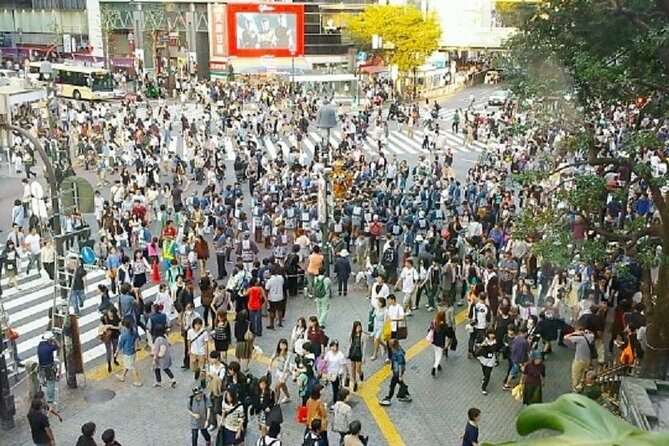
Shibuya Scramble Crossing is fast—around 30 minutes here. The numbers are almost comical: roughly 500,000 people cross daily, and one green light can mean about 3,000 walkers moving at once. The point isn’t just photography; it’s watching the choreography of people and traffic signals that work so well the crowds don’t collide.
This is the stop I’d choose if you want a modern Tokyo punctuation mark in the middle of a day that otherwise leans traditional (temples, markets, gardens). If you’re photography-obsessed, this time block is still realistic—you’ll get the crossing experience without turning the whole day into a waiting game.






Skytree and Tokyo Tower: pick the one that matches your view style

Both Tokyo Skytree and Tokyo Tower deliver skyline drama, but they do it differently, and that affects what you’ll enjoy.
Tokyo Skytree
Skytree is the world’s tallest tower listed at 634 m, and it includes observation decks at 340 m and 450 m. There’s also a café on the observation deck, where you can drink tea while you look out. On sunny days, you may see Mount Fuji—so this stop can be worth a bit of weather optimism.
Tokyo Tower
Tokyo Tower is shorter at 333 m and was built in 1958. The listing points out a view café and a Tower jingu Shrine. It also mentions two lighting styles: Landmark Light and Diamond Veil, with seasonal differences (white in summer, orange in winter for Landmark Light).
How I’d decide:
- If you want maximum height and a “high-up tea break,” choose Skytree.
- If you want a classic, iconic tower vibe with a shrine and a view café, choose Tokyo Tower.
Either way, set aside a budget line item for admission, since those are not included.
Ueno Zoo: animal time that fits into a Tokyo day
Ueno Zoo is a Tokyo Metropolitan Zoo and was opened as Japan’s first zoo back in 1882. You’re allocated 2 hours 30 minutes, which matters because animals aren’t on your schedule. This is enough time to wander through exhibits without feeling like you’re constantly sprinting.
The animal variety is a major draw in the description: about 400 species, including rare animals like Sumatra tiger. You’ll also find a Giant Panda Building and areas for Japanese wild birds and animals such as sika deer and Japanese serow deer. The listing also notes sections like a forest where the gorilla tigers live—so it sounds like the zoo is built for variety, not one-off viewing.
For most people, this is one of the best “change the pace” options. It also makes a nice anchor if you’re traveling with kids, or if your day is otherwise heavy on temples, shopping streets, and viewpoints.
Shinjuku Gyoen, Hamarikyu, and Imperial Palace East Gardens: three kinds of green
Tokyo gardens are not all the same, and the best way to enjoy them is to pick based on the kind of scenery you want.
Shinjuku Gyoen National Garden (about 1 hour)
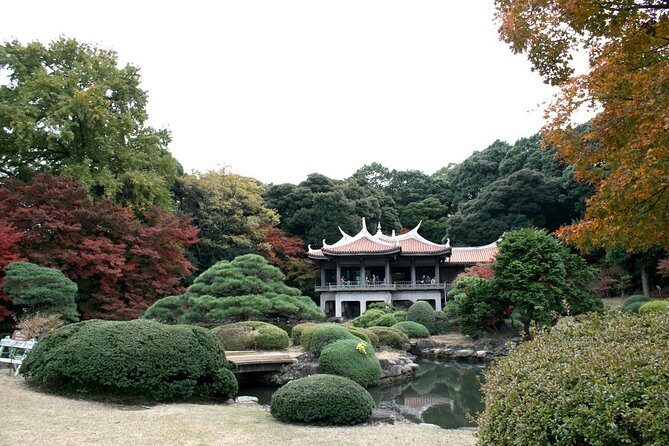
This garden represents the Meiji period, blending a well-formed garden, landscaped garden, and Japanese garden. It was built in 1906 as an imperial garden and is surrounded by over 10,000 trees. The listing notes seasonal scenery and historic buildings, plus a way to learn imperial history from those structures.
Hamarikyu Gardens (about 1 hour)
Hamarikyu opened to the public on April 1, 1946, and the scale is big: about 250,165 m². You’ll see Shioiri Pond, and the park is surrounded by a seawater moat filled by Tokyo Bay. It was remodeled as a public garden on the site of a Tokugawa shogun villa in the 17th century—so it has a strong “palace grounds” feel even though you’re in a city.
Imperial Palace East Gardens and Edo Castle Ruin (about 1 hour)
This stop puts you in Chiyoda Ward. The premises include grounds associated with the Emperor and Empress and the Imperial Household Agency office, plus the palace area. Historically, the listing notes it was used as Edo Castle during the Tokugawa period, and it highlights Nijyubashi bridge as a top sight. Even with skyscrapers around, the area is described as full of nature, which can be a real mental reset.
If you like open space and wandering, Shinjuku Gyoen and Hamarikyu make a lot of sense. If your travel goal is to connect the modern skyline to older Tokyo power centers, the Imperial Palace East Gardens stop is the logical choice.
Owl cafés, hedgehogs, and the maid café option: playful stops with real tradeoffs
This is the fun part, but it comes with a reality check: these aren’t the type of attraction you can skim. You’ll want time to relax and actually interact, and the tour structure gives you about an hour for each listed café option.
Owl café Tokyo Akiba Fukurou (about 1 hour)
You interact with owls, and the description emphasizes the emotional effect—people often smile, and the café leans into a calm atmosphere with classical music and chandelier lighting. It’s designed as a healing-style hangout.
Hedgehog Café HARRY, Harajuku (about 1 hour)
This one is described as a drink-only concept (not open for lunch or dinner). The hedgehogs play with you, or they may sleep on your hands. It’s very much about gentle, close-up contact rather than showy entertainment.
Maid café: at-home café Akihabara Main (about 1 hour)
Here you enjoy a meal while maids play, sing, and dance. The listing also describes maid clerks drawing pictures with ketchup and chocolate on an omelet and cafe latte. If you want an experience that’s part performance and part food, this is the pick.
The main consideration: these are listed as admission not included, and you’ll be paying for the experience yourself. If that cost fits your day, they’re a genuinely memorable change of pace. If you’d rather spend your money on viewpoints and gardens, skip the cafés and put that time into a major icon stop.
What makes this tour feel smooth: public transport with a private guide
Tokyo public transport is excellent, but navigating it while also scanning for what to see next can drain your energy. This tour takes the stress away by having an English-speaking guide manage the flow between your selected stops using public transport.
Another detail that matters: the guide’s public transportation to/from is included, while your own transport isn’t listed as included. That means you should plan to pay your own rail or metro rides as you go. The good news is that hotel pickup and a private guide still reduce the biggest headache: deciding which line, which station exit, and how long you’ll lose walking around.
In the best-case scenario, you’ll feel like you’re traveling with someone who understands the day’s rhythm. One example from past guidance notes that Yoki handled highlights like the Outer Market, the Skytree, and the Imperial Palace in an engaging way, which is exactly what you want from a day designed around your choices.
Price and value: where the $191.14 really lands
Let’s talk value without hand-waving.
You’re paying for a few concrete things:
- a private English-speaking guide
- hotel lobby meeting and pickup
- an about-8-hour day built around your four picks
- guide transport to/from via public transport
- a mobile ticket
Then you manage the rest: food and drinks are not included, and admissions are not included for many of the biggest-ticket stops (Skytree, Ueno Zoo, Tokyo Tower, several gardens and the Imperial Palace East Gardens area). That means your final out-of-pocket cost depends on which four destinations you select.
This is where the tour can be a smart move: if you want the convenience of a private guide but you also plan to pick a mix that includes at least one or two paid attractions. It’s less of a deal if you only choose free stops, because then you’re paying mostly for guiding and transport rather than savings on admissions.
Also note the practical booking rhythm: it’s commonly booked about 81 days in advance. If your dates matter, reserve earlier rather than later.
Tips to make your four stops actually work as a day
A private 4-stop day works best when you plan for reality: Tokyo has lines, walking, and waiting. Here’s how to make it feel effortless.
- Reply with your destination list quickly after booking. The tour includes an email after booking, and you reply with the sites you want to visit.
- Use one stop as your anchor. Choose a major paid or big-icon stop (Skytree or Ueno Zoo, for example) and build around it.
- Balance crowd energy. Mix one high-people area (Tsukiji or Shibuya) with one calmer space (Meiji Jingu or a garden) so you don’t burn out early.
- Bring comfortable shoes. You’re doing a private day on public transport with multiple sightseeing blocks, and walking adds up fast.
- Budget admissions and food separately. The free-to-enter stops are clearly marked, but the paid ones aren’t included.
Who this Tokyo private tour suits best
This tour fits best if you want a first-timer-friendly route that still feels personal. It’s a great match for:
- couples and friends who don’t want to juggle train transfers and ticket lines alone
- families who value a guide to keep the day manageable
- travelers who want a “Tokyo greatest hits” mix with one playful twist (like owls or hedgehogs)
- anyone staying close to where hotel pickup is practical and who wants to start the day without transit stress
If you’re an experienced Tokyo self-navigator and you love planning everything yourself, you might not need a private guide. But if you’d rather buy back energy and let someone else handle the route between your four choices, this is a strong format.
Should you book this Tokyo private tour?
I’d book it if you like the idea of choosing your own four stops and you want an English-speaking guide to manage the hardest part: timing and getting around Tokyo on public transport. The hotel pickup and private setup make the day feel intentional, not thrown together.
Skip it if your travel goal is to do zero guided structure, or if you plan to pick only free stops and keep spending minimal. In that case, the admissions logic won’t work in your favor.
If you’re flexible and you’re excited to mix classics (temples and markets) with one or two signature experiences (views, animals, gardens, or themed cafés), this private day is a good value way to get a lot of Tokyo into one stretch.
FAQ
How many destinations can I choose?
You choose four destinations from the list of options, then the guide designs the day around those picks.
Is hotel pickup included?
Yes. Meeting is in your hotel lobby, and hotel pick up is included.
Is this tour private or shared?
This is a private tour. Only your group participates.
Is the tour done using public transport?
Yes. It’s a private tour using public transport, with the guide using public transport to/from as part of the inclusions.
Are admission fees included?
Admission is free for some stops like Tsukiji Outer Market, Senso-ji Temple, Shibuya Crossing, and Meiji Jingu Shrine. Admission for other stops such as Tokyo Skytree, Ueno Zoo, Tokyo Tower, and multiple gardens and cafés is not included.
What language is the guide?
The tour includes an English-speaking professional guide.