REVIEW · TOKYO
Sushi-Making in Nakameguro, Tokyo with a Professional Chef
Book on Viator →Operated by 寿司活LAB · Bookable on Viator
VR first, then nigiri.
In Nakameguro, I like how Sushi Katsu LAB mixes a playful VR fishing warm-up with real, hands-on fresh wasabi prep before you ever make your own nigiri. It’s a smart way to learn sushi culture without feeling like you’re stuck watching from the sidelines.
I also like that the class stays small, with a maximum of 6 people, so you get clear coaching on fish handling and shaping. One possible drawback: you will cut and handle fresh fish, so if you prefer a strictly eat-only sushi outing, this might feel too hands-on.
In This Review
- Key things I’d mark on your mental map
- Where Nakameguro sushi class energy feels different
- Meeting at GEMS Nakameguro and what happens when you arrive
- VR fishing first: not a gimmick, a warm-up
- Fresh wasabi grating and nigiri shaping the real way
- Cutting fresh fish and learning what good handling feels like
- Tamagoyaki demo: the egg technique you’ll remember
- Tasting your own nigiri, plus chef-clothing photo moments
- Price and value: what $114.45 buys you (and why it’s not just a ticket)
- Who this suits best in Tokyo
- Should you book Sushi Katsu LAB’s Nigiri Sushi Experience?
- FAQ
- Where is the meeting point for the class?
- How long is the Nigiri Sushi Experience?
- What do you do during the activity besides making nigiri?
- How big is the group?
- How much does it cost?
- Do I get a ticket on my phone?
- What’s the cancellation policy?
Key things I’d mark on your mental map
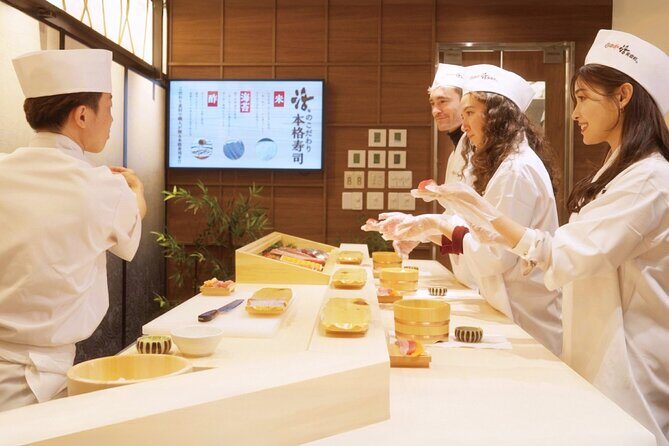
- Virtual reality fishing sets the stage and makes the fish lesson feel less abstract
- Professional chef guidance helps you learn the rhythm of nigiri shaping
- Fresh wasabi grating shows how different it feels from the tube stuff
- Live tamagoyaki demo gives you a quick look at Japanese egg technique
- Hands-on fish prep means you get to cut and work with fresh ingredients
- You taste your own nigiri right there, plus photo moments in chef clothing
Where Nakameguro sushi class energy feels different
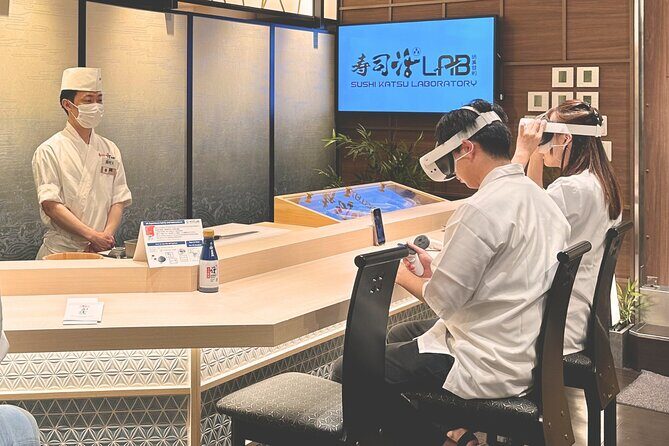
Nakameguro is a great choice if you want Tokyo that feels lived-in, not just postcard-focused. Doing sushi making here gives you the satisfaction of learning a craft, then stepping back into the neighborhood afterward with no long commute drama.
The best part is the format. Instead of a lecture with a few tastings, you’re actively working through the core moves: handling fish, shaping nigiri, and using classic tools like wasabi. That hands-on structure is what makes this class feel like value, not just entertainment.
Also, the class runs about 1 hour 30 minutes, which is long enough to learn real technique but short enough to fit between sightseeing plans.
You can also read our reviews of more tours and experiences in Tokyo.



Meeting at GEMS Nakameguro and what happens when you arrive
You’ll meet at GEMS Nakameguro, 2-chōme-13-3 Kamimeguro, Meguro City, Tokyo 153-0051, Japan. The activity ends back at the meeting point, so you’re not stuck figuring out a second location.
When you arrive, the staff will get you set with appropriate clothing for the hands-on cooking part. I found that kind of touch matters. In a sushi class, you’re working around fish and kitchen mess, so being kitted out keeps things comfortable and keeps the focus on technique instead of your clothes.
The group is capped at six people, and that small size usually changes the vibe fast: you’re less likely to feel rushed, and the chef can actually correct what your hands are doing.
VR fishing first: not a gimmick, a warm-up
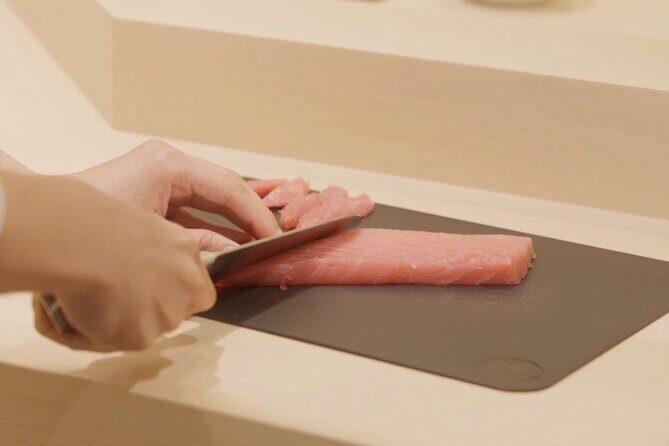
The tour starts with a virtual-reality fishing adventure. Think of it as a story starter. You get to see the fish sourcing idea in a playful way before you move to the real ingredient work.
Why it’s useful: sushi is all about fish quality and respect for ingredients. When you start with VR fishing, you’re mentally primed to notice details like texture, cut style, and how fish is handled. Then, when you’re later shaping nigiri, you’re not just copying steps. You’re connecting the steps to what the ingredients actually are.
For people who get bored watching cooking from a chair, VR helps. Even if you’re not a gamer, it’s quick, immersive in the practical sense, and it gets you engaged before your hands take over.
Fresh wasabi grating and nigiri shaping the real way
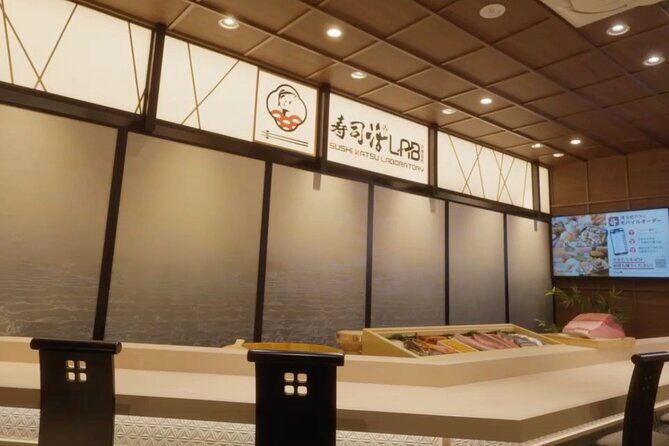
After the VR segment, you shift into the core craft: making nigiri. You’ll learn how to handle fresh fish and how to shape authentic sushi under the chef’s supervision.
The wasabi moment is a standout because it’s sensory. You’re not just learning that wasabi goes with sushi; you’re learning how it changes flavor when it’s fresh and grated. Grating also gives you a small lesson in texture and aroma. Tube wasabi is convenient, but fresh wasabi is a different experience, and the class makes that difference feel obvious fast.
Then comes the part you came for: shaping nigiri. You’ll work on the technique that turns fish and rice into a neat, balanced piece. The chef guidance matters here. Nigiri isn’t just a food shape; it’s a technique where pressure and grip affect how it holds together.
One practical note: this is not a hands-off show. You’re actively making the sushi pieces, and you’ll likely take a few attempts before your shapes look how you want.
Cutting fresh fish and learning what good handling feels like
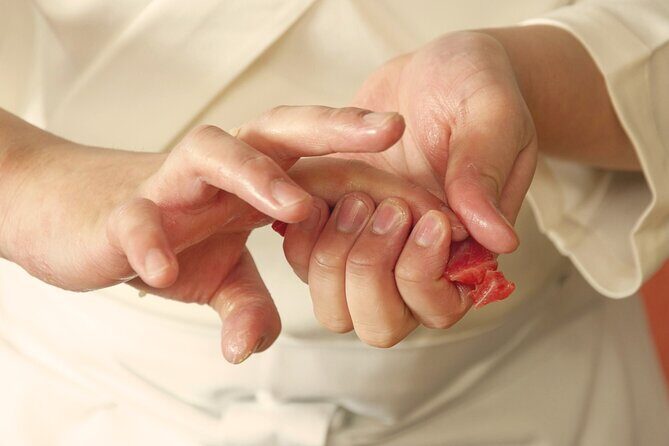
You’ll also do hands-on prep like cutting fish. That lines up with what people love most about the class: you leave with the confidence that you actually learned technique, not just watched it happen.
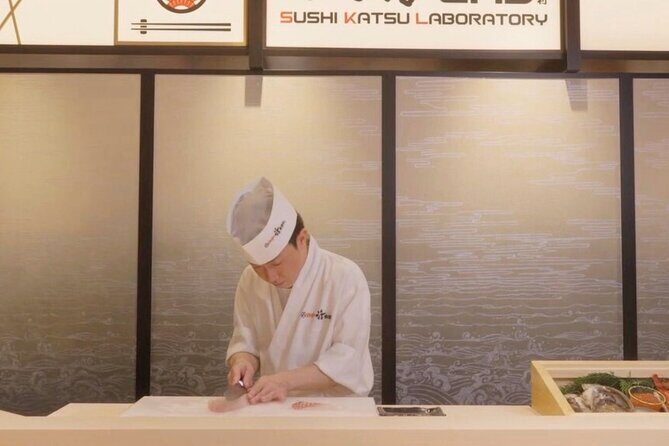
Handling fish can feel intimidating if you’re used to ordering sushi and moving on with your day. The class is set up to make it manageable. You’re given coaching as you work, and you’re doing it in a controlled setting with a professional chef leading.
If you’re squeamish about raw seafood, this is the section to consider carefully. But if you’re willing to try, it’s also one of the most memorable parts. There’s something oddly satisfying about doing a small, precise task that directly connects to a dish you’ve eaten for years.






Tamagoyaki demo: the egg technique you’ll remember
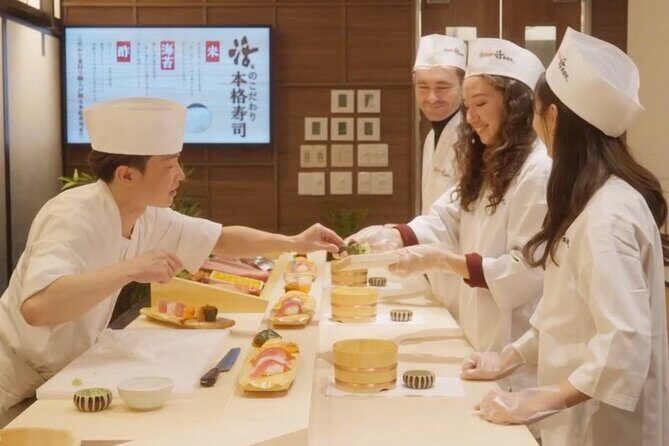
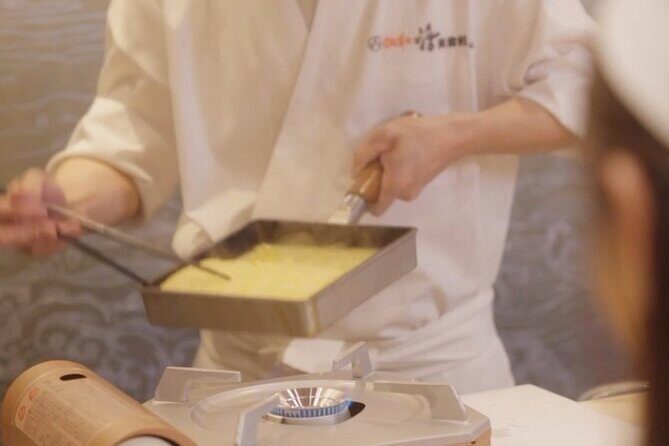
Midway through, you get a live demonstration of tamagoyaki, the Japanese rolled omelet. Even if you’re not trying to cook eggs at home tonight, watching how it’s made helps you understand why Japanese egg dishes have a specific structure and bite.
The chef’s approach gives you a feel for timing and rolling technique. It’s also a nice break from fish handling without turning the class into a full stop. You keep moving through the cooking rhythm: fish work, egg technique, then back to tasting.
And yes, you get to taste what’s prepared as part of the class. That matters because you’re not left wondering if your nigiri ideas would taste good. You get immediate feedback in the form of flavor.
Tasting your own nigiri, plus chef-clothing photo moments
The class finishes with you tasting the sushi you create. That part is not just a feel-good ending. It’s how technique becomes real. You can make changes right away in your mind: Did you like the balance? Was the wasabi intensity what you expected? Did the nigiri feel right in your hands?
People tend to remember the tasting because it’s personal. You’re eating the result of your effort, not just enjoying a finished plate.
There are also photo moments. The class includes time for memorable photos of the sushi you make in chef clothing, which is a fun way to keep the experience tangible after you leave.
Price and value: what $114.45 buys you (and why it’s not just a ticket)
At $114.45 per person for about 1 hour 30 minutes, the first question is simple: is this worth it?
Here’s the value logic I’d use:
- You’re paying for a professional chef-led class, not a self-guided workshop.
- You get multiple hands-on components: fish handling/cutting, nigiri shaping, and fresh wasabi grating.
- You also get structured entertainment with purpose: VR fishing sets context before you start working.
- You’re not just learning technique; you taste what you make on the spot.
The small group size also supports the value. When a class is capped at six people, you’re more likely to get real corrections on technique, which is what usually separates a good class from a forgettable one.
If you’ve done sushi classes elsewhere that mostly involve rice seasoning with minimal interaction, this one feels more complete because you touch the key ingredients and learn the core steps.
Who this suits best in Tokyo
This is a strong fit if you want sushi culture that feels hands-on and guided, not like a museum exhibit with chopsticks.
It also works well for families, since the format has variety: VR fishing, knife work, shaping nigiri, an egg demo, and a tasting at the end. Kids and adults both get multiple “new things” to do, so the session doesn’t drag.
You’ll probably enjoy it most if you:
- like cooking classes where you actually make food
- are curious about how sushi technique changes flavor
- want something different from standard sightseeing meals
The main mismatch is the hands-on fish prep. If the idea of cutting and handling fresh fish makes you uncomfortable, pick a meal-focused sushi experience instead.
Should you book Sushi Katsu LAB’s Nigiri Sushi Experience?
If your goal is to leave Tokyo knowing more than how to order nigiri, I’d book it. The combination of VR fishing, fresh wasabi grating, and a chef-guided nigiri workflow makes the class feel practical, not performative.
I’d hesitate only if you strongly dislike raw food handling. Otherwise, for a small group class with tasting built in, it’s a solid use of time in Nakameguro.
FAQ
Where is the meeting point for the class?
You’ll meet at GEMS Nakameguro, 2-chōme-13-3 Kamimeguro, Meguro City, Tokyo 153-0051, Japan. The activity ends back at the same meeting point.
How long is the Nigiri Sushi Experience?
It runs for about 1 hour 30 minutes.
What do you do during the activity besides making nigiri?
The class includes a virtual-reality fishing adventure, hands-on nigiri sushi making, grating fresh wasabi, a live tamagoyaki demonstration, and tasting the sushi you create.
How big is the group?
The activity has a maximum of 6 travelers.
How much does it cost?
It costs $114.45 per person.
Do I get a ticket on my phone?
Yes, it uses a mobile ticket.
What’s the cancellation policy?
You can cancel for free up to 24 hours in advance for a full refund. If you cancel less than 24 hours before the start time, the amount paid is not refunded.