REVIEW · KYOTO
Kyoto Fushimi-Inari Night Walking Tour
Book on Viator →Operated by Tomodachi Tours · Bookable on Viator
Night at Fushimi Inari feels like another Kyoto. A guided small-group walk keeps it calm (max 12), and the shrine looks totally different when the lanterns and dusk take over. I also like that you get the meaning behind what you’re seeing, from Inari worship to practical prayer etiquette, not just pretty photos. One thing to consider: you will be walking on stone paths through the gates after sunset, so bring solid shoes and go slow.
With free admission to the shrine and a mobile ticket, this tour is a straightforward way to spend 1.5 to 2 hours getting your bearings fast. Guides like Jem, Tammy, and Hiro in particular are praised for clear explanations and friendly pacing, including time for photos without losing the group. If you hate walking (even a small hike), this may feel like more effort than you want.
In This Review
- Quick Reasons You’ll Like This Kyoto Night Walk
- Why Night Changes Fushimi Inari (and Your Photos)
- The Fox-Statue Start: Where You’ll Meet and What It Means
- Fushimi Inari-taisha After Dark: Torii Gates, Foxes, and Quiet Side Stops
- How the Guide Turns Worship Into Something You Can Follow
- Walking Time, Shoes, and What “Small Hike” Really Means
- Value Check: What $43.11 Buys You (Besides a Ticket)
- Who This Tour Suits Best (and Who Should Think Twice)
- Practical Tips Before You Go
- Should You Book This Kyoto Fushimi-Inari Night Walking Tour?
- FAQ
- What is the duration of the Kyoto Fushimi-Inari Night Walking Tour?
- How much does the tour cost?
- Do I need to pay shrine admission?
- Where do I meet the guide?
- How big is the group?
- Is there a mobile ticket?
- Is this tour near public transportation?
- Are service animals allowed?
- Can I cancel and get a full refund?
Quick Reasons You’ll Like This Kyoto Night Walk
- Max 12 people means you’re not stuck in a crowd stampede
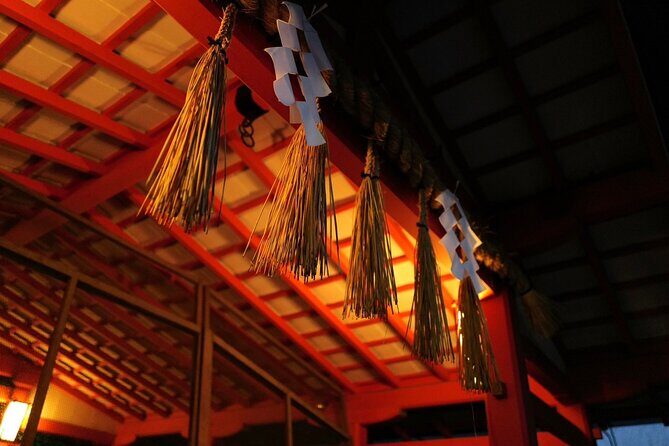
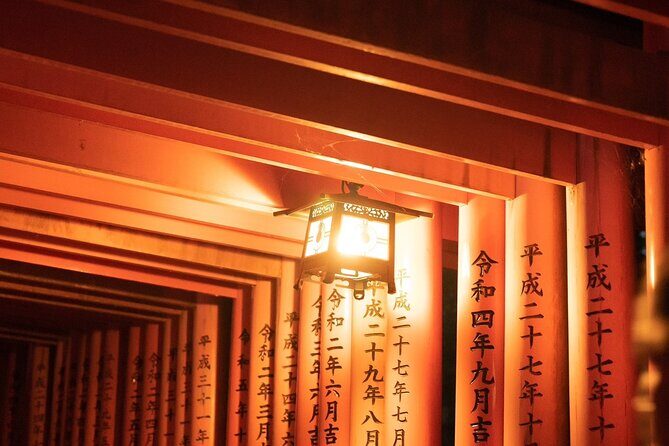
- Dusk and lantern lighting turn the torii gates into a calmer, moodier scene
- Inari Shrine context helps you understand what you’re looking at (not just where to walk)
- Prayer guidance shows how different sites are approached in Shinto practice
- Guided navigation at night keeps you from feeling lost in the gate-and-path maze
- Time for photos with a guide who knows when to pause
Why Night Changes Fushimi Inari (and Your Photos)
Fushimi Inari is famous for its thousands of red torii gates. In daytime, those gates can feel like a conveyor belt of people. At night, the atmosphere shifts toward quiet focus, and the walk feels more like you’re visiting a living place of worship than sightseeing a landmark.
You’ll still see plenty of structure—fox statues, side shrines, and the paths climbing Mount Inari—but with less pressure. The lighting on the routes also makes photos easier, especially when you want depth through the gates rather than just a flat crowd shot.
If your goal is to understand the shrine as much as to see it, night timing helps a lot. It gives you a window to slow down, look closely, and listen to what your guide is pointing out.
You can also read our reviews of more walking tours in Kyoto



The Fox-Statue Start: Where You’ll Meet and What It Means
Your meeting point is the fox statue at the entrance to Fushimi Inari Taisha Shrine. That matters more than it sounds, because this area can be confusing once you’re surrounded by gates and branching paths. Starting clearly reduces the “wait, which way now?” stress—especially after dark.
This tour runs about 1 hour 30 minutes to 2 hours, so it’s long enough to feel satisfying but not so long that you’re exhausted halfway up. It also ends back at the meeting point, which helps if you’re planning dinner or another evening stop after.
Since it’s near public transportation, you can usually fit it into your Kyoto rhythm without reorganizing your whole day. You just need to be there on time, because walking tours are happiest when the group moves together.
Fushimi Inari-taisha After Dark: Torii Gates, Foxes, and Quiet Side Stops
The heart of the experience is your guided walk through Fushimi Inari-taisha, the spiritual center tied to Inari. That’s the god associated with rice, agriculture, and business—so people visit with hopes for practical success, health, and happiness. Night makes this feel less like “a photo spot” and more like a place with real purpose.
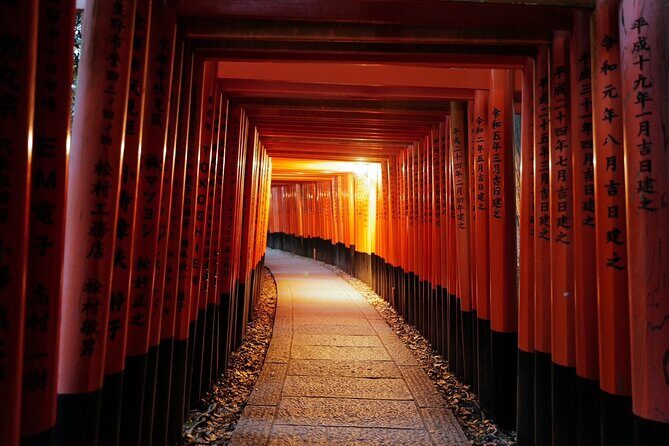
As you move through the gates, you’ll pass stone fox statues and smaller shrines along the route. You’ll also get pointed out key viewpoints—areas where the path opens up and you can see how the torii lines stretch. Even if you only cover part of the climb, the route still gives you that signature sense of walking through an endless tunnel of red.
A big part of what makes this tour special is that it’s not only “keep walking.” Your guide is there to explain what you’re seeing: why torii gates are placed the way they are, what fox imagery relates to, and why certain spots matter for worship.
And because it’s at night, you get that shift in pace. People talk less. You notice more. The shrine’s details—stone carvings, side altars, the rhythm of the paths—show up in a different way when you’re not elbow-to-elbow.
How the Guide Turns Worship Into Something You Can Follow
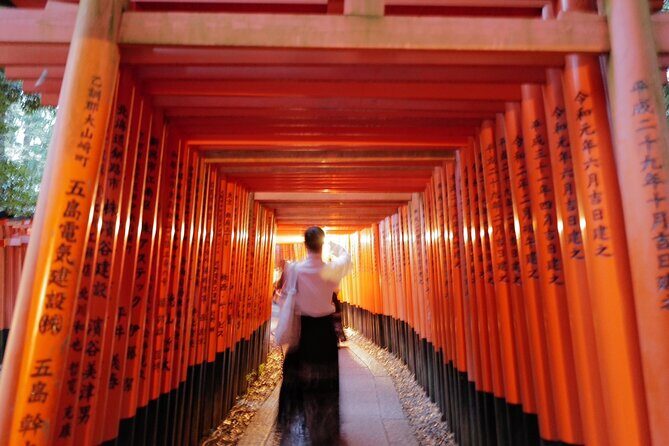
The best tours at shrines don’t just point; they translate. This one is praised for exactly that—guides who connect the visuals to meaning and help you understand the logic of the place.
Expect your guide to explain the significance of this top Kyoto attraction and give context for the structure around Mount Inari. Guides like Jem, Tammy, and Hiro are specifically mentioned for friendly, organized explanations and for answering questions confidently. That matters because Fushimi Inari isn’t one simple straight line—it’s a network.
You’ll also get instruction on prayer at different sites. The experience includes practical guidance on how to approach and participate, and it’s clear that not every spot is treated the same way. If you’ve never done Shinto prayer before, this is the kind of support that makes you feel respectful instead of awkward.
Another practical bonus: at night, it’s easy to go the wrong way or lose the group in the gate maze. Guides are there for navigation, but also for safety and pacing. In one example, the guide-led navigation was called out as worth it simply because the shrine can be disorienting after dark.
Walking Time, Shoes, and What “Small Hike” Really Means
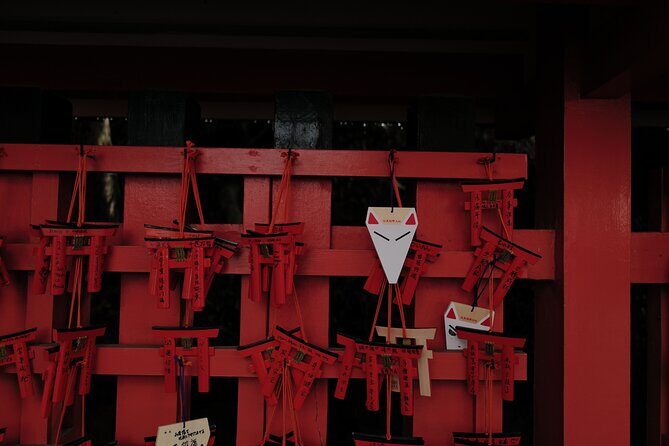
This is a walking tour on shrine paths, including mountain-side routes through the gates. That’s why the common advice is simple: wear walking shoes. Reviews also mention bringing layers in cooler months, and the walk can help you feel the weather quickly since you’re outside most of the time.
One review notes that the experience includes proper nighttime walking through lantern-lit gates, not just dusk. So plan for darker footing and slower steps. The good news is that the path is lit, and the atmosphere stays pleasant as evening falls.
If you’re traveling in summer, bring water habits like you would for any Kyoto evening walk. One guide was praised for leading people through the August heat, which is a reminder: “night” doesn’t always mean “cool.”
If you’re sensitive to uneven stone steps or you don’t like repeated climbing, consider whether a 1.5 to 2 hour gate-and-path walk fits your body. This tour likely won’t be for you if you want zero stairs and zero uneven ground.
You can also read our reviews of more evening experiences in Kyoto





Value Check: What $43.11 Buys You (Besides a Ticket)
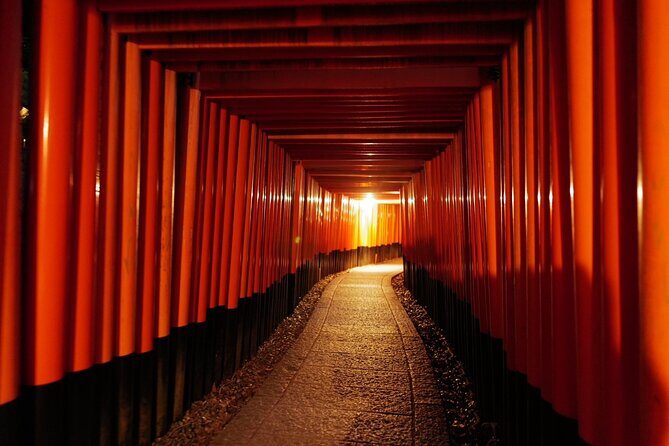
At $43.11 per person, the price can sound like a splurge—until you add up what you’re getting. The shrine admission itself is free, so your money pays for guidance, timing, and interpretation, not entry fees.
The big value is the human layer. You’re not only seeing a famous place; you’re learning what those gates and symbols mean and how worship works in practice. The guides are also praised for pacing: they keep the group together while still making room for questions and photos.
Another value point: the group cap of 12 changes the experience. Less crowd means you can actually listen. Less crowd also means your guide can stop and explain details without you struggling to hear over foot traffic.
If you’re the type who likes “context,” this is usually a better deal than a plain self-guided wander. If you only want quick snapshots and don’t care about the background, you might decide self-exploring is enough.
Who This Tour Suits Best (and Who Should Think Twice)
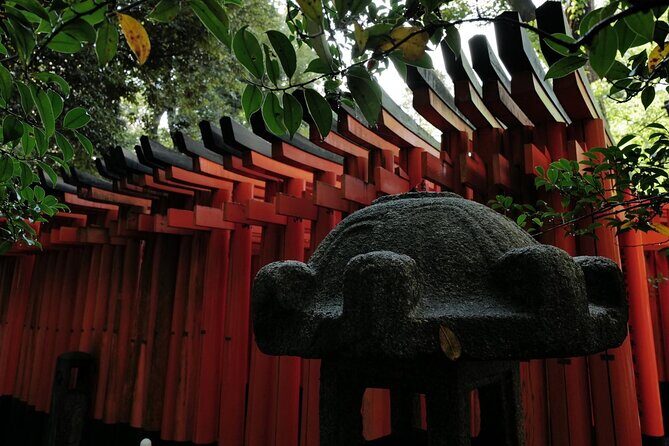
This tour fits you well if you want a calmer Fushimi Inari experience. It’s especially good when you prefer evening light, fewer people, and a guided route that helps you understand the shrine instead of just walking through it.
You’ll likely enjoy it if you like asking questions and want your guide to explain practical details like how to pray at different sites. Reviews also call out that the guides are patient—helpful when someone stops for photos or if it’s raining.
It’s also a smart pick if you feel nervous navigating alone at night. Fushimi Inari can be a maze of gates and side paths, and having someone lead keeps the whole visit less stressful.
Think twice if you don’t like walking after dark, or if you need a fully accessible route with minimal stairs and uneven ground. The tour involves mountain paths through the gates, so it’s not the best choice for a “sit-down-only” evening.
Practical Tips Before You Go
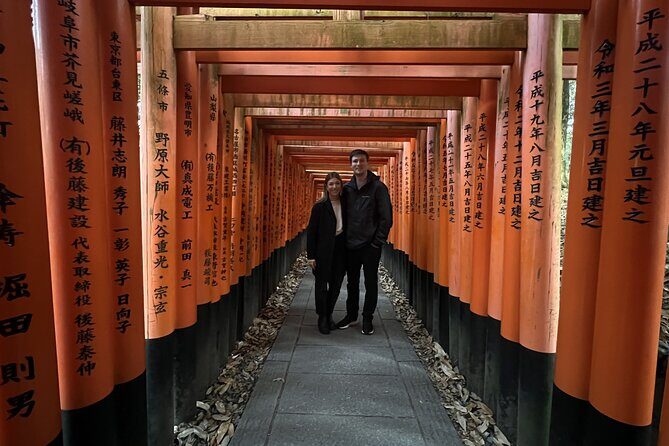
Bring comfortable, grippy shoes. Even on lit paths, stone can feel slick at night, especially after rain.
Dress for the season. One review mentions layers in December, and another highlights the heat in August. Kyoto weather can surprise you, so it’s worth planning for temperature swings between dusk and full dark.
If you care about photos, expect time to stop. Guides are described as patient and helpful with photos, but the goal is still to keep moving as a group.
Finally, keep your expectations realistic: this tour is short, focused, and guided around a key part of Fushimi Inari. You’ll get a meaningful circuit and context, not an all-day marathon.
Should You Book This Kyoto Fushimi-Inari Night Walking Tour?
I’d book it if you want the Fushimi Inari experience without the daytime crowd crush. The small-group size, the night lighting, and the fact that your guide explains symbols and prayer etiquette make this feel like more than a sightseeing loop.
I’d skip it if you only care about seeing torii gates in the simplest way possible. In that case, you could enjoy a daytime visit at your own pace. Or if walking after dark doesn’t match your comfort level, choose a different time or a different kind of tour.
If you do book, you’re choosing a straightforward evening plan: meet at the fox statue, follow the lantern-lit paths with your guide, learn how worship works in this place, and return back where you started—after a calmer Kyoto moment that looks and feels different than it does in daylight.
FAQ
What is the duration of the Kyoto Fushimi-Inari Night Walking Tour?
It runs about 1 hour 30 minutes to 2 hours (approx.).
How much does the tour cost?
The price is $43.11 per person.
Do I need to pay shrine admission?
No. The shrine admission is free.
Where do I meet the guide?
You meet at the fox statue at the entrance to Fushimi Inari Taisha Shrine, near Inarionmaechō (稲荷駅).
How big is the group?
The tour has a maximum of 12 travelers.
Is there a mobile ticket?
Yes. It uses a mobile ticket.
Is this tour near public transportation?
Yes, it’s near public transportation.
Are service animals allowed?
Yes, service animals are allowed.
Can I cancel and get a full refund?
Free cancellation is available up to 24 hours in advance for a full refund.