REVIEW · OSAKA
Amanohashidate Ine Funaya Miyama Village No Sato Tour from Osaka
Book on Viator →Operated by TrevoTour Travels · Bookable on Viator
Four scenic stops, one early start. This Osaka-to-Kyoto-area tour is all about big visual payoff: I really like Ine Funaya for its wooden boathouses and the slow coastal feeling, and I also love Amanohashidate for its 3.6 km pine-covered sandbar plus the famous upside-down viewing tradition. The one thing to watch is the schedule: it’s a long day, and each highlight gets a limited amount of time.
You’ll roll from Osaka starting at 7:20 am, then spend about 9 to 10 hours total visiting four major places with a multi-language guide (Chinese/Japanese/English/Korean). The good news is that admission is free for the listed sights, so your money goes mostly into transportation and local time. One practical note from past guests: the guide is meant to speak English, but English clarity can vary—so if you’re picky about language, be ready to use simple communication.
In This Review
- Key highlights at a glance
- Getting from Osaka to the Kyoto Coast: timing that matters
- Ine Funaya in Fuga: the funaya boathouses and why this stop clicks
- Amanohashidate sandbar: the 8,000 pine walk and upside-down viewing
- Chionji Temple at the south end: quick prayer for wisdom and success
- Miyama Kayabuki-no-sato Kitamura: thatched-roof rural charm in 40 minutes
- Price and value: what $89.99 buys you (and what it doesn’t)
- The pacing reality: how to make a long day feel manageable
- Who this tour fits best (and who should pass)
- Should you book the Amanohashidate Ine Funaya Miyama Village tour from Osaka?
- FAQ
- What time does the tour start?
- Where is the meeting point?
- Where do we end after the tour?
- How long is the tour?
- Which stops are included in the itinerary?
- Is admission included?
- Is there a lunch during the day?
- What happens if weather is poor?
Key highlights at a glance
- Ine Funaya: traditional funaya boathouses right along the coast, with time for a scenic walk
- Amanohashidate sandbar: 3.6 km of sand lined with about 8,000 pine trees, plus the upside-down view tradition
- Chionji Temple: a short, meaningful stop tied to wisdom and academic success
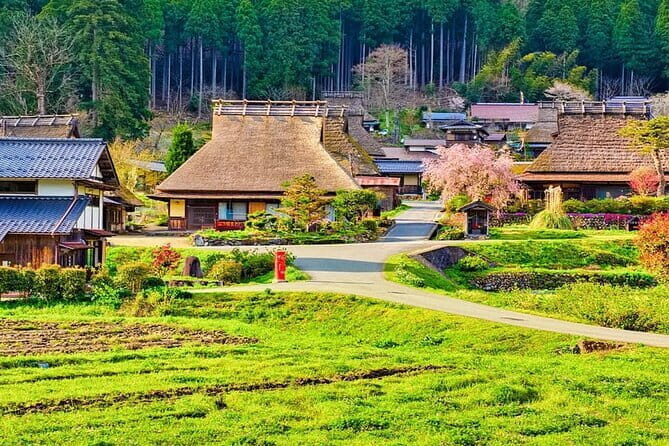
- Miyama Kayabuki-no-sato Kitamura: about 50 preserved thatched-roof homes for a classic rural look
- Free admission at the listed stops, with a guide and a small group cap of 46
Getting from Osaka to the Kyoto Coast: timing that matters
This is a one-day carpool-style tour from Osaka, run by TrevoTour Travels. You meet at 1-chōme-3 Nipponbashi Parking at 7:20 am, then you end in the Shinsaibashi and Dotonbori area (542-0085 area) after the last stop. Total time is about 9 to 10 hours, including travel.
Why that matters: most of your “quality time” is packed into the sightseeing blocks. Even though each destination is short, the overall route is efficient. If you hate rushed days, plan on doing quick loops, not deep wandering.
Also, take the start time seriously. The operator notes that if you’re late, there’s no refund and you may be responsible for issues after being late—so arrive early and be ready to go when the group is assembled.
You can also read our reviews of more tours and experiences in Osaka.

Ine Funaya in Fuga: the funaya boathouses and why this stop clicks
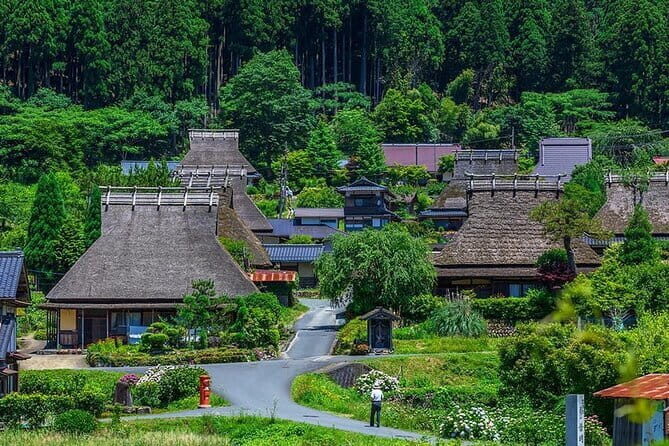
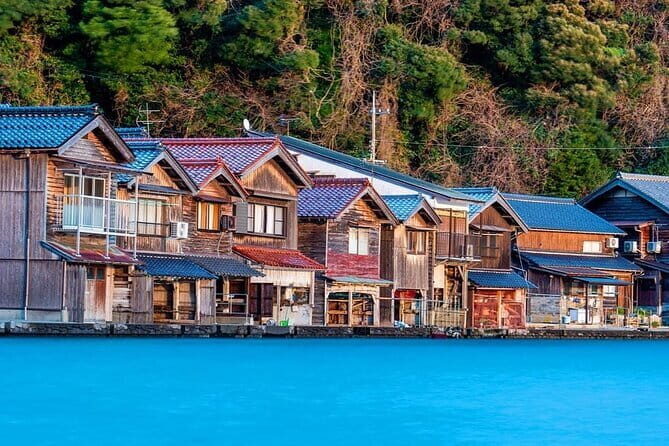
Your day begins with Ine Funaya (Fuga). This is the famous fishing village setting often called the Venice of Japan, built along the coastline with traditional wooden boathouses called funaya. The feeling here is about still water, simple shapes, and that unique “homes meet harbor” layout you don’t get in most Japanese towns.
Expect around 40 minutes on the site. Admission is listed as free, and the tour experience is focused on letting you walk the area and soak in the views at your own pace. The overview specifically calls out exploring along the water’s edge by walking or cycling, which tells me the village is designed for movement at a slow tempo—good for photos, good for watching how people live near the boats.
What I like about this stop: it’s not just a viewpoint. The boathouses feel functional and old-school rather than staged. You’ll get a sense of why the village became so iconic: the architecture and the coast are inseparable here.
A small caution: 40 minutes goes fast if you stop at every corner for pictures. If you’re photographing, pick a few angles you care about most, then do one complete loop.
Amanohashidate sandbar: the 8,000 pine walk and upside-down viewing
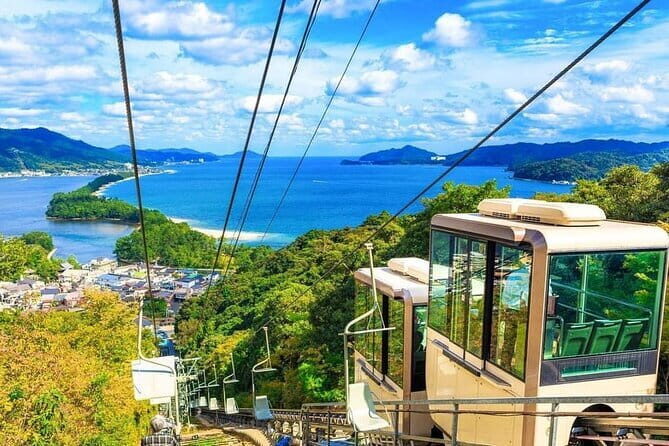
Next up is Amanohashidate, one of Japan’s top three scenic spots. This is the big showpiece of the tour: a natural sandbar that stretches 3.6 kilometers and is lined with about 8,000 pine trees.
You’ll get about 1 hour 30 minutes here, and admission is listed as free. The tour info highlights the self-guided exploration style, which is helpful because it lets you move at your own speed rather than being pushed from one spot to another.
The unique tradition is the one you shouldn’t skip: viewing the sandbar upside down. It’s a goofy idea, but it’s exactly the kind of local twist that makes a famous place feel human. If you’re traveling with kids, it’s also an easy win. If you’re just an adult who likes weird traditions done sincerely, it’s still worth your time.
Practical take: because this is outdoors and based on the sandbar walking area, weather plays a real role in comfort. If it’s windy or rainy, you’ll feel it. If it’s clear, you’ll feel it too—clean sight lines make the pine-lined stretch look even longer and more dramatic.
One more scheduling note: the sandbar is long, so you may not cover every possible walking segment in 90 minutes. Aim to enjoy the main stretch and a couple of photo moments rather than trying to “finish the whole thing.”
Chionji Temple at the south end: quick prayer for wisdom and success

After the sandbar, you visit Chion-ji Temple for about 30 minutes. Admission is listed as free, and this stop is tied to a very specific theme: wisdom and academic success. The temple is connected to Monju Bosatsu, the Bodhisattva associated with wisdom.
This is a shorter, quieter pause compared with the outdoor sightseeing. It’s also a nice balance if your morning is already heavy on scenery. You get a change of pace: fewer views, more stillness, a chance to step into a sacred space for a moment.
Because time is limited here, I suggest treating it like a focused stop rather than a long temple wander. Look around, read what you can, and do the thing you came for—whether that’s quiet observation or a prayer.
Miyama Kayabuki-no-sato Kitamura: thatched-roof rural charm in 40 minutes

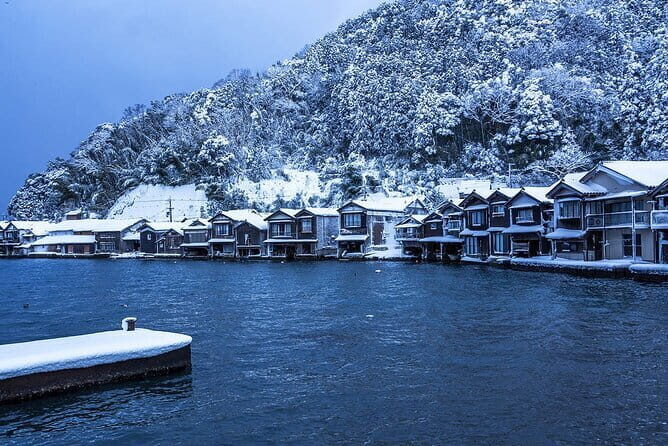
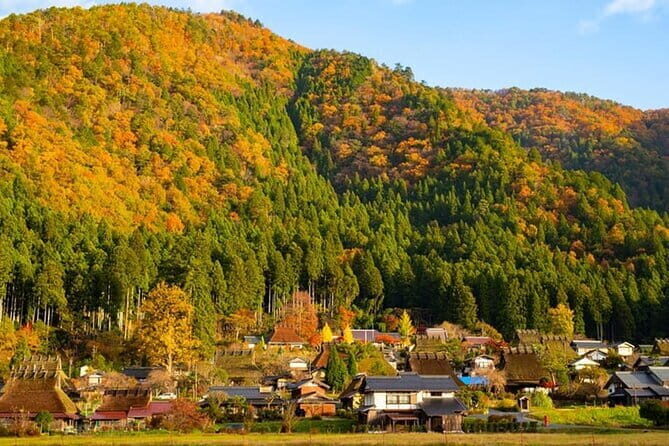
Your last major sightseeing block is Miyama Kayabuki-no-sato Kitamura. This is a preserved village known for its thatched-roof houses, with about 50 preserved homes. Think rural Japan as it’s meant to be remembered: traditional roofs, timber-and-paper textures, and streets that make you slow down automatically.
You’ll have about 40 minutes here, and admission is listed as free. This is one of those places where your best experience comes from wandering. Don’t just stand in one spot—walk the village lanes, check out the roof lines, and take photos from a few different heights if possible.
What I liked about this kind of stop: it’s a real contrast to the coastal fishing village. Ine Funaya is water-first and boat-first; Miyama Kayabuki-no-sato is house-first and countryside-first. Seeing both in one day makes the overall theme of the trip feel stronger: Japan’s landscapes, yes, but also Japan’s daily rhythms—homes, work, and weather.
Also, this is where you’ll likely want to do a final souvenir pass. The tour notes that personal expenses aren’t included, so if you want snacks, crafts, or small gifts, budget for it.


Price and value: what $89.99 buys you (and what it doesn’t)
The price is $89.99 per person. For a day trip at this distance, the biggest value drivers are:
- Transportation for a long day (start in Osaka and reach multiple Kyoto-area sites)
- A guide who’s expected to handle Chinese/Japanese/English/Korean
- Free admission for the listed stops
- A tight set of top-name places: Ine Funaya, Amanohashidate, Chionji Temple, and Miyama Kayabuki-no-sato
What you don’t get: there’s no mention of upgrades or ticketed attractions beyond free admissions, and personal expenses aren’t included. Also, lunch is mentioned in the tour overview, but it isn’t clearly listed under included items—so treat food as a “plan for it” moment and confirm what’s actually covered when you book.
Value-wise, this tour makes the most sense if you want one day that checks off multiple icons without doing the planning math yourself. If you already know you’ll spend extra time at each stop (like hours at Amanohashidate alone), you might find the pace a little too efficient.
One more factor: the group size has a cap of 46 travelers. That’s large enough that you’ll see movement and logistics, but not so large that it feels like mass tourism at every moment. Still, if you prefer quiet, expect a normal group-day energy.
The pacing reality: how to make a long day feel manageable
This tour is structured for maximum highlights, so the pacing is the deal. The itinerary is built from short sightseeing blocks—40 minutes, 1.5 hours, 30 minutes, 40 minutes—plus drive time.
Here’s how to work with that pacing:
- Arrive early at each pickup/meeting moment and don’t treat “start time” like a suggestion.
- Keep your sightseeing plan simple: one main photo goal per stop, then explore casually.
- Expect that the guide will manage the flow, including possible schedule shifts if weather or traffic changes the order.
Speaking of traffic: the operator explicitly warns that traffic jams can happen and the company won’t cover “subsequent costs” caused by delays. You can’t control Osaka-area roads, but you can control your expectations. Bring patience. If you’re the type who gets stressed when a timeline slips, this may test you.
Language is another practical consideration. The tour is marketed with English support, but one experience note indicates the guide switched between English and Japanese. If you rely on perfect English explanations, I’d recommend going in with a flexible mindset: the places do a lot of the talking.
Who this tour fits best (and who should pass)
This is a strong match if you want:
- A day that combines coastal village views with the pine-lined Amanohashidate sandbar and two cultural stops
- A guided structure that saves you from coordinating trains and multiple transfers
- A “see a lot” day, not a “stay forever” day
I’d steer you away if:
- You want long, slow immersion at just one location
- You hate outdoor weather uncertainty (this tour is stated to require good weather)
- You need very consistent English narration throughout every minute
If you’re visiting from Osaka and want a one-day hit list, this tour is built for you.
Should you book the Amanohashidate Ine Funaya Miyama Village tour from Osaka?
I’d say yes if your travel style is “check the big sights and enjoy the walk.” The combination of Ine Funaya’s funaya boathouses and Amanohashidate’s pine-covered sandbar is exactly the kind of pairing that makes a single day feel like a win. Add Chionji Temple for a calm reset and Miyama Kayabuki-no-sato Kitamura for classic thatched-roof village vibes, and you get variety without needing extra planning.
Book if you can handle a packed day and you’re okay with time limits at each stop. Pass if you want slow roaming, detailed lectures, or a fully self-paced itinerary.
FAQ
What time does the tour start?
It starts at 7:20 am from the meeting point at 1-chōme-3 Nipponbashi Parking in Osaka.
Where is the meeting point?
The meeting point is 1-chōme-3 Nipponbashi Parking, 1-chōme-3 Nipponbashi, Chuo-ku, Osaka (542-0073).
Where do we end after the tour?
You’ll disband in the Shinsaibashi and Dotonbori areas (542-0085).
How long is the tour?
The duration is about 9 to 10 hours, including transportation time.
Which stops are included in the itinerary?
The tour includes Ine Funaya (Fuga), Amanohashidate, Chion-ji Temple, and Miyama Kayabuki-no-sato Kitamura.
Is admission included?
Admission is listed as free for each of the itinerary stops (40 minutes at Ine Funaya, 1 hour 30 minutes at Amanohashidate, 30 minutes at Chion-ji Temple, and 40 minutes at Miyama Kayabuki-no-sato Kitamura).
Is there a lunch during the day?
The tour overview mentions a lunch of fresh local seafood, but the included items list only mentions the guide, so you should check the booking details for what’s actually provided.
What happens if weather is poor?
The experience requires good weather. If it’s canceled due to poor weather, you’ll be offered a different date or a full refund.
If you tell me your travel dates (and whether you care more about photos, temples, or countryside villages), I can also suggest how to prioritize your time at Amanohashidate and the two village stops.