REVIEW · OSAKA
Experience Samurai and traditional Culture to the fullest
Book on GetYourGuide →Operated by 株式会社武士の誉れ · Bookable on GetYourGuide
Sword practice by Osaka Castle sounds unreal. In this 3-hour Honshu experience, you wear a kimono, practice calligraphy, take part in a tea ceremony, try katana slashing, then get dressed in samurai armor for a photo with Osaka Castle as the backdrop. I love the way the day mixes calm, traditional skills (calligraphy and tea etiquette) with hands-on training, and I also like that the staff slow down for technique. The main drawback is logistical: you’re expected to arrive early for changing and instructions, and there’s no pickup included—so you’ll want to get yourself there on time.
You’ll do it as a private group with English-speaking staff (and other languages by request), plus you’ll have a photographer covering the activities. The pacing matters here: you’re not just watching samurai cosplay, you’re practicing the motions and manners behind it.
Bring a t-shirt (simple, comfortable is best). Also note the age limits: it’s not suitable for children under 10, and it’s not for people over 95, so check before you book.
In This Review
- Key takeaways before you go
- Samurai to Osaka Castle: what this 3-hour combo actually gives you
- Kimono, calligraphy, and manners that make Bushido feel practical
- Samurai calligraphy with words of resignation
- Tea ceremony with Bushido honor: posture, gestures, and etiquette
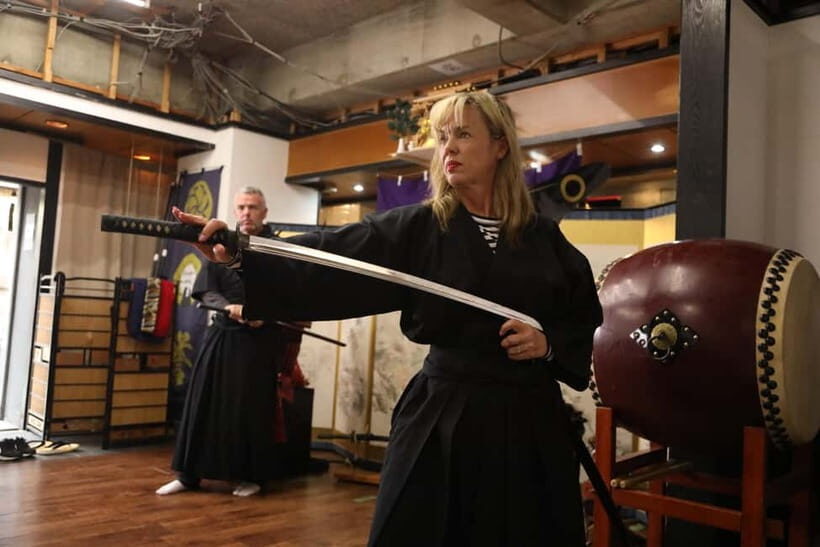
- Katana trial cutting: learning control, not movie moves
- Armor indoors, then Osaka Castle grounds for the photo
- Optional Seppuku-style performance: choose with care
- Price and value: why $168 can make sense in Osaka
- Logistics near Osaka: meeting point, timing, and what to bring
- Who should book this samurai culture session
- Should you book Samurai and Traditional Culture to the fullest?
- FAQ
- How long is the experience?
- What’s included in the price?
- Do I need to arrange transportation to the meeting point?
- What language will I be taught in?
- What should I bring?
- Is this suitable for children?
- Is the Seppuku / Harakiri part required?
Key takeaways before you go
- Kimono + etiquette first: you start in traditional clothing, then learn manners through calligraphy and tea.
- Calligraphy you can actually do: you practice strokes like tome, hane, and harai, then write a chosen kanji.
- Tea ceremony as Bushido behavior: posture and gesture are part of the lesson, not an add-on.
- Katana trial cutting with responsibility: the training is framed around self-respect and handling a deadly weapon responsibly.
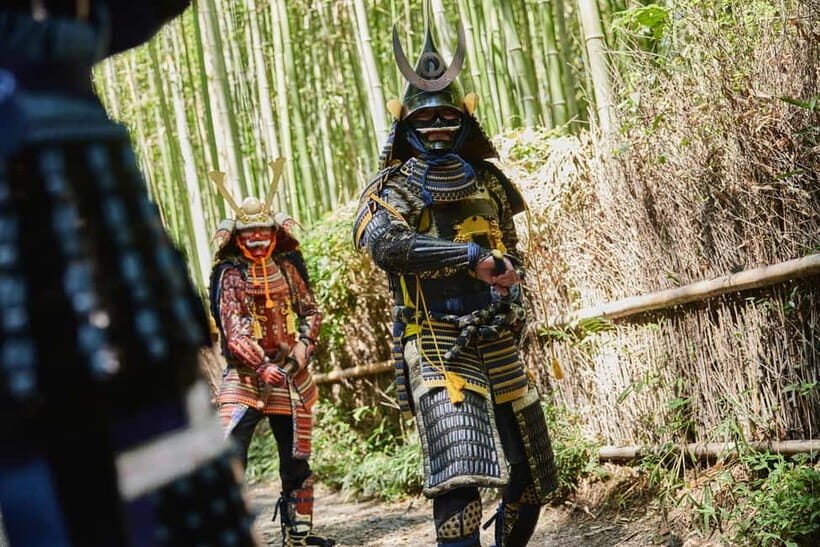
- Armor indoors, photo at Osaka Castle grounds: the big picture moment happens right at the castle area.
- Photo data sent to you: a photographer documents the whole experience and sends the files by email.
Samurai to Osaka Castle: what this 3-hour combo actually gives you
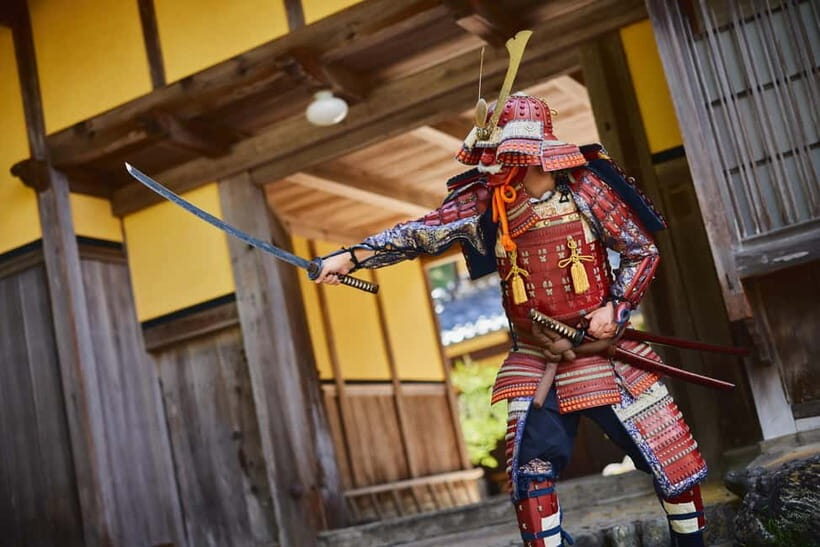
This is the kind of Osaka activity that feels like it was designed for people who want more than a quick photo. You get a whole sequence of cultural “skills,” not just costumes: kimono, calligraphy practice, tea ceremony etiquette, sword trial cutting, and then armor role-play for photos.
Price-wise, $168 per person sounds steep until you look at what’s included: samurai clothing, calligraphy and tea activities, sword trial cutting instruction, armor, a photographer, and staff support in multiple languages. In other words, you’re paying for instruction and time on multiple hands-on stations, not just entry to a site.
The biggest value for me is the contrast. You start with quiet precision (brush strokes and tea etiquette), then you shift into controlled, physical training (katana slashing), and you end with armor and a dramatic setting. If you like experiences where you leave with something more than memories—like muscle memory for gestures or a real written kanji—this format fits.
You can also read our reviews of more tours and experiences in Osaka.

Kimono, calligraphy, and manners that make Bushido feel practical
You start by changing into a kimono. That matters because the experience isn’t framed as a history lecture. It’s framed as “learn the body language.” In Japanese culture, courtesy and gestures aren’t just politeness—they’re a skill set. Putting on the clothing is the first step in adopting that mindset.
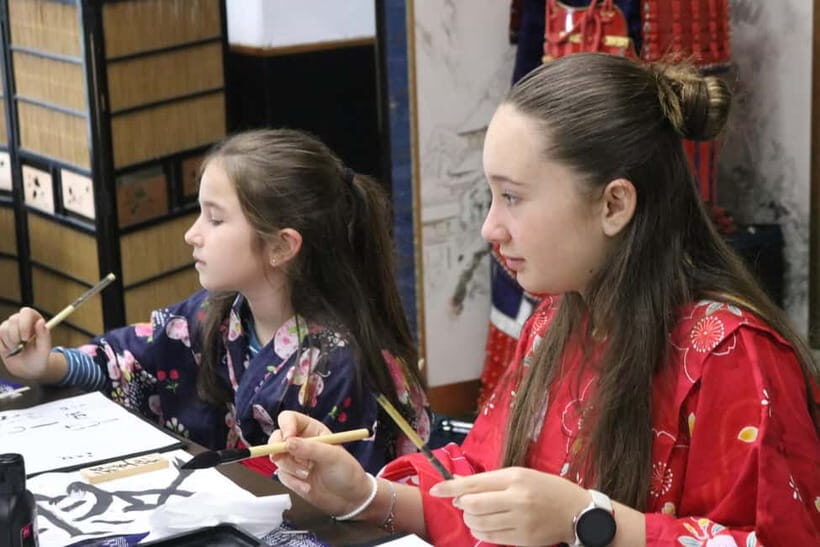
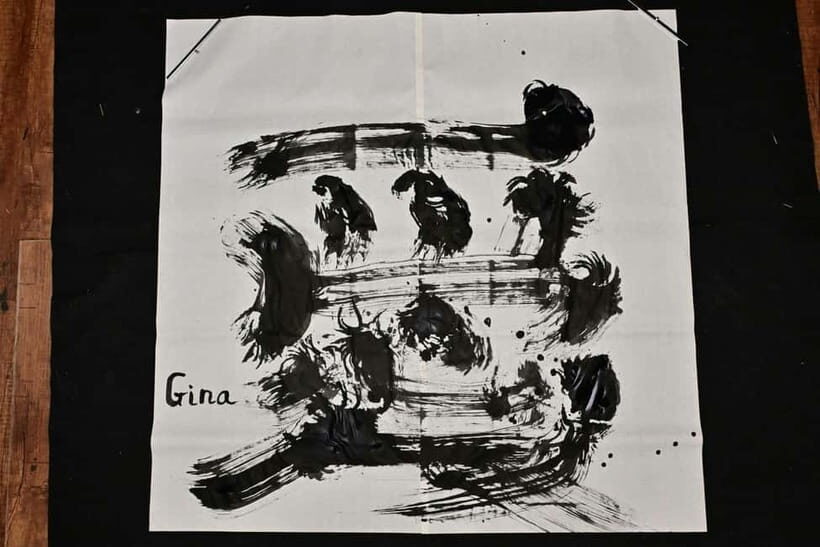
Then you practice calligraphy with guidance from an instructor. You learn how to prepare yourself for calligraphy, including how to hold the brush and handle the tools. After that, you drill basic strokes: tome, hane, and harai. Those names aren’t random. They’re the building blocks of how Japanese characters feel balanced and intentional.
You’ll choose a kanji character and follow the stroke order, so you’re practicing something structured—not free-form art. That’s what makes it satisfying. You can track your progress because there’s a clear sequence to follow.
Samurai calligraphy with words of resignation
Next comes a more intense calligraphy segment: Samurai Calligraphy (Words of resignation). The focus is on the idea of resignation as a final stance, with the words written as a farewell as someone prepares to die. You write the kanji you’ve chosen, paying close attention to technique.
If that sounds dark, it is—this part of the experience is leaning into Bushido’s themes of duty, finality, and courage. I appreciate that they frame it through the written act, not shock value. Still, this may not be your cup of tea if you prefer light and playful activities.
Tea ceremony with Bushido honor: posture, gestures, and etiquette
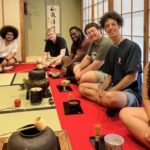
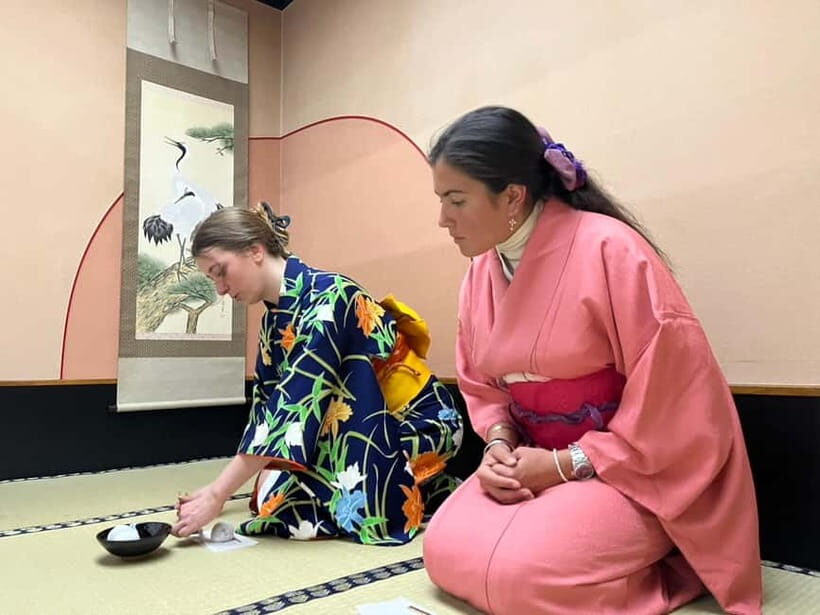
After calligraphy, you shift into a samurai tea ceremony moment. A tea master prepares and serves powdered green tea to you.
This is where the experience ties manners to action. The goal isn’t just to sip tea. You’re learning etiquette, manners, beautiful gestures, and the spirit of hospitality. They’re very explicit about the theme: honor, connected to Bushido.
Practically, you’ll likely leave remembering what to do with your body—how you sit, how you handle movements, how you respond. If you’ve ever been to a tea ceremony and felt like you didn’t know what mattered, this kind of guided lesson helps you connect the rules to the “why.”
One thing I like: tea is a low-stress skill compared to sword cutting. So even if you’re nervous about the physical part later, you get a calm reset first.
Katana trial cutting: learning control, not movie moves
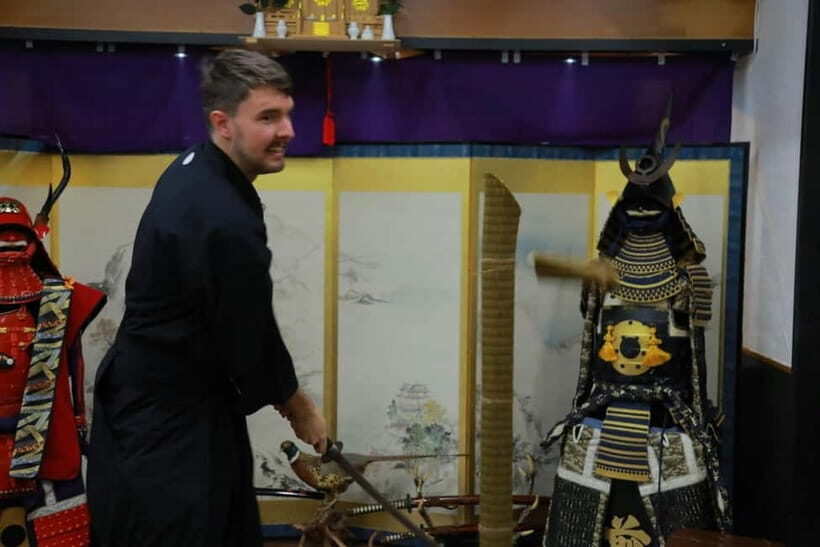
Now for the action: samurai sword trial cutting. You learn how to use a sword and also hear a lesson about responsibility—self-respect and the reality of carrying a deadly weapon.
You’ll be allowed to wear a serious sword, then try your hand at sword cutting with a samurai sword. The experience emphasizes that there is no end to training, and it frames practice as learning through discipline rather than flashy stunts.
A helpful reality check: you should treat this like a skills lesson. You’re not going to become a swordsman in 30 minutes. But you can learn safe, guided basics: how to stand, how to handle the sword, and how your motion affects the cut. That’s what makes the trial worth it.
Also, because the day includes both traditional arts and a weapon practice, it helps you understand how the samurai idea isn’t only violence. The training is part physical, part ethical: conduct, restraint, and responsibility.



Armor indoors, then Osaka Castle grounds for the photo
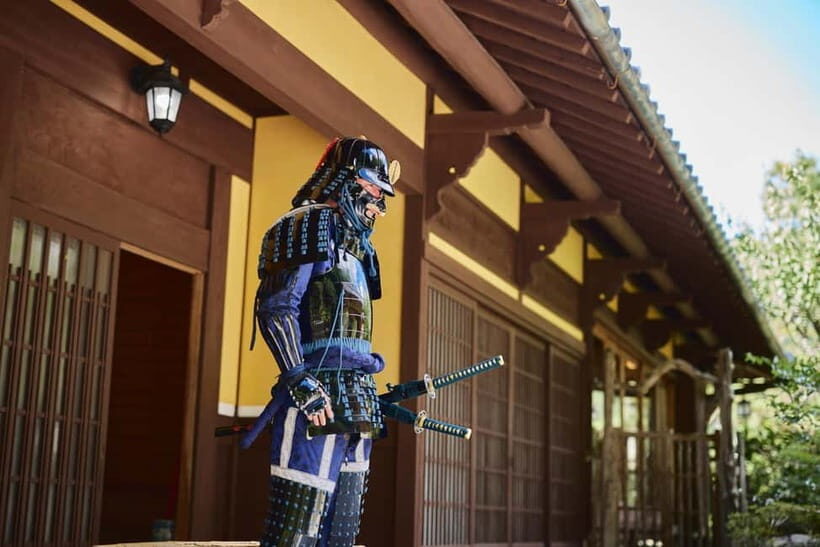
After the sword trial, you’ll move into armor. You’ll wear a suit of armor indoors, which is a nice touch—less fuss in the hottest or rainiest conditions. Then you’ll head out for the photo scene.
The story centers on April 1615 and the Osaka Summer Battle. You’ll be positioned on the grounds of Osaka Castle and photographed pretending to be a soldier on Toyotomi’s side. The point isn’t accuracy down to every rank detail; it’s that you step into the setting and “perform” the role long enough for a powerful image.
And yes, you get that Osaka Castle photo backdrop while in full armor. For many people, this is the main reason to book. A lot of Osaka activities end with a small souvenir. Here, the photo is the souvenir—and it’s attached to the effort you put into the earlier steps.
The photographer shoots across the events, not just at the end. Afterward, you send the photo data to a designated email address. This is the kind of service that makes the whole day feel “captured,” not improvised.
Optional Seppuku-style performance: choose with care
There is an optional activity described as Seppuku / Harakiri. The theme is readiness to die for one’s lord, with Bushido emphasizing righteousness and the idea of a beautiful death.
This is heavy material. If you’re sensitive to depictions connected to self-inflicted death, you should skip the optional segment. If you’re studying Japanese culture with a serious interest in how historical codes shaped behavior, you might find it meaningful—especially because it’s framed through virtue and ritual, not sensation.
Either way, decide based on your comfort level. This part isn’t necessary to enjoy the rest of the experience.
Price and value: why $168 can make sense in Osaka
At $168 per person, this isn’t a “walk in anywhere” kind of activity. You’re paying for several included elements that add up quickly if you tried to piece them together:
- Instruction across multiple disciplines: calligraphy technique, tea ceremony etiquette, and sword trial cutting.
- Costume and gear: kimono, plus samurai armor for the photo portion, and a serious sword for the trial.
- Staff support in English by default, with additional languages by schedule request.
- A photographer covering the events, with photo data sent by email.
- Tax and tips included, which simplifies budgeting.
Where the price might feel less justified is if you’re only interested in one element—say, the armor photo. In that case, you’d be happier with something more photo-only. But if you like a full “culture-to-combat” package that stays structured for 3 hours, this pricing starts to look fair.
Also remember what’s not included: transportation. If you’re far from the meeting point, your time and taxi/subway cost can change the true total.
Logistics near Osaka: meeting point, timing, and what to bring
This experience runs for 3 hours, and you’ll want to arrive early. You should show up 30 minutes before your reserved time for instructions and changing clothes. That early buffer is part of how the day stays organized.
Meeting point is marked by a wooden sign that reads Honor of the Samurai. It’s described as a rack with samurai honor activity pamphlets in front of the store. There are also kimonos and hakama hanging out to dry, so it should be visually obvious once you’re there.
The address is:
Address/Excellence Takayama 1F, 2-3-19 Shiginonishi, Joto-ku, Osaka-shi, Osaka 536-0014
What to bring is refreshingly simple: a t-shirt. You can keep everything else minimal because the experience provides the clothing for the day.
One more practical note: the tour isn’t set up as a stop-and-go city walk. You’re staying put around the studio area for most of the skill practice, and then you go to the Osaka Castle grounds for the armor photo moment.
Who should book this samurai culture session
This fits best if you want a structured cultural experience with physical practice, and you’re happy to switch gears during the 3 hours.
You’ll probably enjoy it if:
- you like hands-on learning (calligraphy strokes, tea gestures, sword cutting motions)
- you want a serious photo moment near Osaka Castle
- you value etiquette training, not just the theatrical parts of samurai culture
You might skip it if:
- you dislike activities involving weapons, even in a guided trial format
- you’re traveling with kids under 10 (it’s not suitable for children under 10)
- you need a tour with pickup from your hotel or station (pickup and drop-off are not included)
Because it’s a private group, it can also work well for couples or small groups who don’t want to feel lost in a large crowd. You’ll still be grouped under the activity flow, but you’re not competing for attention.
Should you book Samurai and Traditional Culture to the fullest?
My take: if you want a full Osaka-themed experience that ties together kimono, calligraphy, tea etiquette, sword trial cutting, and a real Osaka Castle armor photo, this is a strong fit for the time you have.
Book it if you’re the type who likes learning in layers—quiet skills first, then action, then a dramatic setting. Pass if your goal is only one piece (like armor photo only) or if you’re uncomfortable with the optional serious ritual segment.
If you’re considering it, do two things: plan your route so you can arrive 30 minutes early, and bring that simple t-shirt. After that, you’ll be set for a day that tries to teach more than costume.
FAQ
How long is the experience?
It lasts 3 hours from start to finish, with you arriving 30 minutes early for instructions and changing.
What’s included in the price?
You get samurai clothing, calligraphy practice and Samurai Calligraphy, a tea ceremony, Samurai sword trial cutting, and wearing armor. A photographer also takes photos, and the photo data is sent to a designated email address. Tax and tips are included.
Do I need to arrange transportation to the meeting point?
Yes. Pick up and drop off at the train station or hotel are not included, so you’ll handle getting to the meeting point yourself.
What language will I be taught in?
English is the default. Other languages are available by request (Italian, Spanish, French, Chinese, Thai, Indonesian), depending on staff schedule.
What should I bring?
Bring a t-shirt. The rest of the required clothing for the activities is provided.
Is this suitable for children?
No for children under 10. It’s also not suitable for babies under 1 year, and the experience lists people over 95 years as not suitable.
Is the Seppuku / Harakiri part required?
No. It’s listed as an optional activity, separate from the main sequence.