REVIEW · TAKAYAMA
From Takayama: Delve into Hida-Furukawa’s Cultural Treasures
Book on GetYourGuide →Operated by Machinovate Japan Ltd. · Bookable on GetYourGuide
White walls, temple steps, and crafts in one day. This small-group tour from Takayama (or Hida-Furukawa) strings together the town’s most memorable cultural stops, with a guide, walking time, and a weaving session you can take home.
I love two things most: the slow, photo-friendly walk along Shirakabe Dozogai Street, and how the festival museum explains the Hida-Furukawa spectacle even when it’s not April. One thing to consider: the day is full and you’ll be on your feet, so if you prefer long, quiet museum time over guided movement, you may feel a bit rushed.
In This Review
- Key highlights worth planning around
- From Takayama station at 9:30 to Hida-Furukawa by 10:00
- Shirakabe Dozogai Street: the white-wall warehouse walk
- Festival Exhibition Hall: UNESCO in a year-round museum
- Hida Crafts Museum (Hida no Takumi Bunkakan): tools and trades you can feel
- Santera pilgrimage and temples: walking with purpose
- Lunch and free time: use your hour wisely
- Traditional village + the workshop/secret stop: weaving your own keepsake
- Getting back to Takayama: timing that keeps the day sane
- Price ($135) and value: what you’re actually paying for
- Who this tour fits best (and who should skip it)
- Should you book from Takayama to Hida-Furukawa?
- FAQ
- FAQ
- Where is the meeting point if I start from Takayama Station?
- How long is the tour, and how long is the train ride?
- What are the starting and drop-off options?
- What is included in the price?
- Is lunch included?
- How big is the group?
- What is the weaving session like?
- What should I wear in winter?
Key highlights worth planning around
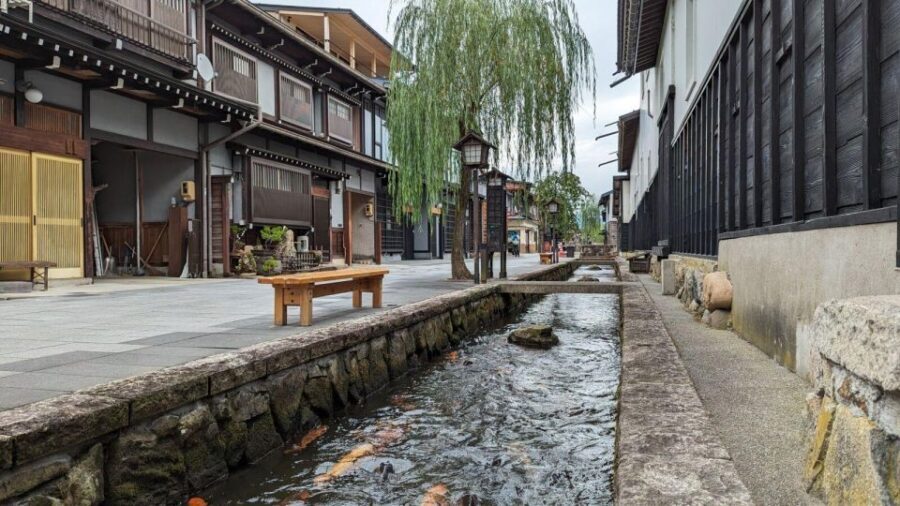
- Shirakabe Dozogai Street’s white plaster walls set against dark wooden beams, plus a scenic canal walk
- Hida-Furukawa Festival Exhibition Hall with year-round exhibits tied to the April UNESCO Intangible Cultural Heritage festival
- Santera pilgrimage steps and temples, combining spiritual atmosphere with local culture
- Hida no Takumi Bunkakan (Hida Crafts Museum) for crafts context, not just shop browsing
- A hands-on traditional weaving workshop where you craft a keepsake
- Small group size (up to 15) helps your English-speaking guide keep a good pace
From Takayama station at 9:30 to Hida-Furukawa by 10:00
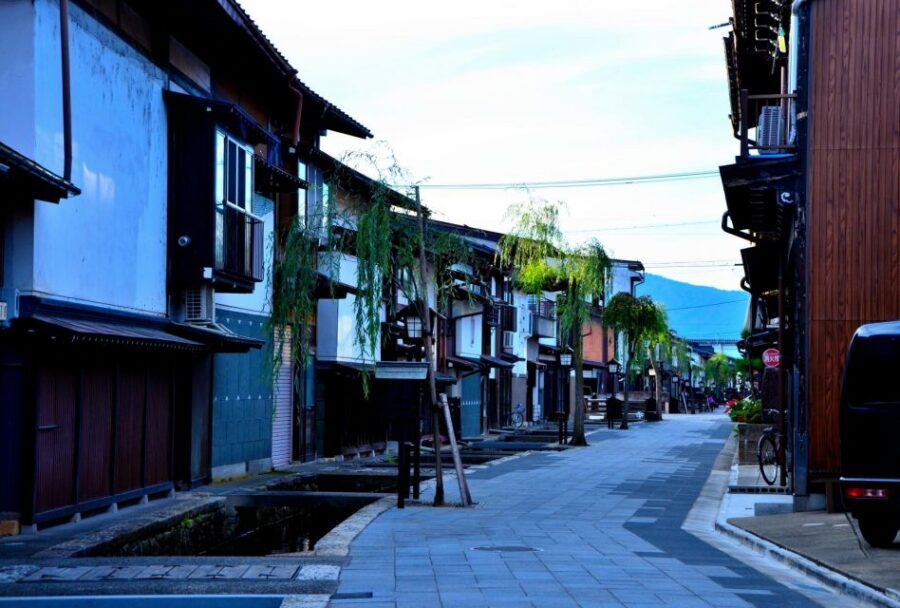
The day starts with clarity. Your guide meets you at 9:30 A.M. in front of the Takayama Station ticket gates, so you’re not standing around guessing where to go. Then you hop the train, about 30 minutes, and you’re in Hida-Furukawa by around 10:00 A.M.
If you’re not starting in Takayama, you can also book with a start from Hida-Furukawa Station. Either way, the tight start time matters: you’ll hit the best light for photos on the oldest streets while the day is still calm.
You can also read our reviews of more tours and experiences in Takayama.


Shirakabe Dozogai Street: the white-wall warehouse walk
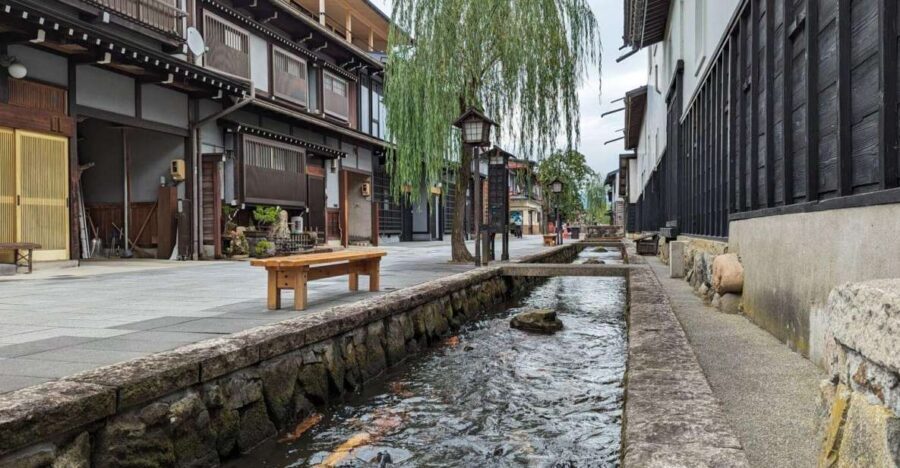
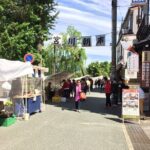
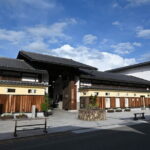
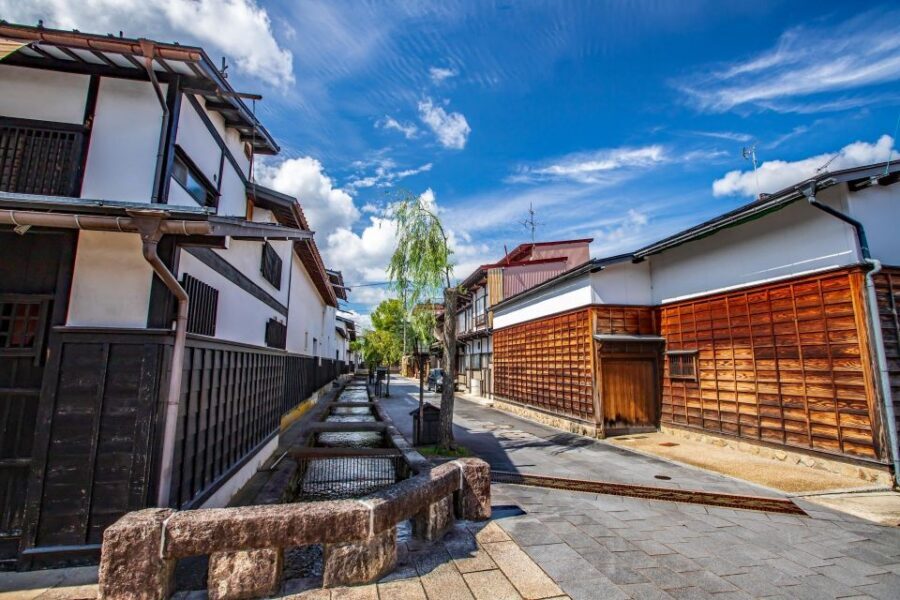
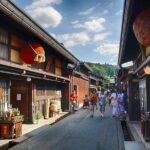
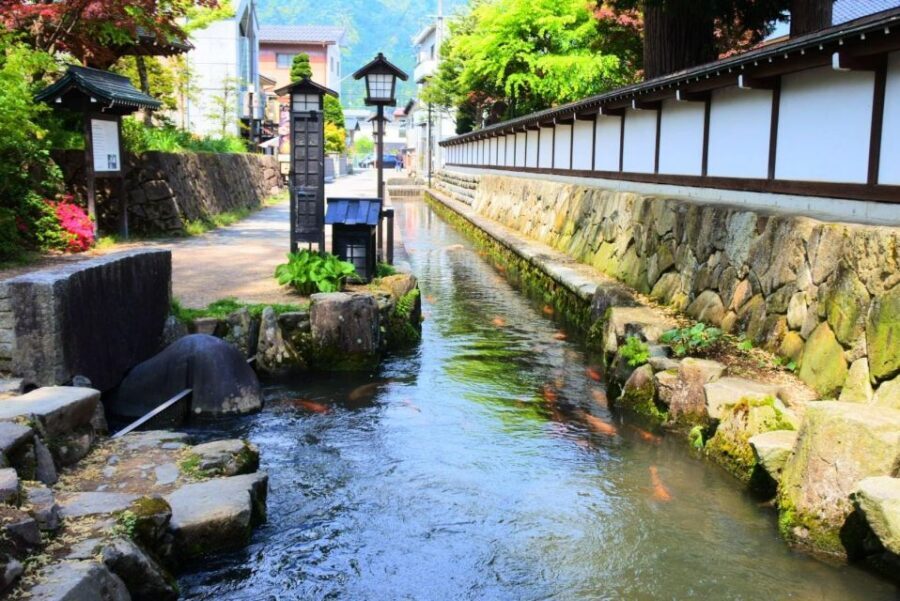
This is the kind of street that makes you lift your camera without trying too hard. Shirakabe Dozogai Street is famous for its white plaster walls and dark wooden beams, which is why it’s often translated as the White Wall Warehouse District. In the Edo period, these buildings served as a working commercial area, with stores for things like rice, sake, and miso.
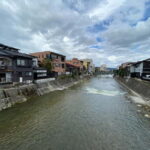
Today, the setting still feels functional. You’ll enjoy a guided stroll with stops for photos, and you’ll also catch the canal views that bring a gentler tempo to the walk. One of my favorite small details is the carp in the canal—quick, playful movement that breaks up the straight lines of old architecture.
What I like about this stop is the balance of story and scenery. You’re not just looking at pretty streets; you’re learning what the walls were for and how the district worked.
Festival Exhibition Hall: UNESCO in a year-round museum
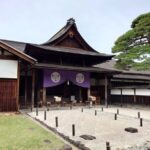
If the April festival floats are on your wish list, this hall is the smart plan. The Hida-Furukawa Festival Exhibition Hall connects directly to the town’s annual Hida-Furukawa Festival—recognized as UNESCO Intangible Cultural Heritage—and it keeps the experience alive even when the festival isn’t happening.
You’ll see festival-related exhibits built around the big April elements: elaborate floats, colorful costumes, and traditional music and dance. You also get a more detailed look at the festival feel, including the drum-driven energy that people associate with festival day. It’s especially helpful if you’re visiting outside festival season, because the museum gives your eyes something to look for later.
A practical note: the museum is included, but time here still fits into a full day. So if you’re the type who wants to linger over every display, treat this as “orientation plus highlights,” not a museum marathon.
Hida Crafts Museum (Hida no Takumi Bunkakan): tools and trades you can feel
Next comes craft context at the Hida Crafts Museum (Hida no Takumi Bunkakan). This is where the day shifts from “what the town looks like” to “how the town makes things.” You’ll get a guided tour, which helps you connect what you saw earlier—old buildings, old routines—with actual workmanship.
This stop works well because it doesn’t ask you to guess. Your guide helps you see how crafts fit into daily life and local identity, so when you reach the workshop later, you’re not just trying a technique—you understand why it matters.
Santera pilgrimage and temples: walking with purpose
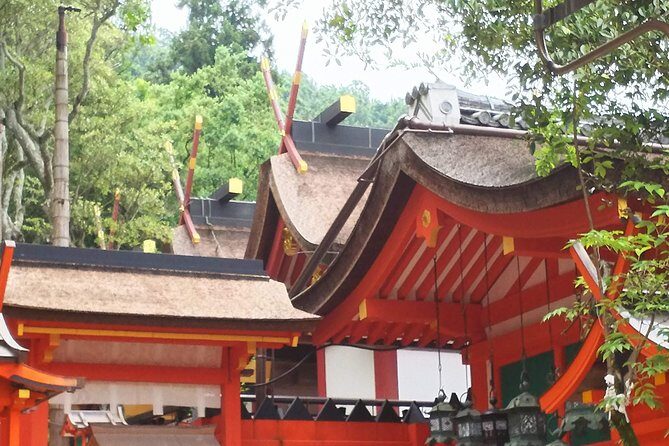
After the museum time, you’ll head into the Santera pilgrimage route. The idea isn’t just sightseeing; it’s walking paths that have been used by pilgrims for a long time, with temple visits along the way. Even if you’re not religious, the pace tends to slow your thinking a notch. You start noticing small elements—stone steps, gateways, quiet courtyards—that you’d normally zip past.
It’s also a cultural bridge. As you move along, you’ll find quaint shops and local craft-related browsing nearby, which makes the route feel like part of everyday Furukawa life, not a separate staged attraction.
The only consideration here is physical comfort. It’s a walking day, and temples usually mean stairs and uneven surfaces. Wear footwear you trust.

Lunch and free time: use your hour wisely

Lunch is provided as part of the day only as a stop at a local restaurant, and you’ll have about one hour of free time after. Lunch itself isn’t included in the price, so plan on paying for your meal on the spot.
Your best use of that hour is simple: catch your breath, refill water, and decide whether you want to wander on your own near the places you just learned about. With a guided tour, there’s often a temptation to spend all your free time checking again what you already saw. Instead, use the hour to rest so the workshop part of the day feels fun, not tiring.
Traditional village + the workshop/secret stop: weaving your own keepsake
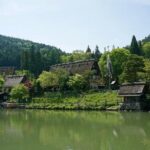
The afternoon includes a traditional village segment with photo stops and guided touring. This portion is designed to show how the town’s older lifestyle shaped spaces—how structures and streets connect, and how people moved through daily routines. You’ll still walk, but the goal is to give your photos and your memory more texture than a single street can.
Then comes the hands-on part: a workshop class (described as a secret stop on the day’s flow) with a traditional weaving session. This is one of the most meaningful activities on the schedule because you’re not just observing—you’re making. You’ll work with skilled artisans and craft a unique keepsake, guided from start to finish.
In other words, it’s the day’s practical souvenir. And it’s the kind you’ll actually keep, because you had hands-on time making it.
One extra detail from real-world experiences: some departures include a sake brewery visit or tasting arranged through local partners. It’s not written into every general schedule detail, so consider it a bonus if it appears on your specific day.
Getting back to Takayama: timing that keeps the day sane
After the final station visit in Hida-Furukawa, you return by train, again about 30 minutes. Drop-off options include either Takayama Station or Hida-Furukawa Station, depending on which starting option you booked.
This timing matters because it prevents the “too long, too late” problem that some one-day trips suffer. The day feels structured, and the small group size (up to 15 participants) helps your guide manage pace without turning it into a frantic sprint.
If you’re sensitive to cold, pay attention in winter. The tour notes that daytime can hover near 1–2°C and it may be below freezing. There can also be snow and ice on roads and sidewalks, so bring warm layers and footwear with traction.
Price ($135) and value: what you’re actually paying for
At $135 per person, this tour isn’t trying to be a bargain bus. You’re paying for the full package: transport between Takayama and Furukawa, an English-speaking guide, admissions to the Festival Exhibition Hall and Hida Crafts Museum, plus the hands-on weaving session. Lunch is extra.
Here’s why that value makes sense for the right traveler. Two of your biggest inputs—guided interpretation and a structured craft workshop—aren’t easy to replicate on your own without extra planning. The guide’s job is to connect the dots: why a street was built the way it was, what the festival means, and how the crafts connect to everyday life.
Is it overpriced for a fast photo stop? Yes, probably. But for a guided culture-and-crafts day with a real workshop and museum entry, it lands in a fair zone.
Who this tour fits best (and who should skip it)
This day works best if you want a guided cultural walk with a clear structure. You’ll likely enjoy it if you like old streets, festival context, and crafts you can touch (literally, later in the day).
You might want to look at another option if you:
- dislike walking long stretches,
- prefer full-day museum time over a timed route,
- or want totally independent pacing with no group structure.
Should you book from Takayama to Hida-Furukawa?
If your goal is to see the “real Furukawa” side of Hida-Furukawa—not just one pretty street—this booking is worth serious consideration. You get architecture, festival interpretation, temple walking, craft museum guidance, and a weaving keepsake in one day.
The biggest reason to book is simple: the schedule is built around experiences that are hard to DIY well. If you’re also going in cold months, dress properly and you’ll set yourself up for a comfortable day.
FAQ
FAQ
Where is the meeting point if I start from Takayama Station?
You meet your English-speaking guide at 9:30 A.M. in front of the ticket gates at Takayama Station. The meeting point can vary depending on which starting option you book.
How long is the tour, and how long is the train ride?
The experience is listed as a 1-day tour. The train ride between Takayama and Furukawa is about 30 minutes.
What are the starting and drop-off options?
You can start from either Takayama Station or Hida-Furukawa Station. Drop-off options include Takayama Station or Hida-Furukawa Station.
What is included in the price?
Admission is included for the Hida-Furukawa Festival Exhibition Hall and Hida Crafts Museum (Hida no Takumi Bunkakan). The tour also includes the traditional weaving session, guided walking, and travel between Takayama and Furukawa with an English-speaking guide.
Is lunch included?
No. Lunch is not included in the price, though you’ll have a local restaurant stop with free time (about 1 hour).
How big is the group?
The group is limited to up to 15 participants.
What is the weaving session like?
You’ll take part in a traditional weaving hands-on session with guidance from artisans. The goal is to make a unique keepsake you can take home.
What should I wear in winter?
In winter, temperatures can drop below freezing and there may be snow and ice on sidewalks and roads. Bring warm clothing and footwear suitable for slippery conditions.
If you tell me your travel dates (especially if it’s outside April festival season), I can help you decide whether this is the best day trip from Takayama for your interests.