REVIEW · NAHA
Kintsugi Experience in Naha, Okinawa – Art from Broken Pieces!
Book on Viator →Operated by Okinawa Kintsugi Experience · Bookable on Viator
Kintsugi turns damage into art. In Naha, you get the gold-and-silver look of Kintsugi made practical in a short workshop. I like that it’s meaningful without being complicated, and the studio keeps the mood calm and creative.
Two highlights stand out right away: you’ll learn the basics of restoring broken pottery with traditional gold and silver tones, and you’ll take home something you made yourself instead of a store-bought trinket. It’s a small setup (max 10), so you’re not rushed.
One thing to consider: the finished piece is for decoration, not everyday use for food or drink. If you want something functional at the table, this isn’t that kind of souvenir.
In This Review
- Key Kintsugi Takeaways Before You Go
- Kintsugi in Naha: gold-and-silver repair with a philosophy
- Where You’ll Make It: Urushi Studio Kodemari in Naha
- Your 2-Hour Workshop Flow: what happens during the session
- Picking Your Piece and Making It Look Like You
- Why the Experience Feels Peaceful (and why that’s not just marketing)
- Your Take-Home Souvenir: beautiful, but not for food
- Price and Value: is $56.01 a fair deal in Naha?
- Who Should Book This Kintsugi Experience in Okinawa
- Should You Book This Kintsugi Workshop?
- FAQ
- How long is the Kintsugi workshop in Naha?
- How much does it cost?
- Do I need any prior experience with Kintsugi?
- What will I make and take home?
- Can the finished pottery be used for eating or drinking?
- Where does the workshop start?
- Is parking available?
- Is there a limit on group size?
- What is the cancellation policy?
- Should You Book This Kintsugi Experience in Naha?
Key Kintsugi Takeaways Before You Go
- Beginner-friendly, no experience needed with step-by-step help
- Small class size (max 10) for patient guidance
- Traditional Kintsugi concept, simplified for a short 1.5–2 hour session
- You take home your repaired pottery as a personalized interior piece
- Relaxed, mindful pace that works well on hot Okinawa days
Kintsugi in Naha: gold-and-silver repair with a philosophy
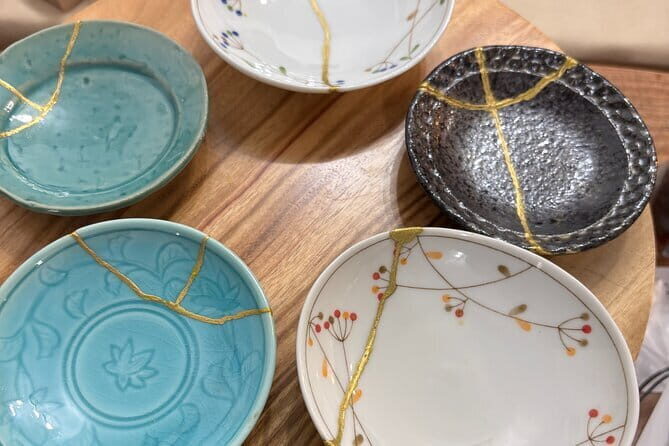
Kintsugi is the Japanese practice of repairing broken pottery using metallic accents—most often gold or silver. The point isn’t to hide the break. It’s to celebrate it. In this Naha workshop, that philosophy shows up in a way that feels personal even if you’ve never touched pottery repair before.
You’ll be working with a simplified version of the technique. That matters. You’re not signing up for a lifelong craft lesson. You’re joining a condensed workshop where the goal is clear: make a restored piece that looks intentional and beautiful, and leave with a souvenir that actually tells a story.
I also like how the meaning doesn’t stay theoretical. The hands-on steps are part of why the class feels calming. You get something to focus on besides your phone and your itinerary.
You can also read our reviews of more tours and experiences in Naha.



Where You’ll Make It: Urushi Studio Kodemari in Naha
Your meeting point is 漆工房 小手毬 (Urushi Studio Kodemari) at 2-chōme-16-6 Maejima, Naha, Okinawa 900-0016. The location is near public transportation, which is a big deal if you’re staying central and don’t want to fight with taxis or parking.
There’s no car park. So if you’re driving in Okinawa, plan for that ahead. If you’re walking or taking transit, build in a little extra time to find the studio entrance.
Inside, the workshop is designed for a comfortable pace. One review mentions it as a cool escape from the heat, and that you get a cup of cold tea at the end. That little reset makes the whole experience easier to enjoy, especially in summer.
Your 2-Hour Workshop Flow: what happens during the session
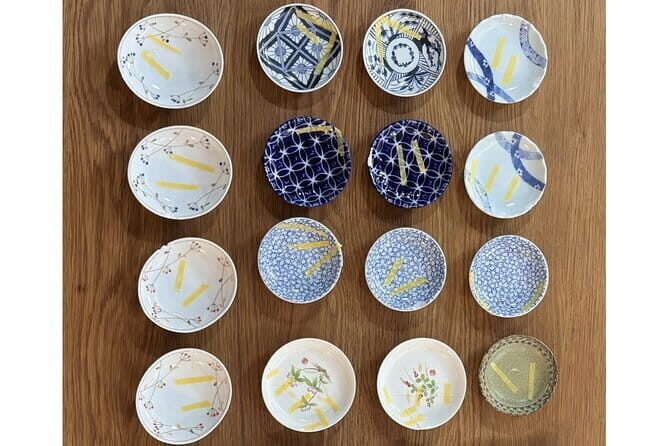
This experience runs about 2 hours (approximately), and the pace is deliberately beginner-proof. You won’t be thrown into advanced steps without support.
Here’s what the session typically looks like, in plain terms:
1) Welcome and orientation
You’ll start with an explanation of what Kintsugi is and how the repair process works. The workshop’s focus is practical—what you’re going to do today, not just a lecture.
2) Handling a broken piece and preparing for the repair
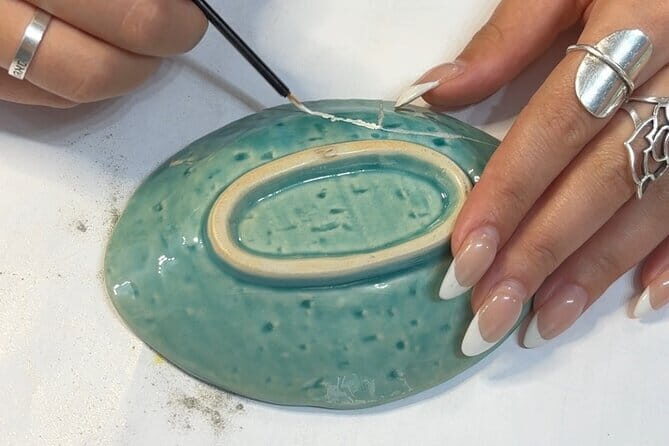
You’ll be restoring pottery that’s already broken, so you’re working with real fracture lines. The instructor guides you through how to approach those seams and breaks as part of the process.
3) Applying the Kintsugi-style repair method
Kintsugi uses metallic accents (gold or silver tones). This class follows traditional ideas but in a shortened form that beginners can manage. You’ll do the hands-on parts while the instructor keeps an eye on your progress and helps with anything that feels unclear.
4) Finishing your restored look
The goal is that you leave with a finished piece. Multiple reviews emphasize taking home something ready to display. That means the class is set up so you can complete your souvenir during the workshop window.
5) A wrap-up with extra cultural context
You’ll also get extra information about Kintsugi and related materials (including lacquer), so the piece in your hands has a deeper meaning than a cosmetic repair.
The session ends back at the meeting point. It’s a good fit for people who want a structured activity without losing half a day.
Picking Your Piece and Making It Look Like You
A lot of art workshops boil down to copying a sample. This one aims for the opposite: your piece should reflect your choices within the structure of Kintsugi.
You’ll be restoring a pottery item, and you’ll get to work on your selected piece rather than just watching from the sidelines. That’s why it feels more like craft than souvenir shopping. The end result is personal because you handled the broken areas and helped shape the repair lines.
One subtle benefit: you don’t need to be artistic to get a pleasing outcome. The instructor support is there so that even if your first attempt isn’t perfect, you’ll still end up with something that looks coherent and intentional.
Also, because the class is small (max 10), it’s easier for the instructor to notice what you need—rather than giving one-size-fits-all direction.
Why the Experience Feels Peaceful (and why that’s not just marketing)
Kintsugi has a reputation for being mindful, but you can see why it works. Repairing a broken object forces you to slow down. You pay attention to the seams. You take care with placement. You focus on steps that are simple enough to repeat, but meaningful enough that you care about doing them right.
The workshop explicitly includes a mindfulness element. In practice, it shows up as a relaxed flow: no rushing, guided pacing, and time for questions.
This is also a smart choice if your trip has you running hot. Okinawa summers can be intense. A workshop like this gives you a controlled indoor activity with a clear start and end, plus a tangible result you can carry home.
One more detail that helped the mood for some participants: they were supported calmly and didn’t feel pushed. That kind of atmosphere is rare in a short class, and it’s one reason people rate it so highly.






Your Take-Home Souvenir: beautiful, but not for food

This is one of those tours where the souvenir is the point. You’ll leave with a restored pottery piece you made yourself using the simplified Kintsugi method.
Here’s the key limitation to understand upfront:
- The finished item cannot be used for eating or drinking.
In other words, you’re making a decorative or display piece—perfect as interior art, a tray, or an accent you can set on a shelf or desk. It’s not meant to be a functional replacement for a bowl you use every day.
This affects value in a helpful way: you’re paying for meaning and beauty, not utility. If that matches your goal—an Okinawa memory you can display—this class delivers.
Also, because it’s simplified, your piece may not look like a museum restoration. But that’s okay. The real strength is that it’s yours, and the broken-to-beautiful idea lands even when the execution is casual.
Price and Value: is $56.01 a fair deal in Naha?

At $56.01 per person, this workshop sits in a reasonable midrange for a hands-on craft experience in Japan. What makes it feel like good value isn’t just the price. It’s what you get for the time and guidance.
You’re paying for:
- a structured, instructor-led class
- a small group experience (max 10)
- step-by-step support for beginners
- a finished, personalized souvenir you can take home
- cultural context tying the craft to Japanese repair philosophy
The “short but real” approach also helps value. The class runs about 1.5–2 hours, so it doesn’t eat your whole day. You’re getting a complete project outcome instead of leaving mid-process.
Where the price might feel less compelling is if you were expecting a deep, long-form traditional Kintsugi session. This is a shortened version. You should come for the experience, not for an hours-long technical mastery course.
Who Should Book This Kintsugi Experience in Okinawa
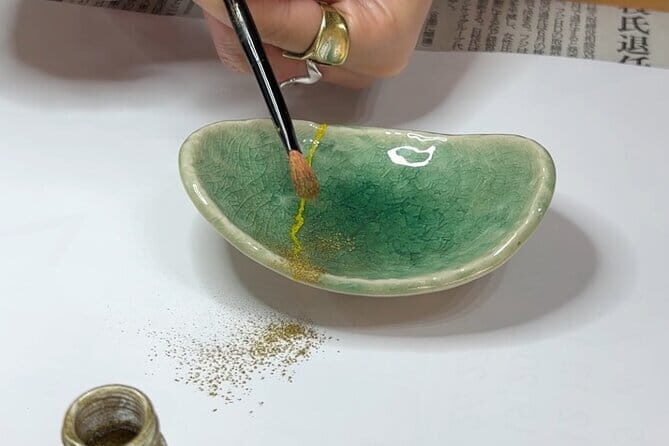
This workshop is a strong match if you want a break from typical sightseeing and you enjoy hands-on activities. It’s also a good fit if you like crafts that have meaning behind them.
You’ll likely be happiest here if:
- you want a beginner-friendly introduction to Kintsugi
- you want a unique souvenir that isn’t mass-produced
- you’re traveling with family members or someone who enjoys calm creative activities
- you want an indoor option during heat or rain
- you like learning cultural practices that connect to everyday life in Japan
It’s less ideal if you’re seeking a heavy technical course or you want something functional for food use. That decorative limitation is part of the deal.
One small practical tip: wear clothes you’re comfortable getting a bit messy in. Even if the process is guided and controlled, you’ll be doing hands-on repair work.
Should You Book This Kintsugi Workshop?

If your goal is a one-of-a-kind Okinawa souvenir with real cultural meaning, I’d book it. The experience is built for beginners, keeps the pace calm, and sends you home with a finished piece you made yourself.
Skip it only if you need a food-safe item or you’re hoping for a long, highly detailed deep-dive into Kintsugi as a full craft. This is a short, guided, simplified experience—and it’s best seen as that: a meaningful creative detour that fits neatly into a travel day.
FAQ
How long is the Kintsugi workshop in Naha?
It runs about 2 hours (approximately), with the experience described as around 1.5–2 hours.
How much does it cost?
The price is $56.01 per person.
Do I need any prior experience with Kintsugi?
No. The workshop is designed so you can participate with no experience.
What will I make and take home?
You’ll restore broken pottery using a simplified Kintsugi method and take home a renewed, personalized piece for display.
Can the finished pottery be used for eating or drinking?
No. The finished work created in this experience cannot be used for eating or drinking.
Where does the workshop start?
The meeting point is 漆工房 小手毬 (Urushi Studio Kodemari), 2-chōme-16-6 Maejima, Naha, Okinawa 900-0016, Japan.
Is parking available?
There is no car park, and the studio is near public transportation.
Is there a limit on group size?
Yes. The activity has a maximum of 10 travelers.
What is the cancellation policy?
You can cancel for a full refund up to 24 hours before the experience starts. If you cancel less than 24 hours before, the amount paid is not refunded.
Should You Book This Kintsugi Experience in Naha?
Book it if you want a calm, hands-on cultural activity and you like the idea of carrying home a repaired piece with meaning. The simplified format is beginner-friendly and gives you a real outcome within a short window. Pass if you need a functional, food-safe item or you’re looking for a longer, advanced training session.