REVIEW · TOKYO
Tokyo: Calligraphy Experience with yukata or Samue
Book on GetYourGuide →Operated by 日本書鏡院 · Bookable on GetYourGuide
Brush strokes beat boring sightseeing here. This Tokyo calligraphy class is built around real handwork: you wear a yukata or samue, learn from a professional calligrapher, then leave with your own finished piece. Expect step-by-step guidance, not vague “watch and copy” instruction, with teachers like Hana, Koushi, and Tomo showing up in recent classes.
I love the practical pacing. You practice the basics first, then work toward a final artwork you can bring home, which turns the session into a souvenir you actually made. I also like that the instruction carries meaning, so you understand why certain strokes and characters matter, not just how to copy them.
One drawback to plan for: this is a hands-on class where your clothes can get dirty, and the session is only 90 minutes. If you want slow, perfect calligraphy practice for hours, this may feel short, and it also isn’t suitable for children under 4 or people over 70.
In This Review
- Key highlights worth knowing
- A 90-minute calligraphy class that actually teaches
- Meeting Point by Kaide-ji: plan for a local, simple start
- Yukata or samue first: the fast track to feeling Japanese tradition
- Welcome tea and a real classroom vibe
- Learning the basics: strokes, brush control, and your first character
- Building to your final artwork: practice first, then write your own
- Why the spirituality and history part feels useful
- English or French support: how language affects your progress
- Tools and what’s included: you won’t need to hunt supplies
- Price and value: $64 for technique plus a finished souvenir
- Who should book (and who should skip it)
- Practical tips so you enjoy it more
- Should you book this Tokyo calligraphy class?
- FAQ
- How long is the calligraphy experience?
- What does it cost?
- Where do I meet for the class?
- What languages are available during the class?
- Is it a hands-on activity or just watching?
- Are tools provided?
- What do I take home?
- What should I wear or bring?
- Is public transport included?
Key highlights worth knowing
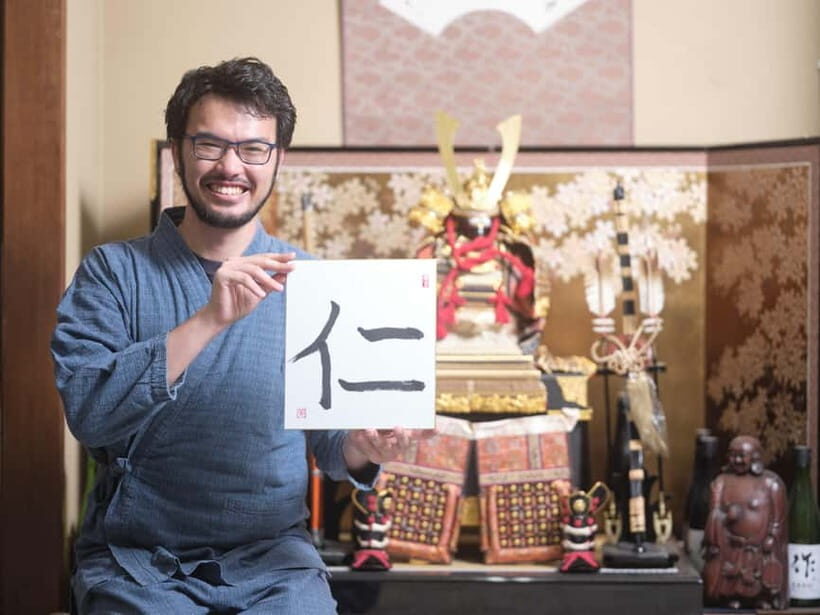
- Dress up in yukata or samue so you feel part of the tradition from minute one
- Small group size (up to 10) keeps attention on your technique
- Brush practice plus a final artwork means you leave with something real
- A professional calligrapher teaches the basics rather than a casual demo
- Tea break included to slow down and reset during the class
- Take-home souvenir: your finished calligraphy piece (often with personal touches)
A 90-minute calligraphy class that actually teaches
This isn’t a performance. You learn the foundation of Japanese classical calligraphy and then do your own writing with a brush, during a tightly timed 90 minutes.
That time box is part of the value. You get enough instruction to understand what your hand is doing, and enough practice to produce a final result, without turning the class into a half-day project.
The energy stays calm and focused. Recent classes describe a warm, patient atmosphere where the teacher takes time to explain, then helps you adjust while you practice.
You can also read our reviews of more tours and experiences in Tokyo.



Meeting Point by Kaide-ji: plan for a local, simple start
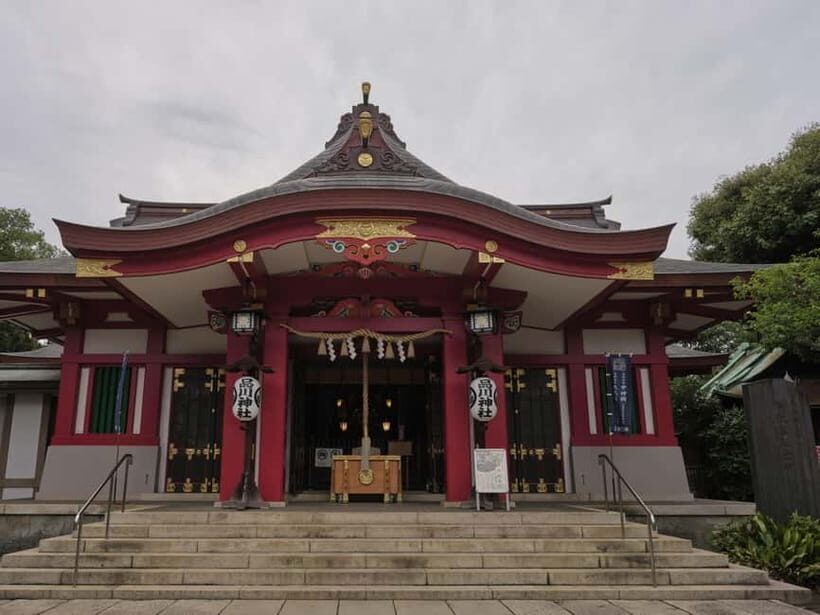
You meet near a small local landmark: next to a nursery, and right by Kaide-ji. It’s a straightforward meeting area, which matters because calligraphy classes are easy to miss if your start point is unclear.
Once you’re there, the class setup is quick. You’ll be guided into the activity, and the first stage is about settling in, not rushing into technique.
Because the meeting point is local, I recommend planning your timing a bit conservatively. Tokyo trains are reliable, but you don’t want to arrive flustered with wet ink waiting for you.
Yukata or samue first: the fast track to feeling Japanese tradition
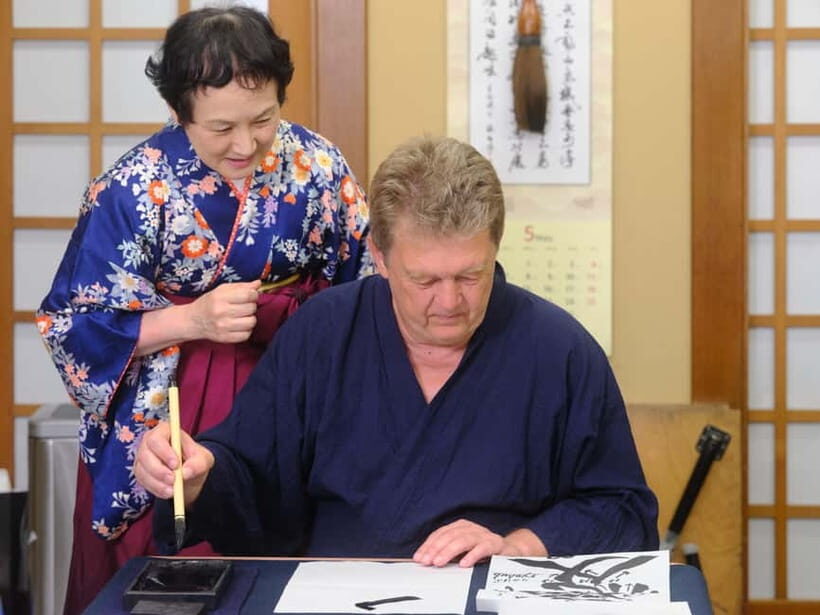
One of the most praised parts of this experience is the dress-up element. You start by putting on a kimono-style outfit such as a yukata or samue, so the class feels like a ceremony you participate in, not just an art lesson.
This matters more than it sounds. Clothing changes how you sit and move, and calligraphy is all about controlled posture and calm hands. When you dress for it, you naturally slow down into the right rhythm.
Recent feedback also mentions kimonos being provided, and that the team helps you get ready. If you’re a first-timer, that support reduces the awkward first five minutes and lets you focus on the writing.
Welcome tea and a real classroom vibe
You’ll get a cup of Japanese tea as part of the session, and in some classes there are also tea-time snacks. It’s not a random add-on; it’s part of the pace.
In a class where you’re learning concentration, tea works like a soft reset. You sip, listen, and let your brain shift from sightseeing mode into handwork mode.
This is one reason the experience often scores so highly for families and mixed groups. It feels welcoming without turning into a party.
Learning the basics: strokes, brush control, and your first character
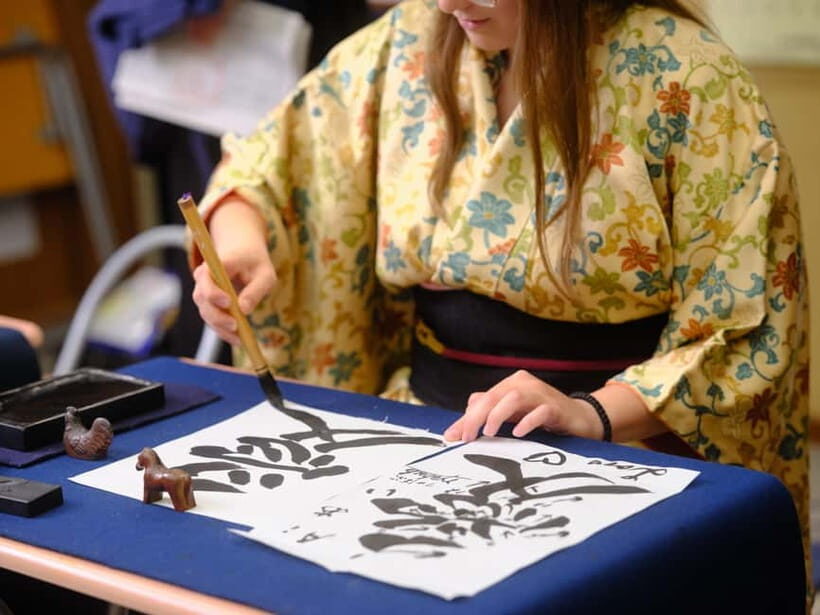
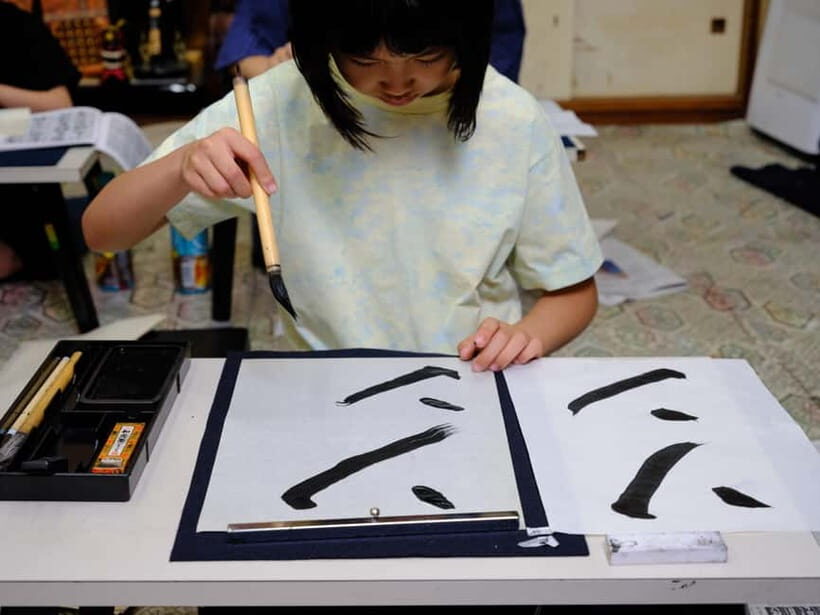
The core of the class is learning the fundamentals from professional calligraphers. You go step by step, usually starting with the basics of how to make clean strokes and how to hold and move the brush.
From the instruction you should expect help on practical technique such as:
- tracing or practicing line direction and spacing
- using the brush correctly so the ink behaves the way you intend
- writing a kanji (or character) in a guided way
The best part is that you don’t just copy a finished example. You practice so your hand understands the stroke before you’re asked to commit it to your final piece.
Recent classes mention teachers guiding participants through practice and giving support until the result looks right to the eye. Teachers like Hana and Tomo are highlighted for being especially pedagogical and attentive during the learning phase.






Building to your final artwork: practice first, then write your own
The session is structured to get you from basics to a finished souvenir. You practice the strokes, then create a final artwork that you can take home.
Many classes include a personal touch. One example from recent participants is a teacher writing a participant’s name as part of the final result. Even when you don’t know what you’ll end up choosing, the class is set up so you get a memorable, individualized outcome.
This is where the “small group” rule really matters. With a group capped at 10 participants, instructors can watch what your brush is doing and correct details before your final piece.
If you’re worried about not being good at art, good news: calligraphy grading is different from, say, sketching. You’re learning technique and intent, and the goal is a satisfying piece you made, not a contest entry.
Why the spirituality and history part feels useful
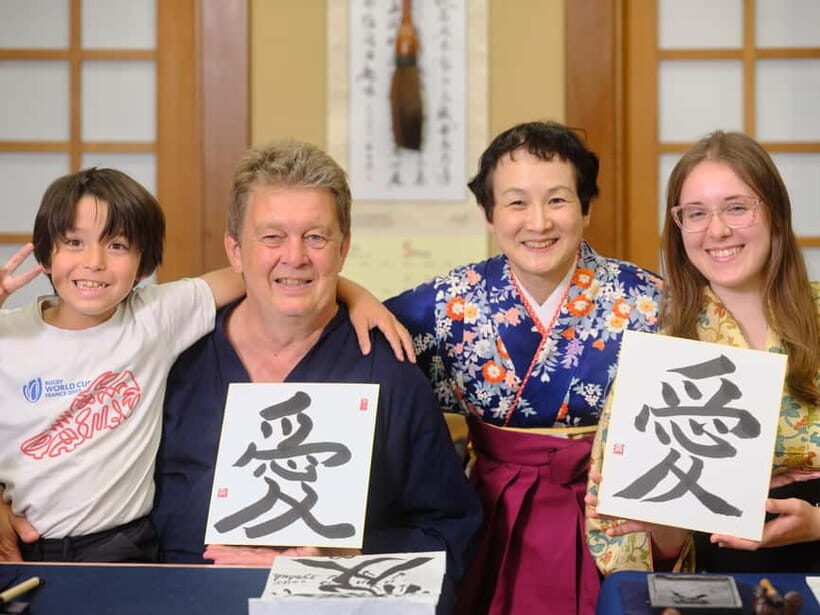
Calligraphy in Japan isn’t just decoration. The class includes spirituality and history behind the characters, so you understand the why alongside the how.
That cultural context helps you take the strokes seriously. When you learn that characters carry meaning and that brushwork connects to discipline and presence, you stop treating the brush like a pen and start using it like a tool for intention.
You’ll also notice the class atmosphere supports this. It tends to feel respectful and focused, with teachers explaining the deeper meaning so the session becomes more than a craft workshop.
English or French support: how language affects your progress
The instructor and guide are available in English and French. That matters because calligraphy instruction is full of small adjustments: brush angle, pressure, timing, and stroke flow.
When you can ask questions or follow the explanation in your language, you learn faster. Recent feedback notes that French and English explanations were both a good fit and made the class feel clear from start to finish.
If you’re traveling with someone who prefers a specific language, this is one of those activities that can feel smoother when everyone shares the same language track.
Tools and what’s included: you won’t need to hunt supplies
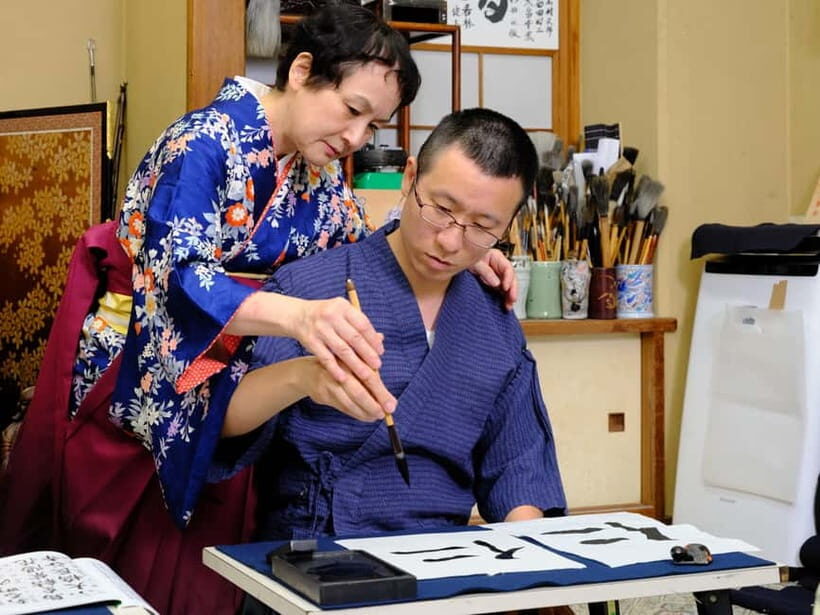
Good art experiences remove friction, and this one includes what you need. The class provides:
- instruction by professional calligraphers
- all necessary calligraphy tools
- your finished calligraphy work to take home
- Japanese tea
- an English-speaking guide (and instruction languages include English and French)
That inclusion affects the real value of the price. You’re not paying for a “museum talk” plus renting supplies. You’re paying for a guided, hands-on lesson with materials handled for you.
What you should bring is simple: clothes that can get dirty. Ink stains happen, and you’ll feel more relaxed if you dress for it.
Price and value: $64 for technique plus a finished souvenir
At $64 per person for 90 minutes, the value depends on what you want from Tokyo.
If you want a photo spot, this won’t be as satisfying as a view. But if you want a skill, a cultural moment, and a take-home item you can display, the price feels fair.
Here’s why it adds up:
- You get direct instruction from professionals
- Tools are provided, so you’re not paying extra
- You leave with a completed piece, which turns the class into a tangible memory
- Small group size means you’re not lost in a crowd
Also, the class is in a traditional setting near Kaide-ji, which usually means you’re dealing with local people and local timing rather than a big, impersonal tourist setup.
If you’re on a tighter budget, still consider it as a “one-and-done” souvenir purchase. Buying calligraphy supplies after the fact usually costs more than you expect, and you would miss the instruction part entirely.
Who should book (and who should skip it)
This class fits best if you want a calm, hands-on cultural activity. It’s also a strong choice for families who want something meaningful, since recent classes mention it working well even with kids in the group.
Two clear limitations are listed: it’s not suitable for children under 4, and it’s not suitable for people over 70. If either applies, you should skip this particular session.
You’ll also do better if you’re comfortable sitting and concentrating for a short stretch. This is not an activity built for high mobility or constant switching between sights.
If you hate uncertainty, you’ll still enjoy it. Even if you’re nervous about getting it wrong, the teachers guide you through practice and toward a final result.
Practical tips so you enjoy it more
A few simple things can make the difference between okay and great.
First, wear clothes that can get dirty. Don’t wear your best outfit just because it’s Japan-themed.
Second, arrive with a calm mindset. Calligraphy rewards patience. You’ll probably feel awkward for the first few strokes, then suddenly your hand learns the motion and it clicks.
Finally, plan for a take-home item. Your finished piece is the point, so treat it like part of your luggage plan. Bring something simple to protect it on the way back.
Should you book this Tokyo calligraphy class?
Yes, if you want a real cultural activity with a tangible result. The combination of professional instruction, brush practice, a final artwork you take home, and the included tea makes the experience feel like more than a simple souvenir stop.
I’d book it if you:
- like hands-on learning over passive sightseeing
- want something personal you can frame or display
- are traveling with friends or family and want a shared activity
I’d think twice if:
- you’re looking for a long, in-depth art session
- you hate the idea of getting slightly messy with ink
- you fall outside the listed age suitability guidelines
If you want a Tokyo memory that’s practical, beautiful, and genuinely made by you, this class is one of the stronger bets.
FAQ
How long is the calligraphy experience?
The class lasts 90 minutes.
What does it cost?
The price is $64 per person.
Where do I meet for the class?
The meeting point is near a nursery, next to Kaide-ji.
What languages are available during the class?
The guide and instruction are available in English and French.
Is it a hands-on activity or just watching?
It’s hands-on. You learn basics from the calligrapher and then use a brush to create your own finished artwork.
Are tools provided?
Yes. All necessary calligraphy tools are included.
What do I take home?
You take home your finished calligraphy work as a souvenir.
What should I wear or bring?
Wear clothes that can get dirty. You’ll be working with brushes and ink.
Is public transport included?
No. Individual transportation is not included.