REVIEW · KYOTO PREFECTURE
Kyoto: Ikebana (Japanese Flower Arrangement)
Book on GetYourGuide →Operated by Tondaya, Co., Ltd. · Bookable on GetYourGuide
Kyoto can feel like a film set, but this experience is more hands-on. You’ll learn Japanese flower arrangement in a real Kyoto townhouse setting, with an Ikebana master guiding you through stems, tools, and the look of the finished work.
I especially like how the lesson is built for beginners, with seasonal flowers and the needed tools provided. I also like that you’re not just making something pretty—you’re inside a machiya (traditional Kyoto townhouse) that you can explore afterward.
One thing to consider: if you’re hoping for lots of theory or a long, fully paced lesson, you may feel the class is on the shorter side for the price, based on mixed feedback about depth and explanation.
In This Review
- Key Things to Know Before You Go
- Ikebana in 90 Minutes at Tondaya: what you actually learn
- The philosophy behind Japanese flower arrangement (and why it matters)
- Inside Nishijin Lifestyle Museum Tondaya: a 140-year-old machiya setting
- Hands-on lesson flow: from seasonal stems to your finished arrangement
- Socks, footwear rules, and why comfort affects your class
- Photos, garden display, and the optional kimono add-on
- Price and value: what $122 buys in Kyoto
- Language support and how to ask better questions
- Who should book this beginner Ikebana class
- Should you book Kyoto: Ikebana (Japanese Flower Arrangement)?
- FAQ
- Where do I meet for the Ikebana experience?
- How long is the Kyoto Ikebana class?
- Is this suitable for beginners?
- What’s included in the price?
- What should I wear or bring?
- Can I wear stockings or tights?
- Are there language options?
- Is the group private?
Key Things to Know Before You Go
- Beginner-focused guidance with all materials included (flowers and tools)
- Seasonal flowers you use to create your own arrangement
- Tondaya machiya tour after the lesson, in a 140-year-old culturally significant townhouse
- Garden display and photos: your arrangement is placed in front of the garden for pictures
- Private group format, with instructor support in English and Japanese
- Socks required (no bare feet, no stockings or tights)
Ikebana in 90 Minutes at Tondaya: what you actually learn
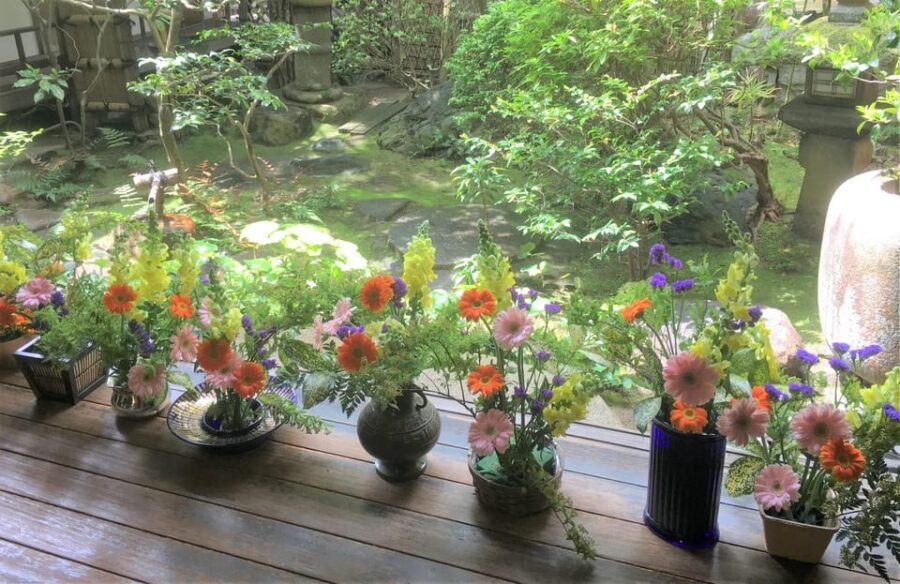
This is a 90-minute Kyoto experience that mixes a hands-on Ikebana lesson with a museum-style visit in Nishijin Lifestyle Museum Tondaya. The idea is simple: you learn how traditional arrangement principles translate into a piece you can finish yourself, then you get context for why places like this townhouse still matter.
You meet at Tondaya – Nishijin Japanese Cultural Experience Museum, 697 Ishiyakushichō, Kamigyo Ward, Kyoto. From there, you’re guided through the core of Ikebana with an instructor who works in English and Japanese. Even if your Japanese is limited, translation support may be used when needed, and at least one staff member can help with language coordination.
The “private group” setup is a big part of the value here. You’re not fighting for attention while everyone tries to copy the same arrangement. It’s structured enough to keep beginners on track, but personal enough that questions don’t feel awkward.
You can also read our reviews of more tours and experiences in Kyoto Prefecture.

The philosophy behind Japanese flower arrangement (and why it matters)
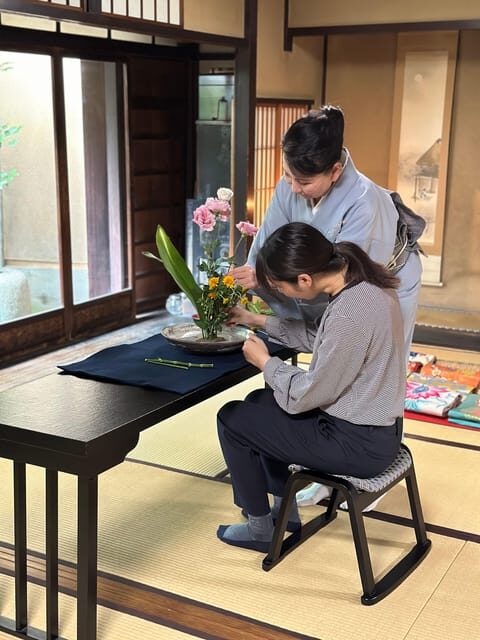
Ikebana isn’t just decorative flower arranging. The origin story shared in the experience points to a moment in Kyoto in 1462, when a flower arrangement was admired for its beauty and elegance. The framing you’ll hear emphasizes harmony between nature and human space, rather than flowers as a religious offering.
That concept changes how you look at your materials. Instead of thinking, How do I make something colorful, you start thinking in lines, balance, and relationship—how one stem relates to another, how height and direction create calm, and how negative space helps the piece breathe.
For beginners, that philosophy is also practical. You don’t need years of gardening to understand it. When the instructor guides you step-by-step, you’re learning not only what to do, but why the arrangement is built the way it is. That’s what makes your final piece feel intentionally composed, not random.
Inside Nishijin Lifestyle Museum Tondaya: a 140-year-old machiya setting
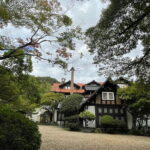
After you arrange flowers, you don’t just leave. You’re guided through Nishijin Lifestyle Museum Tondaya, a townhouse known as a machiya, and described as 140 years old. It’s designated as a culturally significant landmark by the Kyoto City Government.
This matters because Ikebana in Kyoto feels different when you’re surrounded by Kyoto itself. A machiya isn’t a generic museum room. It’s a lived-in architectural style shaped by daily life—space management, natural light, and a sense of quiet routine. Even if you don’t know architecture terminology, you’ll likely feel how the setting helps the lesson land.
The museum visit is also where you get the broader cultural frame. Staff share historically valuable artifacts and stories, and the team includes people experienced in traditional arts such as kimono, tea ceremony, calligraphy, and ikebana. You might not see every art form in one afternoon, but knowing that this team treats traditions as living skills—not just exhibits—adds depth to what you made.
In one optional add-on noted by a review, you may be invited to wear a traditional kimono and take a small tour at an extra cost. If that sounds appealing, it can be a fun way to lean into the cultural setting after the lesson.
Hands-on lesson flow: from seasonal stems to your finished arrangement
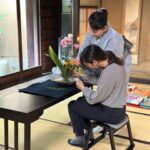
The core of the experience is a traditional Ikebana lesson designed for beginners. Expect a step-by-step progression with seasonal flowers, plus the tools you need. You’re not left standing there with a bouquet wondering what’s next.
Here’s the practical rhythm you can expect:
First, you’ll get an introduction to the roots and purpose of Ikebana—how the practice developed and why it’s seen as a way to express balance. Then the instructor explains the method you’ll use, and you start building your arrangement.
Next, comes the hands-on part. You’ll work through the steps needed to shape your arrangement with the provided flowers and tools. The guidance is key. In mixed feedback, some people said they wanted clearer rules or more explanation. So if you’re the type who learns best from concept + demonstration + repeated practice, ask questions during the lesson rather than waiting until the end.
Finally, once your arrangement is finished, it’s displayed in front of the garden. That’s not just for show—it gives you a clean, scenic backdrop for photos and helps you see the arrangement as it’s meant to be appreciated, outside the “on the table” moment.
A small but important detail: the success of your piece depends on comfort and stability. That’s one reason the socks requirement is more than a formality.
Socks, footwear rules, and why comfort affects your class
This is one of those Kyoto rules that sounds strict until you experience it. You must wear socks during your visit. Bare feet are not allowed, and you should avoid wearing stockings or tights.
For you, that means you should pack a comfortable pair of socks you don’t mind wearing for the full 90 minutes. If you’re planning ahead, choose socks that stay in place. When your feet feel secure, you can focus on the lesson instead of adjusting your footing or shifting your legs every time you stand, sit, or lean toward your work surface.
It also affects photos and pacing. If your socks are comfortable and your footwear situation is simple, you’ll move through the townhouse spaces more easily, especially during the transition from arranging to garden viewing and then to the machiya tour.


Photos, garden display, and the optional kimono add-on
One of the best “after you make it” moments is the display. Your finished arrangement will be placed in front of the garden for viewing and photography. That helps you capture the piece as a Kyoto-style presentation, not just as a handheld souvenir.
The lesson also builds in time for picture opportunities. Depending on your group pace, you’ll want to think about when you want photos most:
- Before you start, for a clear view of the tools and seasonal stems
- After you finish, with the arrangement displayed in front of the garden
- During the townhouse exploration, if the lighting and angles work for you
If you like to get a full set of photos but hate feeling rushed, this structure is a plus. It gives you natural checkpoints rather than forcing you to photograph everything immediately before you’re done.
As for the kimono option: a review notes you might be invited to wear traditional kimono and take a small tour for an extra cost. That’s worth considering if you want a more immersive cultural look at the end of the day. Just be ready that add-ons can change the total time you’ll spend on-site.
Price and value: what $122 buys in Kyoto
At $122 per person for 90 minutes, this is not a “cheap craft” class. It’s priced like a structured cultural workshop: you’re paying for (1) guided instruction with an Ikebana master, (2) provided materials like flowers and tools, and (3) the venue access that comes with the machiya museum visit.
Here’s how to judge the value for yourself:
You’ll likely feel the price is fair if you:
- Want beginner-friendly guidance that helps you finish a real arrangement
- Appreciate the cultural context of the machiya museum, not just the flowers
- Like the idea of having your arrangement displayed for photos
You might question the value if you:
- Expect long explanations, detailed theory, or a lengthy demonstration beyond the hands-on segment
- Prefer more time spent on concept and fewer minutes spent building
The key is matching expectations to what’s offered. This experience is designed to get you making, not to turn into a full academic lecture. If you’re okay with learning by doing, you’ll probably feel satisfied. If you want deep rules and lots of verbal instruction, plan to ask more questions during the lesson.
Also, since reservations require a minimum of two participants, you can often spread the cost if you’re traveling with a companion.
Language support and how to ask better questions
The instructor is listed as available in English and Japanese, and translation support may be used when needed. That’s a practical comfort if you’re worried about not understanding the steps.
To get more out of the 90 minutes, focus your questions while you’re working. Instead of trying to memorize every instruction, ask things like:
- What is the main goal of the next step
- How should I think about balance or height
- What mistakes should I avoid while arranging
If you’re aiming for a particular look, don’t wait until the end. The sooner you clarify the style you want within the lesson’s method, the better your finished arrangement will match your taste.
Who should book this beginner Ikebana class
This class is a strong fit for you if:
- You’re new to Ikebana and want a guided first try
- You care about learning the cultural meaning behind the craft
- You want a Kyoto experience that includes both creation and a townhouse museum visit
- You’d enjoy a private group setting where you can move at a comfortable pace
It’s also a good option if you enjoy hands-on workshops but want the setting to feel authentic. The machiya component is a big part of what makes this feel Kyoto-specific.
If you’re an advanced arranger, you might find the beginner format limits how much new technique you’ll learn. And if you’re hoping for a lengthy, theory-heavy session, consider it carefully: the lesson is built to move through steps and produce a finished arrangement you can view and photograph.
Should you book Kyoto: Ikebana (Japanese Flower Arrangement)?
I’d book this if you want a friendly, beginner-level Ikebana experience paired with a real machiya visit at Nishijin Lifestyle Museum Tondaya. The combination is the selling point: you make something, then you step into the cultural context that keeps these traditions alive.
I would hesitate only if you’re very sensitive to time and explanation depth. With a 90-minute format, you’ll likely learn best by watching, doing, and asking questions as you go, rather than expecting a long lecture.
If you go in with clear expectations—beginner-focused, hands-on, and cultural context—you’ll leave with a finished arrangement, photos, and a better sense of how Kyoto treats nature as part of human space.
FAQ
Where do I meet for the Ikebana experience?
Meet at Tondaya – Nishijin Japanese Cultural Experience Museum, 697 Ishiyakushichō, Kamigyo Ward, Kyoto, Japan.
How long is the Kyoto Ikebana class?
The experience lasts 90 minutes.
Is this suitable for beginners?
Yes. The class is described as an Ikebana experience for beginners.
What’s included in the price?
Materials are included (flowers and tools), along with the entrance fee.
What should I wear or bring?
Bring socks. Socks are required, and bare feet are not allowed.
Can I wear stockings or tights?
No. The guidance says to refrain from wearing stockings or tights and to wear socks.
Are there language options?
The instructor is listed as available in English and Japanese, and translation support may be arranged if needed.
Is the group private?
Yes, it’s listed as a private group.
If you want, tell me your travel dates and whether you’re going as a couple or with friends, and I can help you figure out whether the private-group format and pacing match your style.