REVIEW · OSAKA
Osaka: Sumiyoshi, Osaka’s Most Iconic Shrine – Private Tour
Book on GetYourGuide →Operated by DeepExperience, Inc. · Bookable on GetYourGuide
A shrine guide turns Osaka quiet. Sumiyoshi Taisha isn’t a quick photo-and-go stop—it’s a full-on Shinto experience tied to the sea, old architecture, and the feel of local worship. This private format means you can ask questions and get meaning behind what you’re actually looking at.
I love the focused walkthrough of Sumiyoshi Taisha itself, not just wandering the grounds. I also love the shrine’s fun-but-meaningful rituals, especially the fortune-telling stones and the One-Inch Boy. Those details make the whole visit feel personal.
One consideration: at 90 minutes, you’ll see the core sights and key stories, but you won’t have time to treat it like a full-day shrine-hopping mission.
In This Review
- Key points worth your attention
- Why Sumiyoshi Taisha is more than a stop on the map
- Meeting at the West Grand Torii Gate (and why that first moment matters)
- Guided time at Sumiyoshi Taisha: what the 1-hour walk actually gives you
- Fortune-telling stones and the One-Inch Boy: the ritual part that’s easy to miss
- The Taiko Bridge photo stop: a steep little stage for your memory
- Viewpoint time: use those 15 minutes wisely
- Ending at the stone torii at Daikami Shrine area
- Price and value: is $72 per person worth it?
- Who this tour fits best (and who might want a different plan)
- Before you go: what to know about timing and crowds
- Should you book this Sumiyoshi Taisha private tour?
- FAQ
- How long is the tour?
- Is this tour private?
- Where do I meet the guide?
- Where does the tour end?
- What languages are available?
- What are the main highlights?
- What’s included in the price?
- How much does it cost?
- Can I cancel for a refund?
- Is there a reserve and pay later option?
Key points worth your attention
- A shrine-first tour that keeps you on the important paths and symbols
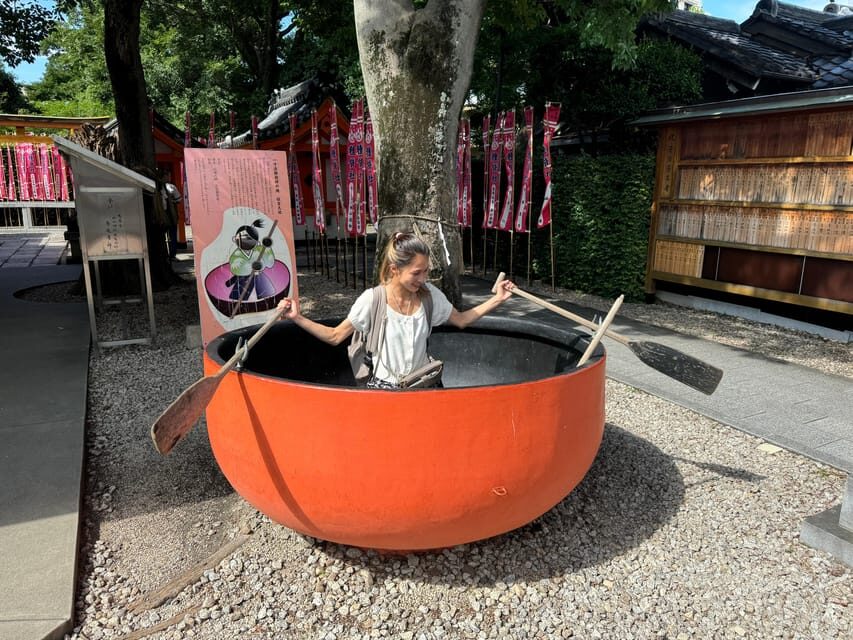
- Fortune-telling stones including the One-Inch Boy and related charms
- A photo moment on the Taiko Bridge with the steep arched look
- Shinto context on-site, so rituals make sense as you go
- Bay-area history framing tied to trade routes and sea worship
Why Sumiyoshi Taisha is more than a stop on the map
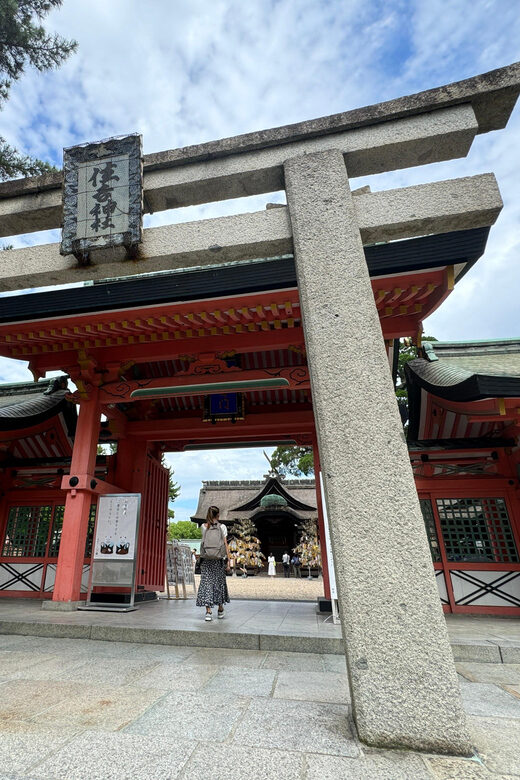
Sumiyoshi Taisha sits on the Osaka Bay side of Honshu, where the area grew up as a trading center linked to Nara and Kyoto. That matters, because shrines here weren’t just spiritual landmarks. They were also part of how communities tracked weather, travel luck, and sea life—basically, how people stayed steady in a hard-working world.
This tour leans into that. You’re not just being shown pretty structures. You’re learning how Shinto spirituality connects to daily life, including the sea god enshrined here. If you’ve ever visited a shrine and wondered what you’re supposed to notice, this is the kind of guide-led structure that fixes that problem fast.
You also get a sense of why locals keep coming back. The shrine draws huge crowds in early January: more than 2 million visitors during the first three days when people make New Year wishes. Tour timing can change the vibe a lot, so going in a less peak moment is one of the biggest practical wins.
You can also read our reviews of more private tours in Osaka



Meeting at the West Grand Torii Gate (and why that first moment matters)
The meeting point is right in front of the West Grand Torii Gate of Sumiyoshi Taisha. Your guide will be holding a yellow sign with the DeepExperience logo. Starting here is smart because a torii isn’t just decoration—it’s the ceremonial threshold between everyday space and sacred space.
From the first step, you can get your bearings. Your guide sets the rhythm so you’re not guessing what comes next, which is especially helpful if you’re not fluent in Shinto terms. You’ll also learn the layout quickly, so later stops like bridges and side charms feel connected, not random.
If you arrive early, take a minute to look at the torii from different angles. Even without a lecture, it helps you understand how the shrine funnels your movement through the grounds.
Guided time at Sumiyoshi Taisha: what the 1-hour walk actually gives you
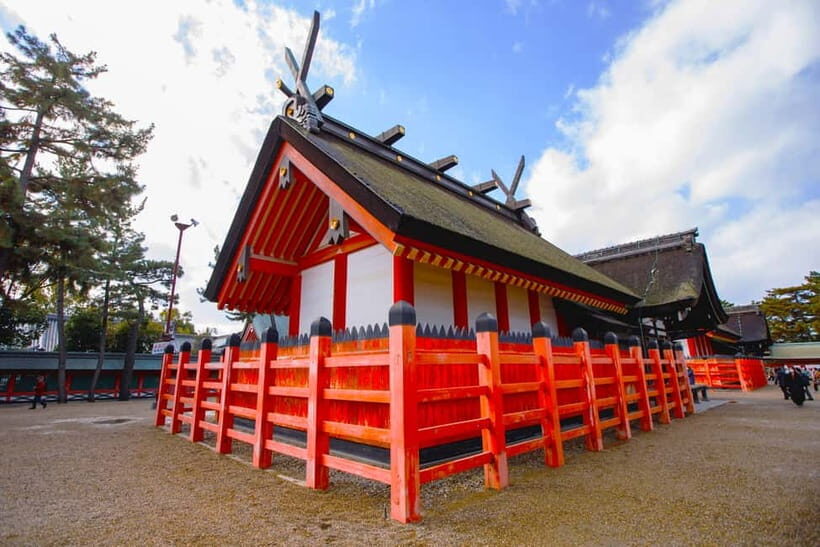
The tour’s heart is about one hour guided at Sumiyoshi Taisha. This is where the value lives. Instead of a general overview, you get a guided tour designed to cover the shrine’s core points—plus the details that most visitors miss.
One of the big themes is interpretation. You’ll learn the spiritual logic of what you see: why people pray, what certain features signal, and how Shinto thinking works as a foundation of Japanese culture. That doesn’t require you to already know anything. It’s built into the walk.
You’ll also hear about architectural character. The information provided highlights the presence of very old-style architecture among the buildings, and your guide points out those elements rather than letting you skim past them. That’s a small thing, but it changes how the shrine feels. Old architecture becomes evidence, not just scenery.
And there’s a fun, humane touch: a cute divine rabbit messenger shows up as part of the experience. It’s the kind of detail that makes a shrine feel alive and story-driven, not like a museum exhibit.
Fortune-telling stones and the One-Inch Boy: the ritual part that’s easy to miss
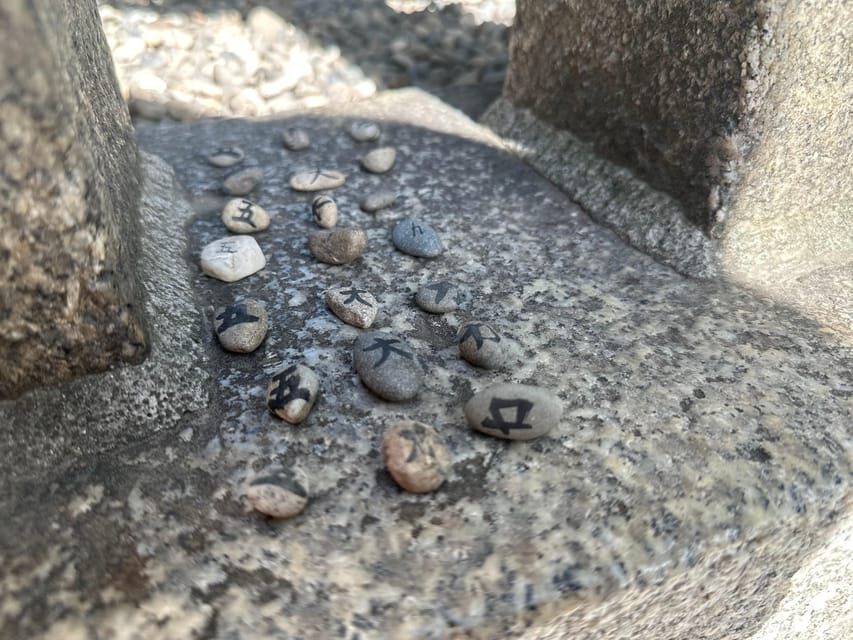
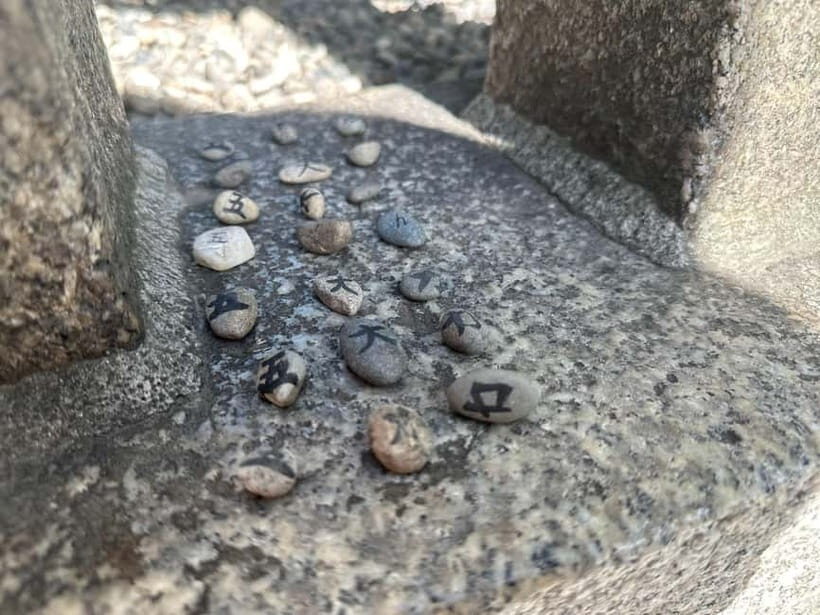
A major highlight here is the fortune-telling element at the shrine, including the fortune stones and the One-Inch Boy. If you’ve seen images of these kinds of charms online, you may not know how they fit into the shrine’s religious world. A guide helps you connect the ritual to the larger meaning of prayer and hope.
In practical terms, this is one of the best reasons to do a guided tour at Sumiyoshi Taisha. You’re more likely to notice the right spots, understand how the stones function as a charm, and feel confident participating without second-guessing yourself.
I also like that the tour frames these charms as part of the shrine’s personality. Shinto often works through small objects and clear actions. When you know what you’re doing and why, it becomes more than a novelty.
If you’re traveling with kids or friends who like hands-on moments, this is your payoff. The “ritual with a purpose” style turns shrine time from quiet observation into shared curiosity.
The Taiko Bridge photo stop: a steep little stage for your memory
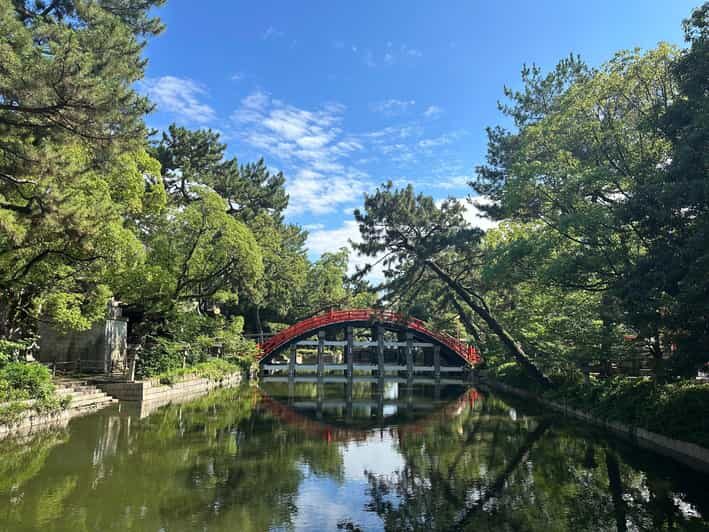
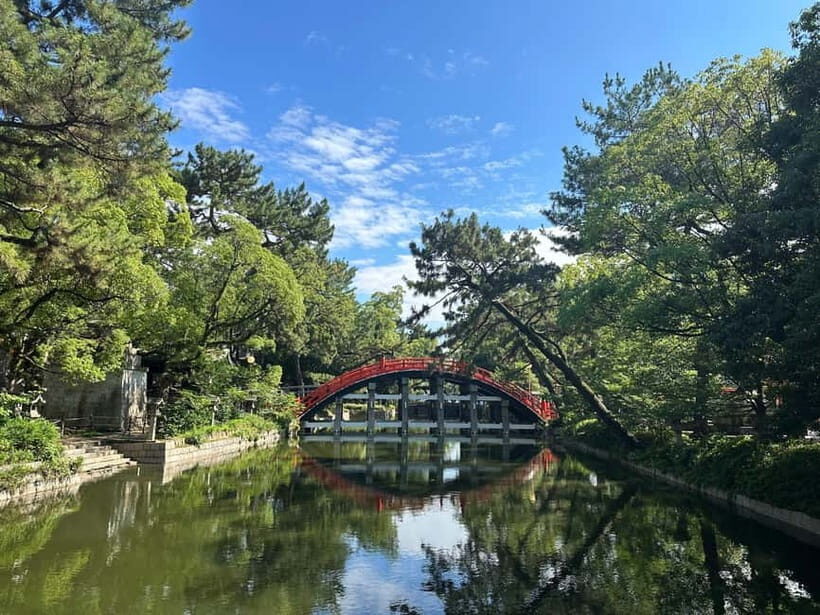
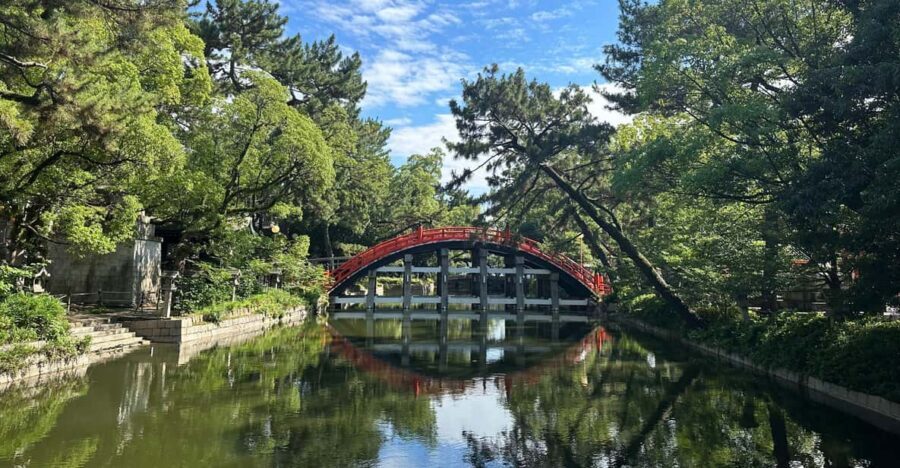
You’ll get a photo stop tied to the steeply arched Taiko Bridge. This isn’t just a background moment. The bridge is a recognizable shape associated with how people cross into and through shrine space, and it adds a dramatic line to your photos.
Why it’s worth it: the bridge’s angle creates a strong visual story. It looks different depending on where you stand, and it’s the kind of shot that’s hard to recreate later if you didn’t know the best spots.
The tour includes a segment in the Osaka area after the main shrine time, with guidance folded in. I’d treat this as your best moment to slow down, take a few photos from different positions, and let the shrine’s mood settle in. You’ll leave with a souvenir that actually matches what you experienced.




Viewpoint time: use those 15 minutes wisely
There’s a short 15-minute viewpoint stop built into the flow. This is where you can reset your senses. You’ve been inside the shrine’s spiritual logic; now you get a small chance to translate that into space—seeing how the shrine sits within its area.
Even if you don’t know the names of every distant feature, viewpoint time helps you stop feeling like you’re only moving between landmarks. You start understanding the setting: Osaka Bay proximity, the area’s role as a trading corridor, and the sense that sea life and travel were long-term parts of local life.
My tip: keep your phone camera ready, but don’t treat this as only a photo break. Take 30 seconds to look without recording. It makes the rest of your memories richer.
Ending at the stone torii at Daikami Shrine area
Your tour finishes at 大海神社 石鳥居. “Stone torii” endings are common in shrine circuits because they mark a final threshold feeling. Ending at a different shrine spot also helps the experience feel like a connected route rather than a single courtyard visit.
That closing point matters for your brain. You’ve started at a West Grand Torii, then moved through Sumiyoshi Taisha’s key religious details, charms, bridges, and viewpoints. Finishing at another stone torii gives the walk a clear beginning and end, which is exactly what you want from a private 90-minute plan.
Price and value: is $72 per person worth it?
At $72 per person for a 90-minute private tour, the value depends on what you want.
If you’re the kind of traveler who wants meaning, not just movement, it’s good value. You’re paying for a guide who can explain Shinto practices on-site and point out specifics like the fortune-telling stones and the One-Inch Boy. Those are the exact details that are hardest to research on the spot without spending your whole trip in your phone.
If you’re perfectly happy with an independent walk and you already know the shrine well, you might question paying for a guide. But for most visitors, a guided shrine experience pays off because it turns “I saw a shrine” into “I understood what I saw.”
Private also helps with pace. You won’t feel rushed through quiet moments, and you can ask about the rabbit messenger, the architecture style cues, or the idea of sea worship—things you might never bother to search for later.
Who this tour fits best (and who might want a different plan)
This works especially well for:
- First-timers in Osaka who want one shrine experience done properly
- People curious about Shinto basics and how rituals connect to culture
- Travelers who like small, specific charms (stones, One-Inch Boy) more than big crowds and shopping
- Couples or friends who want private pacing and time to ask questions
It might feel less ideal if you want a wide, multi-stop tour across many neighborhoods. The tour is shrine-focused, and the schedule is built around that intensity. For a day that also includes markets, food tours, or multiple sights, you may prefer a longer itinerary option.
Before you go: what to know about timing and crowds
Sumiyoshi Taisha can be extremely crowded in early January—especially the first three days when New Year wishes draw over 2 million visitors. That doesn’t mean you should avoid the shrine, but it does mean timing is part of the experience. If you’re visiting around that period, expect a less calm rhythm and more competition for space near key spots.
Outside peak New Year dates, this tour should feel more comfortable. You’ll still get the emotional energy of a popular local shrine, but with fewer logjams that can cut into your 90-minute time.
Should you book this Sumiyoshi Taisha private tour?
Book it if you want your shrine visit to have direction. The standout strength here is not just seeing Sumiyoshi Taisha—it’s learning Shinto spirituality in the place where it’s practiced, with guide-led stops for the fortune stones (including the One-Inch Boy) and a memorable photo on the Taiko Bridge.
Skip it only if you’re happy doing it on your own and you don’t care about charm interpretation. Since the tour is private and tightly timed, you’ll get the most value when you actually want to understand what you’re looking at.
FAQ
How long is the tour?
The tour lasts 90 minutes.
Is this tour private?
Yes, it’s a private group tour.
Where do I meet the guide?
Meet your guide in front of the West Grand Torii Gate of Sumiyoshi Taisha. The guide will be holding a yellow sign with the DeepExperience logo.
Where does the tour end?
The tour finishes at 大海神社 石鳥居.
What languages are available?
The live tour guide is available in English and Japanese.
What are the main highlights?
You’ll get a guided tour of Sumiyoshi Taisha Shrine, see fortune-telling stones including the One-Inch Boy, take a photo on the Taiko Bridge, and learn about Shinto spirituality.
What’s included in the price?
The only listed inclusion is the guide.
How much does it cost?
The price is $72 per person.
Can I cancel for a refund?
Yes. You can cancel up to 24 hours in advance for a full refund.
Is there a reserve and pay later option?
Yes. You can reserve now and pay later, with no payment made today.