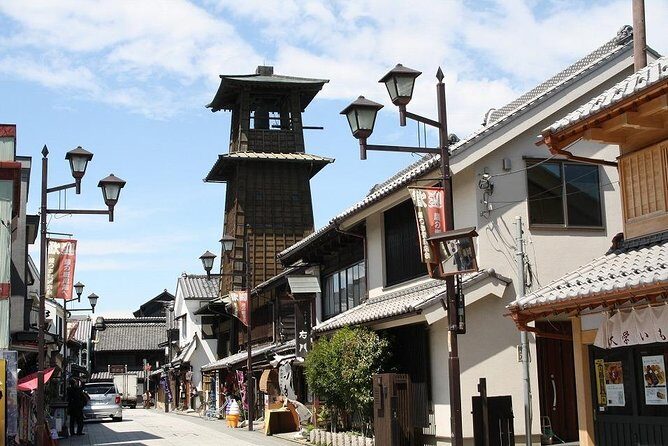
REVIEW · TOKYO
Imperial Palace to Tokyo Station Historical Walking Tour
Book on Viator →Operated by Reelu inc · Bookable on Viator
Gates, gardens, then Tokyo Station in one walk. This 2.5-hour route links Imperial Palace East Gardens to the Marunouchi business district, with Edo-era remnants you can actually see, plus photo stops that make Tokyo feel both historic and current. I like that so many stops have free admission, so most of your ticket price goes to the guide and the walking plan.
I also love how the tour is paced for real questions—my favorite kind of city walk. In past groups, guides such as Naoki and Masa-san have handled lots of questions with patience, and families have said the route works well even when kids and teens want to move at their own speed.
One thing to plan around: you won’t have access to the Inner Palace, and on some days the palace interior may be limited by access rules.
In This Review
- Key highlights you should care about
- Why this Imperial Palace to Tokyo Station walk makes sense
- Wadakura Fountain Park: a calm start near the palace grounds
- Kokyo Otemon Gate and the palace entry logic
- Hyakunin Bansho Guardhouse: order in a small footprint
- Ninomaru Garden, Suwa-no-chaya, and Plum Tree Hill viewpoints
- Edo Castle keep ruins: Takehashi Gomon and the Fujimi-yagura watchtower
- The Edo Castle restoration model: a short stop with big impact
- Honmaru and Kokyo Gaien: palace center to postcard views
- Marunouchi after the gardens: modern Tokyo with the old still nearby
- Tokyo Station finish: red-brick landmark and your next move
- Price and pacing: what you’re really paying for
- Who this tour fits best
- Should you book this Imperial Palace to Tokyo Station walking tour?
- FAQ
- How long is the tour, and what does it cost?
- Is lunch included?
- Can I access the Inner Palace?
- Where do we meet, and where does the tour end?
- Do I need a printed ticket?
- What is the cancellation policy?
Key highlights you should care about
- Imperial Palace East Gardens first, then the city spine: you start calm, then you finish in Tokyo’s major rail hub.
- Free entry stops inside the route: the itinerary is built so you keep paying mostly for guiding, not admission fees.
- Edo Castle leftovers you can point at: watchtowers, gate ruins, and stone foundations are explained on the spot.
- A real garden rhythm: from Ninomaru Garden to Plum Tree Hill, the scenery is part of the lesson.
- Red-brick Tokyo Station as a finish line: you end at a landmark that’s easy to continue from.
- Small groups (max 12): it stays conversational, not a head-count exercise.
Why this Imperial Palace to Tokyo Station walk makes sense
Tokyo can feel like you need a superpower: trains, signage, crowds, and a constant stream of new construction. This tour cuts through that stress by giving you a clean line to follow—from the grounds around the Imperial Palace, to Kokyo Gaien, to Marunouchi, and finally to Tokyo Station.
The best part is the “story” you get just by walking. You begin with palace-era waterworks and gates, then you move into Edo Castle remains: guardhouses, ruins, watchtowers, and reconstructed context. After that, the city takes over with Marunouchi streets, modern buildings, and public art areas. It’s a simple framework, but it helps your brain connect what you’re seeing to what it meant historically.
At $39.09 for about 2.5 hours, it’s also a fair value for Tokyo. You’re not paying for hotel pickup or a fancy vehicle. You’re paying for a guide to explain what the structures are, why they were built, and how to read the space. With a group capped at 12 and a mobile ticket, it’s set up for comfort and ease.
You can also read our reviews of more walking tours in Tokyo

Wadakura Fountain Park: a calm start near the palace grounds
The meeting point is at Starbucks Coffee near Kokyo Gaien Wadakura Fountain Park. That matters because it removes the classic Tokyo problem of “Where exactly is the start?” You can orient yourself quickly and then head into the garden area.
Wadakura Fountain Park is a gentle warm-up. It was established in 1961 to commemorate the marriage of Emperor Akihito, and the fountains give you an easy first visual reference for the palace-adjacent world. Even if you’re arriving in Tokyo for the first time, you’ll likely feel less rushed here than you would at a station platform.
My practical tip: arrive a few minutes early. The “start-by-walking” format works best when everyone settles before moving into the formal palace gateway areas.
Kokyo Otemon Gate and the palace entry logic
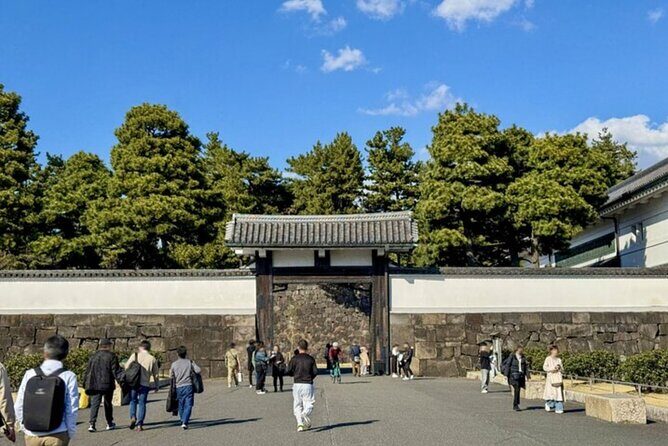
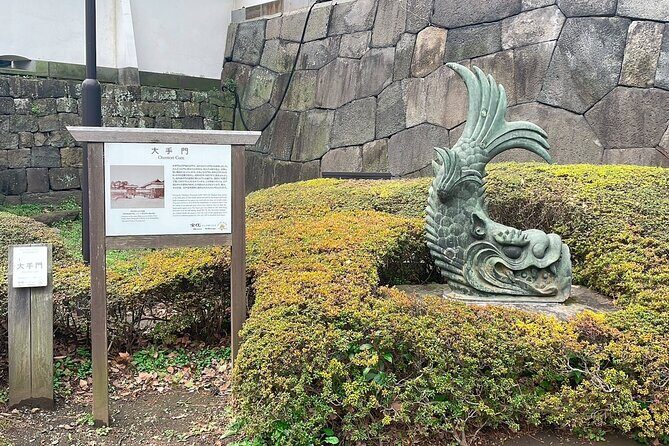
From there, the tour heads to the Kokyo Otemon Gate, the main entrance to the Imperial Palace East Gardens. The key idea here isn’t just that it’s impressive—it’s that it once served as a primary access point to Edo Castle. So you’re looking at a structure that sits at the meeting point of power, movement, and architecture.
Right nearby, you’ll also see the Ote-San’no Gate Ruins. These are remnants of gate and defensive design. The ruins concept is important: it teaches you how much of old Tokyo wasn’t preserved as full buildings, but as shapes, stones, and spatial clues.
This part of the walk is where you start learning to “read” Tokyo. You stop thinking only in modern street addresses, and you start thinking in defensive lines, access routes, and how people were funneled through space.
Hyakunin Bansho Guardhouse: order in a small footprint
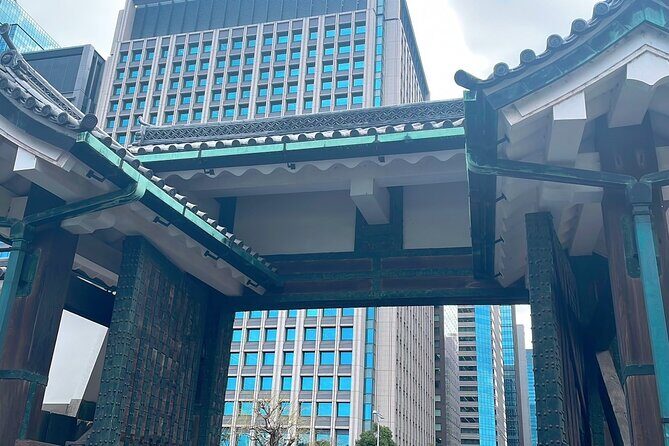
The next stop is the Hyakunin Bansho Guardhouse. The tour frames it around its role: historically, it was manned by a hundred samurai responsible for security within the castle’s innermost sections.
It’s the kind of stop where the scale feels human. You’re not looking at a massive palace façade; you’re looking at a guard function. That makes it easier to connect “history” to daily reality: someone had to watch, manage entry, and keep the whole system running.
If you like architecture and city planning, this is a good pivot point. The guide can tie the guardhouse to why gates and pathways mattered so much—not as decoration, but as control.
Ninomaru Garden, Suwa-no-chaya, and Plum Tree Hill viewpoints
After the guardhouse, the route turns into a proper garden sequence, which is a smart design choice. It gives your eyes a rest, and it changes the pace of learning.
Ninomaru Garden is described as a meticulously landscaped Japanese garden, with seasonal flora, winding paths, and water features. Even if you visit outside a peak season, the tour helps you focus on structure: paths, sightlines, and the way a garden can guide movement like a corridor.
Inside that same garden area, you’ll pause at Suwa-no-chaya, a historic teahouse location. The teahouse itself isn’t operational, but its presence still matters for atmosphere and context—tea culture is part of how people lived around the palace grounds.
Then comes Bairinzaka (Plum Tree Hill). The plum trees bloom vibrantly in season, and this is one of those stops where you might notice the tour is built for repeat visits. Even when blooms aren’t out, the hilltop viewpoint angle is still useful because it shows you how elevation changes what you can see over the grounds.
Potential drawback here: if you’re visiting during a season when plum trees aren’t in bloom, you’ll miss the peak scent-and-color experience. The garden and viewpoints still work, but the “wow” factor depends on the timing.
You can also read our reviews of more historical tours in Tokyo
Edo Castle keep ruins: Takehashi Gomon and the Fujimi-yagura watchtower
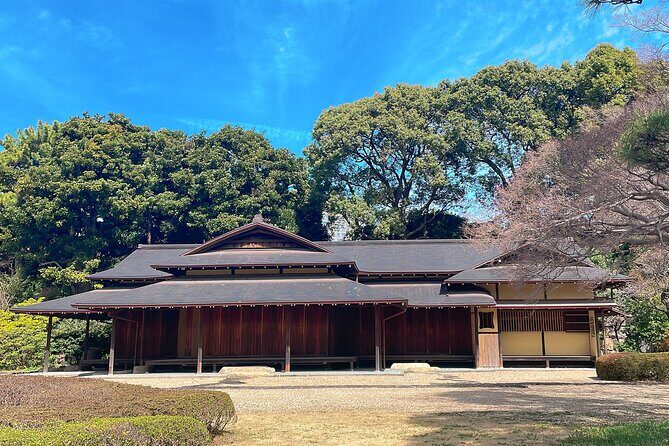
Now the tour shifts from gardens to the physical story of Edo Castle.
First, you’ll explore the Edo Castle Takehashi Gomon Ruins, the site of the former castle’s main keep area. The original structure is gone, but the remaining stone foundations and walls help you understand the keep’s scale and importance as the Tokugawa shogunate’s seat of power.
This is also a good place to pay attention to your guide’s explanation of what remains and what doesn’t. When only foundations survive, your brain needs the extra bridge between “what I see” and “what used to be here.”
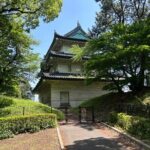
Next is Fujimi-yagura, one of the few remaining watchtowers of Edo Castle. The tour connects it to surveillance and defense, which helps you understand why towers weren’t just decorative. They were tools—built for spotting, communication, and control.
If you want Tokyo to feel less like a blur of skyscrapers, this watchtower segment can be the most satisfying. It turns “old Japan” into specific shapes you can point at.
The Edo Castle restoration model: a short stop with big impact
One of the smartest moments on the walk is the Edo Castle keep restoration model within the East Gardens. Because the original main keep (Tenshukaku) is lost, a detailed scale model gives you a reference point. The tour describes it as reconstructed based on historical records and drawings.
In practice, this is where many people’s mental map clicks. You stop wondering what the structure looked like in full height, and you get a way to compare your earlier “ruins only” view to an older, complete form.
It’s a short stop, but it can make the rest of the palace area feel more coherent.
Honmaru and Kokyo Gaien: palace center to postcard views
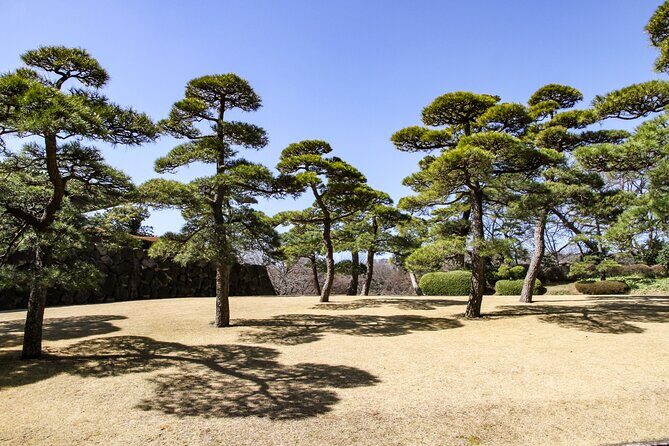
Then you reach Honmaru (Main Hall) within the East Gardens. Historically, this was the core compound area—where the Tokugawa shogunate’s main residence and political headquarters were located. Even without entering the Inner Palace, this is still a meaningful conceptual shift: you’re moving from defensive edges into the center of decision-making.
After Honmaru, the tour exits into Kokyo Gaien National Garden. This is where you get open sightlines and an easy photo payoff, especially at the Nijubashi Bridge viewpoint area. The tour calls out unobstructed views of the palace’s outer structures, and that matches what many people feel: you get a “breathing room” moment after tighter garden and ruin spaces.
My tip: if you care about photos, this is where to slow down and frame. You’ll have fewer chances like this once the walk moves toward Marunouchi streets.
Marunouchi after the gardens: modern Tokyo with the old still nearby
From Kokyo Gaien, the route continues through Marunouchi, Tokyo’s prestigious business district. The idea isn’t to swap history for shopping—it’s to show how the city grew around the palace core.
The tour highlights modern architecture sitting alongside historic sites, plus areas with upscale boutiques, restaurants, and art installations. This part can feel like a mental gear shift, but it’s also useful: you see how Tokyo keeps layering the past onto a working, modern city.
This is also the part of the day where you might want a snack or drink, because the tour doesn’t include lunch. You’ll be passing plenty of places where you can grab something quick before you finish.
Tokyo Station finish: red-brick landmark and your next move
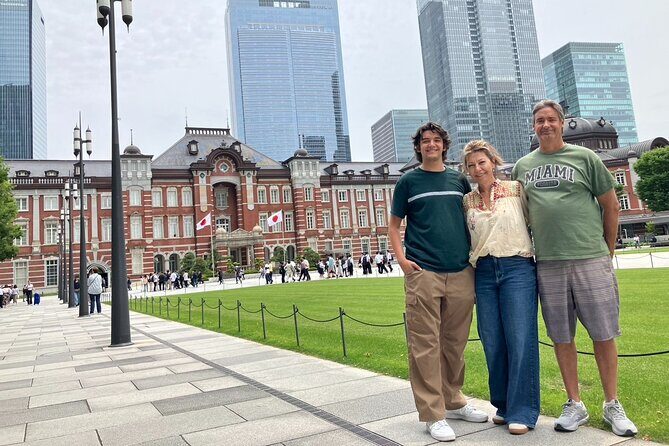
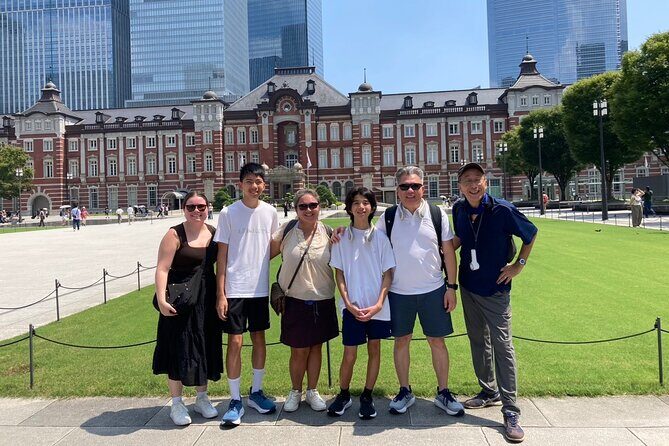
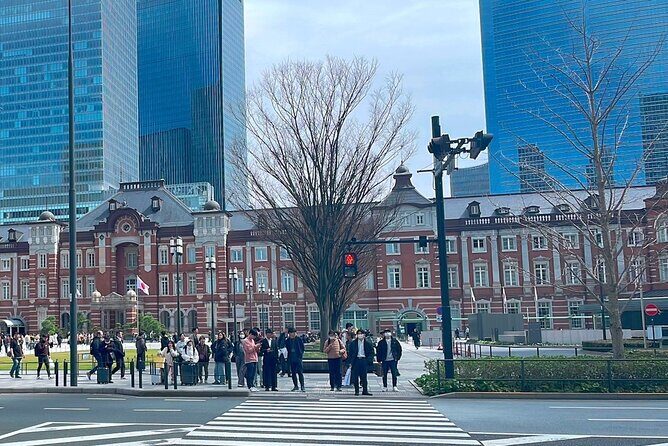
The walk ends at Tokyo Station, famous for its red-brick façade restored to its 1914 glory. It’s an easy final target because Tokyo Station is more than a building—it’s a junction, with endless options for getting to your next place.
The tour notes that inside, the station is a hub of travel, commerce, and dining, with shops and places to eat. Even if you’re not planning to shop, arriving at Tokyo Station means your logistics get simpler fast.
Practical note: plan your onward transit before you reach the final stop. When you arrive, you’ll likely want food, a convenience store run, or tickets for trains. Having your next step ready keeps the ending from feeling chaotic.
Price and pacing: what you’re really paying for
Let’s talk value in a real-world way.
You pay $39.09 for about 2 hours 30 minutes, and the tour includes a local guide. Many stops are listed with free admission. So the cost isn’t going toward entrance fees. It’s going toward someone translating architecture, ruins, and garden design into something you can understand while you walk.
That’s why group size matters. With a maximum of 12 travelers, it stays interactive. Based on guide feedback from prior groups, guides like Ms. Futami and Mitsuko Shirai (also referred to as Mitsi) have been described as friendly and responsive to questions. That kind of dynamic is exactly what you want on a “watch and learn” walking tour.
Also, the tour is mobile-ticket based. In Tokyo, that’s a small but real convenience. You avoid printed-ticket hunting and can focus on meeting your guide and getting moving.
Who this tour fits best
This is a strong match if you:
- like architecture and historical sites that you can see without needing museums
- want a walk that mixes palace grounds with a clear modern-city finish
- enjoy photos, especially around Kokyo Gaien and Tokyo Station
It’s also a solid pick for families, based on feedback that teenage boys and family groups enjoyed the pacing and explanations. If your group wants to keep questions coming, small-group size helps a lot.
If you’re traveling only with very young kids or someone who struggles with walking, you might treat this as “doable but plan carefully.” The route is presented as a walking tour, so comfort and footwear matter even if the stops are frequent.
Should you book this Imperial Palace to Tokyo Station walking tour?
I’d book it if you want one efficient, guided line through Tokyo’s palace area and a high-clarity finish at Tokyo Station. The mixture is genuinely smart: gates and ruins give context, gardens give a break, and Marunouchi shows how Tokyo grows around history.
Skip or rethink it if you specifically want access to the Inner Palace interior, because that part isn’t open to the public on this tour. Also, if you’re visiting during a season when plum blooms aren’t out, you may not get the full fragrance-and-color experience at Bairinzaka.
If your goal is to get your bearings fast and come away with a clearer mental map of Edo-era Tokyo versus modern Tokyo, this is a strong buy.
FAQ
How long is the tour, and what does it cost?
The tour runs for about 2 hours 30 minutes and costs $39.09 per person.
Is lunch included?
No. Lunch is not included, and you’ll need to buy food and drinks on your own.
Can I access the Inner Palace?
No. Access to the Inner Palace is not open to the public, and it isn’t included on this tour.
Where do we meet, and where does the tour end?
You meet at Starbucks Coffee – Kokyo Gaien Wadakura Fountain Park (3-1 Kōkyogaien, Chiyoda City). The tour ends at Tokyo Station (1 Chome-9 Marunouchi, Chiyoda City).
Do I need a printed ticket?
No. The tour uses a mobile ticket.
What is the cancellation policy?
You can cancel for a full refund up to 24 hours before the experience starts. If you cancel less than 24 hours before, the amount you paid won’t be refunded.