REVIEW · TOKYO
Cherry Blossom Go-Kart Tour with Insta360 Video & Photos
Book on GetYourGuide →Operated by Kartzilla Discovery Japan (Kartzilla Go Kart, Tokyo) · Bookable on GetYourGuide
Cherry blossoms, but make it street-level. This 2-hour Honshu Tokyo go-kart tour takes you wheel-first through spring sights and real city driving, guided start to finish. I love the street-legal approach, because it feels like sightseeing with actual momentum, not a parking-lot stunt. I also love the two-way radio guidance, which keeps the group coordinated and makes the route feel more relaxed.
You’ll be most impressed if you want classic Tokyo landmarks plus the softer spring look—think Imperial Palace area waterways and the historic lanes around Nihonbashi. The one thing to plan around is the driver requirement: you must bring a valid accepted license (international driving permit if needed) and you should arrive early for the safety briefing. If you forget something, you may be turned away with no refund.
If you’re a big and tall rider, you’ll likely appreciate the cart setup. The karts are built with reinforced frames and stable handling, plus smooth suspension and hydraulic braking for controlled city driving.
In This Review
- Key points to know before you go
- Street-legal go-karting in Tokyo, not a theme-park loop
- The carts are built for comfort and confidence
- Your guide keeps you on track with two-way radio
- The spring route: cherry blossoms plus Tokyo icons
- Passing Tokyo Skytree early and again near the end
- Japanese Sword Museum: craft meets a calm spring backdrop
- Nihonbashi and Tokyo Station: historic routes and modern scale
- Imperial Palace area and Chidorigafuchi: the spring showpiece moment
- Ginza and Kabukiza: modern elegance with traditional culture
- Tsukiji Honganji and Suitengu Shrine: spiritual stops amid spring greenery
- Insta360 video and photos: how to plan your picture setup
- Costume rental makes quick stops fun
- Price and value: $116 for a guided street ride with gear included
- What you need to bring (and what can stop you)
- Timing and the safety briefing matter more than you think
- Who this tour suits best
- Should you book the Cherry Blossom go-kart tour?
- FAQ
- Do I need an international driving permit for this go-kart tour?
- Where do I meet for the tour?
- How long is the tour, and what time should I arrive?
- Is Insta360 video and photos included?
- What languages are the guides available in?
- What’s included in the price?
Key points to know before you go
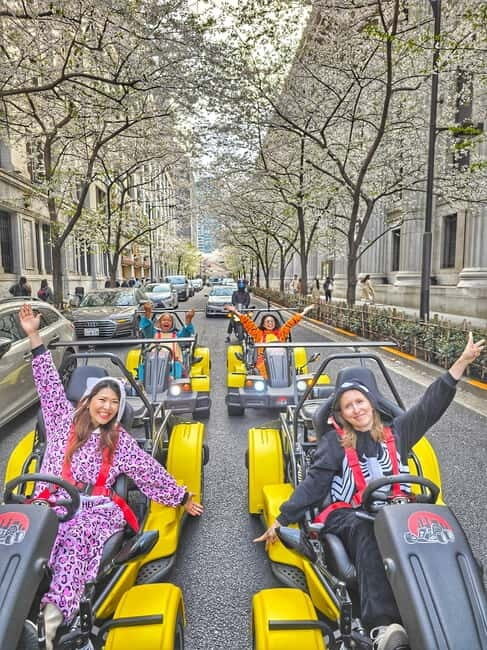
- Street-legal go-karts built for comfort with reinforced frames for big and tall riders, plus suspension and hydraulic braking
- Guided driving with two-way radio so instructions are clear and the group stays together
- Spring route through major landmarks like Tokyo Skytree, Nihonbashi, Tokyo Station, the Imperial Palace area, Ginza, and Kabukiza
- Anime costume rental included, which makes quick photo stops way more fun
- Insta360 option with complimentary photos, but you’ll need a micro SD card (buy on-site if needed)
Street-legal go-karting in Tokyo, not a theme-park loop
This is a guided go-kart tour that runs like real city sightseeing. You start at Kartzilla Go Kart Tokyo in Higashiyotsugi, Katsushika-ku, with the meeting point listed as Kinegawa Central Park. After check-in, you’ll meet your professional guide, choose a costume, and get a safety briefing before you take control of a street-legal kart.
What makes it work is the cart design and the guidance. Kartzilla uses a purpose-built kart meant for urban traffic conditions, with smooth suspension and hydraulic braking, so your ride feels stable instead of bouncy or twitchy.
You can also read our reviews of more photography tours in Tokyo


The carts are built for comfort and confidence
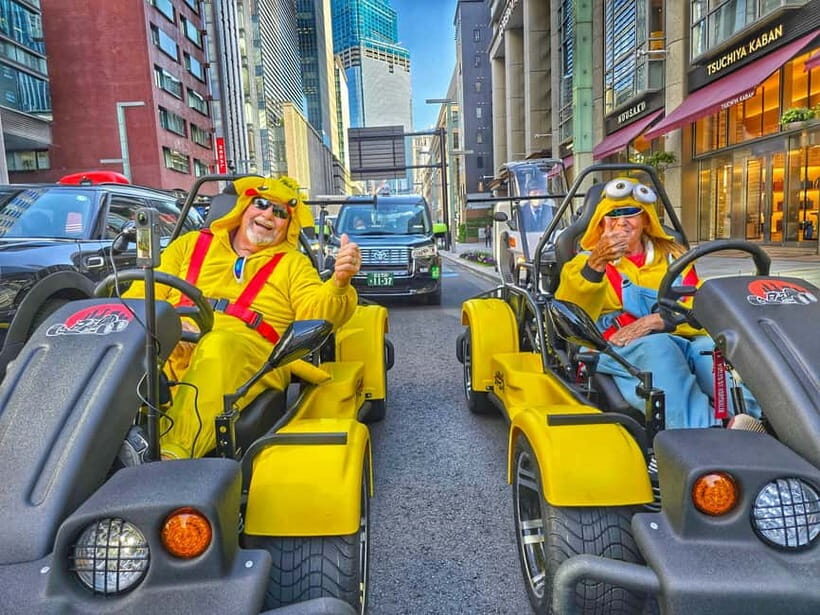
If you’ve ever sat in a small ride designed for someone shorter, you know how fast excitement turns into discomfort. Here, the reinforced frame and comfortable seating are meant for big and tall riders, and the handling is designed for first-time drivers too.
From a practical standpoint, that matters in Tokyo, because you’re not just driving in circles. You’ll be on actual streets for a couple hours, following a guide at a steady pace while enjoying spring scenery along the way.
Your guide keeps you on track with two-way radio
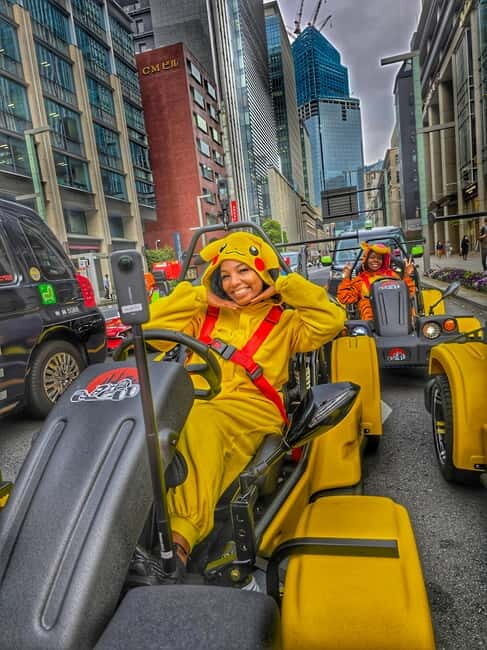
This tour isn’t a free-for-all. Your guide leads the group at all times, and you’ll hear attraction stories through a two-way radio system. That does two things for you: it reduces confusion at road intersections, and it makes the stops feel like a guided tour rather than just scenery passing by your mirrors.
It also explains why the group is kept small. The tour is limited to 10 participants, so you’re not stuck watching a long line stretch across lanes. In real terms, it makes the whole experience feel more organized.
The spring route: cherry blossoms plus Tokyo icons
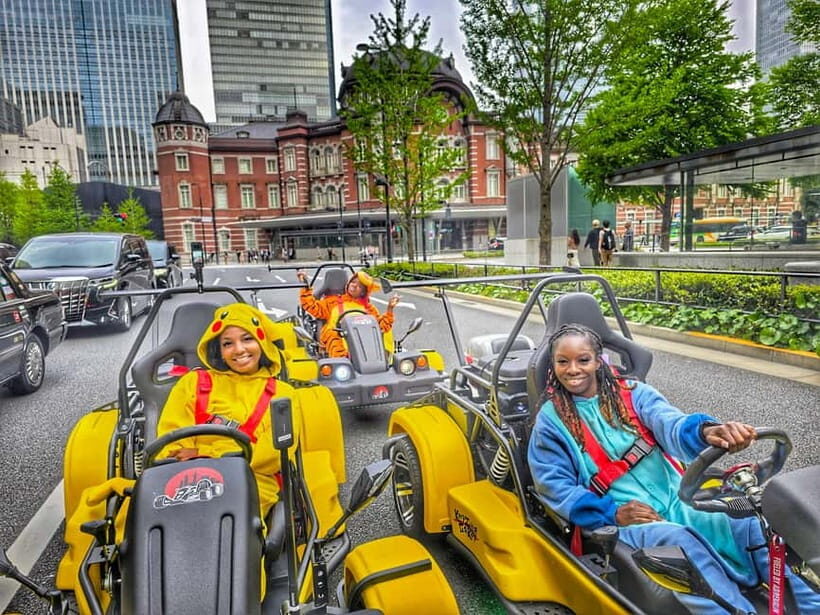
Tokyo in spring can be pretty from the sidewalk. From a street-legal go-kart, it’s different. You’re lower to the ground, closer to the details, and you can reposition your viewpoint as the route turns.
Here’s how the day’s highlights tend to land, in a driving-the-route order that keeps the energy high.
Passing Tokyo Skytree early and again near the end
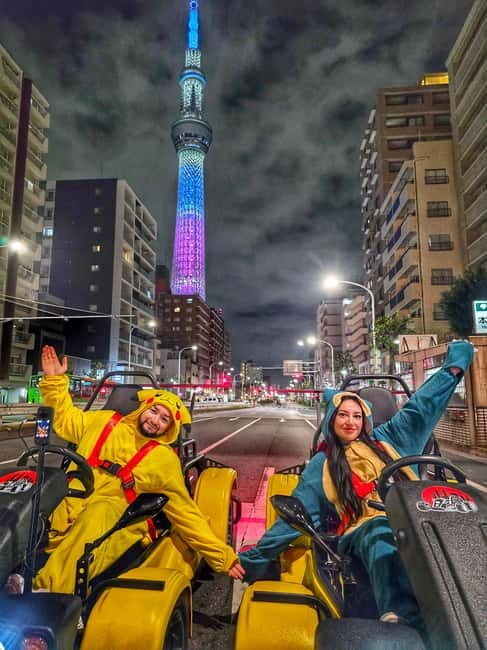
You start with an introduction to Tokyo’s skyline by driving past Tokyo Skytree, which is Japan’s tallest tower. It’s the kind of landmark you spot quickly, and from the kart you can take in the scale before you move into the older, more seasonal-feeling streets.
You’ll also pass by Skytree Town later, which gives you a second chance to catch the tower area as the light changes. If you’re thinking about photos, this is where you’ll want to stay aware and not fight your camera timing.





Japanese Sword Museum: craft meets a calm spring backdrop
Next comes the Japanese Sword Museum, a stop that mixes Tokyo’s cultural niche with the lighter mood spring brings. Even if you don’t go inside, you get the framing: a theme that feels specific, not generic, with seasonal surroundings softening the streetscape.
Nihonbashi and Tokyo Station: historic routes and modern scale
You’ll drive through Nihonbashi, one of Tokyo’s classic historic corridors, and you’ll connect that area to major transportation scale as the route moves toward Tokyo Station. The value here is the contrast. You’ll get spring greenery around older routes, then the big-city geometry that makes Tokyo feel like Tokyo.
If you’re the type who likes architecture and street views, this is where you’ll feel the tour’s “real city driving” advantage.
Imperial Palace area and Chidorigafuchi: the spring showpiece moment
The route brings you toward Chidorigafuchi and the Imperial Palace area, one of Tokyo’s best-known seasonal landscapes. Tree-lined waterways and park views create a calmer feeling compared with the surrounding city streets.
This portion is why spring is the perfect season for this format. You’re not just watching blossoms from a standing spot. You’re moving along the edges of the scenery, which can make the views feel more continuous.
Ginza and Kabukiza: modern elegance with traditional culture
After the quieter Imperial Palace neighborhood, the tour shifts back toward central Tokyo’s energy with Ginza and Kabukiza. Ginza gives you that sleek, shop-and-street vibe, while Kabukiza connects you to performing arts and traditional character.
For most people, it lands as a “Tokyo in one ride” segment: you see high-end modern streets and then a cultural anchor nearby, all with spring foliage softening the scene.
Tsukiji Honganji and Suitengu Shrine: spiritual stops amid spring greenery
The route also passes Tsukiji Honganji and Suitengu Shrine, both historic spiritual landmarks set against greenery as the cherry blossom season shifts. Even from the kart, these spots can feel more grounded than the commercial stretches.
This part is a nice reminder that Tokyo’s spring isn’t only about flowers. It’s also about routine places—temples, shrines, and quiet stonework—looking different under seasonal light.
Insta360 video and photos: how to plan your picture setup
One of the biggest reasons people choose this exact tour is the Insta360° experience. The tour includes on-board Insta360 camera use, and the highlights note optional Insta360 video with complimentary photos included.
Here’s what you must plan for: a micro SD card is required for the camera. The micro SD itself is not included, but it can be purchased on-site. If you hate last-minute shopping, consider bringing your own compatible micro SD so you’re not trying to solve it right before you roll out.
Also note a practical photo tip that comes up in experience feedback: dirt can get in your eyes. Bring sunglasses or be ready to ask for them, because the tour setup isn’t guaranteed to provide them automatically.
Costume rental makes quick stops fun
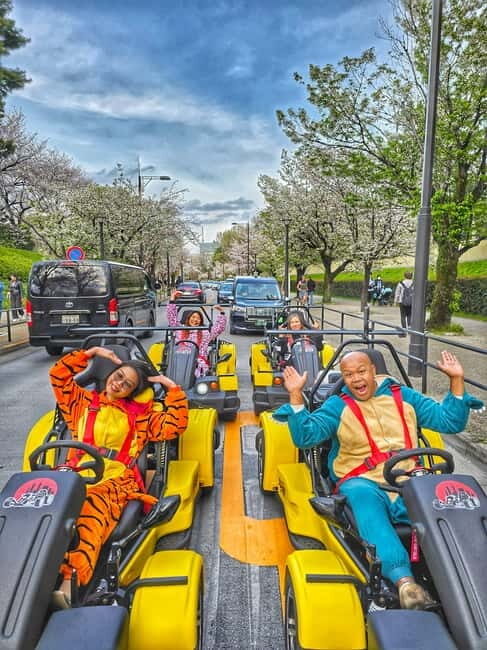
You’ll get to select an anime costume rental during check-in. That means your photos don’t have to be limited to landmark backgrounds; you’ll also have a theme for quick shots while the kart is parked in safe photo moments.
It’s also part of why the mood stays playful. A guided city ride plus a costume changes the tone from sightseeing to a full-on experience.
Price and value: $116 for a guided street ride with gear included
At $116 per person for about 2 hours, this is not the cheapest activity in Tokyo. But it’s also not just a kart rental.
You’re paying for a package that includes:
- a street-legal go-kart rental plus fuel
- a professional local guide with two-way radio
- anime costume rental
- on-board Insta360 camera use (micro SD needed)
- accident insurance
- drinks (water, tea, coffee)
When you add those components, the value becomes clearer. A normal “self-drive” kart option usually saves money by removing the guidance and bundled add-ons. Here, you’re buying the storytelling, the route management, and the spring landmark sequence.
If you’re coming with kids or family who want a shared activity, it can also feel like better value than two separate bookings, since the experience runs in one timed window.
What you need to bring (and what can stop you)
This tour is very direct about driving requirements. You’ll need a valid driver’s license and must bring it with you. Accepted options include a Japanese license, an International Driving Permit issued under the 1949 Geneva Convention for non-residents, or certain country licenses paired with an official Japanese translation issued by JAF.
Key rule: digital licenses, photos, or expired licenses are not accepted. If you arrive without the right paper, you may not be able to participate and refunds aren’t provided.
For what to pack, the list is simple: passport, driver’s license, and (if needed) an international driving permit.
You should also follow the on-tour rules: no smoking, no drones, and no intoxication or drugs. Cellphones are not allowed, which matters if you were planning to use your phone as your photo camera.
Timing and the safety briefing matter more than you think
Arrive at least 40 minutes before your scheduled start time. This isn’t just formality. You need time for check-in, the safety-focused briefing, and proper setup before you drive.
One tip worth taking seriously from feedback: if you want the smoothest experience for everyone, don’t show up close to the start. The staff and guide need everyone ready so they can leave on time and get back when expected.
Who this tour suits best
This is a great fit if you:
- want a guided way to see major Tokyo landmarks without bouncing between neighborhoods on public transit
- like spring scenery and want it from street level
- want photo and video content via Insta360
- need carts designed for big and tall riders
- prefer a small group experience limited to 10 participants
It’s not a good match if you don’t have a driver’s license, since driving is required. It’s also not suitable for visually impaired people based on the tour’s rules.
Should you book the Cherry Blossom go-kart tour?
Book it if you want a street-level Tokyo experience during peak spring vibes, and you’re ready to handle the driving paperwork and rules. The mix of guided route + two-way radio + spring landmarks + Insta360 is exactly what makes this feel like more than a novelty ride.
Skip it if you don’t want to plan around licensing, or if you’re hoping for a hands-free sightseeing experience. In Tokyo, this kind of activity shines when you’re comfortable driving and you show up prepared.
If you do book, show up early, bring sunglasses, and plan for the micro SD card so you can actually capture the cherry blossom season the moment you see it.
FAQ
Do I need an international driving permit for this go-kart tour?
You need a valid driving license to participate. For non-residents, an International Driving Permit issued under the 1949 Geneva Convention is accepted. Certain country licenses must be accompanied by an official Japanese translation issued by JAF.
Where do I meet for the tour?
The meeting point is Kinegawa Central Park. Your check-in is at the Kartzilla Go Kart Base in Higashiyotsugi, Katsushika-ku.
How long is the tour, and what time should I arrive?
The tour duration is 2 hours. You should arrive at least 40 minutes before the scheduled start time for check-in and the mandatory safety briefing.
Is Insta360 video and photos included?
Insta360 camera use is included, and Insta360 video is described as optional, with complimentary photos included. You will need a micro SD card for the camera, which is not included but can be purchased on-site.
What languages are the guides available in?
The live tour guide is available in English, German, and Persian.
What’s included in the price?
Included are the street-legal go-kart rental, fuel, a professional local guide, anime costume rental, on-board Insta360 camera use (micro SD card required), accident insurance, and drinks such as water, tea, and coffee.