REVIEW · OSAKA
Osaka Sushi Miso soup Adventure: A Journey of Exotic Flavors
Book on GetYourGuide →Operated by yuki Japanese cooking class · Bookable on GetYourGuide
Sushi, miso, and real technique—no guesswork. In Osaka, Chef Yuki’s class is a small, hands-on way to learn how Japanese flavors are built, from perfectly seasoned rice to a homemade bowl of miso soup. You leave with skills you can actually use, not just a plate you finished.
I love the hands-on pace—rolling nigiri-style and hosomaki with guidance right there at your station. I also love that you get take-home recipes (and practical notes) so the food doesn’t disappear the moment you clean your plate. The main drawback to consider is logistics: it’s a 3-hour block and the meeting spot is outside the super-central core, so you’ll want to plan your train timing.
In This Review
- Key takeaways before you book
- A Small-Group Osaka Class With Chef Yuki’s Practical Style
- What You’ll Make: Nigiri, Hosomaki, Tamagoyaki, and Miso Soup
- Nigiri sushi: the balance lesson
- Hosomaki: thin rolls with discipline
- Tamagoyaki: the square-pan omelet sidekick
- Miso soup: made from scratch
- Tuna Zuke and Kombu-Jime Salmon: Real Flavor Hacks You Can Repeat
- Tuna zuke: marination for deeper flavor
- Kombu-jime salmon: kelp-curing for clean taste
- The Skills Behind Great Sushi: Rice, Dashi, and the Basics That Matter
- A 3-Hour Flow You Can Picture Before You Go
- Meeting Point and Getting There From Namba (Without Losing Time)
- Price and Value: Is $96 Worth It?
- Who This Course Suits Best (And Who Should Think Twice)
- Should You Book Chef Yuki’s Osaka Sushi and Miso Class?
- FAQ
- How long is the sushi and miso making course in Osaka?
- Where is the meeting point?
- How do I get there from Namba Station?
- Is the class taught in English?
- What dishes will I make during the class?
- How large is the group?
- What is included in the price?
- Can I cancel for a full refund?
- Is it possible to reserve now and pay later?
- Will I have recipes to make the food again at home?
Key takeaways before you book
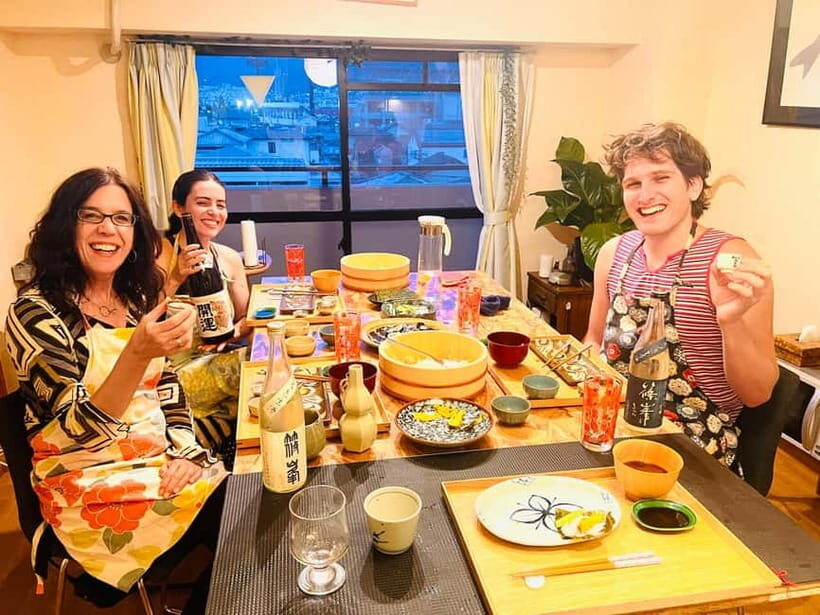
- Learn by doing, not watching: you’ll shape multiple sushi styles and finish by eating what you made.
- Chef Yuki’s background shows in the details: training under a sushi master with 40+ years’ experience.
- Two standout fish methods: tuna zuke and kombu-jime salmon, taught as techniques you can repeat later.
- Miso soup is part of the real meal: you’ll make it from scratch, not as an afterthought.
- Small group size (up to 6): more time for questions in English.
- Practical Osaka context: insider cooking and local-life tips help you connect the food to the city.
A Small-Group Osaka Class With Chef Yuki’s Practical Style
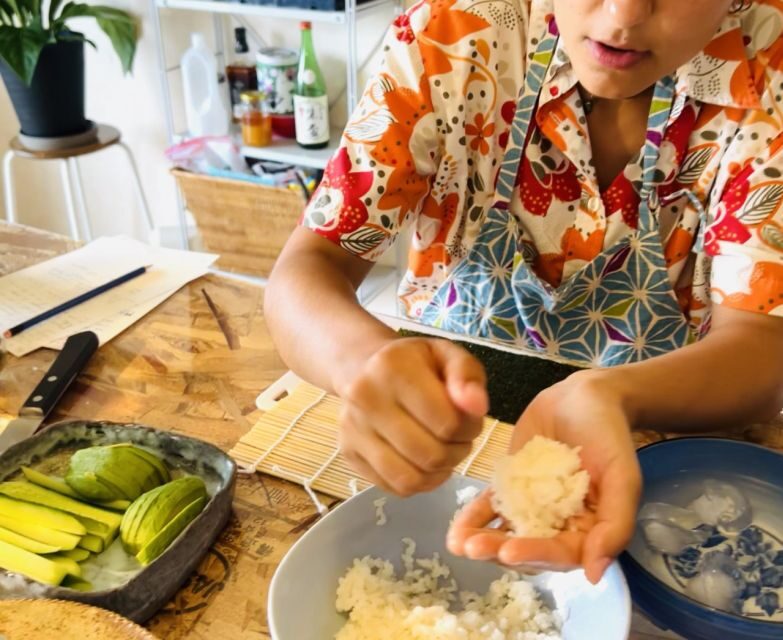
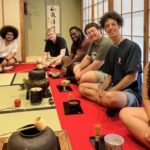
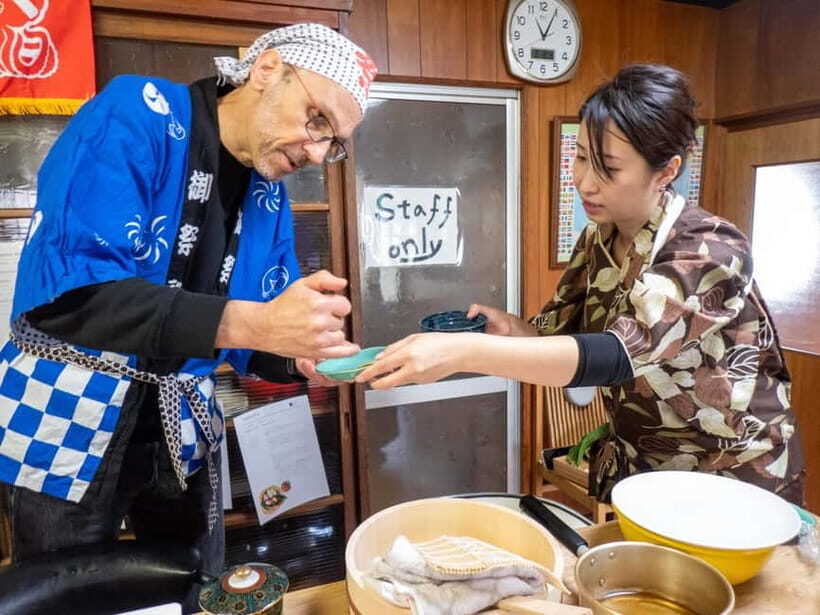
This is the kind of cooking class that feels personal from the start. Chef Yuki keeps the group small (limited to 6), so you’re not shouting over a loud tour bus. Instead, you get focused help as you work the rice, shape the sushi, and coordinate flavors.
What I really like is that the class is built around technique and decisions you can repeat. The goal isn’t only to make a pretty roll. You learn why the rice is treated a certain way, why fish preparation changes taste and freshness, and how miso soup fits the meal.
One more plus: the room is described as cozy and friendly. Many guests call out how approachable Yuki is, with clear step-by-step explanations that help both beginners and people with some cooking experience.
You can also read our reviews of more tours and experiences in Osaka.
What You’ll Make: Nigiri, Hosomaki, Tamagoyaki, and Miso Soup
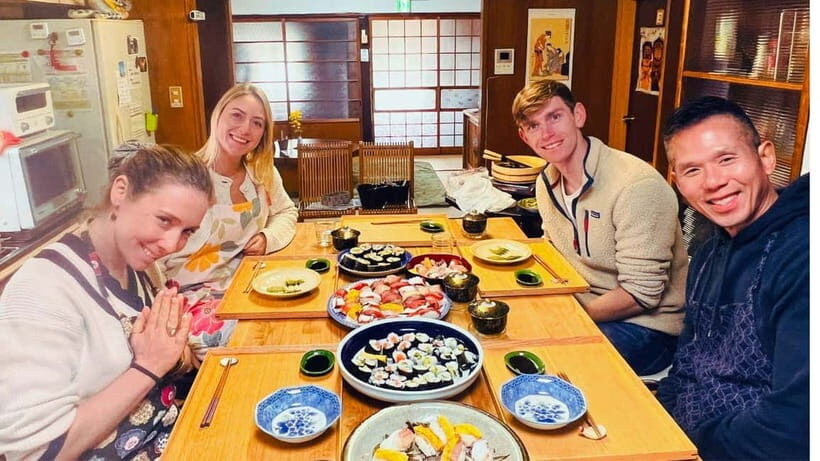
You’ll work through a full Osaka-style sushi-and-soup set, not a thin sampler.
Nigiri sushi: the balance lesson
Nigiri is where sushi becomes more than “rice plus fish.” You’ll learn how to balance seasoned rice with topping choices, and you’ll practice handling the components so they hold together without becoming compressed or awkward. Even if you’ve ordered nigiri in restaurants, making it yourself shows you how sensitive the structure is.
Hosomaki: thin rolls with discipline
Hosomaki (thin rolls) forces clean, consistent rolling. This is where your technique matters: too loose and it falls apart; too tight and it can distort the bite. You’ll practice the kind of precision that makes restaurant rolls look effortless.
Tamagoyaki: the square-pan omelet sidekick
Tamagoyaki is often treated as a side dish, but in practice it’s a skill. You’ll learn how to make the Japanese rolled omelet using a square pan, and it’s a great change of pace after working with rice and fish. It also helps you understand Japanese flavor building beyond soy-and-sauce finishes.



Miso soup: made from scratch
You’ll round it out with homemade miso soup. This matters because miso soup isn’t just a “nice extra.” It’s part of the rhythm of Japanese dining—warm, savory, and grounding. You learn to make it rather than simply receive it, so you can reproduce that comforting bowl later.
Tuna Zuke and Kombu-Jime Salmon: Real Flavor Hacks You Can Repeat
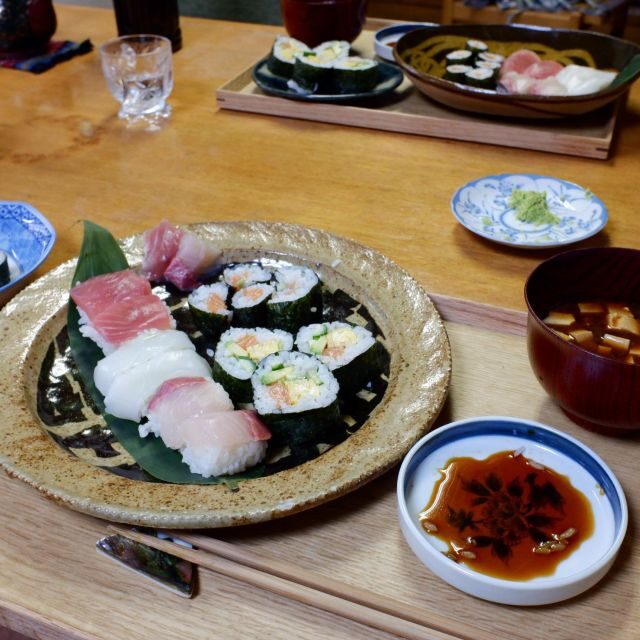
Two fish methods are central to this class: tuna zuke and kombu-jime salmon. These aren’t random gourmet terms; they’re practical ways to improve taste and manage freshness.
Tuna zuke: marination for deeper flavor
Tuna zuke is marinated tuna using a traditional soy-based approach. The lesson here is how time and seasoning change the fish. You’ll see how the marinade complements the raw texture, and you’ll learn a method that’s more forgiving at home than relying on last-minute restaurant sourcing.
Kombu-jime salmon: kelp-curing for clean taste
Kombu-jime salmon uses a centuries-old curing approach with kombu (kelp). The point isn’t only flavor. This method helps the salmon taste cleaner and stay pleasant longer, which is useful if your local market doesn’t always have that same level of freshness.
A big takeaway for real-life cooking: the class frames these methods as skills you can use later. The fish preparation is described as keeping well for 3–4 days, which can be a game changer if you’re outside Japan and want sushi-style eating without stress.
The Skills Behind Great Sushi: Rice, Dashi, and the Basics That Matter
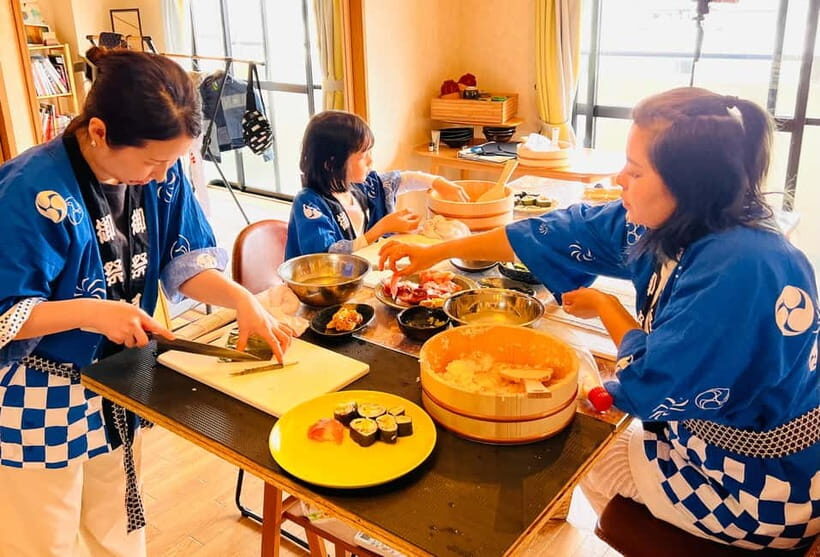
Sushi is 50% technique and 50% timing, and this course focuses on the basics that most home cooks skip. One guest specifically highlighted learning how to treat and prepare rice in a traditional pot. That kind of “how it’s actually done” detail is exactly what separates a good homemade attempt from a great one.
You’ll also get fundamentals tied to Japanese cooking, including wasabi paste basics and dashi broth guidance. Even if you think you already know these, you’ll likely pick up improved ratios, texture cues, and workflow habits. It’s the difference between following a recipe and understanding what you’re building.
And because the class is English-led, the explanations are meant to be usable. You’re not just collecting instructions—you’re learning the why behind them.
A 3-Hour Flow You Can Picture Before You Go
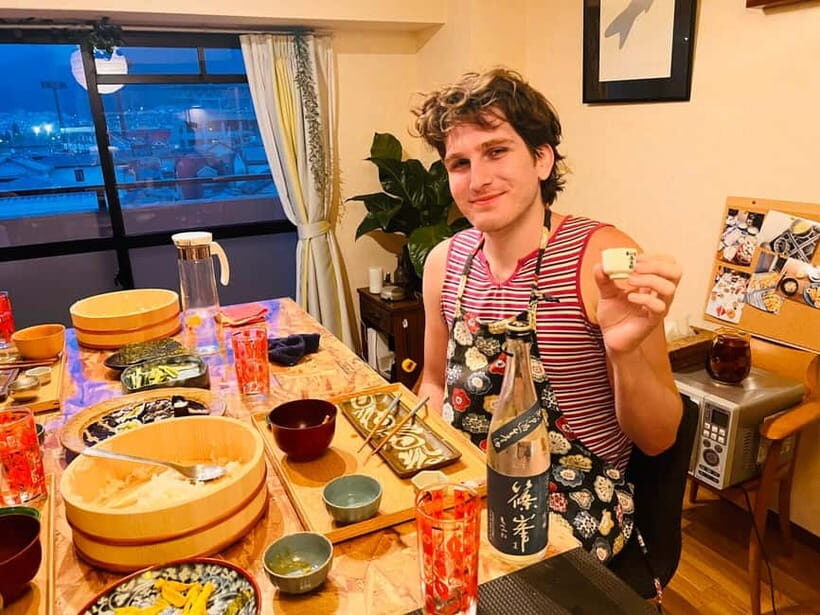
You should expect a structured but flexible session. With a 3-hour duration and a max of 6 participants, you’ll get time to work with your hands and then eat together.
Here’s the rhythm you can plan around:
- Start with instruction and prep: you’ll begin with guidance from Chef Yuki and move into cooking tasks right away.
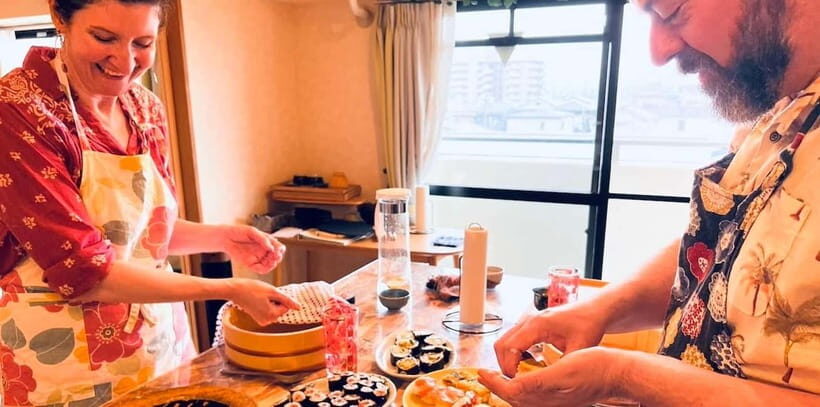
- Work the sushi components: you’ll practice multiple sushi styles, including rolling hosomaki and making nigiri-style sushi.
- Add the omelet and soup: tamagoyaki and miso soup come into the mix so you complete a real meal, not just sushi bites.
- Eat what you made: the class ends with everyone sharing the dishes you produced.
This pacing is a big part of the value. If you’ve ever taken a cooking class where you watch for most of the time, you’ll appreciate that this one puts your hands on the food.
Meeting Point and Getting There From Namba (Without Losing Time)
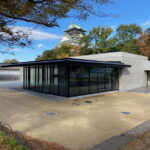
The meeting point is at 4-19 Nukata-cho, Osaka, near Nukata Station, in a white building you can spot from the street. The walk is about 5 minutes from the station, and you’ll be asked to arrive about 10 minutes early to start smoothly.
From Namba Station, you can take the Kintetsu Nara Line to Nukata Station (about 30 minutes, ¥430), then walk the short distance to the address.
A helpful note from actual experiences: some guests report that Chef Yuki meets people near the station area (including meeting at a nearby convenience store) or helps them get oriented once they arrive. That’s worth keeping in mind if you’re trying to reduce stress during your first day in Osaka.
Price and Value: Is $96 Worth It?
At $96 per person for 3 hours, this isn’t a budget snack lesson. It’s closer to paying for coaching plus ingredients plus the chance to eat a full homemade sushi-and-miso meal.
Here’s why it can still feel like good value:
- You’re getting hands-on instruction for multiple dishes, not just one item.
- You work in a small group of up to 6, which usually means more attention and faster feedback.
- The curriculum includes fish preparation techniques (tuna zuke and kombu-jime salmon) plus foundational cooking (dashi/miso-related basics).
- Many guests mention receiving recipes/notes afterward, which extends the value beyond the class itself.
- Several describe the sushi and miso as some of the best they ate in Japan, which tells me the ingredients and method are taken seriously.
If you want sushi that tastes right, learns right, and stays useful after the trip, the price can make sense.
Who This Course Suits Best (And Who Should Think Twice)
This course fits best if you want more than a casual food experience.
You’ll likely enjoy it if:
- You’re a sushi lover who wants to understand the mechanics behind nigiri, hosomaki, and rice.
- You want practical fish methods you can use at home, especially with the tuna zuke and kombu-jime salmon approach.
- You like asking questions in a calm setting, since the group stays small and English instruction is built in.
- You want a slower, local-feeling afternoon instead of another fast moving sight itinerary.
It may be less ideal if:
- You’re only interested in sushi basics and would prefer a restaurant tasting instead of active cooking.
- You hate planning around a specific meeting spot and a set 3-hour block.
Food flexibility is also worth noting. One guest who was vegetarian forgot to mention it in advance, and the host handled it. So if you have dietary needs, still tell Chef Yuki ahead of time, but you have some reassurance that adjustments are possible.
If you’re bringing a baby, at least one booking reports being able to take their child and still have the experience work well. That doesn’t mean it’s automatically guaranteed for every situation, but it suggests the class environment can handle real life.
Should You Book Chef Yuki’s Osaka Sushi and Miso Class?
I’d book this class if you want a hands-on Osaka experience with real take-home skills. Chef Yuki’s teaching style seems to be built for clarity, and the menu is broad enough to give you confidence with rice, sushi shaping, miso soup, and two fish preparation methods that matter at home.
Book it when:
- You want technique, not just a meal.
- You like small group settings.
- You’re excited to learn how sushi flavor is engineered—marination, curing, and seasoning—not only assembled.
Skip it if:
- You’re in Osaka for a quick hit and don’t want to commit to a full 3 hours.
- You’d rather spend that time eating at a great counter than cooking in a home-style environment.
If you want that sweet spot of learning and eating in the same session, this Osaka class is a strong choice.
FAQ
How long is the sushi and miso making course in Osaka?
The course runs for 3 hours.
Where is the meeting point?
It’s at 4-19 Nukata-cho, Osaka. The meeting spot is near Nukata Station, in a white building.
How do I get there from Namba Station?
Take the Kintetsu Nara Line from Osaka Namba Station bound for Kintetsu Nara, get off at Nukata Station (about 30 minutes, ¥430), then walk about 5 minutes to 4-19 Nukata-cho.
Is the class taught in English?
Yes, the instructor provides instruction in English.
What dishes will I make during the class?
You’ll make nigiri sushi, tuna zuke (marinated tuna), kombu-jime salmon (kelp-cured salmon), hosomaki, tamagoyaki, and miso soup.
How large is the group?
The class is limited to a small group of up to 6 participants.
What is included in the price?
Fresh ingredients and traditional seasonings are included, along with instruction by the chef.
Can I cancel for a full refund?
Yes. You can cancel up to 24 hours in advance for a full refund.
Is it possible to reserve now and pay later?
Yes. You can reserve now and pay later, with pay nothing today.
Will I have recipes to make the food again at home?
Based on what past participants shared, Chef Yuki sends recipes/receipts after the class so you can cook again later.