REVIEW · OSAKA
Premium Go-Kart Experience Through Osaka’s Best-Known Landmarks
Book on Viator →Operated by Monkey Adventure Kart · Bookable on Viator
Osaka from a go-kart feels different fast. This is a guided street-level ride in custom-wrapped carts with LED lighting, timed to take you past the city’s most recognizable sights. I love that the tour leans into the fun without losing control: you start with a safety briefing, you get a clear route, and you finish with photo deliverables. I also like the human side, including an international guide team, so you can follow along comfortably in your own language. The one drawback to plan around is the driving rule: you need the right hard-copy license, and the tour depends on good weather.
This experience also gives you something many tours skip: a photo setup designed for the moment. You’ll have your pictures shared afterward by AirDrop or email, plus you get one hard-copy photo per customer. Your kart experience runs about 1 hour 20 minutes, with a small group size of up to 4, so it’s easier to stay together than on big sightseeing buses. Just know you’re seeing these famous areas from the road, so it’s quick “icon stops,” not a long museum-style visit at each location.
In This Review
- Key highlights you’ll care about
- Why Osaka’s landmarks look better at street level
- Getting started at Monkey Adventure Kart Osaka, and what matters for the ride
- The carts, the guide, and the language advantage
- The 1 hour 20 minutes route: icon stops that work
- Stop 1: Tsutenkaku
- Stop 2: Tennoji Temple
- Stop 3: Dotombori Glico Sign
- Stop 4: Shinsaibashi
- Stop 5: Nihonbashi
- Stop 6: Dotombori District
- Photo service: AirDrop or email, plus one hard copy
- Price and value: what $76.88 really buys you
- The one rule you must not ignore: your driving permit
- Who should book this Osaka go-kart tour
- Should you book Monkey Adventure Kart Osaka?
- FAQ
- How long is the go-kart experience in Osaka?
- What is the price per person?
- Where does the tour start and end?
- What do you do at the beginning of the tour?
- Which Osaka landmarks will you pass during the tour?
- Is a photo service included?
- What size is the group?
- Do you need a license to drive the go-kart?
- What happens if weather is bad?
Key highlights you’ll care about
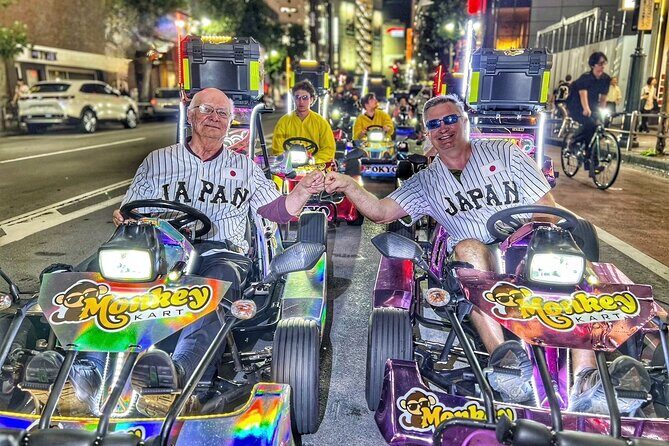
- Custom-wrapped, LED-lit go-karts that look great at night and in photos
- International guides from multiple countries, so language doesn’t feel like a barrier
- A tight 1 hour 20 minutes route built around Osaka’s biggest landmarks
- Costume option for extra fun right at the start
- Photo service included via AirDrop/email plus one hard-copy print per person
- Small group size (max 4) for a smoother ride and calmer briefing
Why Osaka’s landmarks look better at street level
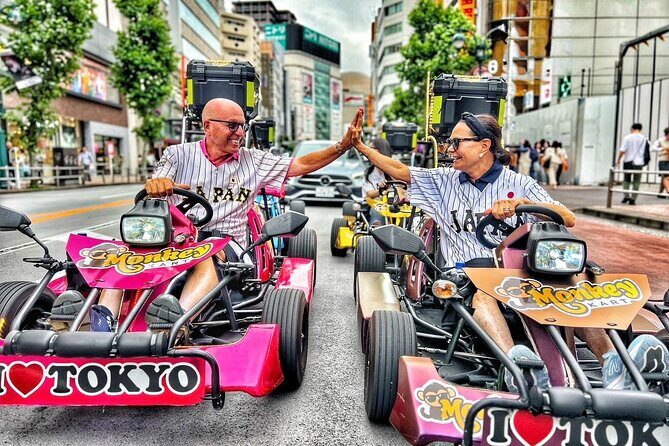
Osaka is the kind of city where the best “wow” moments aren’t always in a quiet courtyard. They’re on street corners—signs glowing, towers rising, lanes narrowing into famous districts. Doing it by go-kart changes the whole angle. You’re not just looking at Osaka, you’re moving through it, which makes places like Dotonbori and Shinsaibashi feel immediate instead of distant.
This tour is built around that idea: a premium ride through the areas people actually point to when they tell you where to go. You’ll hit Tsutenkaku, Tennoji, the Glico Sign / Dotonbori zone, Shinsaibashi, Nihonbashi, and then back through the Dotombori district. The route keeps your energy up while still giving you recognizable photo moments.
And because the carts are custom-wrapped and LED-lit, you get that “Osaka at night” vibe even when you’re just cruising through daytime streets. It’s a small detail until you see yourself in the photos, then it becomes the whole point.
You can also read our reviews of more tours and experiences in Osaka.
Getting started at Monkey Adventure Kart Osaka, and what matters for the ride
Your tour meets at Monkey Adventure Kart Osaka, located at 6-chōme-2-13 Ebie, Fukushima Ward, Osaka. The tour ends back at the starting point, so you’re not dealing with transit shuffles in the middle of your adventure.
Right away, you should expect two things: a thorough safety briefing and instructions you can actually use. That matters more than people think. Go-kart tours feel fun because they’re controlled. When the briefing is clear, you spend less time worrying and more time enjoying the ride.
You’ll also have time to get ready before you go out—partly for safety, partly because this is meant to feel like a premium experience. Even the small option to dress up in a costume is worth it if you like photos and an extra hit of personality.
The carts, the guide, and the language advantage
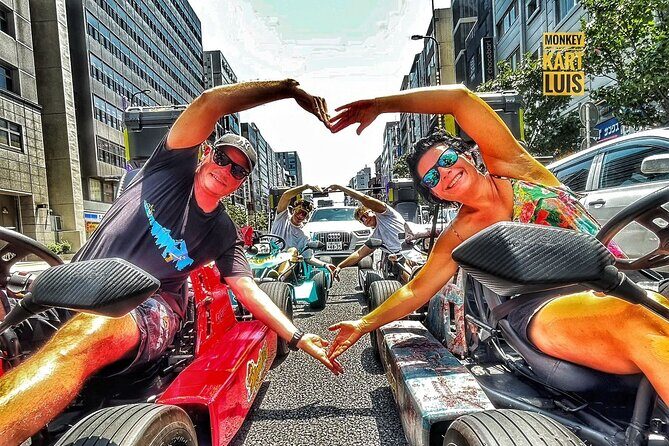
This company puts serious effort into the look of the vehicles. The go-karts come with custom wraps and LED lighting, so you don’t feel like you’re driving a generic rental. The cars look designed for this exact activity, not just “something that works.”
Then there’s the guide team. The guides are international and come from multiple countries, which means the tour is set up to communicate comfortably in your own language. That’s a real quality-of-life upgrade. You’re driving, you’re moving, and you don’t want to miss directions because of translation delays.
A name you’ll hear in the feedback is Matt—a guide described as very helpful, friendly, and professional. That’s the kind of detail that signals how the tour runs day to day: you’re not left on your own after the paperwork. You’re guided.
The 1 hour 20 minutes route: icon stops that work
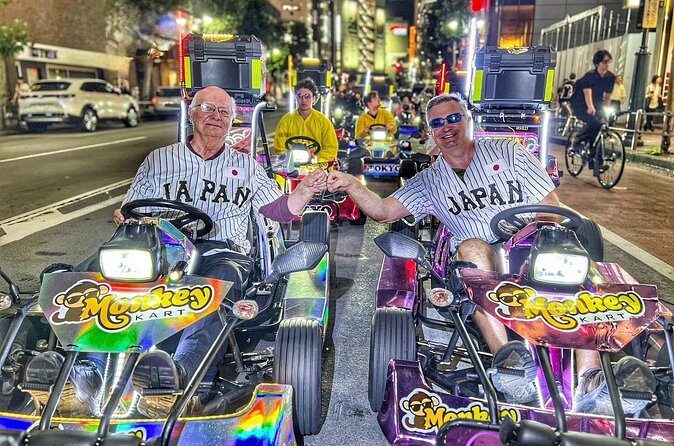
This ride is about 1 hour 20 minutes total, which is a sweet spot. Long enough to feel like an actual kart experience, short enough that you’re not exhausted before you get to the best parts. The tradeoff is that each landmark is more of a highlight stop than a long guided walking tour.
Here’s how the flow makes sense, stop by stop.
Stop 1: Tsutenkaku
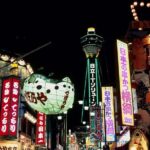
Tsutenkaku is one of those Osaka landmarks you recognize instantly once you see it. On a go-kart route, it functions like an anchor point early on—your first big “we’re here” moment. It also helps you understand the vibe of the neighborhoods around it: narrow city lanes, layers of signage, and an Osaka feel that’s harder to get from a viewpoint alone.
What I like about this stop: it sets the tone right away. You’re not warming up for an hour. You’re getting hit with a major landmark early, so the whole ride feels worthwhile.
A consideration: like all the stops, the timing is tight. You’ll get the main views, but it’s not built for lingering like a self-guided photo stroll.

Stop 2: Tennoji Temple
Next up is Tennoji Temple. This adds a different flavor to the route. Instead of only street visuals, you get a calmer, more reflective landmark stop that still fits the Osaka sightseeing pattern.
Why it’s valuable on a go-kart: it breaks up the density of the more neon-and-shopping-focused areas later in the ride. Your eyes get a reset, and your brain gets a change in pace.
Potential drawback: if you’re hoping for a long time on foot, you might feel the stop is brief. But for most people, that’s exactly what they want inside a 1 hour 20 minutes adventure.
Stop 3: Dotombori Glico Sign
Then the tour hits the Dotombori Glico Sign area. This is Osaka’s “turn your head and look” zone. The sign is iconic, and being there from the road (instead of standing far away) gives you a stronger sense of scale.
What makes this special: it’s a recognizable symbol of the city, and the go-kart perspective makes it feel like you’re riding through the moment. Pair that with LED carts and you’ll get photos that look like a coordinated Osaka street scene.
Consideration: this area can be visually intense. If you prefer quiet sightseeing, you may want a quick breather after the stop so the lights and crowds don’t feel like sensory overload.
Stop 4: Shinsaibashi
Shinsaibashi is next, and it’s the kind of place that connects Osaka’s “famous sights” with everyday energy. It’s a shopping-and-street hub, and on this route it works like the bridge between big landmark icons and the surrounding districts.
Why you’ll probably like it: you get the sense of Osaka as a living city, not just a checklist of photos.
Drawback to note: Shinsaibashi is also visually busy, so your best photos tend to be the ones you take while the cart is moving past the recognizable storefront and street angles. If you’re the type who wants endless stop-and-start shooting, this tour’s timing may feel quicker than you want.
Stop 5: Nihonbashi
Nihonbashi rounds out the classic city-center experience. This stop adds depth to the route because it’s not only about modern neon. You’re seeing another Osaka district that feels tied to the city’s identity.
What this stop does for your day: it prevents the tour from becoming “only one kind of scenery.” It keeps the route varied, so you come away with multiple kinds of Osaka impressions.
Potential drawback: since it’s still part of a driving circuit, the viewing time will be limited. Think short landmark exposure rather than a long walk.
Stop 6: Dotombori District
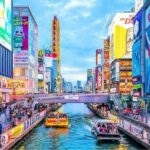
Finally, the tour keeps you in Dotombori District, looping back through the energy you already started to feel around the Glico Sign. This end stretch is important: it lets you experience the area twice in different ways—first for the iconic sign moment, then again through the broader district feel.
Why the ending lands: you finish while your adrenaline is still up and your brain is still in “Osaka mode.” It’s a good way to close out the ride with strong visuals.
Consideration: if you want a quieter wind-down afterward, plan a little extra time before you head to dinner. You might feel hyped and want to keep walking afterward.
Photo service: AirDrop or email, plus one hard copy
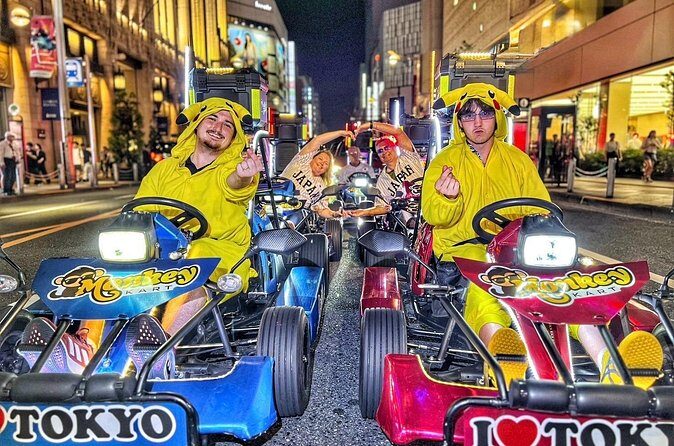
This tour includes a proper photo delivery system, and I think it’s one of the biggest value adds. Many go-kart experiences give you a few images, if anything. Here, you’ll have photos shared by AirDrop or email at the end, and you’ll also receive one hard-copy photo per customer.
That means you can focus on driving and landmark spotting rather than trying to balance a camera in your hands. If you’re traveling with friends or family, it’s also helpful because you’re not stuck asking strangers to take shots while you line up at a curb.
One practical tip: if you’re using email delivery, make sure the email you gave during booking is correct. If you rely on AirDrop, make sure your device settings are ready before the tour ends so you don’t lose time at the finish line.
Price and value: what $76.88 really buys you

At $76.88 per person, this isn’t a bargain cart-in-a-parking-lot deal. It’s closer to a premium activity package: guided route, safety briefing, custom LED go-karts, small group size, costume option, and the included photo service (both digital delivery and one printed photo).
Here’s how the value works for you:
- The guidance matters. A route built around major Osaka landmarks saves you the mental work of figuring out where to go and how to string it together.
- Small group size (max 4) usually means a more controlled experience. You’re not stuck waiting your turn behind a bigger crowd.
- The photo included is a hidden cost saver. If you were to do this independently, you’d likely spend time and effort getting decent shots.
Is it worth it if you’re on a tight budget? Maybe not. But if you want a fun, guided Osaka highlight that feels “designed for visitors,” this price starts to make sense.
The one rule you must not ignore: your driving permit

This tour has a firm requirement: participants must have a hard-copy International Driving Permit issued under the 1949 Geneva Convention, or other approved licenses that are recognized under Japanese law. That’s not optional.
If you don’t have the right permit in your wallet folder before you go, you won’t be ready to ride. So treat this like the #1 checklist item, not an afterthought.
Also note: the tour needs good weather. If weather cancels the ride, you’ll be offered a different date or a full refund. That means planning around your overall Osaka schedule matters. If you only have one day with a fixed itinerary and rain is possible, consider keeping some flexibility.
Who should book this Osaka go-kart tour

This experience is a great fit if you want:
- A high-impact Osaka highlight without spending your whole day on trains and long walks
- A small group activity where you’re guided through recognizable places
- A go-kart ride that includes photos, so you leave with proof instead of just memories
- An option that’s fun for first-timers and repeat visitors, since the route hits the city’s core landmarks in a new way
It’s also a good choice if you like the idea of a guide who can communicate clearly. With an international guide team, you’re less likely to get stuck with awkward translation gaps.
If you’re only interested in deep, slow sightseeing or long temple visits, you might find the pacing too quick. This tour is built around movement and landmark moments, not long stops.
Should you book Monkey Adventure Kart Osaka?
If you’re the kind of traveler who wants Osaka to feel alive and immediate, I’d book this. The custom LED karts, the tight landmark route, and the included photo delivery turn it into more than just a thrill ride. It’s also the kind of activity where a good guide matters, and the feedback around Matt points to a professional, friendly experience.
The main reason to hold off is the permit requirement and weather dependence. If you have your hard-copy 1949 Geneva International Driving Permit (or approved license) and you can handle one weather-flexible slot, this is a smart use of your time in Osaka.
FAQ
How long is the go-kart experience in Osaka?
It lasts about 1 hour 20 minutes.
What is the price per person?
The price is $76.88 per person.
Where does the tour start and end?
The tour starts at Monkey Adventure Kart Osaka (6-chōme-2-13 Ebie, Fukushima Ward, Osaka) and ends back at the same meeting point.
What do you do at the beginning of the tour?
You’ll receive a safety briefing and instructions from your professional guide, and you can choose to dress up in a costume before you ride.
Which Osaka landmarks will you pass during the tour?
The route includes Tsutenkaku, Tennoji Temple, Dotombori Glico Sign, Shinsaibashi, Nihonbashi, and the Dotombori District.
Is a photo service included?
Yes. Your photos are shared via AirDrop or email, and you also receive one hard-copy photo per customer.
What size is the group?
The tour has a maximum of 4 travelers.
Do you need a license to drive the go-kart?
Yes. You must have a hard-copy International Driving Permit issued under the 1949 Geneva Convention, or another approved license according to Japanese law.
What happens if weather is bad?
This activity requires good weather. If it’s canceled due to poor weather, you’ll be offered a different date or a full refund.