REVIEW · TOKYO
Bon Dance IZAKAYA in Shinjuku, Tokyo
Book on GetYourGuide →Operated by H.I.S. Co Ltd(TIC) · Bookable on GetYourGuide
Bon Odori turns dinner into a show. At Bon Dance IZAKAYA in Shinjuku, I like the Edo-inspired dinner course (you’re not just nibbling) and I really like that the Bon Odori performance is built into the meal, not bolted on at the end like an afterthought.
One thing to plan for: the dance segment is short. It’s only about 30 minutes, and if you’re hoping for a long, purely watch-from-your-seat show, this may feel a bit fast-paced.
In This Review
- Quick Take
- Edo-Style Izakaya Dinner with Bon Odori in Shinjuku
- Where to Find HANAMICHI TOKYO KABUKICHO (and Why the Building Matters)
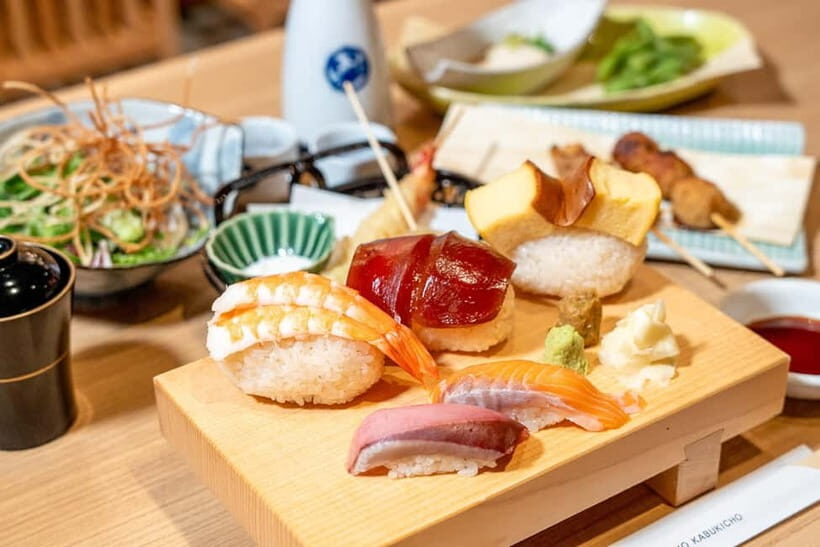
- The Dinner Course: Sushi, Tempura, Soba, and Skewers (Not Just Side Dishes)
- Bon Odori Time (19:30–20:00): Participatory Festival Energy
- Drinks and Value: One Included Drink, or Upgrade to All-You-Can-Drink
- Small Group Size (Up to 6): A Calmer Night in the Middle of Shinjuku
- Food Comfort Zones: Allergies, Vegetarian Needs, and the Halal Limit
- Should You Participate? Who This Fits Best (and Who Might Want to Skip)
- Booking Check: Is Bon Dance IZAKAYA Worth Your Night?
- FAQ
- What days does Bon Dance IZAKAYA run?
- What time does dinner start, and when does the dance happen?
- What is included in the 11,000 yen dinner course?
- Is an all-you-can-drink option available?
- Do I have to choose the same option as everyone in my group?
- Is the venue wheelchair accessible?
- Are Halal options available?
- Where exactly is the meeting point?
Quick Take
- Edo-style dinner course with sushi, tempura, skewers, soba, and miso soup in one set meal
- Bon Odori runs right during dinner, so you get the festival energy without leaving the restaurant
- Small group (up to 6 people), which usually makes participation feel more natural
- Drinks included, with an optional all-you-can-drink upgrade
- Easy access in central Shinjuku, but the venue is on an upper floor (show up early)
Edo-Style Izakaya Dinner with Bon Odori in Shinjuku
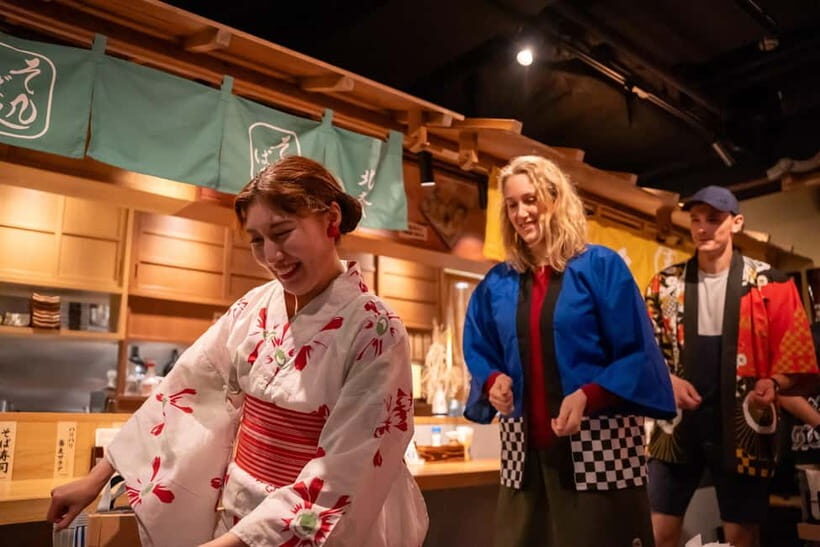
If you want a Tokyo night that feels local but doesn’t require serious navigation skills, this is a strong pick. The restaurant sets up a themed izakaya experience inspired by traditional Edo cuisine, then adds a real Bon Odori performance so the whole place feels like summer festival energy—year-round.
I’m especially drawn to two parts. First, the meal is structured as a proper course, not a random assortment. You get multiple categories—savory starters, crispy noodles, grilled skewers, tempura, and a sushi set—so foodies won’t feel shortchanged. Second, the Bon Odori angle matters because it’s not only for watching. The vibe is meant to be friendly and participatory, which is exactly what makes it fun when you’re far from home.
The catch? Time is limited. Dinner runs 90 minutes, but the dance window is 30 minutes. It’s entertaining, but it’s not a full evening festival.
You can also read our reviews of more drinking tours in Tokyo

Where to Find HANAMICHI TOKYO KABUKICHO (and Why the Building Matters)
This sits in the heart of Shinjuku, right by the entrance to Kabukicho. The meeting point is HANAMICHI TOKYO KABUKICHO, in a commercial building about 5 minutes on foot from Shinjuku Station, and directly behind Shinjuku City Hall.
Now here’s the practical warning: the venue is up on a higher floor. People describe it as easy to miss because you can see only the elevator area below at first. So don’t treat this like a “show up when you’re hungry” meal. Arrive at least 10 minutes early so you can locate the correct floor without stress.
If you’re pairing this with other Shinjuku plans, give yourself breathing room. Kabukicho has distractions everywhere—neon, people, side streets—so your best move is to treat the restaurant like an appointment and arrive early.
The Dinner Course: Sushi, Tempura, Soba, and Skewers (Not Just Side Dishes)
The dinner course runs from 19:00 to 20:30 (90 minutes). You’ll get a set menu designed around traditional Edo flavors, with a mix of cold, crispy, grilled, and warm items. The menu can change, but the core structure stays the same.
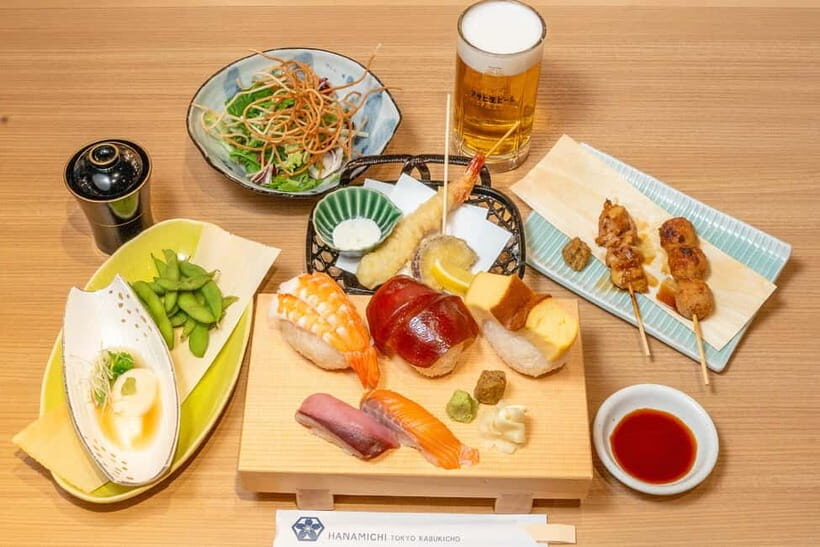
Here’s what you should expect in the course:
- Edamame and tofu with savory sauce (an easy opener that sets a salty-smooth tone)
- Crispy soba noodle salad (this is your crunch moment)
- Skewers: tsukune (chicken meatball) and grilled chicken thigh
- HANAMICHI tempura: shrimp and sweet potato
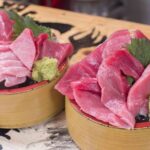
- Edo-style sushi set: 5 pieces including rice ball sushi with marinated tuna/egg, plus nigiri-style pieces like salmon, yellowtail, and sea bream
- Red miso soup
What I like about this format is balance. You’re not just getting one highlight dish. You get hot and cold, crunchy and tender, and the meal covers the classic Japanese “textures and flavors” checklist. If you’ve been grazing all day in Tokyo, this course is a satisfying reset.
Also, the portions feel designed to keep you energized for the dance portion afterward. You’ll be full enough to enjoy yourself, not so stuffed that moving feels like a punishment.
Bon Odori Time (19:30–20:00): Participatory Festival Energy
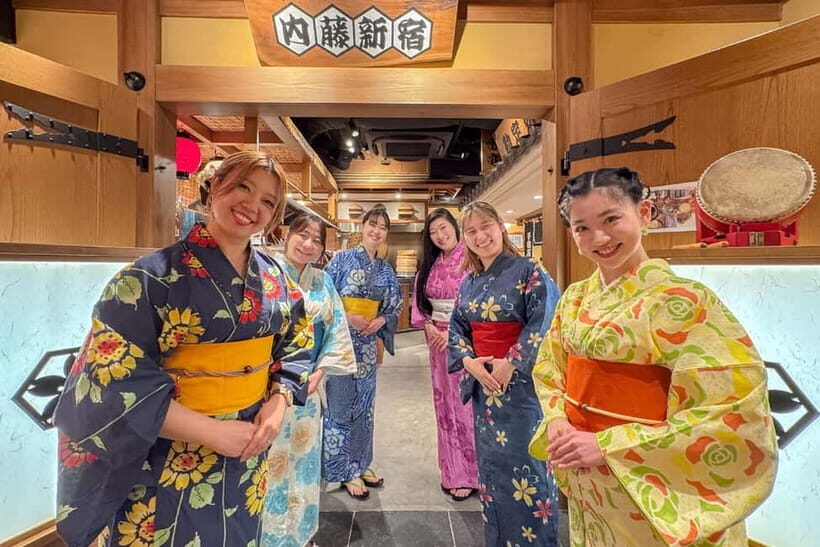
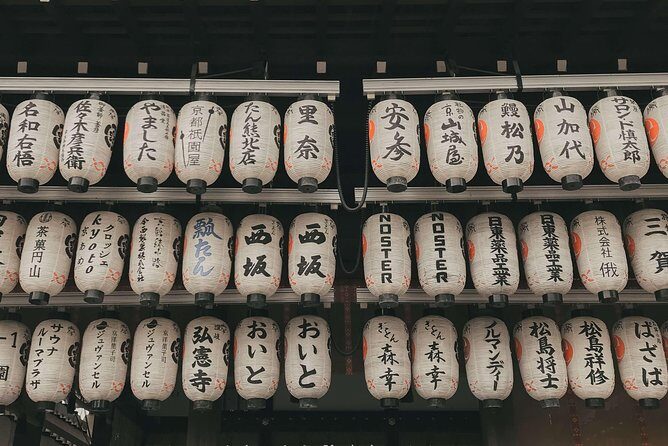
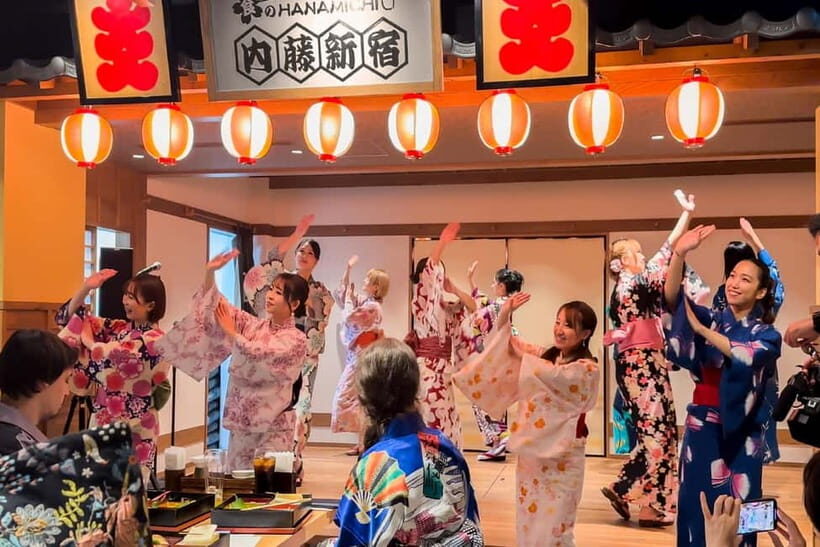
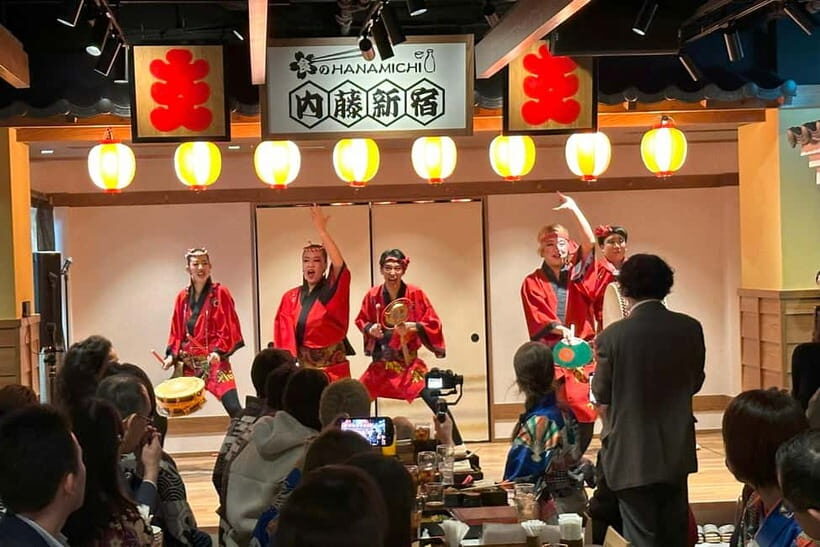
The Bon Odori performance happens from 19:30 to 20:00, right in the middle of your meal. Bon Odori is a traditional dance connected to Obon, a summer festival honoring ancestors. In Japan, you’ll see it during Obon season—but this restaurant keeps the tradition alive in a dinner setting, all year.
In terms of what you’ll actually do, the goal is participation. The dancing isn’t presented as a museum show where you stay perfectly still. You should expect the performers to guide you through it, with a fun, teaching-friendly approach. That’s also where a lot of the value is for first-timers: you get the cultural context and the chance to try the motions.
Two reality checks:
- The performance window is only about 30 minutes.
- If you’d rather watch than dance, this experience may feel a little more interactive than you expect.
Still, if you like cheerful group energy (and you’re not too self-conscious), this is the part that can turn a normal dinner into a memorable night.
Drinks and Value: One Included Drink, or Upgrade to All-You-Can-Drink
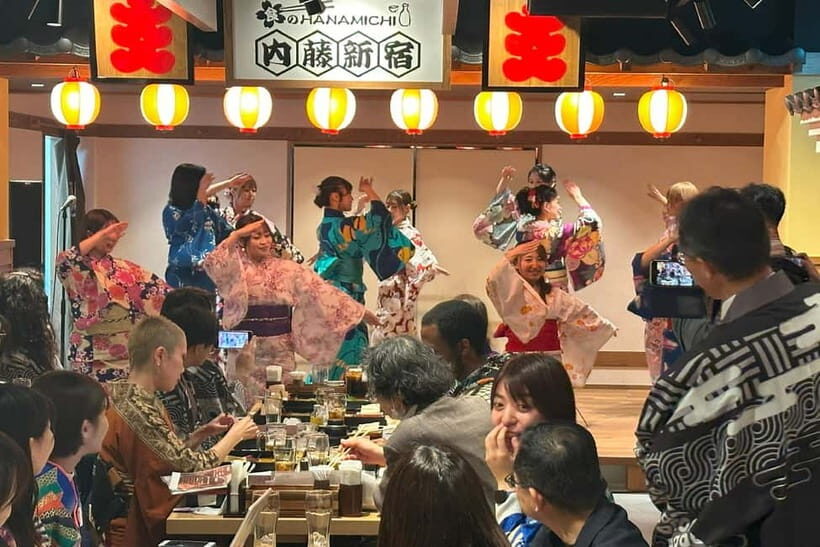
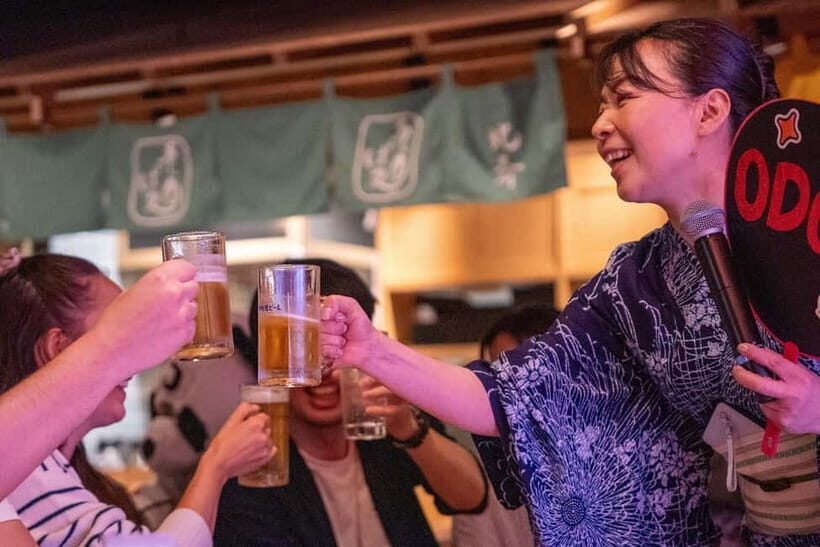
Your course includes one drink (beer, sake, whiskey, shochu, glass wine, or soft drink). That alone is part of the cost value, because most Japanese meal experiences separate food and drinks into different decisions.
If you want more, there’s an all-you-can-drink option. You can replace the crispy soba noodle salad with this option, which is a nice trade if you’d rather drink than munch. The all-you-can-drink list includes beer, shochu, whiskey, sake, soft drinks, and glass wine.
One important group rule: the same option has to be chosen by everyone in your group. So if you’re with a mixed party—one person who wants drinks, one who doesn’t—plan your reservation choice carefully so nobody feels stuck.
Value-wise, this is where the experience can really pay off. You’re not just buying entry to a show—you’re paying for a full dinner course plus alcohol/refreshments, with a simple upgrade path.






Small Group Size (Up to 6): A Calmer Night in the Middle of Shinjuku
This activity is limited to a small group—up to 6 participants. In practice, that matters. Smaller groups tend to feel less chaotic. You’re more likely to get attention when it’s time to join the dance, and it’s easier to enjoy the meal without feeling like you’re part of a big conveyor belt.
The timing also keeps things realistic: dinner and the dance are tightly scheduled, which means you won’t lose the whole evening to delays. You get a clean flow—eat first, then Bon Odori, then you’re done.
One more note that can surprise people: this is a restaurant-based experience, not a sightseeing tour with a roaming guide walking you around. The show and coordination happen through the venue. So if you like structured guiding with constant commentary, you may want to adjust expectations and treat it more like a cultural dinner event.
Food Comfort Zones: Allergies, Vegetarian Needs, and the Halal Limit
Japanese meals are often flexible, but it helps to know the boundaries. You should inform the operator in advance about allergies or dietary restrictions. The restaurant can accommodate allergies with effort, and they’ve handled specific needs like shellfish allergies using alternatives.
If you’re vegetarian, accommodations are mentioned as possible as well. On the other hand, Halal options are not available, so don’t plan on a Halal-safe menu unless you’ve confirmed details directly with the organizers ahead of time.
If you’re traveling with multiple dietary needs in one group, I’d treat this as a “book early, communicate clearly” situation. Same-day meal arrangement requests may not be possible, and better info ahead of time prevents last-minute swaps that ruin the night.
Should You Participate? Who This Fits Best (and Who Might Want to Skip)
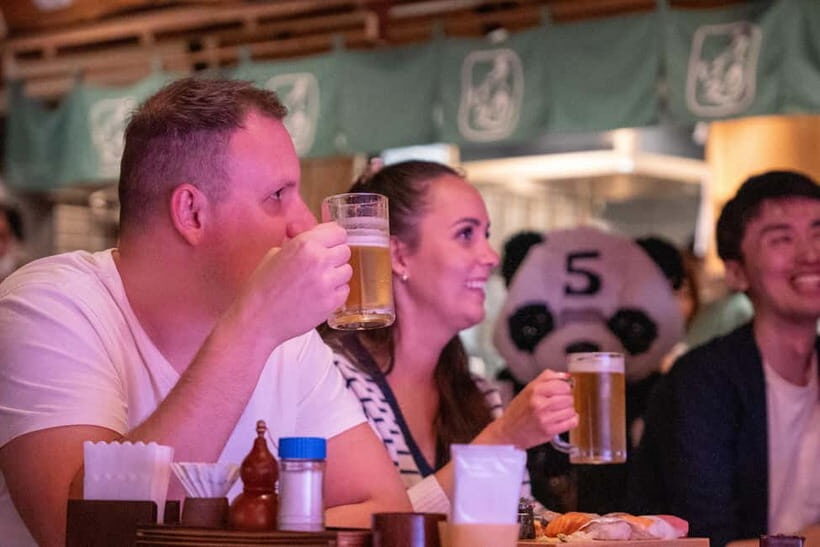
This works best for you if:
- You want an evening in central Shinjuku that feels like a local event, not a generic tourist dinner
- You like trying multiple Japanese foods in one sit-down meal (sushi + tempura + grilled skewers is a good combo)
- You’re open to joining the dance and having a bit of fun with the motions
It might be less ideal if:
- You expect a long, multi-act performance. The dance window is short.
- You strongly prefer to watch rather than participate.
- Your main goal is a guided explanation tour with lots of roaming context. This is more restaurant show than walking tour.
For couples, friends, and small groups, the size makes it easier to relax. For solo travelers, it can be a social-friendly way to get a structured night without needing to find a table and figure out the menu alone.
Booking Check: Is Bon Dance IZAKAYA Worth Your Night?
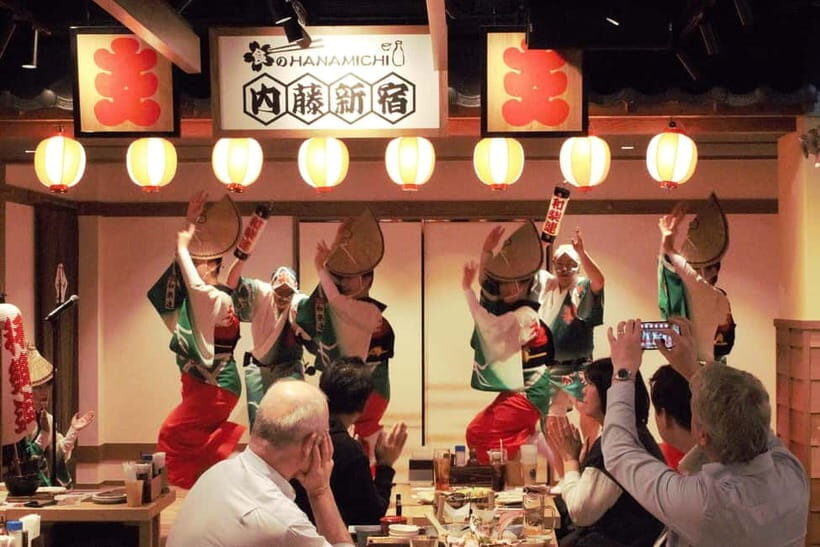
At around $70 per person, you’re paying for an organized dinner course plus entertainment, with a drink included and an optional all-you-can-drink upgrade. For Tokyo, that’s reasonable value because the cost covers both the food structure and the cultural performance component.
I’d book it if you’re doing Shinjuku anyway and you want something that’s easy to understand: eat, enjoy the dance, go back out into Tokyo when you’re still having fun.
If you’re on the fence, decide based on one question: are you excited to participate in Bon Odori, even if the dance segment is only 30 minutes? If yes, you’ll likely feel like you got your money’s worth.
FAQ
What days does Bon Dance IZAKAYA run?
The izakaya dinner course and Bon Odori performance run on Tuesdays, Wednesdays, and Thursdays.
What time does dinner start, and when does the dance happen?
Dinner time is 19:00 to 20:30, and the Bon Odori performance is scheduled for 19:30 to 20:00.
What is included in the 11,000 yen dinner course?
The course includes edamame and tofu with savory sauce, crispy soba noodle salad, skewers (tsukune and grilled chicken thigh), tempura (shrimp and sweet potato), an Edo-style sushi set of 5 pieces, red miso soup, one included drink, and Bon dance time.
Is an all-you-can-drink option available?
Yes. You can choose an all-you-can-drink option, and it replaces the crispy soba noodle salad. The drinks offered include beer, shochu, whiskey, sake, soft drinks, and glass wine.
Do I have to choose the same option as everyone in my group?
Yes. If you choose the all-you-can-drink option, the same option must be chosen by all group members.
Is the venue wheelchair accessible?
Yes, the venue is wheelchair accessible.
Are Halal options available?
Halal options are not available, so you’ll need to plan other dietary approaches if Halal requirements apply.
Where exactly is the meeting point?
The meeting point is HANAMICHI TOKYO KABUKICHO, a commercial building located about 5 minutes on foot from Shinjuku Station, directly behind Shinjuku City Hall (at the entrance area near Kabukicho). Arrive at least 10 minutes before the start time.