REVIEW · OSAKA
Samurai Armor & Sword experience with phot near Osaka Castle
Book on GetYourGuide →Operated by 株式会社武士の誉れ · Bookable on GetYourGuide
Osaka Castle is great, but this is hands-on. You’ll step into samurai training at Samurai Honor, wearing traditional clothes and armor while learning sword etiquette and techniques. I love how the session mixes movement, discipline, and actual sword work (not just posing). I also like the included photo moment that makes it feel like more than a quick stop. A small drawback to plan for: you’ll need a plain T-shirt and the experience isn’t suited for some age or health situations.
What makes this one feel special is the way it’s built around manners first. You bow, you learn how samurai carried swords, you practice stances and iai basics, then you move toward real cutting and armor try-on. If you want a meaningful “samurai” experience near Osaka Castle that doesn’t turn into a costume-only photo, this is a strong fit. Just know it’s a focused 90-minute class, so it’s not a slow museum-style wander.
In This Review
- Key points to know before you go
- Why this Osaka Castle-area samurai session feels more real than costume cosplay
- Getting there: finding Samurai Honor with the Honor of the Samurai sign
- The 90-minute flow: bowing, manners, footwork, and sword basics
- Preparation: costume into samurai training mode
- Bowing at the shrine: discipline before techniques
- Samurai manners and sword responsibility
- Sword-belt walking practice: left-side rule and ready positioning
- Iai practice with a practice sword: Battou, Chiburui, Nottou
- Kata stances and real sword technique cues
- Real cutting with a samurai sword: what you’ll actually do (and what to expect)
- Armor and helmet indoors: the dignity side of samurai look-and-feel
- Photos and the included “send by email” part
- Price and value: is $106 worth it near Osaka Castle?
- Who this is best for (and who should skip)
- What to bring, wear, and do before you start
- Pairing it with Osaka Castle: make the timing work
- Should you book this Samurai Armor & Sword experience?
- FAQ
- How long is the Samurai Armor & Sword experience?
- Is this a private group or shared class?
- What languages are available for the instructor and staff?
- Where do I meet the group?
- What should I bring with me?
- Do I need transportation or pickup from the hotel?
- Is it suitable for children?
- What’s included besides the sword and armor training?
Key points to know before you go
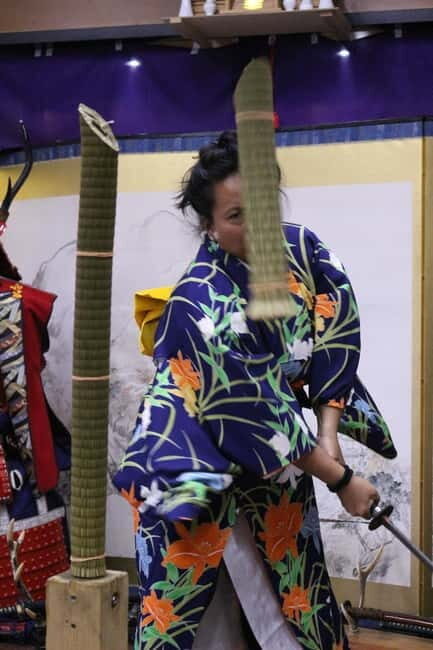
- Bushi no Homare training starts with bowing and a shrine in the dojo
- You’ll learn sword manners like sword-carry positioning and walking on the left side of the road
- You practice iai basics with an iai practice sword, including Battou, Chiburui, and Nottou
- You try cutting with a real samurai sword under instruction
- You can wear samurai armor and helmet indoors, then get a commemorative photo
- It’s a private group with English/Japanese staff and a pro certified instructor
Why this Osaka Castle-area samurai session feels more real than costume cosplay
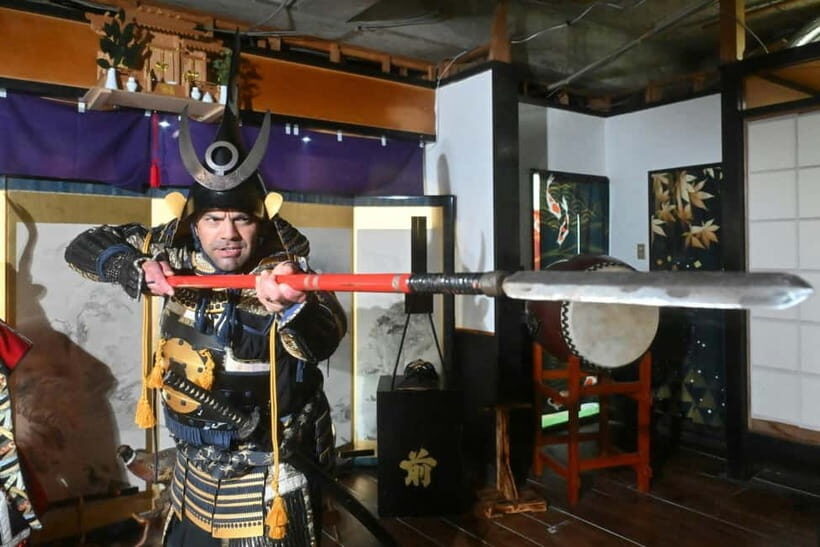
There are lots of places to rent armor near major sights. This one works differently because it treats armor and swords as part of a training routine, not just a backdrop.
The core idea is simple: samurai culture wasn’t only about fighting. It was about how you carry yourself, how you handle a weapon, and how you stay ready even in peaceful times. You’ll see that right away in the way the lesson starts and ends with a bow before the shrine. That moment sets the tone. It also helps you shift from tourist mode into student mode.
Two parts I genuinely like are the attention to etiquette and the progression of skill. The instructions cover how swords were worn and why the placement mattered, then you move into basic kata and stances before you go near cutting. It’s a logical arc that makes the experience feel grounded.
One consideration: it’s intense enough to demand your focus. You’re not just watching a demo. You’re learning movements, grips, and sequences in a short 90 minutes.
You can also read our reviews of more tours and experiences in Osaka.



Getting there: finding Samurai Honor with the Honor of the Samurai sign
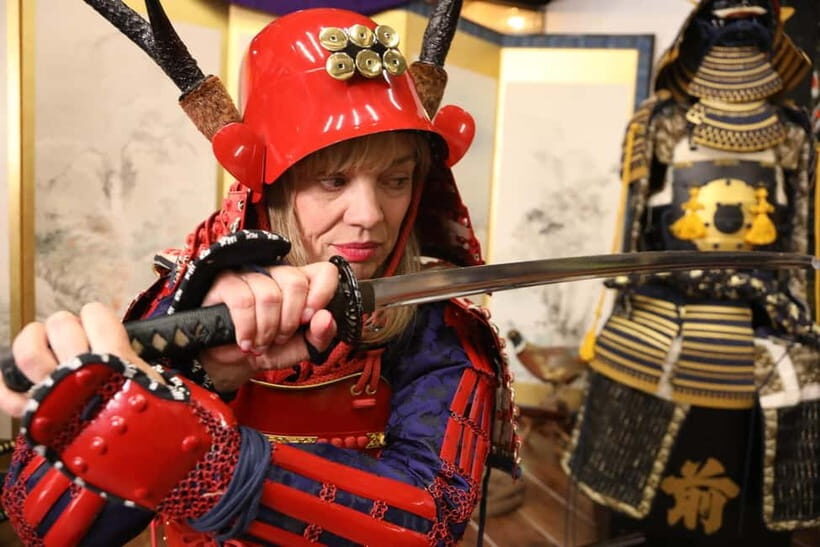
The meeting point is easy if you know what to look for. Meet at Samurai Honor at Excellence Takayama 1F, 2-3-19 Shiginonishi, Joto-ku, Osaka-shi, Osaka 536-0014.
The landmark is a wooden sign that reads Honor of the Samurai. It’s a rack in front of the store with activity pamphlets. You may also notice kimonos and hakama hanging up around the area, which makes the spot easier to recognize.
Important detail: the address shown on Apple Maps is said to be incorrect. Use the Google Maps link from the listing information instead so you don’t waste time.
Plan to arrive early. You’ll want to be there about 30 minutes before your reserved start time so you can get instructions and change into your outfit.
The 90-minute flow: bowing, manners, footwork, and sword basics
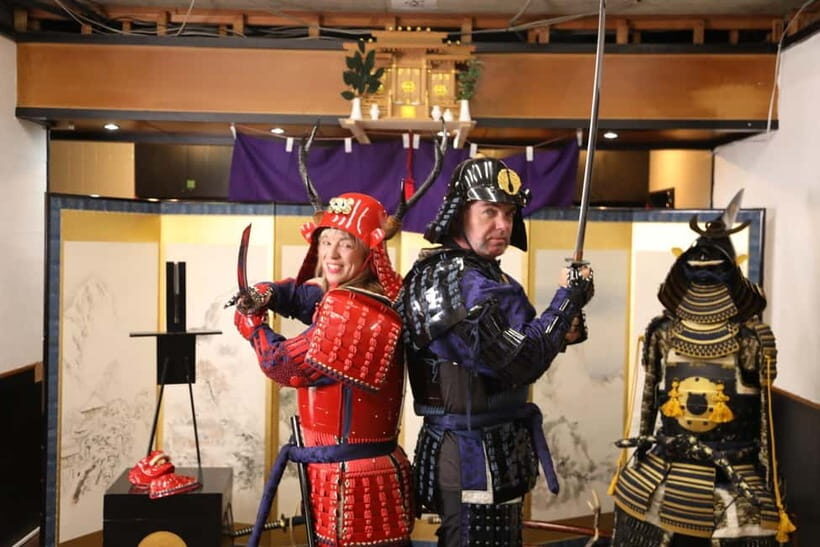
This experience runs about 90 minutes and it follows a clear training rhythm. Here’s how it usually unfolds, and what each part means for you.
Preparation: costume into samurai training mode
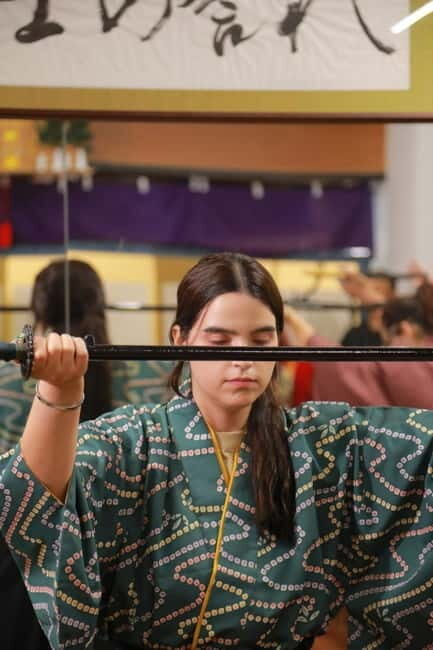
You’ll change into samurai clothing (dogi and hakama) first. That matters more than it sounds. The clothing helps you move correctly and makes the lesson feel structured. You’re also taking part in a real routine, not floating between photo spots.
Bowing at the shrine: discipline before techniques
Training begins and ends with a bow before the shrine enshrined in the dojo. This isn’t random theater. It frames the session as practice with respect—especially important when you’re dealing with a deadly weapon symbol.






Samurai manners and sword responsibility
You’ll hear a lesson about samurai upbringing and sword responsibility. The training description explains how boys began with wooden swords and how, at around age 15, they gained permission to wear a serious sword. The message is that carrying a sword wasn’t only permission—it came with responsibility and self-respect.
It also covers a practical idea: samurai lived with their swords inseparable from daily life. Even at rest or during meals, they were described as keeping a draw-ready setup. For you, this becomes context. When you later practice walking and sword positioning, it clicks as part of a larger mindset: you’re learning how readiness is maintained.
Sword-belt walking practice: left-side rule and ready positioning
One of the more “you can feel the logic” parts is walking practice with the sword belt.
You’re taught how to insert the sword into the belt at the waist with the blade side facing up. Then you practice walking with the idea that samurai traditionally walked on the left side of the road so sheaths don’t contact each other. That’s not just a trivia point. It ties etiquette to the physical reality of carrying a sword.
The instructions also emphasize keeping the koiguchi cut ready to draw at any time. Again, this is about preparedness.
Iai practice with a practice sword: Battou, Chiburui, Nottou
After the manners and footwork, you’ll start on iai basics with an iai practice sword. The listed sequence includes:
- Battou: pulling the sword out of the scabbard to cut
- Chiburui: the symbolic motion of removing blood from the blade after a cut
- Nottou: returning the sword to the sheath
Even if you’re new, this is a helpful structure because it breaks the action into clean stages. You’re not trying to perform a full fight in your head. You’re learning a disciplined sequence.
Kata stances and real sword technique cues
Next comes basics directly from the master, including stances, sword swings, and kata-style practice. A specific technique cue is included: when the swing is correct, you may hear a hi-nari sound from the sword.
That’s a great sign to aim for. You’re not only chasing movement. You’re trying to move in a way that produces the expected sound and feel.
Real cutting with a samurai sword: what you’ll actually do (and what to expect)
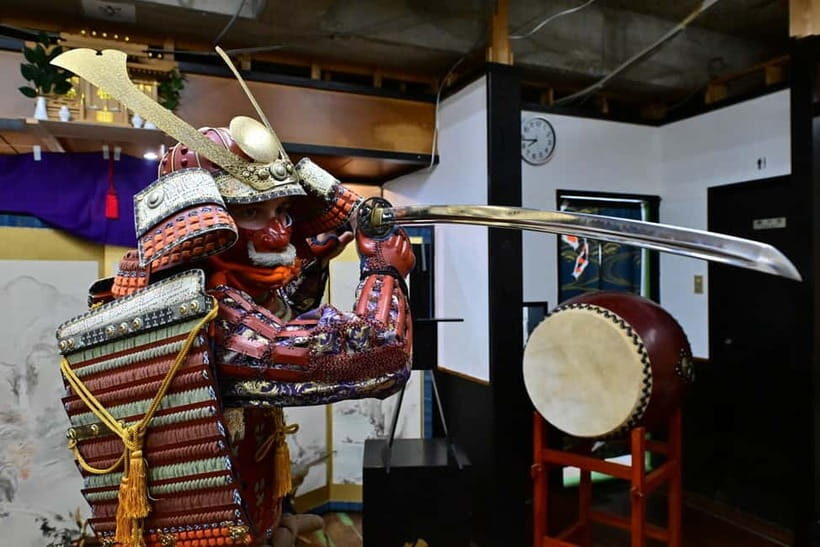
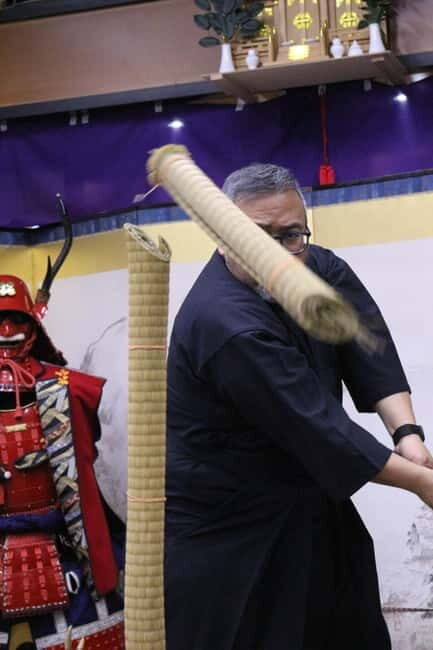
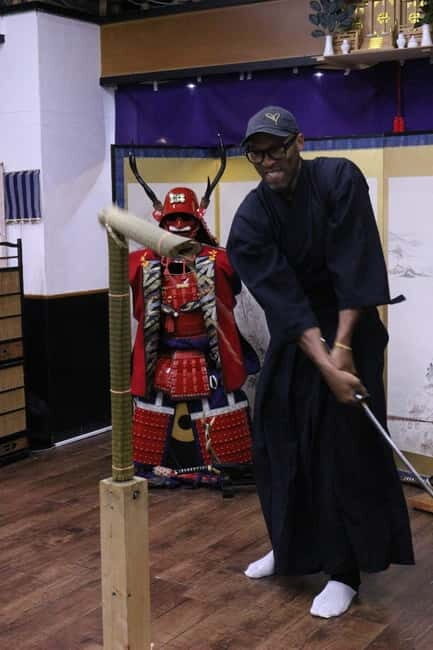
The session culminates in a try-it-yourself moment: cutting practice using a real samurai sword.
The training info frames it as the world’s best cutting performance, and the tone is clearly meant to build confidence step by step. For you, the key is that you won’t jump into cutting without preparation. You’ll practice stances, swings, and iai actions first so you’re not totally guessing.
Because the details of the cutting target aren’t described in the information you provided, I can’t promise the exact setup. What I can say is that you’ll be doing real cutting under instruction, not just miming.
If you’re the kind of person who likes “prove it” activities—learning a sequence and then testing it—this is one of the best parts. If you’re nervous about weapons, take comfort in the way the session emphasizes manners, bowing, and structured basics first. Also, the overall experience is described as safe and educational in the available feedback.
Practical tip: if you want this section to feel smooth, focus on following the instructor’s timing and stance. With sword techniques, small adjustments matter, and you’ll get more out of it if you treat it like training rather than a stunt.
Armor and helmet indoors: the dignity side of samurai look-and-feel
After you work through sword technique, you’ll shift gears into samurai armor.
You’ll wear samurai armor and helmet indoors. The training description emphasizes that armor wasn’t just protection—it was also about dignity and beauty before going to war. For you as a visitor, this turns the armor from a costume into a symbol of role and responsibility.
You’ll also get a photo. The included photo shooting is designed as a commemorative moment—one of those “I did something real” proof-of-time shots. Based on the included info, your photo data is sent to a designated email address after the session.
What I like about this part: you get the physical experience of wearing the kit. Even if you’ve seen armor in museums, wearing it helps you understand scale and weight in a way pictures can’t.
Photos and the included “send by email” part

This experience includes photo shooting as part of your ticket.
Instead of only getting a random snap, the information says the photo data is sent to your email. That’s helpful if you want to save time and avoid rushing back to collect physical prints. It also means you can focus on the practice without worrying about camera timing.
There’s also a paid option mentioned for movie shooting, but it’s not included by default. If you want video, you’d need to pay for that add-on.
If you care about getting photos that look good, I’d recommend you arrive on time and keep your instructions clear to yourself. When you’re properly changed and ready, you’ll get more comfortable faster—so your photo moment looks less like awkward “quick costume changes.”
Price and value: is $106 worth it near Osaka Castle?
At $106 per person for about 90 minutes, the value depends on what you want from the experience.
Here’s what you get that can justify the price:
- Samurai clothing (dogi and hakama)
- The chance to wear samurai armor indoors
- A certified professional instructor
- English-speaking staff (default language)
- Tips and tax included
- Photo shooting included
What you don’t get is also important for budgeting: pick-up/drop-off isn’t included, and transportation isn’t included. So the real cost is your base fee plus whatever it costs to get there and back.
My take: the price looks reasonable if you want a full “training + armor + photo” program, not just a rental. If you only want a costume photo for ten minutes, you’ll likely feel like it’s too structured. But if you want instruction, manners, sword basics, and a real cutting try-it-yourself moment, it’s the kind of activity that earns its cost.
Who this is best for (and who should skip)
This experience is clearly built for adults and kids old enough to handle instruction and safe practice.
It’s not suitable for:
- Children under 10
- People with altitude sickness
- People over 80
- Babies under 1
It also has a list of “not allowed” items and group types (including restrictions around pets and party-style groups like bachelor/bachelorette). Assistance dogs are allowed.
What that means for you: if you’re generally healthy, comfortable following instructions, and can focus for 90 minutes, it should work well.
It also helps if you like learning. This isn’t only about action. You’re taught sword manners and responsibility, plus walking and iai sequences. If you’re more into scenic sightseeing and you hate structured activities, you might prefer something slower.
What to bring, wear, and do before you start
The key item is simple: bring a T-shirt. That’s what the information says you should wear for the experience setup.
You’ll change on-site, and the session includes changing time, so arrive early. If you show up rushed, you can end up stressed right when the session expects your focus.
Also, keep food and alcohol in mind. Food and alcohol aren’t allowed during the experience.
Pairing it with Osaka Castle: make the timing work
You’re doing this near Osaka Castle, so it fits well as a “contrast day” activity: history sightseeing in the morning or afternoon, then hands-on samurai training afterward.
The biggest timing trick is to schedule so you’re not sprinting between sites. Because you need to arrive 30 minutes early to change and receive instructions, pick a slot that doesn’t force you to cut it too close.
A smart approach:
- Visit Osaka Castle first, so your interest in samurai history is fresh
- Then come for the 90-minute session
- Finish with a relaxed meal nearby and let the training feel like a highlight rather than a rushed task
Should you book this Samurai Armor & Sword experience?
Book it if you want a structured, instruction-led samurai experience near Osaka Castle—especially if you care about the manners side, want to practice iai basics, and want a shot at real cutting. The included armor try-on and the photo shooting make it feel complete for the price.
Skip it (or choose a different style of activity) if you’re looking for something casual and low-effort, or if you fall into the listed not-suitable categories. Also consider this: one booking was reported to be cancelled due to overbooking, so if your travel plans are tight, keep a little flexibility in your schedule.
If you like learning by doing, this is one of the more satisfying “samurai” options in the Osaka area because it’s not only costumes. It’s training, technique, and a real sense of how samurai life was framed around readiness and respect.
FAQ
How long is the Samurai Armor & Sword experience?
It lasts about 90 minutes.
Is this a private group or shared class?
It’s listed as a private group.
What languages are available for the instructor and staff?
English and Japanese are available. English is the default interpreter language.
Where do I meet the group?
Meet at Samurai Honor. The landmark is a wooden sign that reads Honor of the Samurai.
What should I bring with me?
Bring a T-shirt.
Do I need transportation or pickup from the hotel?
Pick up and drop off at a train station or hotel are not included. Transportation is also not included.
Is it suitable for children?
It is not suitable for children under 10. Babies under 1 are also not suitable.
What’s included besides the sword and armor training?
Samurai clothing, wearing armor indoors, an English-speaking staff/instructor, and photo shooting are included. Photo data is sent to a designated email address.