REVIEW · TOKYO
Shibuya: Ramen Dojo Tokyo | Make All 3 (Tonkotsu/Shoyu/Miso)
Book on GetYourGuide →Operated by Viyago Japan · Bookable on GetYourGuide
Making ramen in Shibuya beats any store-bought bowl.
You’ll make fresh noodles and assemble three mini bowls in one 90-minute, English-guided workshop. I like that it stays beginner-friendly while still feeling hands-on, like you’re actually running the kitchen steps. One thing to keep in mind: it’s not a fit for serious gluten/egg/soy issues, including celiac.
You’ll be close to Shibuya Station, with a short walk to the studio and a smooth, step-by-step pace. I also like the “learn it, then eat it” format: you leave with ramen skills and a digital recipe, not just photos. The trade-off is that the class runs on schedule and the studio is stairs-only.
In This Review
- Key Points Before You Go
- Why This Shibuya Ramen Class Feels Like Real Tokyo Cooking
- Getting to the Studio Near Shibuya Station (and Timing It Right)
- Check-In Briefing: How the 90 Minutes Actually Runs
- Noodle Making With the Professional Machine: What You’ll Practice
- Chicken Chashu and Soup Base Tuning for Tonkotsu, Shoyu, Miso
- Chicken chashu: you do the meat work
- Soup base: you adjust strength to your taste
- Plating and Photo Time: The Ramen Trio Moment
- What You’ll Eat (and Why It’s Built for Comparison)
- Price and Value: Is $64 Worth It?
- Who This Workshop Suits Best (and Who Should Skip)
- Practical Tips That Make the Class Go Smoothly
- Should You Book Ramen Dojo Tokyo?
- FAQ
- How long is the Ramen Dojo Tokyo class?
- What ramen styles will I make and eat?
- Will the class be taught in English?
- How big is the group?
- What will I cook during the workshop?
- What allergens are involved?
- Is photography allowed?
- What happens after the class?
Key Points Before You Go
- Three ramen styles, one session: tonkotsu, shoyu, and miso side by side so you can compare flavors clearly.
- Hands-on noodles with a professional machine: knead, roll, and cut fresh noodles yourself.
- Chicken chashu plus soup-strength tuning: you cook the chashu and adjust the soup base to your preference.
- Small group size (max 8): more time for staff support and questions.
- English guidance and photo time: you’ll cook, taste, and take pictures during the same flow.
- Digital recipe after class: practical notes for trying ramen again at home.
Why This Shibuya Ramen Class Feels Like Real Tokyo Cooking
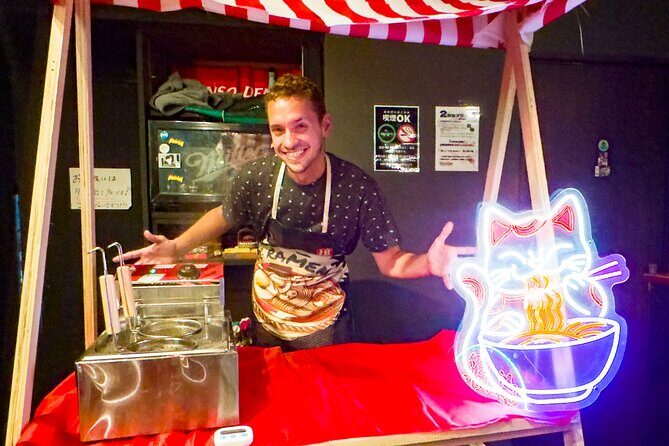
Tokyo has a thousand ways to eat ramen. This experience is different because you don’t just order it. You build it.
You’ll make fresh noodles, cook chicken chashu, and tune the soup base for three classic styles: tonkotsu, shoyu, and miso. The payoff is you sit down afterward and taste your own trio in one meal, which makes the differences between broths far easier to understand than reading about them.
A subtle win is how “Japanese food culture” shows up here: ramen isn’t treated as a mystery box. It’s treated as a set of steps you can learn. That approach makes the whole class feel more doable, especially if you’re not a confident cook.
You can also read our reviews of more tours and experiences in Tokyo.



Getting to the Studio Near Shibuya Station (and Timing It Right)
The workshop starts and ends at the same studio, about a 10-minute walk from Shibuya Station. That matters because you’re not stuck trying to fit dinner logistics around a distant activity. You can do the class, eat what you made, then head right back out into Shibuya.
The studio is in a simple, compact setup (1F, then stairs up for some areas). Plan for stairs only, because there isn’t an accessibility-friendly route listed.
Timing is strict in a good way. Doors open 10 minutes before your start time, and there’s no waiting area if you arrive early. If you’re 5+ minutes late, you may have to join in progress or could be refused for safety and class flow. My practical advice: treat arrival like a train connection. Give yourself a buffer so you’re not stressed.
Check-In Briefing: How the 90 Minutes Actually Runs
This runs for 90 minutes, and the schedule is built to keep you moving without feeling rushed. Here’s the flow, translated into what you’ll feel on the day:
- Check-in & briefing (10 min): you’ll get your instructions and workflow so you know what happens next.
- Chicken chashu prep (5 min): you’ll start with the meat component early, so the timing stays smooth.
- Noodle making (20 min): this is your main hands-on block.
- Chicken chashu finishing (10 min): you’ll wrap up the meat portion.
- Boiling noodles / soup prep (10 min): this is where your noodles and broth come together.
- Plating (5 min): you build your bowls and add toppings.
- Tasting / photo time (30 min): you eat your ramen and take pictures.
I like that the tasting window is long enough to slow down. This isn’t a quick bite-and-run. You get time to compare bowls properly.
Noodle Making With the Professional Machine: What You’ll Practice
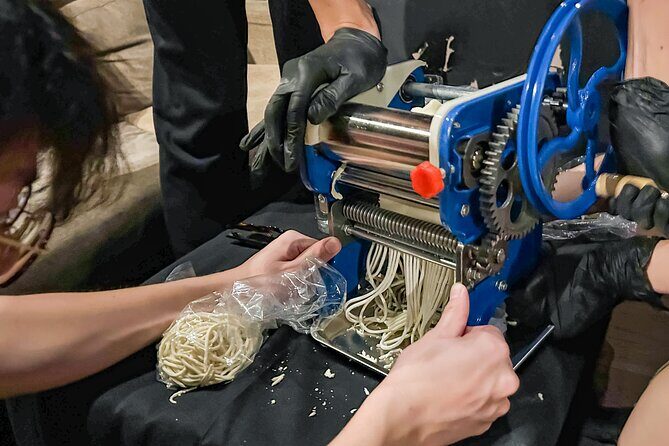
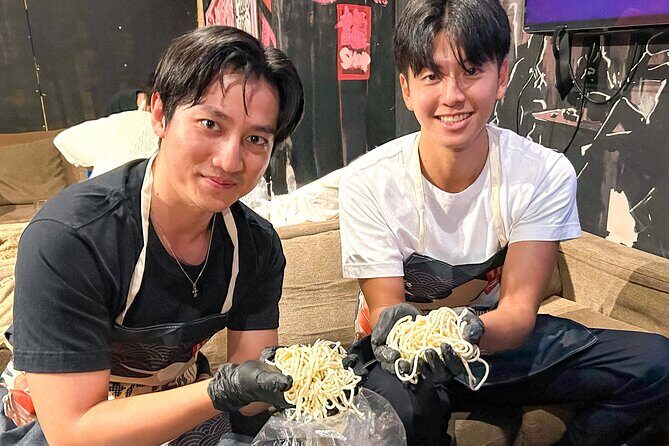
The centerpiece is noodle work. You’ll knead, roll, and cut fresh noodles using a professional noodle machine and cutter.
Even if you’re a total beginner, this part is set up to make you successful. The machine does the heavy shaping work, while you focus on feeding the dough and getting the process right. That’s a smart balance. It teaches technique without turning the class into a test of strength or speed.
What to watch for while you’re working:
- Use the staff guidance for thickness and handling. Small differences show up in the final bite.
- Expect a bit of mess. The studio provides aprons, but flour can still find its way onto your clothes during the noodle stage.
Also, one small but important thing: you’re learning steps you can repeat later. Several past instructors tied their teaching style to clear pacing and a “do it with your own hands” focus, so you don’t just watch.
From what I’ve seen described in past sessions, instructors like Kazuki, Kensei, Kai, and Arata tend to keep directions simple and step-by-step. That matters here, because noodles are the one part where people usually worry they’ll mess up. Good instruction prevents that spiral.
Chicken Chashu and Soup Base Tuning for Tonkotsu, Shoyu, Miso
Ramen is more than noodles. In this class, chicken chashu and soup base adjustments create the three different styles.





Chicken chashu: you do the meat work
You’ll prep and then finish chicken chashu. That’s valuable because you’re not only making the carbohydrate part. You’re also learning how protein changes the bowl’s rhythm and richness.
The class timing keeps chashu from becoming a waiting game. By the time you’re finishing it, you’re ready to move on to assembling and boiling.
Soup base: you adjust strength to your taste
You’ll adjust the soup base strength to your preferred flavor. That’s a big deal because it teaches you the real idea behind ramen customization: tonkotsu, shoyu, and miso aren’t only different ingredients. They’re also different intensity levels.
This is where tasting later becomes extra meaningful. When you sit down with all three bowls, you’re more likely to notice how salty, rich, or savory each one feels, rather than treating ramen differences as random.
If you’re a “tune it to my palate” person, this portion will click fast.
Plating and Photo Time: The Ramen Trio Moment
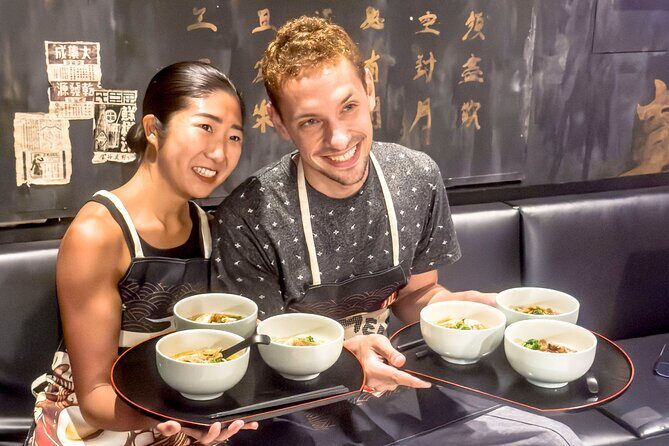
After noodles and soup prep, you plate your bowls and add toppings. The experience is designed to give you a moment where your work looks like ramen, not like a school project.
Then comes a 30-minute tasting and photo time. This is practical, not just for pictures. You’ll taste side by side and figure out which broth you want to recreate at home later.
If you care about the Instagram-style presentation, you’re in the right place. Photography is welcomed, and the studio even encourages sharing with #RamenDojoTokyo.
What You’ll Eat (and Why It’s Built for Comparison)
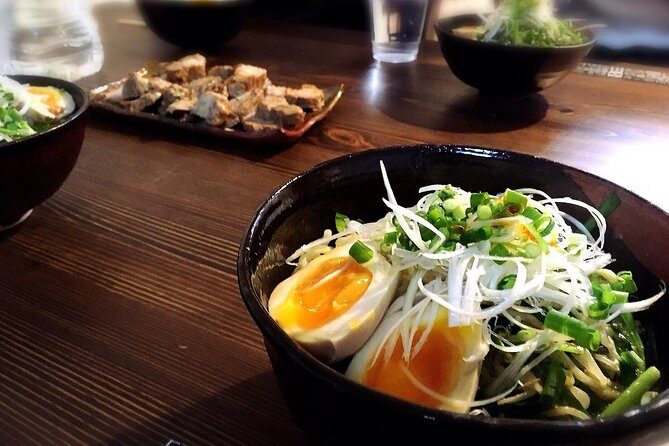
You’ll taste three mini bowls: tonkotsu, shoyu, and miso.
Mini bowls are key for two reasons. First, you can compare flavors without getting too full too fast. Second, the differences between broths become easier to detect when your palate isn’t overwhelmed. You can genuinely notice how the noodles behave in each soup style too.
A few past sessions also highlight that some soup elements may start from prepared bases, since broth takes time. The important part for you is that you’re still doing the meaningful work: adjusting the soup base strength and putting the bowls together so the final flavors are yours.
Price and Value: Is $64 Worth It?
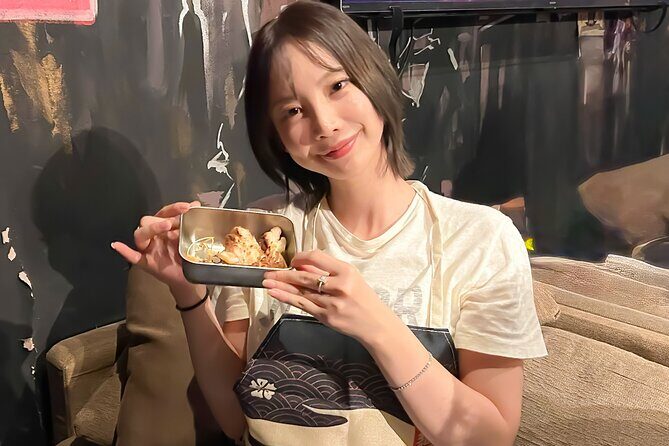
At $64 per person for 90 minutes, you’re paying for more than a meal. You’re paying for:
- fresh noodle-making with professional tools,
- chicken chashu prep and finishing,
- three ramen styles in one session,
- English-guided instruction,
- apron loan,
- and a digital recipe after class.
If you’re comparing this to eating three separate ramen bowls around Shibuya, the class still may feel like a better deal because you’re getting a guided skill-building activity plus lunch/dinner. You also get something meals rarely provide: repeatable technique.
For many people, the real value is that you can take the process home. One of the recurring themes tied to instructors like Kensei and Kazuki is that the recipe support makes the class feel useful after you leave Tokyo.
Who This Workshop Suits Best (and Who Should Skip)
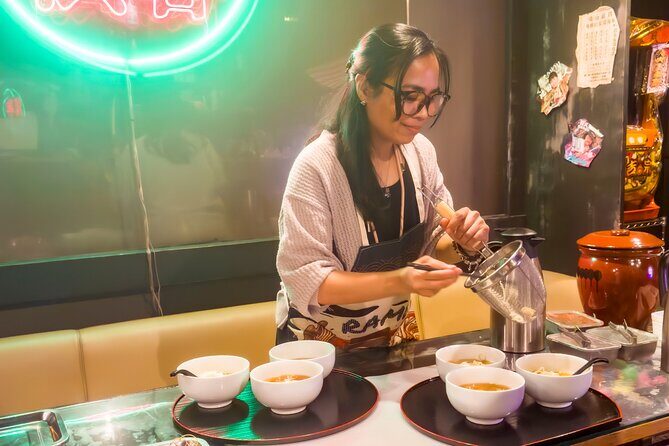
This is best for you if:
- you’re new to cooking ramen and want a guided path,
- you like hands-on activities more than watching someone else work,
- you want to compare three ramen styles instead of just eating one.
It’s also a good fit for couples or small groups. The max group size is 8, so you won’t feel like you’re stuck in a crowd with one station and a single instructor.
It’s not suitable if you have:
- severe wheat (gluten), egg, or soy allergies,
- celiac disease,
- severe airborne flour sensitivity,
- or you need strict dietary compliance beyond the listed options.
The ingredients used include wheat (gluten), egg, soy, chicken, and pork, and the studio states it can’t guarantee complete prevention of cross-contamination.
Dietary requests can sometimes be partially accommodated for no chicken/pork, vegetarian, and vegan, but you need to ask in advance. If that applies to you, message early so you don’t get surprised last minute.
Practical Tips That Make the Class Go Smoothly
A few details will help you enjoy the day more:
- Arrive on time, not early. Doors open 10 minutes before. There’s no waiting area if you come too soon.
- Wear clothes you don’t mind getting flour on. Aprons are provided, but noodle work can be messy.
- Plan for a full meal. The three bowls are meant to be filling, and you’ll have a long tasting block.
- Ask questions while you cook. The small group setup works best when you speak up during the steps, not after the bowls are plated.
Also, if you’re sensitive to strong smells or have asthma, tell staff when you check in. One past participant noted they had an unexpected coughing fit and staff were kind and accommodating, which tells me they take comfort seriously.
Should You Book Ramen Dojo Tokyo?
Book it if you want Tokyo ramen in a hands-on format, not just a restaurant meal. I’d especially recommend it if you’re the type who likes learning a process you can repeat, since you’ll leave with fresh noodle technique, a soup-strength framework, and a digital recipe.
Skip it if you have severe allergy concerns (wheat/egg/soy), celiac disease, or you need strict dietary control not supported by the class information. Also skip if stairs are a problem for you, since the studio lists stairs only.
If you’re on the fence, here’s my quick decision rule: if making something is more interesting to you than eating it, this class will likely feel worth every minute.
FAQ
How long is the Ramen Dojo Tokyo class?
The class runs for 90 minutes.
What ramen styles will I make and eat?
You will make and taste three styles: tonkotsu, shoyu, and miso.
Will the class be taught in English?
Yes. The instruction is in English, with an instructor also able to speak Japanese.
How big is the group?
The group is small, with a maximum of 8 guests.
What will I cook during the workshop?
You’ll make fresh noodles using a professional noodle machine, and you’ll prepare and finish chicken chashu. You’ll also assemble three mini bowls.
What allergens are involved?
The class uses wheat (gluten), egg, soy, chicken, and pork, and cross-contamination cannot be fully prevented.
Is photography allowed?
Yes. Photography is welcome, and the studio encourages sharing with #RamenDojoTokyo.
What happens after the class?
You’ll receive a digital recipe after you finish the workshop.