REVIEW · OSAKA
Traditional Calligraphy Experience near Dotonbori
Book on Viator →Operated by MIYABI Culture Salon · Bookable on Viator
Sharp brushstrokes, quick calm. This traditional calligraphy class near Dotonbori is a simple, hands-on way to tap Japan’s “way” culture through kanji writing. I especially like the English instruction and the fact you finish with a hanging scroll you can take home. The only drawback to note is that the session is about 1 hour, so it’s best thought of as a focused introduction rather than deep, multi-character practice.
You’re not stuck in stiff floor-posture. You can sit on a chair, and the class keeps things beginner-friendly, including choosing your kanji from examples and practicing at your own pace. With a max group size of 8, you’re more likely to get practical guidance on grip and posture, not just watch instructions from the sidelines.
In This Review
- Key Things I’d Watch For
- Why Osaka’s Calligraphy Class Feels Like a Reset
- Finding the Studio Near Dotonbori (Without Drama)
- Inside the 60-Minute Flow: Lecture, Tools, and Strokes
- Choosing Your Kanji: Beginner-Friendly, Not Babyish
- Getting the Right Brushwork: Posture and Grip Matter
- The Final Moment: Hanging Scroll, Your Name, and a Stamp
- Price and Value: Is $45.52 Worth It?
- Practical Tips to Get the Best Experience
- Who Should Book This Calligraphy Class (and Who Might Skip)
- Should You Book This Calligraphy Tour?
- FAQ
- How long is the calligraphy experience?
- Is the instruction available in English?
- Can beginners participate?
- Do I get to take something home?
- How big is the group?
- Is there free cancellation?
Key Things I’d Watch For
- English-led lessons: The instructor teaches calligraphy techniques in English.
- Chair seating: You write while seated, so you can relax your body and focus on the strokes.
- Pick your kanji: Beginners choose a favorite character from the instructor’s prepared samples.
- Tools and technique: You learn how to use traditional tools the right way.
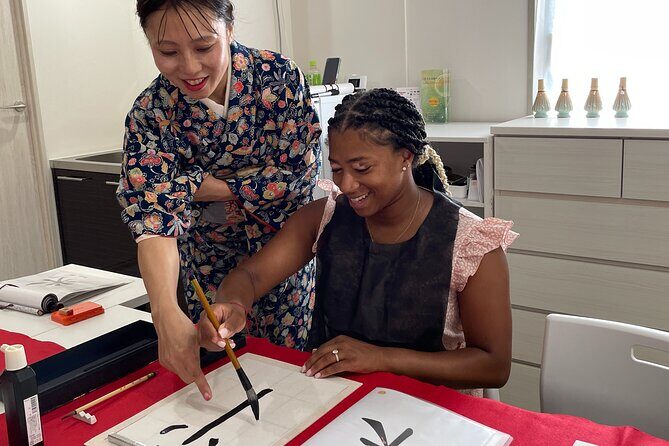
- Focusing on form: Expect attention to how you hold the brush and how posture affects your line.
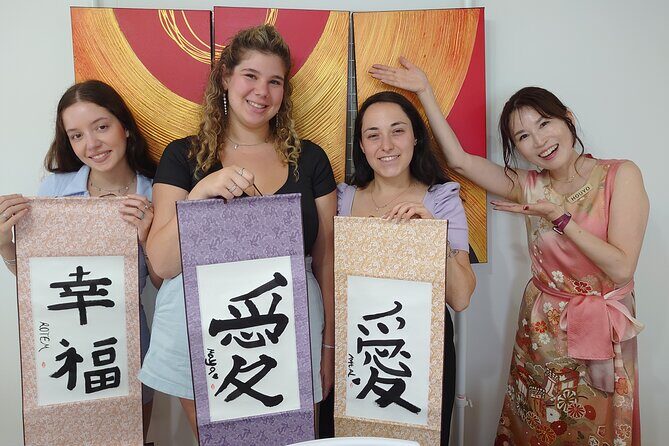
- A true souvenir: You end with a hanging scroll, add your name, and stamp it.
Why Osaka’s Calligraphy Class Feels Like a Reset
Calligraphy in Japan isn’t just handwriting. It’s treated like a mindset—calm focus, careful movement, and a kind of quiet discipline. In this one-hour session, the goal is to help you clear your head by concentrating on one thing at a time: writing kanji with intention.
Here’s what makes it work for many visitors. You start with context, then you learn the tool basics, and then you immediately apply them. That keeps the experience from turning into a lecture you only half remember.
It also helps that the instruction is designed for newcomers. You’re not expected to know stroke order already. You’ll imitate a character, adjust as you’re guided, and see your lines start to look more consistent as you go.
You can also read our reviews of more tours and experiences in Osaka.



Finding the Studio Near Dotonbori (Without Drama)
The meeting point is at 1-chōme-5-12 Nishishinsaibashi, Chuo Ward, Osaka. It’s set up to be easy to reach since it’s near public transportation. If you’re using transit, this is the kind of location that lets you fit the class into an Osaka day without losing half your afternoon to getting there.
Because the tour ends back at the meeting point, you also don’t have to plan a separate walk to wherever you’re going next. That matters in Osaka, where plans can change fast once you start eating and shopping around the canal area.
You’ll receive a mobile ticket, which is handy for keeping everything in one place on your phone. Just make sure you have it accessible when you arrive.
Inside the 60-Minute Flow: Lecture, Tools, and Strokes
This class is structured, but it doesn’t feel rigid. It moves in clear steps, and each part sets you up for the next.
First comes a short lecture. The instructor explains the background of calligraphy and what makes it a traditional “way” passed down since ancient times. It’s not just trivia. The point is to frame what you’re doing so you write with purpose instead of treating it like a craft you rush through.
Then you learn the tools. You’ll be shown how to use traditional calligraphy equipment and the correct way to write kanji. This part is especially valuable if you’re brand new, because the brush can feel very different from a pen. The “right way” isn’t about being fancy—it’s about control.
Next is guided practice. You pick your favorite kanji from samples the instructor has prepared. Then you copy the character and gradually refine your hand movement. The goal is for your spirit to feel more unified as your strokes become steadier and more intentional.
A detail I really like: you don’t have to worry about sitting straight in a tough posture. You’re allowed to sit in a chair, and the instructor focuses on the practical stuff that affects your line quality.
Choosing Your Kanji: Beginner-Friendly, Not Babyish
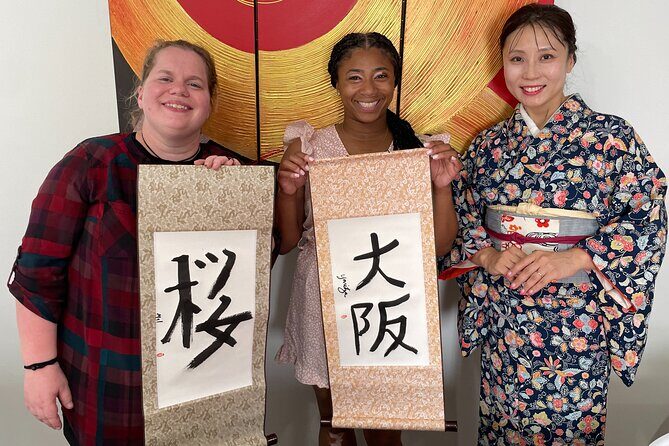
Selecting the kanji is part of the fun. Instead of feeling stuck with a complicated character, you choose what you connect with from the samples. That’s a small decision, but it changes the whole mood of the session—people pay more attention when they care about what they’re making.
If you’re worried about making mistakes, don’t. The teaching approach is built around success. In sessions led by instructors like Fumi, the vibe is patient and focused on getting you to do well, even if it’s your first time holding a brush.
The class also teaches you the mechanical basics that matter most:
- how to hold the brush for control
- how posture affects the movement of your arm
- how to shape strokes so they look balanced
You’ll probably notice your confidence improving quickly once you’re copying the strokes and getting small corrections. That’s the “aha” moment in calligraphy: you’re not waiting for inspiration. You’re building accuracy.
Getting the Right Brushwork: Posture and Grip Matter
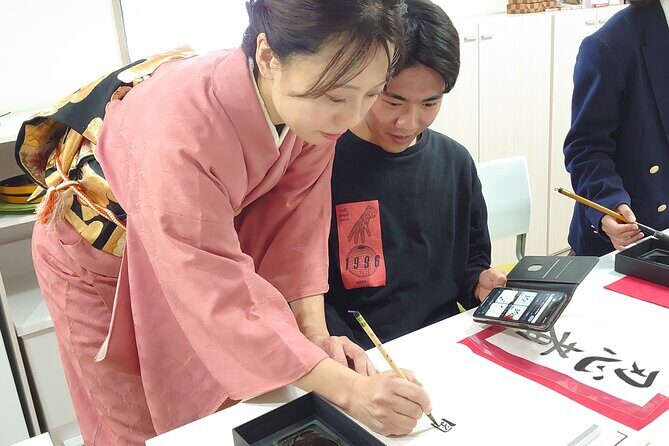
The instructor will guide you through how posture and grip influence the quality of your strokes. That might sound overly technical, but it’s exactly why this experience feels more meaningful than a casual souvenir workshop.
With brushwork, the line comes from the whole body, not only your hand. That’s why the class pays attention to how you sit and how your arm moves as you write. The chair helps you stay comfortable while still practicing the correct technique.
A helpful part here is that you’re not just watching from across the room. You’re writing. You’ll get guidance on what to adjust while you work, so the learning stays practical instead of theoretical.
If you’ve ever tried traditional crafts and felt like you were always “doing it wrong,” this setup is different. It’s built for improvement during the session, not evaluation after it.





The Final Moment: Hanging Scroll, Your Name, and a Stamp
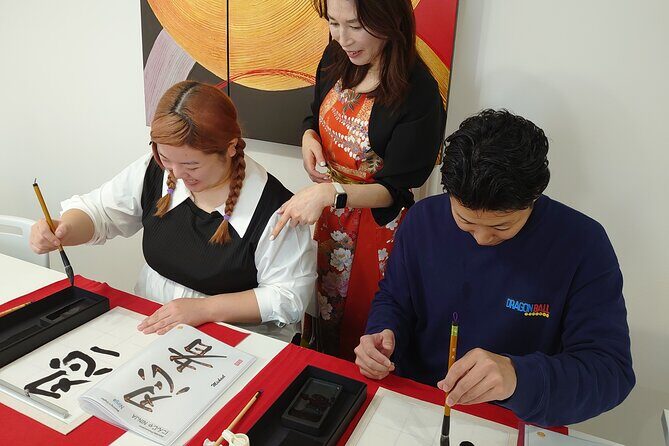
This is where the class becomes tangible.
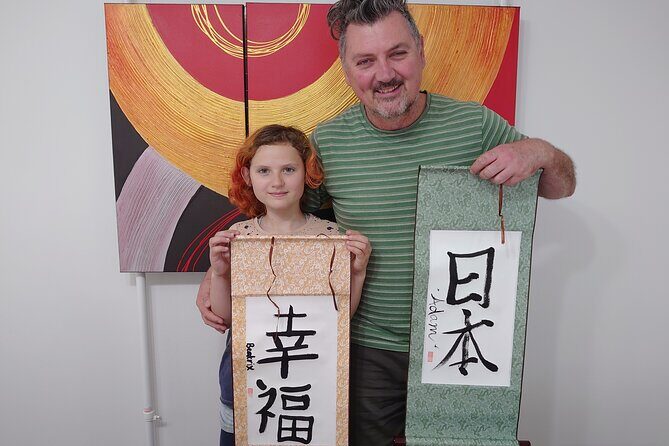
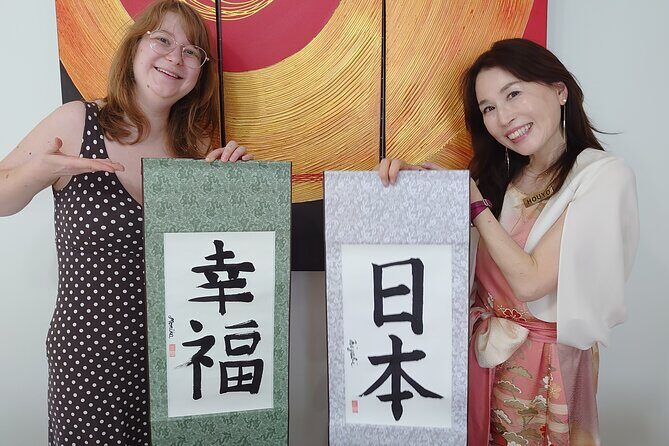
After you practice your kanji, you write it on a beautiful hanging scroll. Then you write your name, and finish by adding a stamp. That final stamp step is small but satisfying—it turns your work into something official-looking and personal.
Then you take the hanging scroll home as a memory of Japan. That matters more than you’d think. Photos fade fast. A scroll you own becomes part of your space, and it keeps the experience alive long after your trip notes are done.
Also, having a finished product makes the one-hour duration feel purposeful. You’re not just “learning something.” You’re producing something you can display or keep safely.
Price and Value: Is $45.52 Worth It?
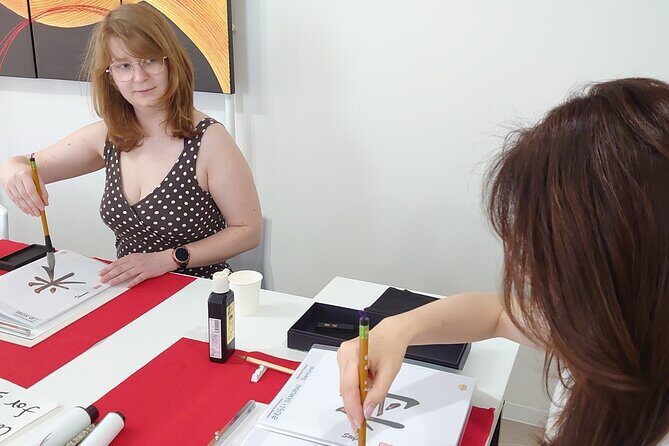
At $45.52 per person for about 1 hour, this isn’t the cheapest thing you’ll do in Osaka. But for what you get, it usually feels like solid value.
Here’s what’s included in the experience you’re paying for:
- instruction in English
- teaching how to use traditional calligraphy tools
- practical guidance while you copy and write
- a completed hanging scroll souvenir with your name and stamp
- a small group size of up to 8
The big value driver is the combination of instruction + a high-quality take-home item. Many short classes are either heavy on performance (you watch) or heavy on materials only (you craft without much coaching). This one is clearly coaching-focused, with the output being the scroll.
The price also makes sense if you think of it as a “cultural workshop,” not a museum activity. You’re learning a traditional skill through a guided process, and you leave with a product that reflects your practice.
Practical Tips to Get the Best Experience
You’ll have the best time if you treat this like skill-building, not a test.
Go in expecting one good kanji, not a whole alphabet. The class is structured around selecting one character and refining your strokes.
Take the instructor’s corrections seriously. Small changes to grip or posture can dramatically change the look of your strokes. Don’t argue with the brush. Let the guidance work.
Slow down once you’re writing for the scroll. Practicing is one thing. The final scroll is the moment you’ll want steady pressure and controlled movement.
Plan what you’ll do after. Since it ends back at the meeting point, it’s easy to continue your Osaka day nearby. Just keep in mind you’ll be leaving with a hanging scroll, so you’ll want a way to carry it comfortably.
Who Should Book This Calligraphy Class (and Who Might Skip)
This class is a great fit if you want a hands-on cultural activity in Osaka that doesn’t require prior experience. It’s also ideal if you like activities where you can focus quietly, learn technique, and leave with a real item you made yourself.
It also works well for families who want something calmer than the usual sightseeing track. One of the standout points from the experience is that it can be enjoyable even for younger participants, especially when the instructor is patient and encouraging.
You might consider a different option if:
- you want to write multiple kanji characters in one session
- you’re looking for a long workshop with lots of repetition over time
- you prefer activities that don’t involve careful form and concentration
This isn’t a fast try-and-go activity. It’s a focused hour.
Should You Book This Calligraphy Tour?
Yes, if you want a small-group, guided introduction to traditional Japanese calligraphy with English support and a take-home hanging scroll. For the price, the souvenir quality and the instruction make it feel like more than a basic craft stop.
Book it especially if you enjoy cultural skills you can practice at home after your trip. If you’re the type who likes learning how something is done correctly, not just how it looks afterward, you’ll likely leave satisfied with your finished scroll and the technique you picked up along the way.
FAQ
How long is the calligraphy experience?
It runs for about 1 hour.
Is the instruction available in English?
Yes. The instructor teaches calligraphy techniques in English.
Can beginners participate?
Yes. Beginners can choose a kanji from sample sheets and imitate the strokes with guidance.
Do I get to take something home?
You’ll write your kanji on a hanging scroll, add your name, stamp it, and take the hanging scroll home.
How big is the group?
The class has a maximum of 8 travelers.
Is there free cancellation?
Yes. You can cancel for a full refund if you cancel at least 24 hours before the start time.