REVIEW · FUKUOKA
Akiyoshido Cave & Motonosumi Shrine Coastline & Spelunking Tour
Book on Viator →Bookable on Viator
Red torii meet underground limestone today.
I like how this route stacks two standout sights—Akiyoshido Cave and Motonosumi’s 123 red torii gates—into one smooth, full-day circuit. The pacing gives you real time to wander, take photos, and reset between places. One thing to plan for: the cave ticket isn’t included, and this is a carpool-style tour where being on time matters.
The cave time is the kind of setup that works for different travel styles. You can enjoy the passages at your own pace, and a guide-led moment helps you know what to look for so you’re not just walking in the dark.
Finally, you’re not stuck underground all day. You also get big coastal views starting at Wafukari PA (Kanmon Strait) and ending at Tsunoshima Bridge, with plenty of chances to trade dry shoes for camera time.
In This Review
- Key highlights at a glance
- A 9–10 Hour Kyushu Loop That Mixes Cave and Coast
- Wafukari PA and Kanmon Strait Views Before You Go Underground
- Akiyoshido Cave: Japan’s Limestone Giant and How to Enjoy It
- Cave ticket reality (and why it affects your budget)
- What to do once you’re inside
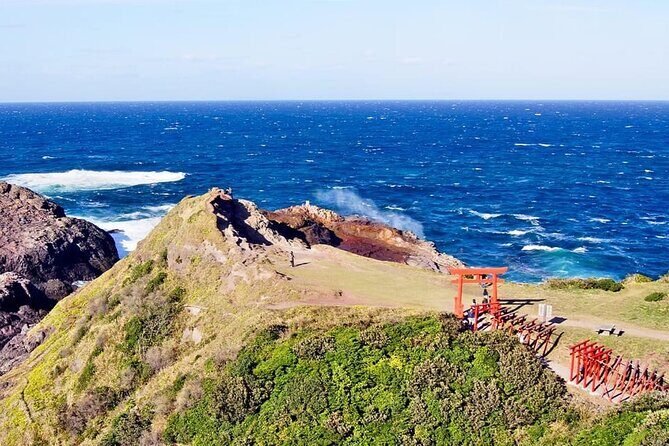
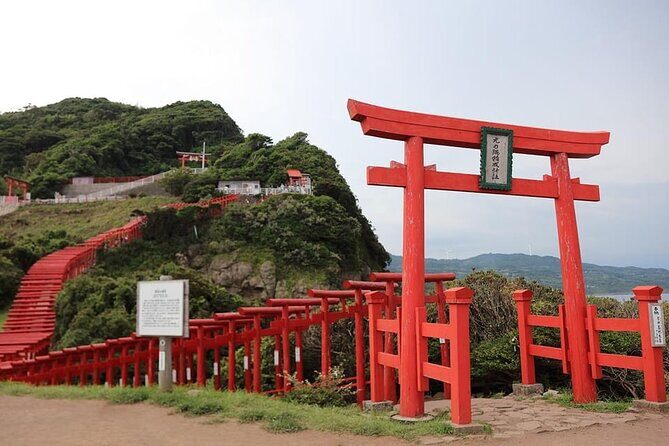
- Motonosumi Inari Shrine: 123 Torii Gates Leading to the Sea
- How to get better photos (without overthinking it)
- Tsunoshima Bridge: The Long Sea-Crossing Finale
- A note on pacing and energy
- Price and Value: What Your $88 Actually Buys
- The Guide Factor: Why Names Like Ella, Lina, and Leann Matter
- Who Should Book This Tour (and Who Might Not)
- My Booking Recommendation: Should You Book This Tour?
- FAQ
- Where does the tour start?
- What time does the tour depart?
- How long is the tour?
- Is the Akiyoshido Cave ticket included in the price?
- How much time do you spend at Motonosumi Shrine and Tsunoshima Bridge?
- What languages do the guides speak?
Key highlights at a glance
- Akiyoshido Cave time you control: about 2 hours for self-paced exploring plus lunch time.
- Motonosumi Inari’s sea-facing torii staircase: 123 red gates aimed toward the water.
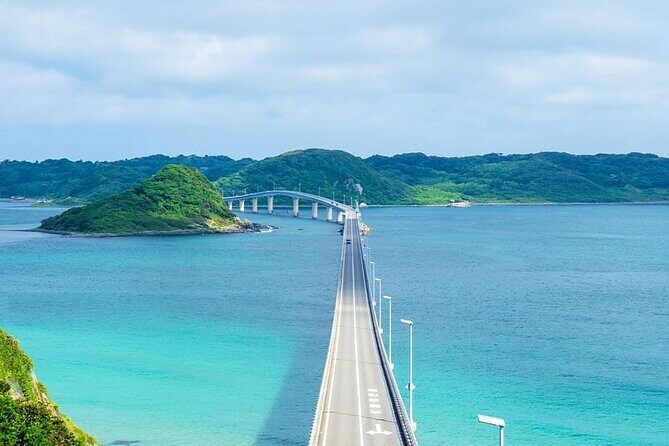
- Tsunoshima Bridge photo stop: a long bridge across the Sea of Japan (about 1,780 meters).
- Guides who set an easy rhythm: guides like Ella, Leann, and Lina have been praised for humor and encouragement.
- Rest-stop realism: a scheduled stop for legs, snacks, and restrooms on the drive.
A 9–10 Hour Kyushu Loop That Mixes Cave and Coast
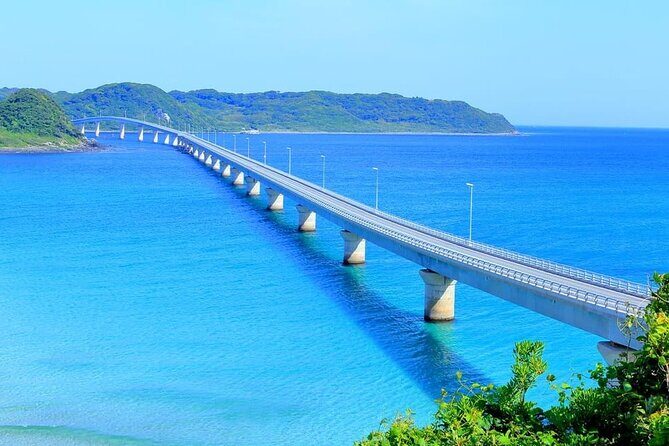
This tour is built around contrast. You start with a strait-viewing stop, then go underground at Akiyoshido, and by late morning you’re back in daylight at a coastal shrine. The final act is another water-themed viewpoint at Tsunoshima Bridge.
At about 9 to 10 hours total, it’s a solid day trip length: long enough to feel like you did something meaningful, not so long that you’re only sitting in a van. The group size caps at 45 travelers, which usually helps keep the day moving.
If you’re the type who likes to get photos without feeling rushed, the schedule is friendly. You’ll spend roughly 2 hours at Akiyoshido, then about 50 minutes at Motonosumi Shrine and 50 minutes at Tsunoshima Bridge.
You can also read our reviews of more tours and experiences in Fukuoka.


Wafukari PA and Kanmon Strait Views Before You Go Underground
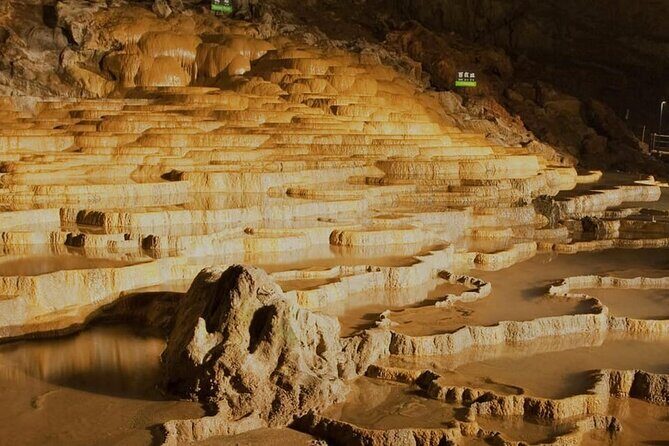
The day starts with a drive-out rhythm that’s pretty typical for Kyushu carpool tours. There’s a meeting point at Oriental Hotel Fukuoka Hakata Station and a 8:30 am departure, and the itinerary includes a brief stop for breaks and quick needs.
Before Akiyoshido, you’ll stop at Wafukari PA where you can look out across the Kanmon Strait from an observatory. This is more than just a bathroom-and-coffee moment. It helps you set the theme of the day: islands, sea crossings, and coastal scenery.
If you’re sensitive to time, this matters. The tour notes that the departure could shift slightly depending on peak season or special conditions, and late arrivals aren’t waited for. So I’d treat the morning like a “be early, don’t gamble” situation.
Akiyoshido Cave: Japan’s Limestone Giant and How to Enjoy It
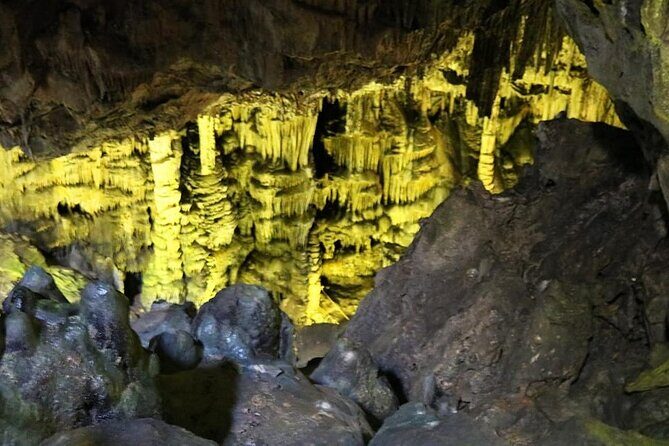
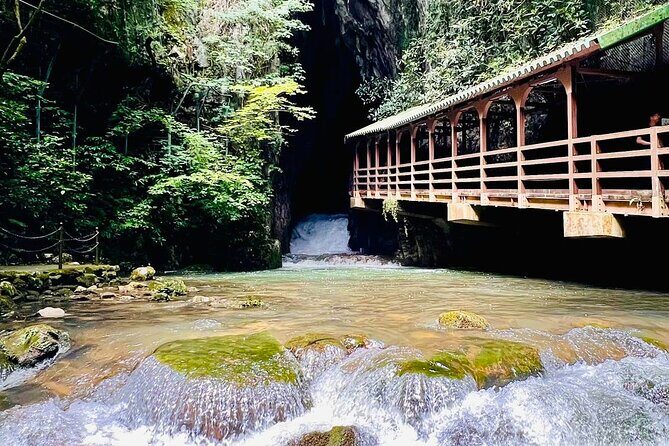
Akiyoshido is the big reason this tour earns its reputation. This is Japan’s largest limestone cave, with over 10 kilometers underground, and visitors typically explore about 1 kilometer of the walkable passages.
You get 2 hours at the cave, and the timing includes lunch time as part of that block. That’s a practical design choice. Two hours is enough to slow down for photos, watch your steps on uneven ground, and still have energy left for the later shrine and bridge stops.
Cave ticket reality (and why it affects your budget)
The cave admission is not included in the $88 price. The listed ticket is:
- 1,300 yen for age 16+
- 1,050 yen for ages 13–15
- 700 yen for ages 6–12
So your true cost is the tour price plus the cave ticket (based on age). Even with that add-on, the value often still holds because transport plus a guide covers the logistics of reaching a major cave and two separate coastal icons.
What to do once you’re inside
Akiyoshido is the kind of place where “walk forward and hope” can feel underwhelming. The smarter move is to use the guide’s help to spot features you’d otherwise miss. Past guides like Leann have been praised for pointing out details at the right spot, including visual effects you can actually capture on camera.
I’d plan your cave visit like this:
- Start by walking at a normal pace so you feel the scale.
- Pause where you can see the formations clearly, not only where the floor is easiest.
- Save your slower, photo-heavy time for the middle stretch when you’re more oriented.
Also, wear shoes you trust. Cave floors can be slick, and you’ll be doing a lot of steady walking.


Motonosumi Inari Shrine: 123 Torii Gates Leading to the Sea
Then comes the red. Motonosumi Inari Shrine is famous for its 123 torii gates, which form a dramatic corridor running down from the cliffs toward the sea. It’s scenic in daylight, and it’s also the kind of spot that turns your phone camera into a tourism machine.
You’ll have about 50 minutes here, which is usually perfect. It’s long enough to walk partway down, find your favorite angles, and still climb back without turning the shrine visit into a sprint.
How to get better photos (without overthinking it)
The torii gates create strong leading lines. That means your best photos come from positioning—not from using fancy settings.
I’d try:
- A first set of shots from a higher vantage point to show the whole staircase effect.
- A second set closer to the gates so the red frames become your foreground.
- One moment where you pause and let the scene “settle,” so you don’t miss the way the water and the sky color balance with the red.
If you’re traveling with someone who’s less into photos, this stop still works. It’s atmospheric and easy to understand quickly, and you don’t need a long attention span to enjoy it.
Tsunoshima Bridge: The Long Sea-Crossing Finale
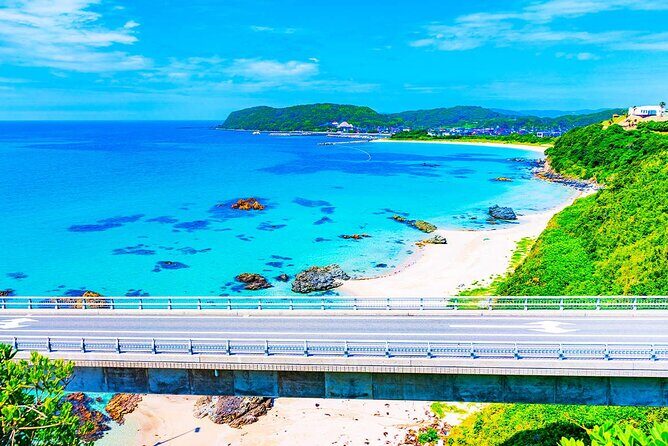
Your last major stop is Tsunoshima Bridge, spanning about 1,780 meters across emerald-green waters in the Sea of Japan. It connects Honshu to Tsunoshima Island, and that long stretch is part of the charm: the view looks like it’s extending beyond what your eyes expect.
You’ll get about 50 minutes here. That’s enough time to walk to viewpoint angles (if available), take photos, and check that you’re done before your group moves on.
A note on pacing and energy
By the time you reach the bridge, you’ve already done a cave walk and a shrine circuit. The schedule keeps you from getting trapped in one location too long. It also means you’re less likely to feel “done” with the day early.
If your feet are tired, focus on shooting from the most direct viewpoint rather than chasing minor angle differences. When time is tight, your best photos come from consistency and good light.
Price and Value: What Your $88 Actually Buys
The tour price is $88 per person, which typically covers the guided day trip logistics: transport from Fukuoka, planning between stops, and the presence of a Chinese / English / Japanese-speaking guide.
What it doesn’t cover is the cave ticket. That makes your final total depend on your age category. Still, from a value standpoint, you’re paying for:
- A full-day route that would be harder to string together efficiently on your own
- A guide to help you move smoothly between dispersed sights
- Time allocations that give you a real experience rather than quick photo grabs
It’s also a good option if you want to avoid the stress of coordinating separate transport legs, especially when you’re trying to see Akiyoshido plus Motonosumi plus Tsunoshima Bridge in one day.
The Guide Factor: Why Names Like Ella, Lina, and Leann Matter
This tour’s quality isn’t just about sites. It’s also about how the day feels in motion. Several guides have been specifically praised in past trips, including Ella, Lina, and Leann.
What stands out is the way they support an easy rhythm. One guide was noted for helping people enjoy the cave whether they wanted to follow along or explore more independently. Another was praised for humor and encouragement, which matters when the group is tired and the day is long.
If you like a guide who gives you just enough direction to make the sights land, this tour tends to fit. You don’t need a deep lecture—just cues for where to stand, what to look for, and how to make the time count.
Who Should Book This Tour (and Who Might Not)
This works best for you if:
- You want one day that covers cave + shrine + bridge without planning transfers
- You prefer an easy pace rather than constant rushing
- You enjoy photography but also want time to actually enjoy being there
- You’re visiting Fukuoka and want to see more of Kyushu in a single trip
You might want a different option if:
- You hate long car time and would rather break the day into smaller chunks
- You’re only interested in one single highlight and the rest feels like extra
- You’re likely to run late in the morning (the tour is clear: latecomers aren’t waited for)
As for weather: the tour requires good weather. If conditions are poor, you’ll be offered a different date or a refund. Cave and coast days can get slippery or visually washed out when conditions aren’t great, so it’s worth keeping an eye on forecasts.
My Booking Recommendation: Should You Book This Tour?
I’d book it if you’re the kind of traveler who likes structure but still wants freedom inside key stops. The best part is the balance: enough time in Akiyoshido to do more than just stamp your ticket, plus a shrine and bridge finale that feel like a real day out rather than a stop-and-go tour.
Be sure to:
- Budget the cave ticket cost on top of the $88
- Wear solid walking shoes for uneven cave floors
- Arrive early to the morning meeting point so you don’t stress about departure timing
If you want a Kyushu day that mixes dramatic red gates, an underground limestone world, and a sea-crossing bridge view, this one fits the bill.
FAQ
Where does the tour start?
The tour starts at Oriental Hotel Fukuoka Hakata Station (4-23 Hakataekichūōgai, Hakata Ward, Fukuoka, 812-0012, Japan).
What time does the tour depart?
The start time is 8:30 am.
How long is the tour?
The total duration is about 9 to 10 hours, including travel time.
Is the Akiyoshido Cave ticket included in the price?
No. The Akiyoshido Cave ticket is not included. It costs 1,300 yen (16+), 1,050 yen (13–15), and 700 yen (6–12).
How much time do you spend at Motonosumi Shrine and Tsunoshima Bridge?
You’ll spend about 50 minutes at Motonosumi Shrine and about 50 minutes at Tsunoshima Bridge.
What languages do the guides speak?
The guide speaks Chinese / English / Japanese.