REVIEW · FUKUOKA
Kumamoto Castle Kusasenrigahama and Mount Aso tour from Fukuoka
Book on Viator →Operated by TrevoTour Travels · Bookable on Viator
Kumamoto and Aso in one long day. This tour strings together castle views, active-volcano drama, and a proper hot-springs unwind, all with live on-board commentary. I like that it’s structured enough to hit the big sights, yet flexible enough to leave room for how the weather treats you. I especially enjoy the chance to see Aso from multiple angles: Nakadake Crater up close, then Kusasenri’s open grasslands where cows and horses quietly share the view. One thing to plan for: time at each stop can feel tight, and volcanic access can change when conditions aren’t cooperating.
You’ll start in Fukuoka at 8:00 am and you’ll be back at the same meeting point by night. Expect an all-in day of rides, photo stops, and short walks—very efficient, but not a slow travel day. If you hate rushing, or if you’re set on a specific route segment (like the castle), read the line details carefully before you book.
In This Review
- Key points to know before you go
- A full-day Kyushu plan that moves: what this tour is really like
- Picking the right route line: Line A vs Line B
- Kumamoto Castle: dark stone, reconstruction, and cherry-blossom timing
- Nakadake Crater: seeing an active volcano without the fantasy filter
- The Aso Volcano Museum: where the crater makes sense
- Kusasenri and the horse option: open grasslands with real caldera views
- Komezuka: the perfect 10-minute stop for symmetry lovers
- Aso Shrine (Line B): 2,000 years of agricultural faith
- Aso Road Station and the practical food-and-photo pause
- Kurokawa Onsen (Line B): how to make your hot-springs stop count
- Price and value: is $99.49 worth it?
- Timing, weather, and how to keep the day from stressing you out
- Who this tour suits best (and who might want something else)
- Should you book the Kumamoto Castle and Aso day trip from Fukuoka?
- FAQ
- What time does the tour start?
- How long is the tour?
- Is there a mobile ticket?
- Do I need to pay for admission at Kumamoto Castle and Kurokawa Onsen?
- Are meals included?
- Where do I meet the tour?
- Is there child seating or can kids join?
Key points to know before you go
- Two route lines (Line A vs Line B) can shift which sights you visit, including whether you get Kumamoto Castle
- Active volcano viewing at Nakadake, with potential access limits depending on conditions
- Kusasenri grasslands offer big caldera views and the option of horseback riding on the plains
- Fast scenic stops like Komezuka are mostly for seeing from the road, so don’t expect long exploring
- Kurokawa Onsen time is built for relaxation, but hot-spring entry isn’t included
- Smallish group size (max 43) keeps the day from feeling like a cattle chute
A full-day Kyushu plan that moves: what this tour is really like
This is the kind of tour you take when you want to see a lot without planning a transport puzzle all day. The core rhythm is simple: bus pickup in Fukuoka, then one major hit after another—Kumamoto Castle and Mount Aso—before finishing with Kurokawa Onsen.
You get live commentary during the ride, plus a guide who can work with Chinese and English. On some departures, the guide experience and smooth pacing can really make the day feel easier—names like Thomas and Rina show up for different runs, and that matters when you’re trying to keep track of timing and weather.
The tradeoff is that this is not a slow, linger-each-place trip. You’ll be hopping on and off the bus, walking short stretches, and moving on. If you’re the type who likes to sit in a café and watch the world pass, you might find the schedule a bit aggressive. If you’re happy with “see it, savor it, move on,” it’s a good fit.
You can also read our reviews of more tours and experiences in Fukuoka.


Picking the right route line: Line A vs Line B
One of the biggest “read-this-first” details is that some stops are marked Line A only and others are Line B only.
From the schedule:
- Kumamoto Castle is listed as Line A only (with a scheduled 2 hours).
- Aso Shrine is Line B only.
- Kurokawa Onsen is Line B only.
- The volcano and grasslands parts—like Nakadake Crater and Kusasenri—show up on both lines.
So when you book, don’t assume every departure does the exact same sequence. If Kumamoto Castle is your top goal, confirm you’re on the line that includes it. And regardless of line, remember that traffic and weather can nudge timing.
This isn’t nitpicky. It’s value. If you pay for a day that’s supposed to balance history and volcano thrills, you want your route to match your priorities.
Kumamoto Castle: dark stone, reconstruction, and cherry-blossom timing
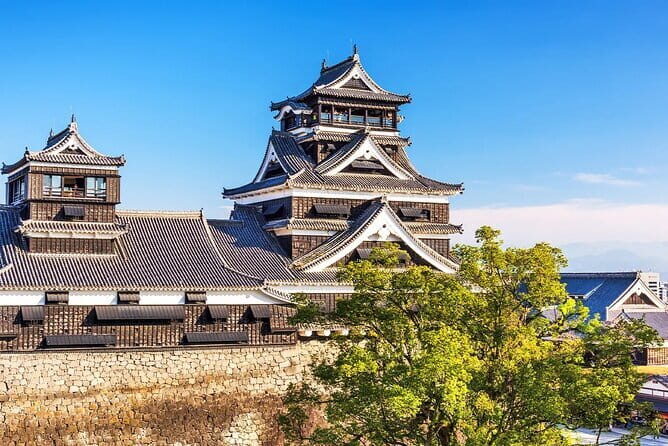
Kumamoto Castle is famous for its imposing stone walls and historic significance, and it’s one of the three big “must-see” castles in Japan. The castle’s look is dramatic: darker structures set against greenery, and in spring, cherry blossoms can make the whole scene feel extra cinematic.
The schedule gives you around 2 hours here, but real life can shorten that depending on weather and the day’s logistics. If it’s raining, you’ll spend more time watching your footing, and photos become harder. I’d treat the castle time as a “target window,” not a leisurely afternoon.
What you’ll like most if you’re here for the real vibe:
- You get to study the castle’s architecture and reconstructed towers rather than just snapping one quick view.
- The grounds help soften the fortress feel, especially when the season is right.
Quick tip: bring a small umbrella or a light rain jacket even if forecasts look friendly. Castle days can get soggy fast, and you don’t want to rush because your shoes are soaking.
Nakadake Crater: seeing an active volcano without the fantasy filter
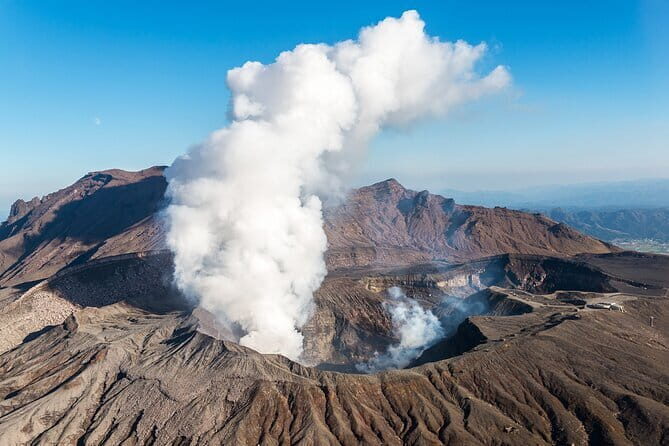
Mount Aso is massive, and Nakadake Crater is the star for a reason. At the first crater viewpoint, you can see volcanic activity—smoke and steam rising from the crater depths. On clear days, you may also catch an emerald-green crater lake.
This part is exciting because it’s not a museum model. You’re looking at one of Japan’s most active volcanic areas inside the Aso Caldera, with rugged terrain and volcanic rock fields that tell a story of past eruptions.
The practical side:
- Walking trails let you get closer to the crater rim.
- Access may be restricted depending on current volcanic activity.
That means you should plan mentally for “close-up” versus “from a safe area” variations. Sometimes weather and conditions decide your experience more than the schedule does.
Also note: this stop is marked as free for admission for the crater area. So even if your day is feeling busy, this is one of the moments where you’re getting a real sense of place without paying extra at the gate.
If you’re someone who cares about understanding what you’re seeing, pairing crater views with the nearby museum experience (more on that next) is a smart move—otherwise, you might leave knowing what it looks like but not why it’s shaped the way it is.
The Aso Volcano Museum: where the crater makes sense
Near the crater area, the Aso Volcano Museum is the best stop for making your volcano photos feel less random. It’s geared toward geology and the region’s volcanic history, and it also sets you up for the “why” behind the scenery.
Even if you’re not a science person, this helps you connect:
- the crater activity you saw outside
- with the broader caldera story and past eruptions
- and with what might happen next in a safely managed way
Because the itinerary time is tight, I’d use the museum strategically: pick a couple of key exhibits that match what you just saw, rather than trying to read everything. You’ll come out with context you can actually carry into the next stops.


Kusasenri and the horse option: open grasslands with real caldera views
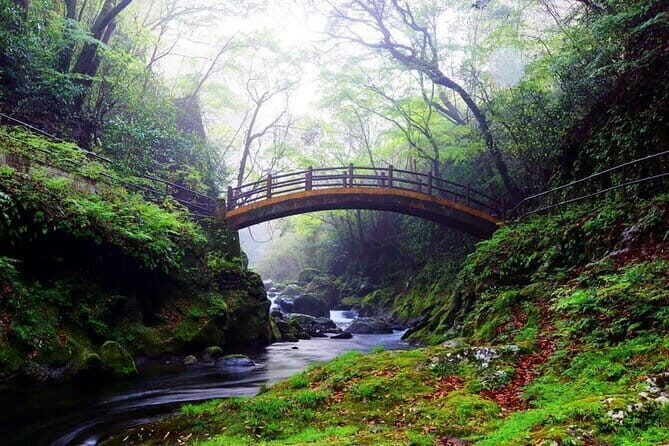
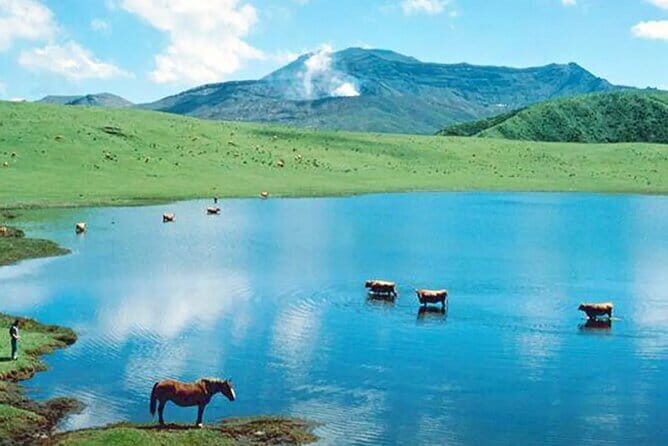
After the volcanic intensity, Kusasenri feels like a reset. This vast grassy plain sits on the northern slopes of Mount Aso, and it’s famous for rolling hills, small ponds, and panoramic caldera views. It’s also where you can watch cows and horses roam—quietly, like they own the place.
Kusasenri is marked as free admission, and the schedule gives about 1 hour. That’s usually enough time to:
- walk a loop along the grasslands
- take in distant crater views (when skies are clear)
- and, if the activity is running, enjoy horseback riding on the plains
The tour includes “instructor fees,” which strongly suggests horseback riding is part of what the operator plans for. Still, on-the-ground availability can depend on conditions. Keep an open mind, and if riding is offered during your slot, go for it—this is one of the most memorable contrasts in the whole day.
Why it’s worth it: you don’t just see Aso as rock and smoke. You see it as living terrain—where animals graze and your mind gets a chance to exhale.
Photo tip: the grass plains are very forgiving for pictures. Wide shots work, and so do close details like the texture of the fields and animals in motion.
Komezuka: the perfect 10-minute stop for symmetry lovers
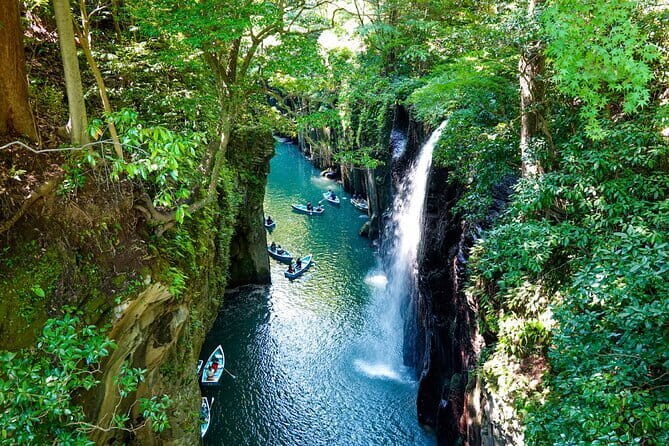
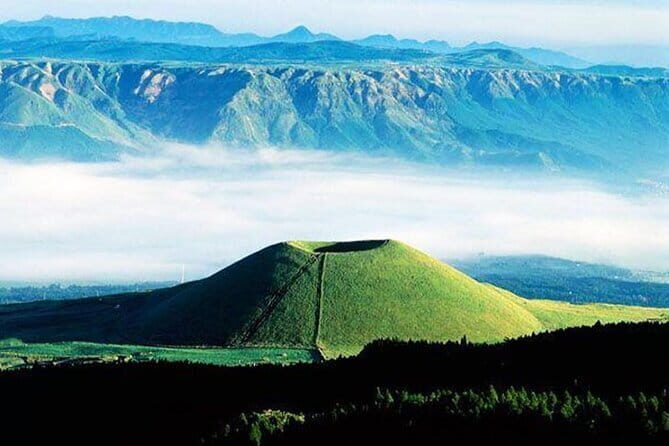
Komezuka is admired mostly while you drive through the Aso region. It’s known for a symmetrical cone shape rising about 80 meters, and in spring and summer it’s covered in lush grass.
Because it’s mostly a roadside view, manage expectations. Don’t plan to “tour” Komezuka. Treat it as a quick scenic breath: a visually calm shape against the harsher volcanic surroundings.
This is the kind of stop that makes the day feel varied. After crater steam and open plains, your eyes get a simpler shape to rest on, and it helps break up the long bus hours without demanding effort from you.
Aso Shrine (Line B): 2,000 years of agricultural faith
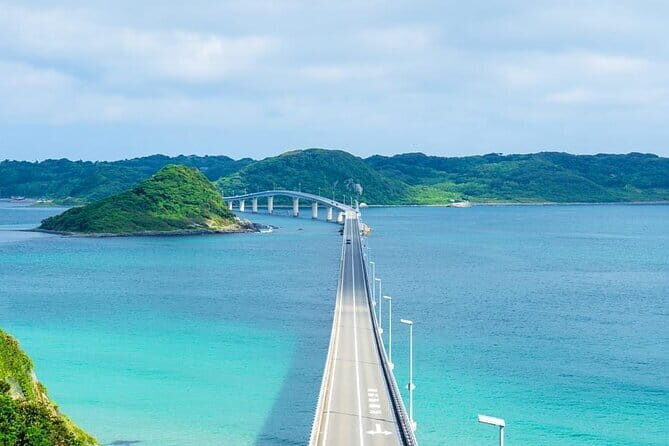
If your route includes it, Aso Shrine is a low-key, meaningful stop. It’s one of Japan’s oldest and revered Shinto shrines, with a history said to span over 2,000 years. The shrine is dedicated to the deity of agriculture, and that theme fits the region’s long relationship with farming and seasonal cycles.
On-site, you can see traditional structures, including a distinctive two-story Romon Gate listed as an Important Cultural Property.
This stop is not about speed or views from a lookout. It’s about atmosphere:
- quieter paths through the grounds
- the feeling of a living religious site
- learning how the Aso region understands nature through worship and tradition
If you’re choosing between “more photos” and “more meaning,” this is where I’d tilt toward meaning.
Aso Road Station and the practical food-and-photo pause
You also stop at Aso Road Station (also called a roadside rest area with shops). This is valuable even if you’re not food-shopping hard.
Why? It’s where you can reset during a long day with:
- panoramic views of the Aso Five Mountains
- local specialties like seasonal produce, handmade bento, and desserts
There’s also a bronze statue of Usopp from One Piece, which can be a fun detour if you’re a fan. Either way, this is a place to grab a snack you can rely on when the meal times are tight.
Practical move: pick up water and a small snack here if you tend to get hungry. Meals aren’t included on the tour, so you’ll want options that don’t depend on finding the “perfect” restaurant at the perfect time.
Kurokawa Onsen (Line B): how to make your hot-springs stop count
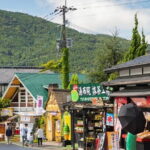
Kurokawa Onsen is the relaxing ending most people come for. It’s a hot-spring town with traditional ryokan, open-air bath culture, and retro streets lined with wooden buildings and small shops.
This is marked as Line B, and Kurokawa Onsen admission is not included, so you’ll likely need to pay for your specific bath option. Your best strategy is simple: when you arrive, decide quickly what you want—sit-and-shop mood versus bathing-and-recover mode.
How to get value from this part:
- If you’re carrying bus fatigue, prioritize soaking over wandering.
- If you’re energized, take 20–30 minutes to enjoy the street atmosphere and choose where you’ll eat.
Because the rest of the day is packed, this stop works best if you treat it as your decompression time, not just another photo stop.
Price and value: is $99.49 worth it?
At $99.49 per person, this tour can be a solid value if you want a day that’s already handled for you. What you’re paying for isn’t only the sights—it’s the full-day logistics.
Included in the price:
- a guide with live on-board commentary
- toll, parking, instructor, and fuel fees
What you’ll still likely spend extra on:
- Kumamoto Castle admission (not included)
- Kurokawa Onsen admission (not included)
- meals and beverages (not included)
So the financial math depends on whether you plan to do the paid parts you care about. If you’re the kind of traveler who skips paid gates anyway, the value might feel less impressive. If you’re happy to pay small admissions for big moments—castle, crater viewing, and hot-spring downtime—this price feels more reasonable.
Also, the tour duration is about 10 to 11 hours, including travel time. That’s a long block, but it’s also what makes it workable for people based in Fukuoka who don’t want to plan separate legs to Kumamoto and Aso.
Bottom line: I’d book this at $99.49 if your priorities match the route (and you confirm you’re on the line that includes what you want). If you’re only there for one highlight, you might find a tighter, cheaper option.
Timing, weather, and how to keep the day from stressing you out
Two factors can shape your experience more than anything else: weather and access rules.
- The tour requires good weather, and if it’s canceled due to poor conditions, you’ll be offered a different date or a full refund.
- Even when the tour runs, volcanic access around Nakadake can change depending on volcanic activity.
- Rain can also affect walking comfort and how much time you effectively spend at each site.
So here’s how I’d prepare:
- Pack a light rain layer and shoes that handle wet ground.
- Bring cash or card for meals and for any paid admissions (especially castle and onsen).
- Keep your expectations flexible at Nakadake—sometimes you’ll get a close rim walk, sometimes you’ll keep to a safer viewing area.
Finally, treat punctuality like a real part of the trip. If you arrive late, you might lose out on the scheduled flow, and refunds or changes aren’t issued in that scenario.
Who this tour suits best (and who might want something else)
This tour is a strong match if you:
- want a one-day overview of Kumamoto + Aso without hiring separate guides
- like the mix of history (castle, shrine) and dramatic nature (crater and grasslands)
- enjoy structured itineraries, including bus rides with commentary
You might want to consider a different plan if you:
- hate tight time slots at each stop
- have a strong need to linger in one place for hours
- are sensitive to walking in wet weather (because delays can shorten your time and make paths slick)
Group size is capped at 43, which is helpful. It should stay manageable, and you usually won’t feel lost or constantly waiting for strangers to find the next bathroom.
Should you book the Kumamoto Castle and Aso day trip from Fukuoka?
I’d recommend booking if you want an efficient Kyushu day that balances big-name sights with real-world nature—especially if Kusasenri’s open grasslands and the chance for horseback riding matter to you.
Book with confidence if:
- Kumamoto Castle or Aso Shrine (depending on your line) is on your must-see list
- you’re okay with short walks and photo stops
- you’ll treat Kurokawa Onsen as true recovery time at the end of the day
Skip this one (or look for a different format) if:
- your main goal is only the crater or only the onsen and you don’t want the rest of the day-long route
- you want long, slow exploration at a single site
If you’re flexible and prepared, this can be a memorable sampler day: fortress walls in the morning, volcanic drama at midday, peaceful grasslands before sunset, and hot-spring comfort to close it out.
FAQ
What time does the tour start?
The tour starts at 8:00 am.
How long is the tour?
The total time is about 10 to 11 hours, and it includes travel time.
Is there a mobile ticket?
Yes. The tour uses a mobile ticket.
Do I need to pay for admission at Kumamoto Castle and Kurokawa Onsen?
Yes. Kumamoto Castle admission is not included, and Kurokawa Onsen admission is not included. Nakadake crater viewing is listed as free.
Are meals included?
No. Meals and beverages are not included.
Where do I meet the tour?
You meet at LAWSON Oriental Hotel Fukuoka Store, 4-23 Hakataekichūōgai, Hakata Ward, Fukuoka 812-0012, Japan.
Is there child seating or can kids join?
The tour notes that child seats are not available.