REVIEW · KANAZAWA
Kanazawa 4hr Private Tour with Government Licensed Guide
Book on Viator →Operated by Japan Guide Agency · Bookable on Viator
Kanazawa makes more sense when you have a human map. This 4-hour private walking tour lets you choose your stops and get on-the-ground English guidance as you connect Edo-period landmarks to daily life. I like that it’s built for comfort and focus: you’re not stuck in a long bus-style loop, and you can shape the route around your interests.
The main thing to think about is pace and tickets: it’s mostly walking, and entrance fees aren’t included for most sights—so your final cost depends on which 2–3 places you pick.
In This Review
- The Key Wins You’ll Feel Right Away
- Why This 4-Hour Private Walking Tour Works in Kanazawa
- Start at Kenrokuen: the Garden That Teaches You How Kanazawa Sees Beauty
- D.T. Suzuki Museum: A Quiet Detour That Adds Meaning
- Myoryuji, the Ninja Temple (Myth vs. Reality)
- Higashi Chaya District: Teahouse Elegance Without the Tourist Stampede
- The 21st Century Museum: Modern Art Next to Classical Kanazawa
- Seisonkaku Villa: A Samurais’ Life Scene in a Compact Hour
- Nagamachi Samurai District: Where You Understand the Castle-Town Grid
- Omicho Market: Your Rest Stop That’s Also Part of the Story
- Kanazawa Castle: The Big Seat of Power (Even If It’s Not All Original)
- Nishi Chaya Museum Area and Oyama Shrine: Small Options, Big Context
- Picking Your 2–3 Stops Like a Pro (So You Don’t Overpay or Overwalk)
- How the Guide Actually Changes the Tour
- Practical Notes That Save You Stress on the Ground
- Is It Worth $122.23 Per Person?
- Should You Book This Kanazawa Private Walking Tour?
- FAQ
- How long is the Kanazawa private tour?
- Is this tour walking only?
- Can I choose which sites to visit?
- Are entrance fees included?
- Is pickup included?
- Is this a private tour?
- What language is the guide?
- What about transportation and getting between districts?
- Do I need to buy tickets in advance?
- Can I cancel for a refund?
The Key Wins You’ll Feel Right Away
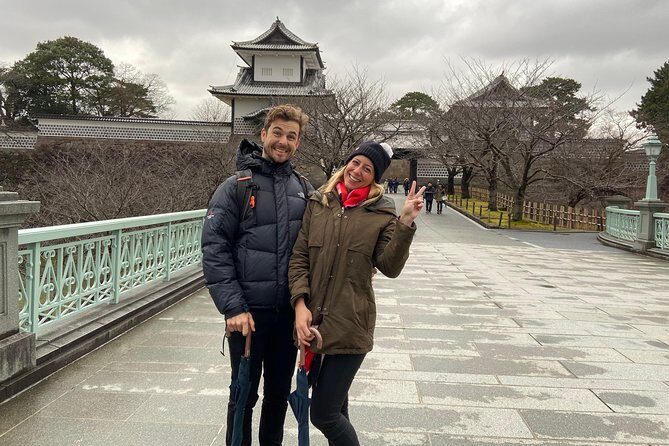
- Private means zero crowd-pressure: it’s just your group, so you can pause and ask questions.
- Pick 2–3 sites from a smart Kanazawa set: you get breadth without turning into a nonstop checklist.
- English commentary while walking: explanations land better when you’re standing where the story happened.
- A guide who can tailor the order: people specifically recommend guides like Yumi for customizing priorities.
- Some stops cost nothing: Higashi Chaya, Nagamachi, and Omicho Market can keep your day lighter on fees.
Why This 4-Hour Private Walking Tour Works in Kanazawa
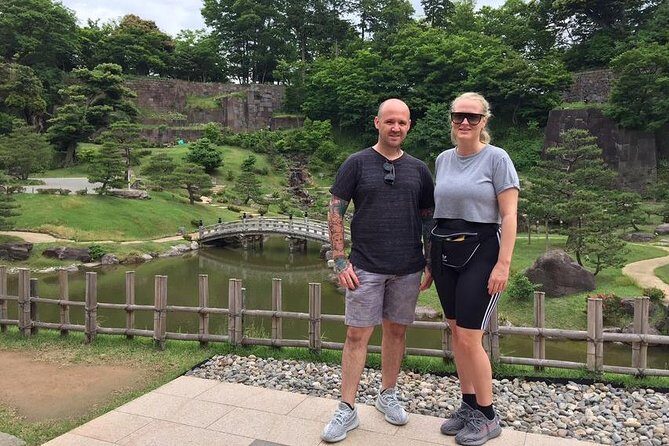
Kanazawa can feel like a “choose-your-own adventure,” but the city also has layers. Gardens, samurai neighborhoods, teahouse districts, and modern museums sit close enough that you can cover a lot—if you know where to place your time.
This tour is built around that reality. You get a government-licensed local English guide, and you design your own route by choosing 2–3 stops from the list. In a place like Kanazawa, that makes a big difference because each area has its own logic—where you stand changes what you notice.
It also helps that the day is short enough to stay pleasant. At about 4 hours, you can see several major highlights without spending your whole day hopping between districts. And because it’s private, you can move at a human speed instead of trying to match a group’s pace.
You can also read our reviews of more guided tours in Kanazawa



Start at Kenrokuen: the Garden That Teaches You How Kanazawa Sees Beauty
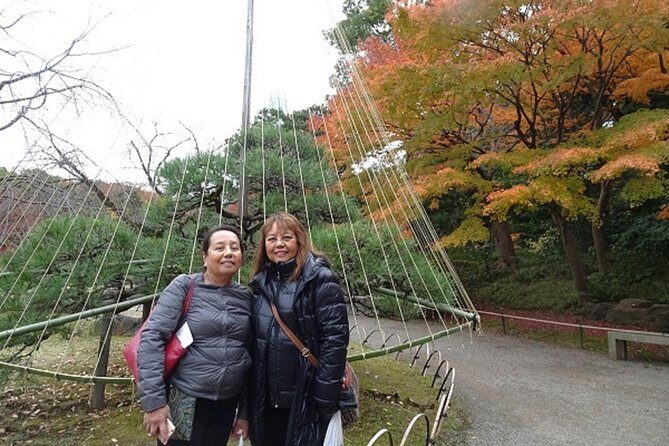
Kenrokuen is famous for a reason, but the trick is understanding what you’re actually looking at. A good guide helps you read the pond layout, the stone and bridge choices, and the way seasonal views are designed to work like a sequence.
Plan for this stop to set the tone. It’s one of those places where you’ll want a few slow minutes to look closely—especially if you’re the type who notices details instead of just taking photos. Expect roughly an hour here, though your guide may guide your timing based on what you pick next.
Watch your entrance fee math. Kenrokuen admission isn’t included, so if you want to keep costs down, you may want to pair it with free stops like the samurai district or market. If you love classic gardens, this is usually the best “paid” pick.
D.T. Suzuki Museum: A Quiet Detour That Adds Meaning
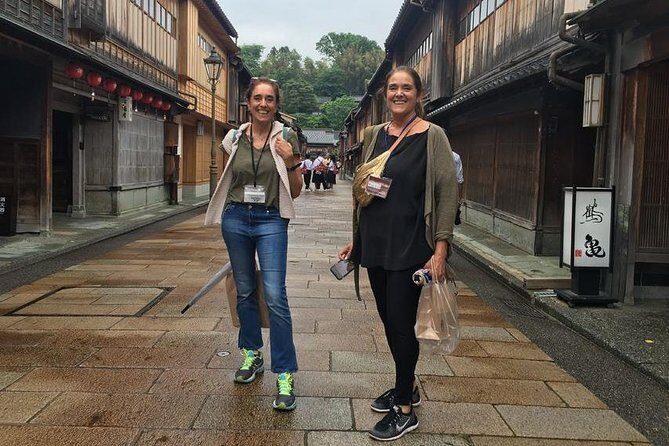
If you want more than scenery, the D.T. Suzuki Museum is a solid contrast stop. It’s dedicated to Suzuki Daisetz Teitaro, a Buddhist philosopher, and it tends to work best when you’re interested in ideas behind Japanese culture.
This isn’t a huge museum moment on the schedule—about an hour—and it won’t replace time outdoors. But it can give you a different lens for everything else you’ll see that day, especially if you’re curious how philosophy and everyday life connect in Japan.
If you’re short on energy or you’re traveling with people who want only outdoors, you might swap it out. But for many visitors, it’s the stop that turns a sightseeing day into a more thoughtful one.
Myoryuji, the Ninja Temple (Myth vs. Reality)
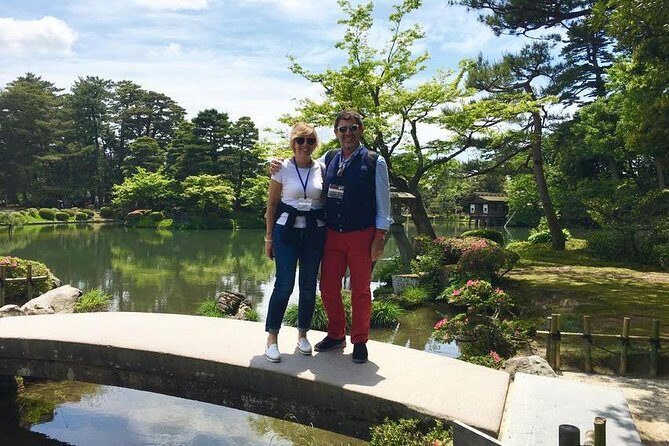
Myoryuji is commonly called Ninja Temple, but the key point is that it’s not “ninja training.” What makes it fascinating is how the story became attached to the site and what the temple’s layout and history suggest about the Maeda era.
It’s a great stop for people who enjoy legends, but also for anyone who likes separating marketing stories from real history. Your guide can help you understand what’s going on in a way that doesn’t ruin the fun.
One practical note: temples often have different rules for shoes, photos, and quiet areas. If you’re the kind of traveler who hates being rushed, this is usually manageable because the tour is private and paced around you.
Higashi Chaya District: Teahouse Elegance Without the Tourist Stampede
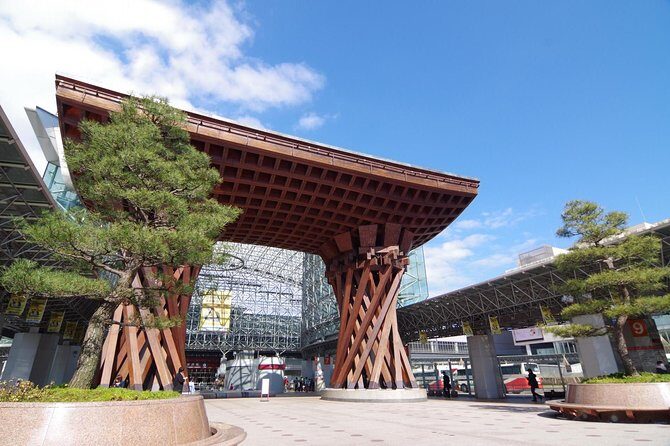
The Higashi Chaya District is one of the best “walk-and-look” sections in the city. The chaya (teahouses) were entertainment venues in Edo times, and today the district gives you that old-world atmosphere—without requiring you to be a specialist in historical culture.
The best value here is that the stop is free. You get the vibe and the architectural cues, and your guide can explain what a chaya functioned like back then (and how the district’s role changed over time).
Even if you’re not planning a formal geisha-related experience, you’ll learn to notice the details. Look at the streetscape, the way buildings face inward, and the subtle layout that supports privacy. With a guide, it’s not just pretty—it becomes readable.
You can also read our reviews of more private tours in Kanazawa



The 21st Century Museum: Modern Art Next to Classical Kanazawa
The 21st Century Museum of Contemporary Art is a different kind of Kanazawa stop. It’s about modern creative thinking in a city famous for tradition, so it can refresh your brain halfway through the walk.
This stop is about an hour, and admission isn’t included. If you’re art-museum-inclined, you’ll like the change of pace. If you’re more into gardens and neighborhoods, it can still work as a reset—just don’t expect it to explain the Edo period the way the castle and samurai district do.
Also, contemporary museums can have areas that move slowly (lines, timed entries, or busy rooms). With a private setup, you’re less likely to get stuck waiting with a crowd, but you still may want to keep your energy for the later stops.
Seisonkaku Villa: A Samurais’ Life Scene in a Compact Hour

Seisonkaku Villa (Seisonkaku) is elegant and smaller than a big museum, which makes it easy to absorb on a half-day schedule. It was built in the final years of the Edo period by a Maeda lord for his mother, so it comes with built-in family and status context.
This is a good pick if you like the “how people lived” side of history. A villa also tends to show you landscape design and sightlines in a practical way—how architecture frames views and how spaces support gatherings.
Entrance isn’t included, so this is another cost item. If you choose Seisonkaku, consider balancing it with free stops like Nagamachi or Omicho to keep the day from getting too expensive.
Nagamachi Samurai District: Where You Understand the Castle-Town Grid
Nagamachi is one of the most satisfying “walkable history” areas on the route. You’re moving through what used to be samurai housing near Kanazawa Castle, and the district layout helps you understand how the city was organized.
The best value: the stop is free. That makes it easy to justify spending your money on a garden or museum and still get real context. With a guide, you’ll likely learn why certain home styles, street patterns, and neighborhood boundaries mattered.
People also tend to love this district because it feels human. You’re not just looking at buildings; you’re seeing a neighborhood that explains the social structure behind the pretty stuff.
Omicho Market: Your Rest Stop That’s Also Part of the Story
Omicho Market is one of those places where you can pause without losing momentum. It’s a fresh food market that has existed since the Edo period, and today it’s a busy network of shops under covered streets.
The market stop is free, and it’s a practical moment in a walking tour. You can use it to regroup, grab a snack, or just watch how locals and visitors move through the same lanes.
If you hate planning lunch too early, this is useful. Just know that lunch is not included, so you’ll pay as you choose. It’s one of the easier places to find something fast after museums and gardens.
Kanazawa Castle: The Big Seat of Power (Even If It’s Not All Original)
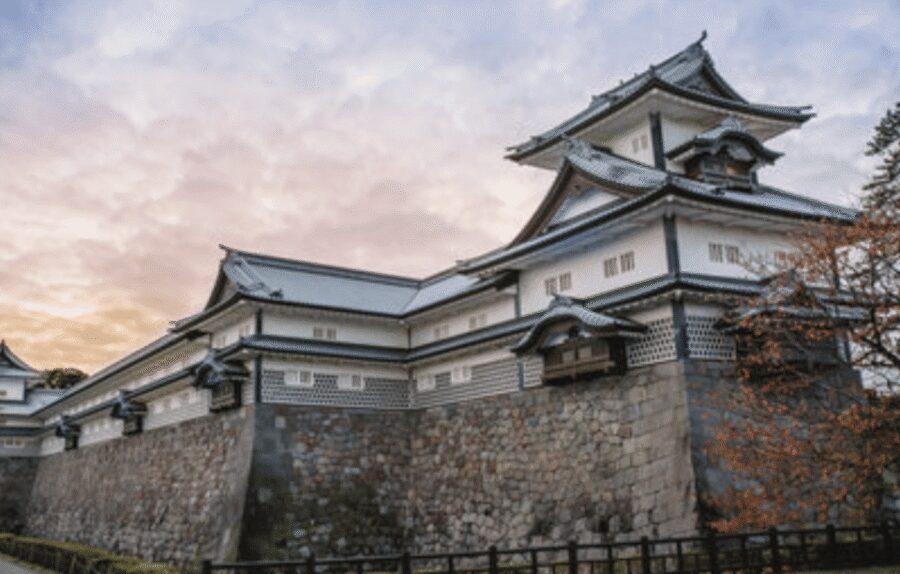
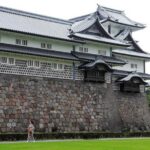
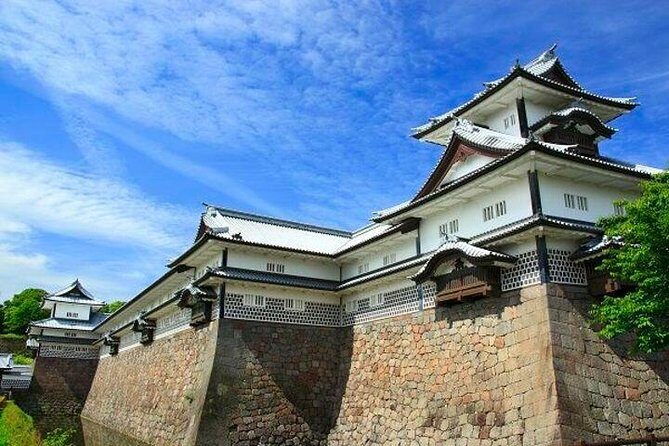
Kanazawa Castle is a must for most first-timers. Even if you don’t expect to see every original structure, the site explains the Maeda clan’s power and why Kanazawa mattered in feudal Japan.
This stop can also work well near the end of your tour. After walking through samurai housing and teahouse districts, you’ll be able to connect the dots between social roles and where power lived.
Admission isn’t included, so if castle tickets are a factor for your budget, you might choose either Kenrokuen or the castle as your main “paid big hitter.” For many people, though, the castle is worth it because it anchors everything else you saw.
Nishi Chaya Museum Area and Oyama Shrine: Small Options, Big Context
The tour list also includes the Kanazawa City Nishi Chaya Museum area and Oyama Shrine. These can be great add-ons if you want more teahouse district context and more Maeda-era religious grounding.
Both have admission that may or may not be included depending on how the stop is treated, and the schedule suggests about an hour for each. Since you only choose 2–3 sites, these are best if your top priorities are very specific—like geisha-related districts or shrine culture.
If you’re unsure, I’d pick only one of these “secondary context” stops and use the remaining slot for Kenrokuen, Nagamachi, or the castle. That way, you’re not spending your limited time on places you weren’t already leaning toward.
Picking Your 2–3 Stops Like a Pro (So You Don’t Overpay or Overwalk)
Because the tour lets you choose 2–3 sites, the value depends on your selection. Here are a few smart ways to build a day that feels balanced.
Garden + Samurai + Market
Kenrokuen + Nagamachi + Omicho is a classic first-day recipe. It mixes beauty, daily-life history, and a natural break.
Philosophy + Teahouse District
If you prefer depth over scenery, try D.T. Suzuki Museum + Higashi Chaya District. You’ll learn ideas and then see how cultural spaces shaped social life.
Castle + Villa + Castle-Town Neighborhood
Seisonkaku + Kanazawa Castle + Nagamachi is a good combo if you like power and living spaces. You’ll get how the Maeda world worked, not just where it sat.
One more budget reality: entrance fees aren’t included for many stops. So if you want to keep costs tight, pair one paid site (Kenrokuen, museum, castle, villa) with one or two free stops (Higashi Chaya District, Nagamachi, Omicho Market).
How the Guide Actually Changes the Tour
The biggest advantage here isn’t the route—it’s the interpretation. Guides turn a collection of landmarks into a connected story.
In particular, guides are repeatedly praised for custom route planning and clear English explanation. Many people recommend requesting Yumi if you want high adaptability, and you’ll also see strong mentions of guides like Yoshi, Yumiko, Sachi, Hiroko Nakia, Fumie, Akira, and Yuki for different strengths, like architecture-focused context or smooth pacing.
You can use that as a planning tip. If your interest is architecture and how spaces work, lean toward a guide who has been praised for architecture and structure explanations. If you want a route built around your must-sees, prioritize the guides known for customization.
Also, a private setup matters when you need time for questions. You’re not rushing because the group behind you is waiting.
Practical Notes That Save You Stress on the Ground
This is a walking tour. The pickup is described as offered, but pickup is on foot—so you should plan to meet within a designated area rather than expecting a vehicle pick-up.
Transportation fees aren’t included, so if your chosen stops are spread out, expect to use local transit at your own expense (or keep your picks close together). The tour is also not designed to combine multiple groups, so your schedule will stay focused on your own party.
Weather matters too. Kanazawa can be chilly, especially earlier in the year. If it’s rainy, you’ll want to bring a simple rain layer and comfortable shoes that won’t hate wet sidewalks.
Is It Worth $122.23 Per Person?
At $122.23 per person for about 4 hours, you’re paying for three things: a private government-licensed English guide, flexibility in choosing the 2–3 sites, and interpretation that’s hard to replicate with a self-guided app.
If you pick two paid highlights—like Kenrokuen plus the castle or a museum—you’ll pay some entrance fees on top. But the “value” often comes from not wasting time figuring out what’s actually important. Kanazawa’s attractions reward context, and a guide can help you notice what you’d miss on your own.
For couples, this can be a strong value if you’d otherwise join a crowd tour and spend energy negotiating where to go. For solo travelers, it can be pricey, but it’s often worth it if you truly care about understanding the city’s Edo-era logic rather than just checking boxes.
Should You Book This Kanazawa Private Walking Tour?
Book it if you want a half-day that feels organized, flexible, and easy to understand. You’ll get the Kanazawa experience in a way that doesn’t force you into a rigid loop, and you can shape the day around what you actually care about—gardens, samurai neighborhoods, teahouse districts, museums, or a mix.
Skip it or adjust your plan if you dislike walking for several hours or if you know you only want one or two sites. Since entrance fees aren’t included for many stops, you’ll get the best value by choosing a combination that includes at least one free area (like Higashi Chaya, Nagamachi, or Omicho) plus one paid anchor attraction.
If you book, do yourself a favor: choose your 2–3 stops first, then ask the guide to prioritize them in a sensible order. With guides like Yumi (often recommended for customization), you’ll likely end up with a day that feels tailored, not templated.
FAQ
How long is the Kanazawa private tour?
It’s about 4 hours.
Is this tour walking only?
Yes. It’s a walking tour, and you meet the guide on foot within a designated area.
Can I choose which sites to visit?
Yes. You can customize the tour by choosing 2–3 sites from the provided list.
Are entrance fees included?
No. Entrance fees are not included for many sights, and the tour also lists some stops as free.
Is pickup included?
Pickup is offered, but the tour notes that pickup is on foot and you meet within a designated area.
Is this a private tour?
Yes. It’s private, meaning only your group participates.
What language is the guide?
The tour includes a licensed local English-speaking guide.
What about transportation and getting between districts?
Transportation fees aren’t included. You may need to use buses or other local options depending on the stops you pick.
Do I need to buy tickets in advance?
The tour includes a mobile ticket, but admission tickets for specific attractions are not included.
Can I cancel for a refund?
Yes. Free cancellation is available if you cancel at least 24 hours before the experience start time.