REVIEW · KANAZAWA
Kanazawa Ninja Temple Half Day E-bike tour
Book on GetYourGuide →Operated by Beyond Kanazawa Tours · Bookable on GetYourGuide
Two wheels, real stories, and minimal walking. This Kanazawa Ninja Temple half-day e-bike tour makes it easy to cover the samurai quarter atmosphere, Kanazawa Castle, and the famous Myōryūji Ninja Temple without feeling like you’re sprinting through sights. I especially like how the ride takes you along backstreets and scenic spots, and how the guide ties sites to the Maeda clan and local life in a way that’s easy to remember. One consideration: the tour is weather-dependent, so pack for rain and expect possible adjustments if conditions are rough.
What surprised me most is how much you get from a 4-hour format when the city is on mostly flat ground and you’re on an e-bike. You’ll start with orientation near Kanazawa Station, stop for a tea-and-dessert break at Gyokusen-an, and then keep rolling through the preserved old-city feel of the Nagamachi samurai district. The small group size (up to 8) also helps, because you can hear your guide and still move at a comfortable pace.
The experience is run by Beyond Kanazawa Tours, with an English live guide and multilingual audio support. In at least some departures, I’ve heard the guide named Ti leading the afternoon—he’s the type who can adjust the pace when someone has mobility needs. Just note that it isn’t set up for everyone: it’s not suitable for people under 145 cm, and it has an upper age limit of 80.
In This Review
- Key takeaways before you book
- Why Kanazawa feels made for an e-bike tour
- Meeting at Kanazawa Station: quick start, easy handoff
- The backstreet ride that turns into a history lesson
- Gyokusen-an break: tea, dessert, and a soft landing
- Nagamachi samurai district: seeing Edo-era atmosphere up close
- Kanazawa Castle: Maeda stories you can picture
- Kenrokuen area time: the calm counterpoint
- Myōryūji Ninja Temple: trapdoors, hidden steps, secret routes
- After the guide: keeping the e-bike for your own detours
- Price and value: what $132 buys you in real life
- Who this tour suits best (and who should skip it)
- What to bring: rain gear is the big one
- Should you book the Kanazawa Ninja Temple half-day e-bike tour?
- FAQ
- Where does the tour meet?
- How long is the tour?
- Is an e-bike included?
- What languages are available?
- What’s included in the ticket price?
- What should I bring and what’s not allowed?
- Is the tour guaranteed to run every day?
Key takeaways before you book
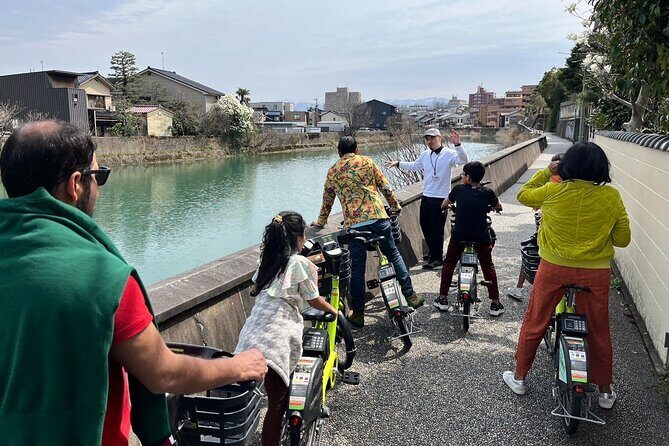
- E-bike pacing: You’ll see more of Kanazawa in less time, with less effort than walking or constant taxi hops.
- Samurai district atmosphere: The ride is timed to let you actually feel the preserved Edo-era vibe of Nagamachi.
- Gyokusen-an stop: Tea, dessert, and snacks are built in, so you’re not stuck hunting for food mid-tour.
- Myōryūji visit with support materials: You’ll get the multilingual materials you need to follow the ninja features.
- Free e-bike time after the guided portion: You can revisit places you liked or detour on your own.
- Small group feel: Limited to 8 participants, which keeps the whole thing calm and easy to follow.
Why Kanazawa feels made for an e-bike tour
Kanazawa has a way of rewarding slow curiosity, but it’s still a city with distances between highlights. This tour solves that tension. You get guided context at the big historic stops, and you get the freedom to connect them with short rides through neighborhoods that most visitors don’t see by accident.
The e-bikes matter here. They don’t just mean comfort—they change the rhythm of sightseeing. You can pause when something catches your eye, then roll to the next point without turning the day into a leg workout. And since Kanazawa is described as relatively flat, the e-bike helps you spend your energy on looking and learning, not grinding up hills.
You also get “scenic + practical” routing. The tour includes stretches of passing scenic viewpoints and hidden backstreets—exactly the kind of route that makes a half-day feel like a full afternoon.
You can also read our reviews of more cycling tours in Kanazawa
Meeting at Kanazawa Station: quick start, easy handoff
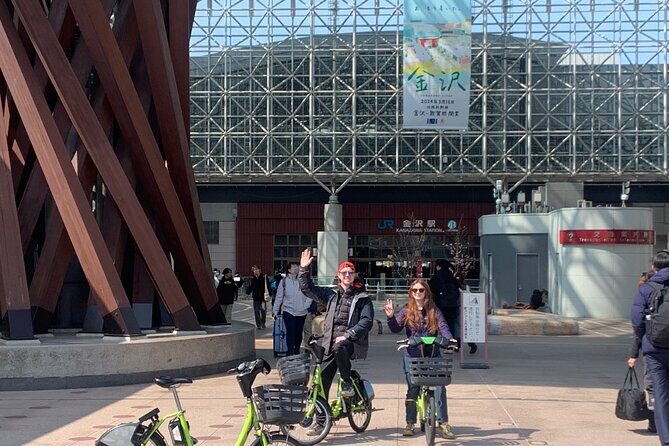
Your guide meets you at the front of McDonald’s at Kanazawa Station, holding a sign for Beyond Kanazawa E-bike Tour. This kind of meeting point is handy because it’s hard to get lost once you’re at the station. If you’re arriving from another part of Japan that day, you’ll likely find it straightforward to locate.
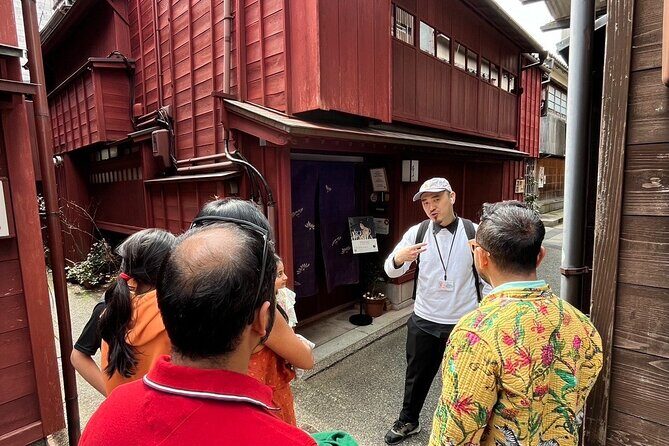
At the first stop by the station area, there’s a photo moment plus a short guided introduction. You’ll get oriented to how the ride works—timing, where you’ll be going, and how to manage the e-bike smoothly in a group setting. That early “get your bearings fast” stage is important, because it helps the rest of the tour feel relaxed instead of chaotic.
The backstreet ride that turns into a history lesson
A huge part of the value is how the tour uses movement as part of the storytelling. Instead of just bouncing from one attraction gate to another, you’re guided through the samurai district context with short rides between points.
This matters because Kanazawa’s key neighborhoods aren’t always obvious at first glance. By traveling along hidden backstreets and scenic stretches, you get a better sense of how the city’s old structures connect to daily life. It’s the difference between seeing buildings and understanding the neighborhood layout.
Also, the group stays small. With up to 8 participants, you can hear the guide’s explanations without straining. And if you’re someone who likes to ask one or two practical questions—like how to read what you’re looking at—this format gives you that chance.
Gyokusen-an break: tea, dessert, and a soft landing
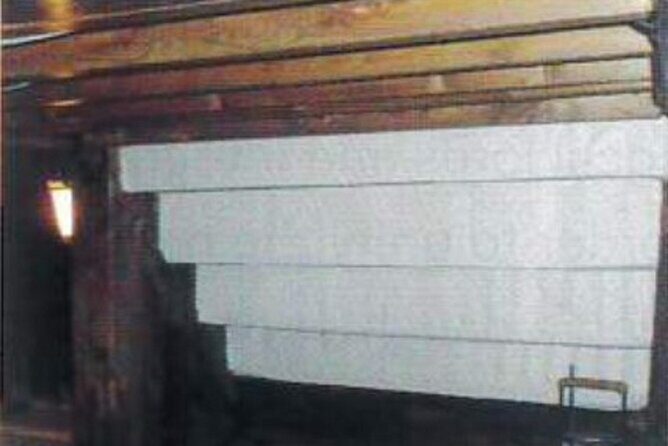
One of the most pleasant moments is the stop at Gyokusen-an, where the tour builds in a break rather than keeping you rolling nonstop. You’ll have time for photos and a visit, plus tea and dessert along with traditional snacks and matcha.
This isn’t just “a break.” It’s a way to reset your energy so the afternoon doesn’t become a blur. E-bike days can feel slightly like you’re in motion the whole time, so having a stationary stop improves the mental pacing. You’ll have a moment to sit, drink matcha, and enjoy dessert before you head into the heavier historic sites.
If you’re concerned about timing, this stop helps. It breaks the tour into chunks you can digest—ride, learn, snack, then continue—rather than forcing you to stay focused through the entire 4-hour stretch.
Nagamachi samurai district: seeing Edo-era atmosphere up close
A standout theme of this tour is the preserved Nagamachi Samurai District atmosphere. You’re not just told it exists—you’re taken through parts of the neighborhood that keep the Edo-era feel.
What I like about this approach is that the district becomes more than a checklist stop. When you move slowly enough to absorb details, you start noticing things you’d miss in a quick walk from one viewpoint to another. The tour’s e-bike routing helps you reach the right sections without wasting time backtracking.
Even if you’re not a deep-history person, the guide’s city context makes it easier to connect names and places to what you see. That turns Nagamachi into a lived environment rather than a theme park version of the past.




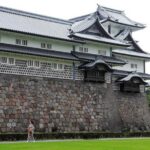
Kanazawa Castle: Maeda stories you can picture
Next you’ll visit Kanazawa Castle for around 30 minutes of sightseeing. This is a good length for a half-day tour: long enough to take in major parts of the site and hear the key context, but short enough that it doesn’t drag.
Castle visits can go one of two ways—either you’re just walking around, or you’re getting meaning behind what you’re viewing. In this tour format, the guide helps you connect the castle to the power of the Maeda clan. When you know what role a place played, the geometry of the grounds makes more sense, and the views feel more intentional.
One practical note: castles attract lots of photos. If you’re someone who likes to linger for golden-hour light, you’ll have to balance that with the group’s pace. Still, 30 minutes is enough to do the essentials without feeling rushed.
Kenrokuen area time: the calm counterpoint
There’s also an additional sightseeing stretch of about 25 minutes between the castle and the final temple stop. In practice, this portion often includes Kenrokuen, and you may have time to walk through the gardens and enjoy seasonal scenery. One review specifically called out autumn foliage, which is exactly the kind of moment that makes a guide-led afternoon feel worthwhile.
This segment works as a calm counterpoint. After history-heavy stops like the castle and the samurai district, Kenrokuen-style walking gives your brain a breather. It also helps you photograph Kanazawa in a way you can’t easily replicate from only a few major viewpoints.
If the weather is good, it’s a great time to slow down and look. If it’s gray and rainy, you’ll still get the benefits of the guided pacing, but expect less time for lingering.
Myōryūji Ninja Temple: trapdoors, hidden steps, secret routes
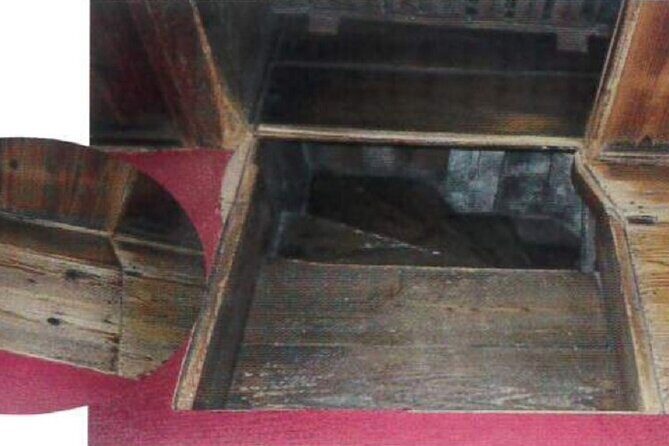
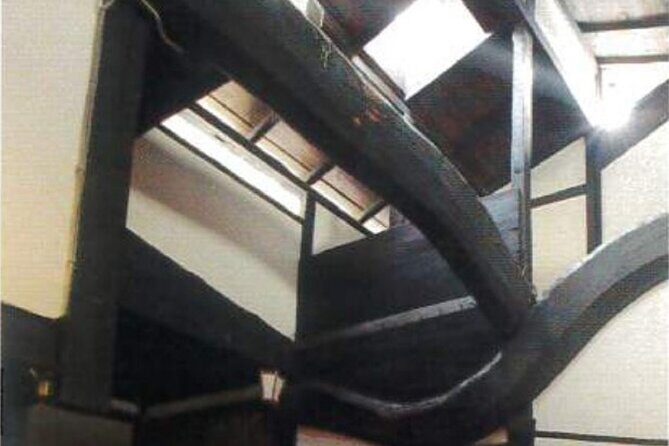
The final highlight is Myōryūji (Ninja Temple) with a guided visit lasting about 1 hour. This is where the tour becomes genuinely memorable. You’re not just hearing the ninja theme as a fun label—you’re guided through the features that make the temple famous.
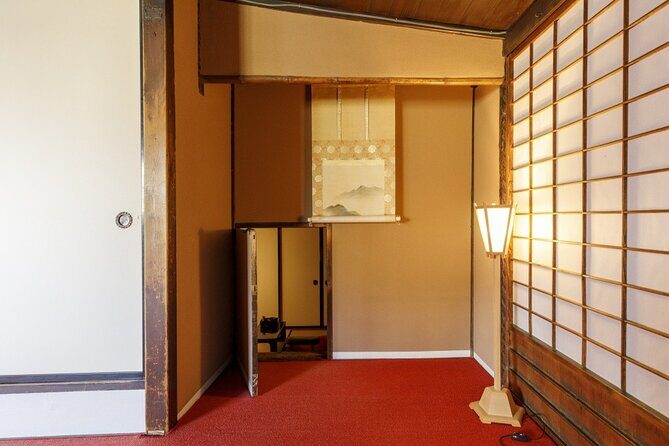
Myōryūji is known for elements like trapdoors, hidden staircases, and secret passages. You’ll follow along with provided multilingual booklets, which makes a big difference. Ninja lore can be easy to gloss over if you can’t read the explanations. With the materials in hand, you can actually map the features to what you’re seeing in front of you.
For me, the best part of a guided ninja stop is the structure: you’re shown what matters, then you get time to connect it to the space. That’s more satisfying than reading a short description on a sign and moving on.
English is handled by the live guide, and there’s also an audio option in multiple languages. That combination helps if you have mixed language preferences in your group or you want reinforcement while walking through key spots.
After the guide: keeping the e-bike for your own detours
One of the most practical perks is that after the guided portion, you get the freedom to keep the e-bike for the rest of the day. That’s a real value add. It means the tour isn’t trapping you into a tight schedule where you can’t revisit what you loved.
In plain terms, you can:
- go back to take a better photo,
- revisit a neighborhood you liked during the guided ride,
- or make a spontaneous detour if you notice something you want to see more closely.
When you do this right, your day feels tailored to you instead of to the tour’s “best-of” script. And you’re not waiting on constant transport either—you’re riding, so you stay flexible until it’s time to return the bike to the designated port.
Price and value: what $132 buys you in real life
At $132 per person for about 4 hours, the headline cost isn’t the whole story. The value comes from what’s included: the electric bicycle rental, local guide, entrance fees, Ninja Temple entry ticket, plus traditional Japanese snacks and matcha.
Many walking tours cost less, but they often don’t include bike transport or entrance fees bundled into the price. Here, you’re paying for a smoother flow between sights and for access where fees apply. For a half-day, that can be a strong deal—especially if you plan to see multiple “paid entry” attractions in one afternoon.
Also, the small group size means you’re paying for a more personal experience, not just a mass departure. If you like the idea of a structured tour plus time to wander afterward, the package makes sense.
Who this tour suits best (and who should skip it)
This tour is a great match if you:
- want Kanazawa highlights without turning the day into a long walk,
- enjoy history context, but don’t want to spend hours reading on your own,
- like the freedom of getting a bike you can use later the same day,
- and prefer a small-group format with time to ask questions.
It might not be ideal if:
- you need a totally step-free setup (the tour is not described that way, and it’s weather-dependent),
- you’re not comfortable riding an e-bike in a group,
- or you fall outside the stated height and age range (under 145 cm or over 80).
If you’re traveling with mobility considerations, I’d still consider it carefully—but the ride can be manageable thanks to e-assist and a guide who can help adjust the pace. One guide-led experience I’ve heard about specifically tailored timing to help manage mobility needs, which is a good sign.
What to bring: rain gear is the big one
Bring rain gear. Because the tour is weather-dependent, being prepared helps you keep momentum instead of cutting the day short.
A simple packing approach wins:
- rain jacket or poncho that won’t tear in motion,
- comfortable shoes you can walk in if you park the bike for short stretches,
- and any layer you need for cooler weather.
Also, alcohol and drugs aren’t allowed on the tour, so plan your day around that.
Should you book the Kanazawa Ninja Temple half-day e-bike tour?
Book it if you want a smart way to see Kanazawa’s standout neighborhoods—samurai district atmosphere, Kanazawa Castle, and Myōryūji—without burning hours on transport or over-walking. I especially recommend it if you like guided context but still want control afterward. The free e-bike time turns a half-day tour into a flexible afternoon, which is rare.
Skip it if weather is unpredictable for your dates and you’d hate the chance of cycling being adjusted or canceled. Also, if you’re not confident riding in a group or you’re outside the height and age guidelines, look for a different style of tour.
If you do book, you’ll get a well-paced mix of motion and meaning—plus matcha breaks and a one-hour stop at a temple where ninja features are explained in a way you can follow. That combination is exactly why this tour earns repeat interest.
FAQ
Where does the tour meet?
Meet your guide out front of McDonald’s at Kanazawa Station. The guide will be holding a sign that says Beyond Kanazawa E-bike Tour.
How long is the tour?
The tour duration is 4 hours.
Is an e-bike included?
Yes. Electric bicycle rental is included.
What languages are available?
The live tour guide is English. Audio guide materials are included in Chinese, English, Italian, and Spanish. Multilingual booklets are also provided for the Ninja Temple visit.
What’s included in the ticket price?
Included are the electric bicycle rental, local guide, entrance fees, Ninja temple entry ticket, and traditional Japanese snacks and matcha.
What should I bring and what’s not allowed?
Bring rain gear. Alcohol and drugs are not allowed.
Is the tour guaranteed to run every day?
The cycling portion is weather-dependent. For safety reasons, the tour may be canceled due to rain, snow, strong winds, or unsafe road conditions.