REVIEW · FUKUOKA
Kyushu Tour From Fukuoka: Itoshima Nature & Coastal Scenery
Book on GetYourGuide →Operated by Lucky Day Travel · Bookable on GetYourGuide
Mist, temples, and ocean views in one smooth day. This Itoshima trip makes it easy to cover a lot of ground without stressing over trains or parking, and I really like how it strings together nature plus culture: Shiraito Falls with its cool mist, then Sennyoji Temple to see the giant Thousand-Armed Kannon.
I also love the photo-driven coastal stops that still feel local, like the coconut swing over the sea and the sacred couple stones tied with a thick rope. The only drawback to plan for is time pressure: the schedule is built around quick visits at each stop, so Fukuoka Tower can feel like less time for the coast if you’re mainly there for beachy viewpoints.
In This Review
- Key moments worth aiming for
- Getting From Fukuoka to Itoshima: 10 Hours, One Easy Ride
- Shiraito Falls: Cool Mist, Then a Peaceful Forest Walk
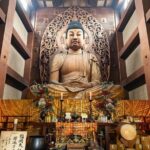
- Sennyoji Temple (Raizansennyoji Taihioin): The 4.8-Meter Thousand-Armed Kannon
- Coconut Tree Swing and Keya no Oto Park: Ocean Views With a Clear Photo Setup
- Coconut Tree Swing
- Keya no Oto Park
- Sakurai Futamigaura’s Couple Stones: Wedded Rocks, Rope, and a White Torii on Sand
- Totoro Forest Trail: A Shaded Walk Under Tall Trees
- Fukuoka Tower: 123-Meter Bay Views to Finish Strong
- Price and Logistics: Why $67 Works for a Packed Route
- Tips to Have a Smoother Day (and Better Photos)
- Who This Tour Fits Best
- Should You Book Itoshima Nature & Coastal Scenery From Fukuoka?
- FAQ
- What time does the tour start and where do I meet?
- How long is the tour?
- Is food included?
- Are tickets to Sennyoji Temple included?
- Are tickets to Fukuoka Tower included?
- What languages are available for the guide?
- Is the tour mostly walking or mostly sightseeing from a bus?
Key moments worth aiming for
- Shiraito Falls: misty hillside air and a short forest walk that resets your brain
- Sennyoji Temple (Raizansennyoji Taihioin): a 4.8-meter Thousand-Armed Kannon plus hundreds of stone Rakan
- Coconut Tree Swing: an easy, romantic photo setup with real ocean breeze
- Sakurai Futamigaura couple stones: husband-and-wife rocks, tied with a giant rope, framed by a white torii on sand
- Totoro Forest Trail: shaded tall trees and filtered light for calm strolling photos
- Fukuoka Tower views: the bay, city, and mountains all in one late-day sweep
Getting From Fukuoka to Itoshima: 10 Hours, One Easy Ride
This is a shared day tour from the Fukuoka area, starting at 4-23 Hakataekichūōgai near Hakata Station. You check in at 8:45AM and the group departs at 9:00AM on time. The round-trip is built to fit a full day (listed as about 10 hours), with a professional driver handling the road so you can focus on photos, walking, and listening.
You’ll ride by bus/coach for about an hour before the first stop, which matters because Itoshima sits just west of Fukuoka City and the best scenery is spread out. For $67 per person, the value is mostly in logistics: guiding, transport, and a packed route that hits major viewpoints without you paying for taxis back and forth all day.
Group tours mean you move at a set pace. That’s good for getting a lot done. It’s not ideal if you want long, slow hangs at one beach.
You can also read our reviews of more tours and experiences in Fukuoka.


Shiraito Falls: Cool Mist, Then a Peaceful Forest Walk
The day starts with Shiraito Falls, with a guided sightseeing segment around 30 minutes. The highlight here is sensory: you’re supposed to feel the cool mist and hear the cascade as you make your way through the area.
What I like about Shiraito Falls on a route like this is that it acts like a palate cleanser. You arrive from the city, then within minutes you’re in cooler air, surrounded by trees. Even with a short visit, you get the feeling of stepping away from crowds.
Practical tip: wear comfortable shoes. You’ll be walking, and damp surfaces can make steps a little slick. If the weather is misty or rainy, dress for it. You’ll likely appreciate the camera time more than you think, because the falls area is designed for close-up views.
Sennyoji Temple (Raizansennyoji Taihioin): The 4.8-Meter Thousand-Armed Kannon
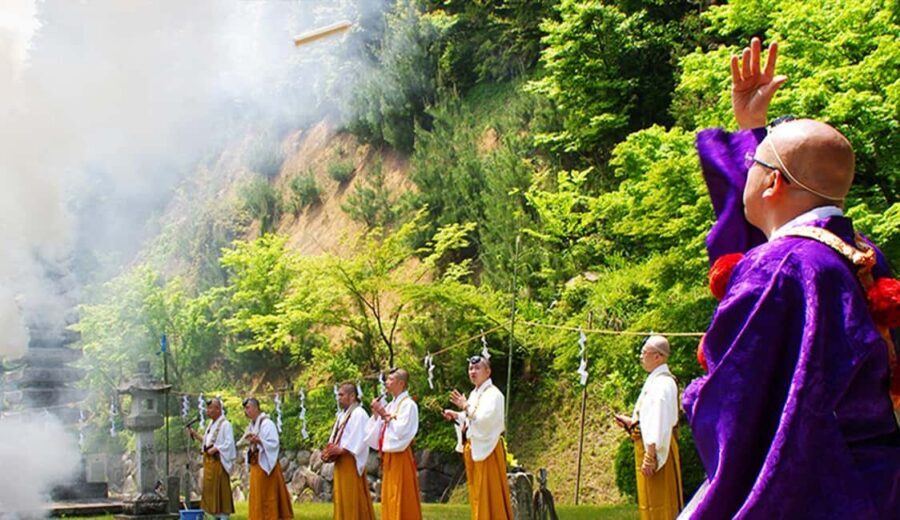
Next is Sennyoji Temple, listed as Raizansennyoji Taihioin, with about 40 minutes of guided time. This is one of those stops where the building and the statues do the talking.
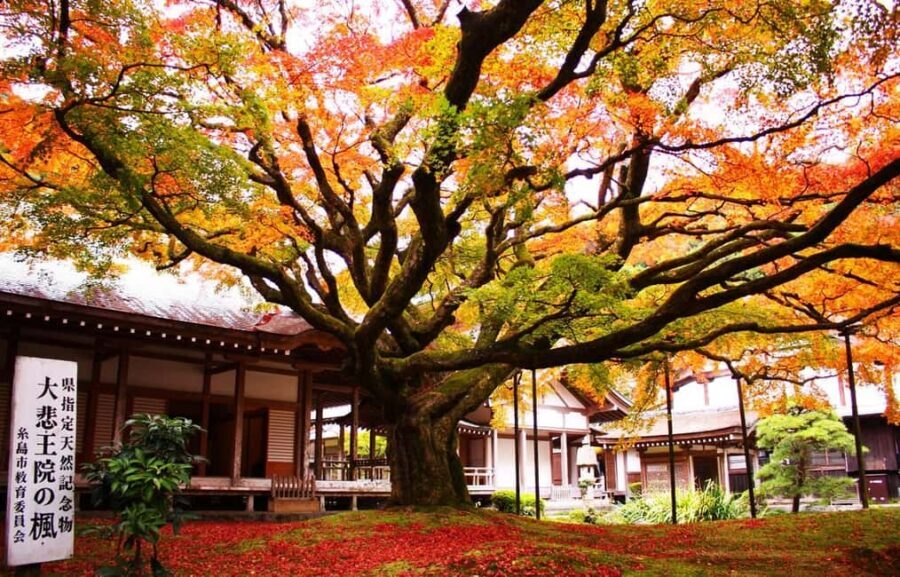
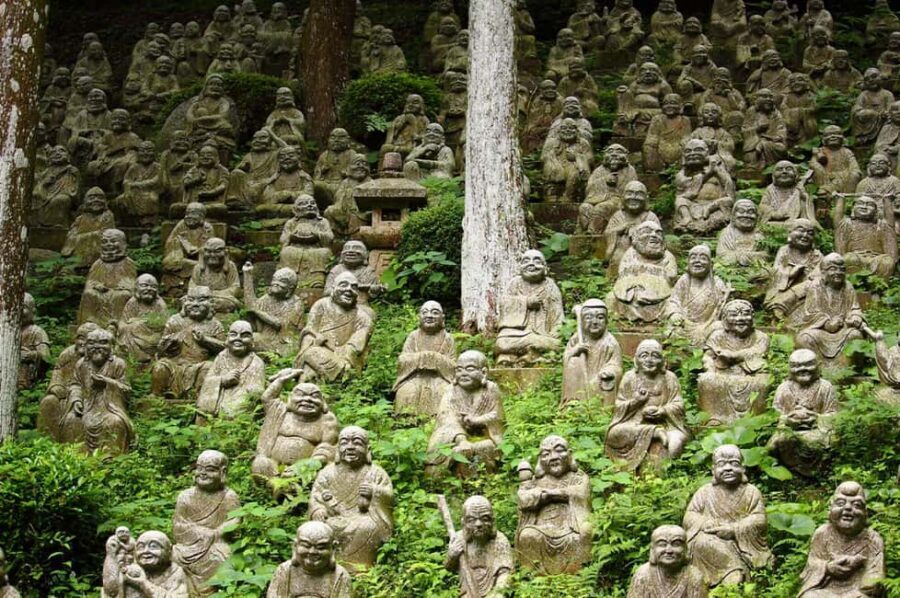
The big draw is the 4.8-meter Thousand-Armed Kannon statue. On top of that, the temple grounds include over 500 stone Rakan statues, each with a different expression. If you’re the type who likes details, you can spend the whole visit scanning faces and gestures.
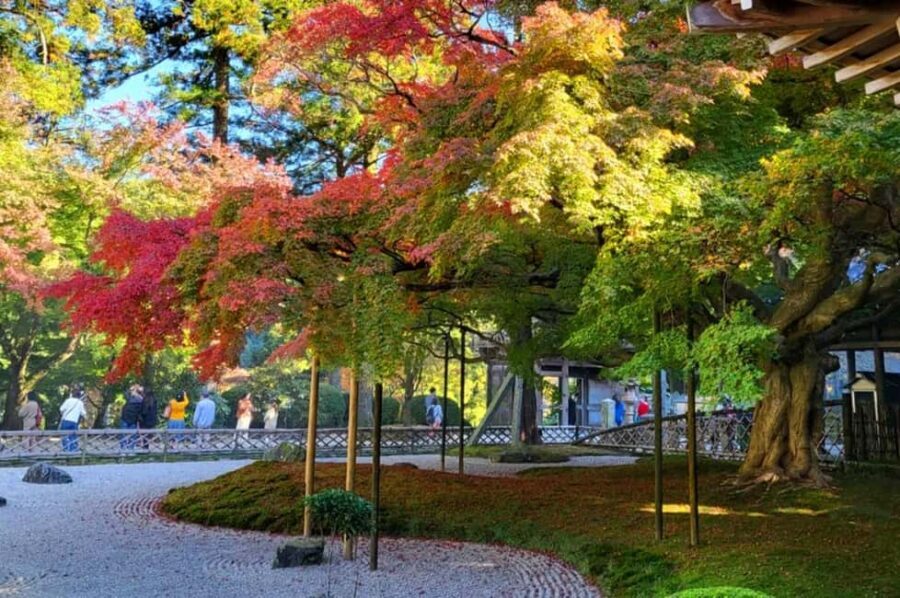
There’s also a seasonal note in the tour info: in autumn, a 400-year-old maple can turn vivid red, which can make the temple feel extra dramatic.
Tickets: Sennyoji Temple is self-paid (about $3 USD). So, if you’re trying to keep spending tight, decide early whether you want the full entry experience or prefer to use your time mainly for photos in the approach areas.
The balanced reality: it’s a spiritual stop, but it’s also very photo-friendly—especially if you enjoy large-scale religious art. Just keep your pace steady; the day is moving, and you don’t want temple stairs and photo stops to turn into a rushed blur.
Coconut Tree Swing and Keya no Oto Park: Ocean Views With a Clear Photo Setup
After the temple, the tour shifts into classic coastal mode.
Coconut Tree Swing
You’ll head to the Coconut Tree Swing (about 30 minutes). This is the romantic seaside photo spot built around two tall coconut trees with a wooden swing between them. Once you push off, the framing puts you right toward the ocean, with sea breeze and wave sound that make it feel more real than most staged viewpoints.
This stop is also fun if you’re traveling solo or with family, because it’s one of the few places where people of different ages can participate without needing special gear. Bring your camera, but also remember that sometimes the best shots come when you pause and just listen to the water.
A quick reality check: if it’s busy, you might wait a bit for your turn. The good news is the location itself is photogenic from multiple angles, so even waiting feels productive.



Keya no Oto Park
The route also includes Keya no Oto Park as a photo stop (about 30 minutes). The tour info doesn’t give a lot of extra detail beyond the photo stop label, so I treat it as an in-between scenic pause: enough time to grab a few shots and reset before the main couple-stone area.
The best way to use these short stops is to set a simple goal: one or two “must-have” photos, then move on. When the route is timed tightly, you’ll enjoy the day more if you don’t try to do ten photo missions in one stop.
Sakurai Futamigaura’s Couple Stones: Wedded Rocks, Rope, and a White Torii on Sand

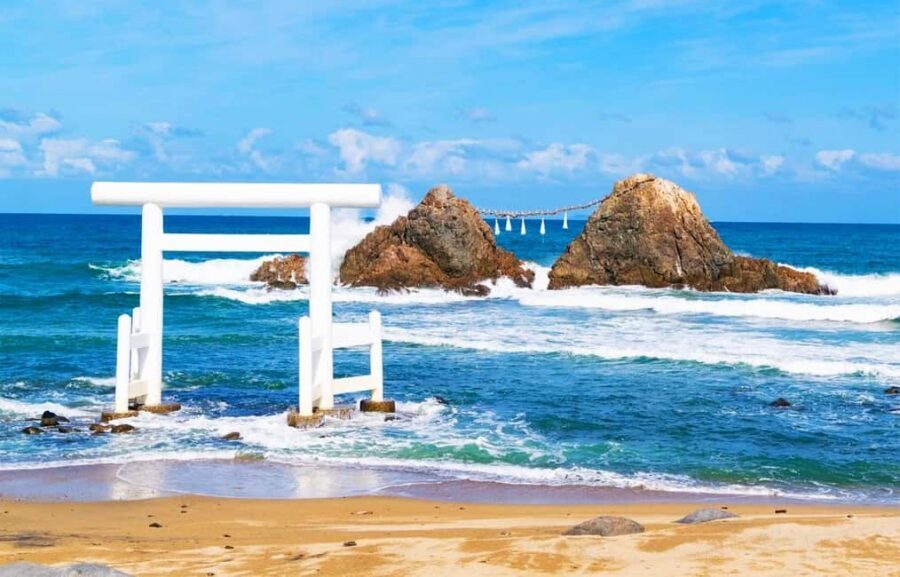
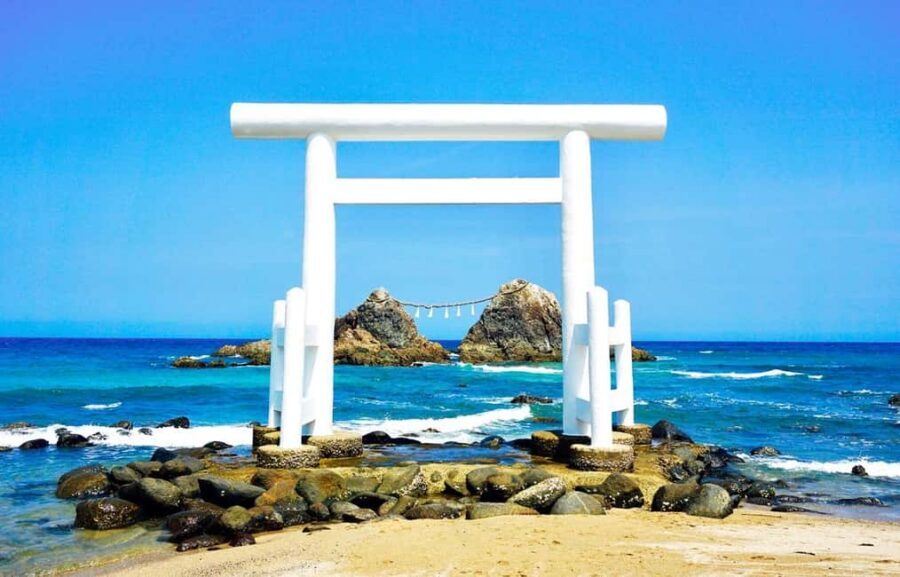
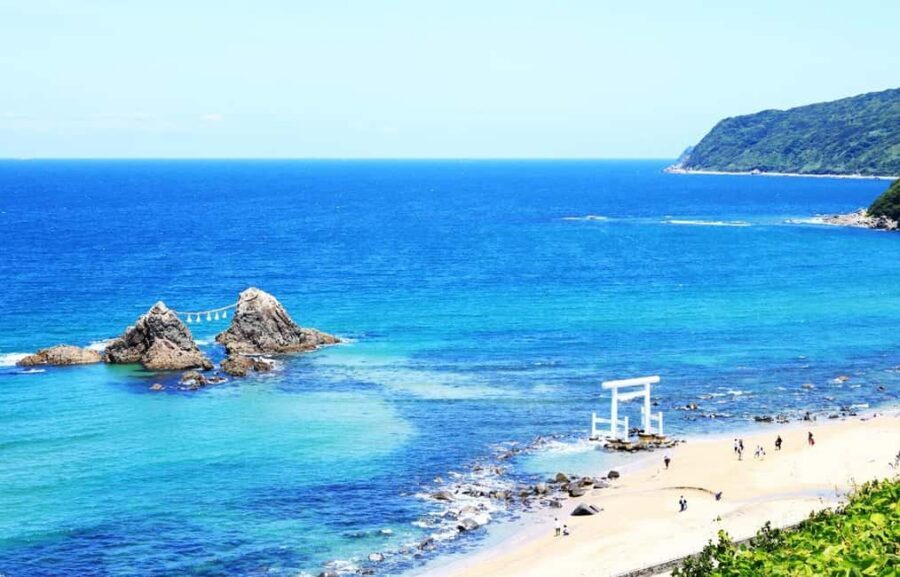
This is the big romantic-and-sacred coastline moment: Sakurai Futamigaura’s Couple Stones. Your scheduled time here is about 1.5 hours, which is long enough to slow down a little.
Here’s what makes it special in the tour description:
- Two sacred rocks rising from the waves, described as husband and wife
- The rocks are tied together with a thick rope
- A pure white torii gate sits on the sand, framing the scene
- Locals say wishes made here bring luck in love
This is the kind of place where the setting matters as much as the object. The rope connection gives the whole view a strong story, and the torii gate adds that classic Japan-meets-ocean symmetry.
Comfort and access: this is a beach-and-steps kind of location, so wear shoes you’re happy to walk in. If you’re someone who dislikes steep stairs, you might want to take it slowly on the way down and back up. Also plan your time so you’re not scrambling at the edges if you want a clear view at your preferred angle.
And yes, it’s easy to spend your entire 1.5 hours taking photos. The trick is to balance photos with a short rest so you still feel the place instead of just hunting for the perfect frame.
Totoro Forest Trail: A Shaded Walk Under Tall Trees
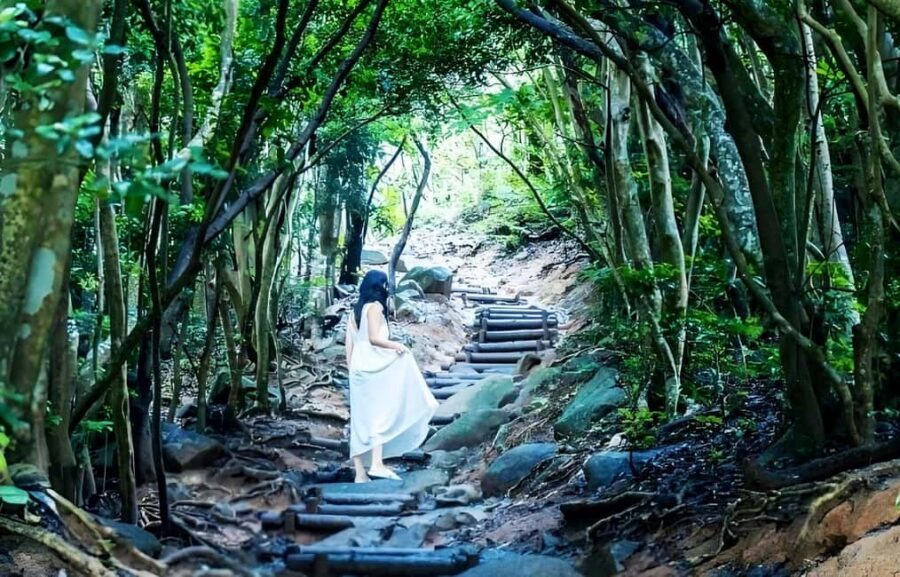
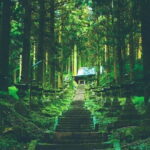
Next comes the route’s most magical-feeling stop: the Totoro Forest Trail. The tour info describes it as a path with tall trees, filtered light, and a quiet sense of wonder.
Even if you’re not chasing specific “look like the movie” photos, you’ll probably appreciate the function of this stop. After temple and seaside rocks, the forest trail shifts your body from standing-and-walking near water into a slower rhythm under shade. It’s a nice middle breath in a packed day.
Practical note: this is still a walk, and parts of it can feel more uphill than you expect. If your legs tend to get tired easily, take small pauses to let everyone regroup, and keep your pace steady rather than sprinting for the next photo angle.
Fukuoka Tower: 123-Meter Bay Views to Finish Strong
The day ends at Fukuoka Tower (self-paid ticket). You get about 50 minutes of sightseeing time up there. The tour info is specific: you can go to 123 meters for sweeping views of the bay, city, and surrounding mountains.
If you’re the kind of traveler who likes a clean “wrap-up view” before heading back, this works well. You’ve been switching between forest air and sea air all day. From the tower, you see the whole system: coast, urban grid, and the hills beyond.
Optional swap: you might also be able to visit Momochihama Seaside Park, which sits next to the tower and features a man-made white sand beach. In summer, the info notes beach volleyball and swimming. During the day, it’s also framed as a relaxed shore stroll and photo stop.
What I’d do: if your goal is ocean-and-sky photos, choose the seaside park time. If your goal is panoramic clarity, prioritize the tower. Either way, keep your energy up for the return drive.
Price and Logistics: Why $67 Works for a Packed Route
At $67 per person for a 10-hour day that includes:
- pickup and drop-off in the Fukuoka area
- a professional driver
- a multilingual guide (English/Chinese/Japanese)
- guided time at key stops
- and covered costs like taxes, parking, tolls, and gas
…the price makes sense for people who don’t want to piece together transport between far-apart sights.
The trade-off is that you’re not paying for leisure. You’re paying for efficient coverage. If you love roaming without a schedule, this might feel a bit like a highlights reel. If you want the best mix of nature, temple, and coast in one day without planning, you’ll likely feel satisfied.
I also like that the tour includes self-paid add-ons clearly labeled:
- Sennyoji Temple ticket about $3 USD
- Fukuoka Tower ticket about $6 USD
That transparency helps you budget. You’re not guessing what’s included after you arrive.
Tips to Have a Smoother Day (and Better Photos)
This tour rewards small preparation. Here are the practical moves that matter most:
- Wear comfortable shoes. You’re walking at multiple stops, including places with stairs.
- Bring a camera. The route is built for scenic framing: mist at Shiraito Falls, statue scale at Sennyoji, ocean shots at the swing and beach rocks.
- Carry cash. The tour info specifically says not all local stores accept cards.
- Plan your outfit around weather. Check the forecast, because misty falls and ocean breeze can change how comfortable you feel fast.
- Keep your expectations realistic about time. Some spots are short photo sessions, some are longer. If you treat the day like a sprint between moments, you’ll enjoy it more.
- On guide days, the guide can also help with group photo moments. Recent tour feedback includes guides like Seki, Thomas, and Robin being noted for friendliness and help, and this matches what you want from a multilingual day guide: fast coordination and clear explanations.
If you’re traveling with kids or older folks, this is still doable, but pace is the key. Take breaks before anyone feels wiped out.
Who This Tour Fits Best
This works especially well if you:
- want a coast-meets-nature day near Fukuoka without renting a car
- enjoy temples and religious sites as well as scenic stops
- like couples’ story spots and photo set locations
- want a mix of quiet forest walking and big ocean viewpoints
It may not be your best match if you:
- want lots of unstructured free time at one beach
- dislike stairs and don’t enjoy short, repeated walking blocks
- hate tight schedules and prefer slow wandering
Should You Book Itoshima Nature & Coastal Scenery From Fukuoka?
I’d book it if you want a single day that covers the emotional spread of Itoshima: water mist at Shiraito Falls, a major temple centerpiece at Sennyoji, romantic seaside photos at the Coconut Tree Swing, sacred meaning at Sakurai Futamigaura, and a calmer reset in the Totoro Forest Trail, then a clean finish from Fukuoka Tower.
I wouldn’t book it if your priority is spending all day on one beach or you want deep temple time. This is a structured highlights route, and the best outcome comes from going with the flow, wearing good shoes, and choosing your “must photograph” moments in advance.
FAQ
What time does the tour start and where do I meet?
Check in is at 8:45AM and the group departs at 9:00AM. The meeting point is Lawson Fukuoka Oriental Hotel (in front of Hakata Station Chikushiguchi), address 4-23 Hakataekichuogai, Hakata Ward, Fukuoka, 812-0012, Japan.
How long is the tour?
The duration is listed as 10 hours.
Is food included?
No. Food and drinks are not included.
Are tickets to Sennyoji Temple included?
No. The Sennyoji Temple ticket is optional and is about $3 USD.
Are tickets to Fukuoka Tower included?
No. The Fukuoka Tower ticket is optional and is about $6 USD.
What languages are available for the guide?
The live tour guide offers English, Chinese, and Japanese.
Is the tour mostly walking or mostly sightseeing from a bus?
It’s sightseeing with walking at the stops. Comfortable shoes are recommended because the tour involves walking and there are stairs at some locations.