REVIEW · OSAKA
Making Soba noodles at Temple
Book on Viator →Operated by 善-zen- · Bookable on Viator
Soba in a temple feels wonderfully grounded. This Osaka experience pairs hands-on soba noodle making with a quiet visit to a historic temple, so the whole 2 hours stays slow and personal. I like that you get a real lesson from a local guide named Hiro, and I also like that you taste the noodles you make, not just watch. One thing to consider: soba here uses buckwheat, so anyone with buckwheat allergy needs to think twice.
You’ll start at a clear meeting point in Tennoji Ward and spend time in a small-team classroom atmosphere. Your group stays private, and the day includes time to see the main hall and the Buddha statue, which helps the class feel more like cultural practice than a cooking stunt.
If you’re the type who needs lots of English or big tour-group energy, this may feel too quiet. But if you want something authentic, practical, and respectful, it’s a strong fit.
In This Review
- Key highlights you’ll care about
- Why Osaka temple soba feels different than a city cooking class
- Where you start in Tennoji Ward, and why the location matters
- Inside the temple classroom: what the 2-hour flow looks like
- Making soba noodles: hands-on steps, not just a demo
- Visiting the main hall and Buddha statue after you cook
- What you eat: the soba you make as snacks
- Price and value: why $68.29 can make sense here
- Weather, allergies, and the two real gotchas
- Who this Osaka soba class suits best
- Should you book Temple Soba in Osaka
- FAQ
- How long is the soba-making experience?
- How much does it cost?
- Where is the meeting point?
- Does the activity end at the same place?
- Is transportation included?
- Is it a private experience?
- Is a mobile ticket used?
- What food is included?
- Is this experience safe for people with buckwheat allergies?
- What happens if the weather is bad or I cancel?
Key highlights you’ll care about
- Private group class with a calm, temple setting
- Guide Hiro’s hands-on teaching and lots of photo sharing at the end
- Make, then eat the soba you produce as snacks
- Temple time included: main hall plus the Buddha statue
- Mobile ticket and confirmation at booking
- Good-weather dependent and buckwheat allergy caution
Why Osaka temple soba feels different than a city cooking class
Osaka has no shortage of food experiences, but this one has a built-in pace change. You’re not cramming cooking skills into a loud room. You’re making soba in a historic temple environment, where the focus stays on careful movement, patience, and doing things the traditional way.
Two details stand out for me as value drivers. First, you don’t just get an overview of soba. You work the dough and cut the noodles, then you eat them right away. Second, the experience is taught by a guide named Hiro, and the tone is personal rather than factory-style instruction.
The main drawback is simple: this is buckwheat soba. If someone in your group can’t eat buckwheat, this won’t work. Even if you’re fine with other noodles, you should treat the buckwheat note as a hard stop.
You can also read our reviews of more tours and experiences in Osaka.
Where you start in Tennoji Ward, and why the location matters
The experience starts at 1-chōme-3-68 Shitaderamachi, Tennoji Ward, Osaka, 543-0076, Japan. It ends back at the same meeting point, so you don’t need to plan a second transfer or worry about being dropped somewhere unfamiliar.
The listing says it’s near public transportation, which is a big deal in Osaka. Tennoji is connected well, and that makes this class easier to stitch into a food day without paying for private transport.
A practical travel note: because it’s a short activity (about 2 hours), you’ll feel the time crunch more than you would on a half-day tour. If you’re moving from another stop, I’d give yourself breathing room so you arrive calm, not sprinting.
Inside the temple classroom: what the 2-hour flow looks like
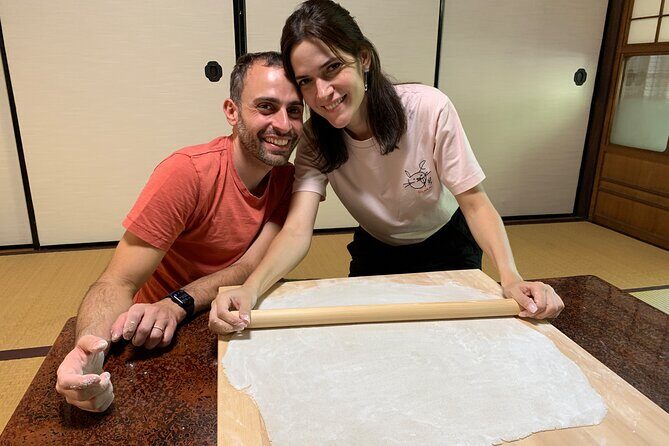
Plan on roughly 2 hours total. The experience runs as a small-team classroom, built to feel warm and private, like you’re returning to family rather than attending a public workshop. That matters because soba-making is partly technique, but also partly rhythm. When the setting stays calm, you’re more likely to actually enjoy the process instead of rushing through it.
You’ll spend time in the soba-making portion first, then shift into temple viewing. The visit includes access to the main hall and time to see the Buddha statue. That sequence is helpful: it gives you a meaningful “why” after you’ve already handled the ingredients and tools.
You should also know it’s a private tour/activity. Only your group participates. So if you’re traveling with family and want a lower-noise experience than a typical group food tour, this format supports that.
Making soba noodles: hands-on steps, not just a demo
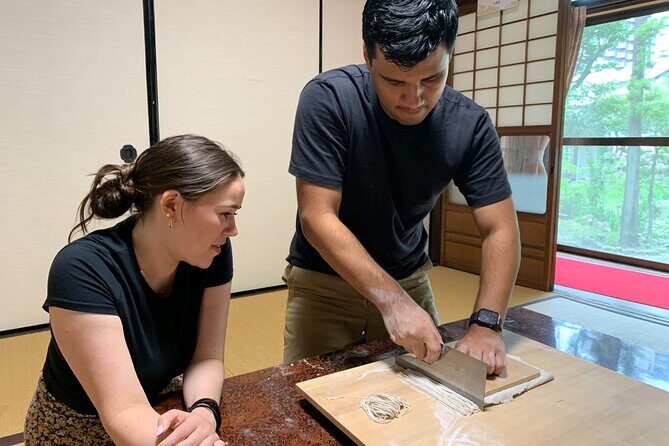
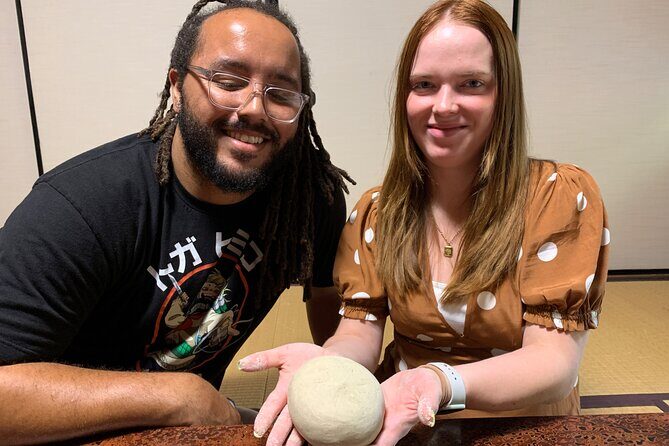
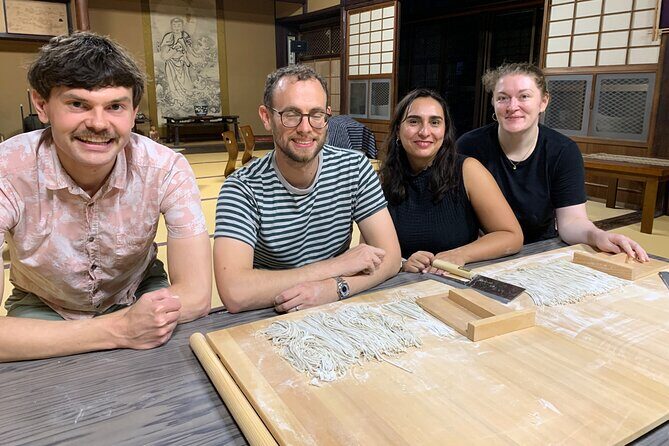
The heart of the experience is traditional soba noodle making. You’ll use buckwheat flour to make soba, shape the noodles, and then sample the noodles you made yourself. This is the kind of activity that feels small in scope but satisfying in outcome. When your own noodles are on your plate, the whole lesson becomes memorable.
A key detail from the experience write-ups: the teaching is practical and friendly, and guide Hiro is described as an amazing teacher. One review also highlights that Hiro takes lots of pictures of your group and then sends them by AirDrop at the end. That’s a nice touch because it means you don’t have to hand your camera around or try to time photos while you’re busy with dough.
How to prepare mentally: soba-making isn’t about perfection. It’s about process. You’ll learn how to handle the dough and cut the noodles with care. Even if your shape isn’t museum-worthy, the point is that you’ll taste the result of your work, and that makes the experience feel earned.
If you’re traveling with kids, this can be a good “food skill” activity because everyone participates. Just keep expectations realistic: shaping dough takes time, and the calm pace is part of the design.
Visiting the main hall and Buddha statue after you cook
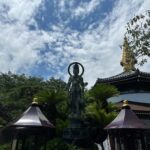
After you make soba, you get the temple portion: visiting the main hall and the Buddha statue. This is more than a quick photo stop. The experience is set up to connect the food practice with the space it’s happening in, which is why the temple atmosphere matters even before you leave the noodle classroom.
One of the reasons this works well for visitors is that it gives you context without turning the experience into a long lecture. You’re not just “in a temple” as scenery. You’re inside a place where calm behavior and respectful attention are part of the experience.
A small practical consideration: since this is a temple setting, you’ll want to keep your behavior low-key and follow the guide’s pace. If you’re used to eating-and-rushing through attractions, slow down here. The value is in the quieter mood.
What you eat: the soba you make as snacks
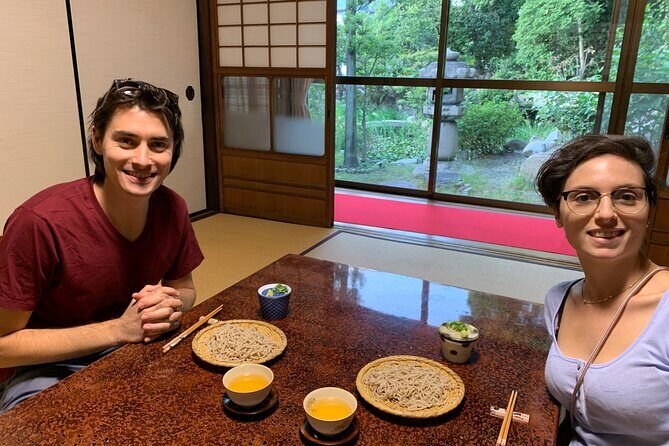
The included food is simple and focused: snacks of the soba noodles you made. That’s a smart way to handle expectations. You’re not paying for a full meal you might not even finish. You’re paying for hands-on work and a tasting that matches the work you did.
Because it’s a snack, you might still want a proper dinner later if you’re a big eater. But for most people, the meal-situation here works well: you’ll leave feeling satisfied by accomplishment rather than stuffed by volume.
The buckwheat note is important again here. If you have any allergy concerns, don’t assume substitutions are available unless you ask. The experience explicitly flags buckwheat allergy as a consideration.
Price and value: why $68.29 can make sense here
The price is $68.29 per person, and the experience lasts about 2 hours. On paper, that’s not cheap compared to casual cooking workshops. But the value comes from what’s included and how it’s delivered.
You’re getting:
- a private, small-team teaching setup
- temple access (main hall and Buddha statue)
- soba-making instruction
- the soba you make, eaten as snacks
Also, the format is private for your group, not a crowded class. In many food experiences, paying more buys you comfort and attention. Here, paying more buys you time with a guide in a calm setting plus the satisfaction of eating your own noodles.
Transportation isn’t included, though. Private transportation is not listed as included. The good news is it’s near public transport, so you can likely handle getting there without extra cost.
One more value tip: the average booking window is about 47 days in advance. If you’re traveling during peak periods, booking earlier gives you more schedule options, especially since the experience needs good weather.
Weather, allergies, and the two real gotchas
The experience states it requires good weather. If weather is poor, it may be canceled, and you’ll be offered a different date or a full refund. So when you pick your day in Osaka, don’t schedule this class as your last-ditch Plan A. Give it a backup day or at least keep your calendar flexible.
The other real gotcha is food safety: buckwheat is used. If anyone in your party has a buckwheat allergy, this is a hard warning. Don’t treat it like a mild dietary preference.
If you’re not allergic, the buckwheat ingredient is part of the authentic soba story. Just double-check that everyone in your group is comfortable with buckwheat before you commit.
Who this Osaka soba class suits best
This class fits best when you want a food activity that feels like culture, not just consumption.
You’ll likely enjoy it if:
- you like Japanese traditions and temple settings
- you want a smaller, calmer experience than standard city tours
- you’re excited by hands-on food making
- you appreciate private group attention
It may not be the best choice if you’re looking for fast-paced sightseeing with lots of walking and constant photo stops. This experience rewards people who can slow down and follow instruction.
For families, the private format can be a big plus. For couples, it’s a memorable shared skill. For solo travelers, the private-group nature can make it less intimidating than a larger class where you get shuffled to the side.
Should you book Temple Soba in Osaka
If you want a meaningful, practical Japanese food experience with a quiet temple mood, I’d book it. The combination of making soba noodles, eating what you made, and visiting the main hall and Buddha statue gives you more than a typical cooking workshop.
The decision hinges on two checks. First, confirm everyone in your group is okay with buckwheat. Second, plan with weather in mind and avoid treating it as your only option on a tight schedule.
If those boxes are good for you, this is the kind of activity that sticks because you leave with both a skill and a taste you can’t get the same way at home.
FAQ
How long is the soba-making experience?
It lasts about 2 hours.
How much does it cost?
The price is $68.29 per person.
Where is the meeting point?
The meeting point is 1-chōme-3-68 Shitaderamachi, Tennoji Ward, Osaka, 543-0076, Japan.
Does the activity end at the same place?
Yes, it ends back at the meeting point.
Is transportation included?
No. Private transportation is not included.
Is it a private experience?
Yes. It’s a private tour/activity, and only your group participates.
Is a mobile ticket used?
Yes. The experience includes a mobile ticket.
What food is included?
Snacks of soba noodles are included.
Is this experience safe for people with buckwheat allergies?
The experience notes that buckwheat is used, and some people may not be able to eat it due to allergies.
What happens if the weather is bad or I cancel?
The experience requires good weather. If it’s canceled due to poor weather, you’ll be offered a different date or a full refund. You can cancel for a full refund up to 24 hours in advance.