REVIEW · OSAKA
Private Tour to Nara from Osaka with English speaking Driver
Book on Viator →Operated by Japan Guide Agency · Bookable on Viator
Nara becomes easy when someone else drives. This private trip from Osaka lets you ride in a private vehicle with an English-speaking driver, so you can focus on the places that make Nara famous: big temples, serene shrines, and deer wandering through the park. I like the flexibility of picking a smaller set of highlights (3–4 stops) rather than racing through everything.
The main downside: this is not a licensed local English guide service. Your driver can explain sights and history, but if you want a professional guide who stays with you for every detail, you’ll have to plan for that separately. Also, while many stops are listed as free-entry on the itinerary, the tour itself does not include entrance fees or lunch.
You’ll still get a smooth, door-to-door feel: pickup is offered, the tour runs about 8 hours, and you get a mobile ticket to keep things simple.
In This Review
- Key things I’d plan around
- Why this private Osaka to Nara trip feels calmer
- Price and what you actually get for $848.72 per group
- The route logic: how your day can flow without feeling rushed
- Todaiji Temple: your Nara anchor stop
- Nara Park: deer, open space, and an easy meetup point
- Kasuga Taisha Shrine: the calm, focused side of Nara
- Wakakusayama Hill: a quick viewpoint that pays off
- Horyu-ji Temple: for when you want older roots
- Naramachi: old merchant town atmosphere and a slower pace
- Kofuku-ji, Yakushiji, and Shin-Yakushiji: the temple depth choices
- Nara National Museum: for when you want context
- Heijō Palace Site Historical Park: where the capital used to be
- Toshodai-ji: the international story inside Nara’s Buddhism
- Isuien Garden and Yoshikien: calmer breaks that actually matter
- Logistics that can make or break a private day
- Real satisfaction comes from the driver’s style
- Who should book this Nara private day trip from Osaka
- Should you book this private Nara day trip?
- FAQ
- How long is the private Nara day trip from Osaka?
- How many people can be in one group?
- Is pickup included?
- Is the driver able to speak English?
- Is this a private tour?
- What sites can we visit in Nara?
- Are entrance fees included?
- Are lunch costs included?
- Are tickets provided digitally?
- Are child seats available?
Key things I’d plan around
- 3–4 stop flexibility: You control the pace and avoid a stressy checklist day.
- English-speaking driver: Helpful wayfinding and on-the-ground guidance without navigating the rail system.
- Nara Park + temple cluster flow: You can group the “classic” sights into one efficient stretch.
- Temple, shrine, and garden options: Not just one type of sight; you can mix old religious sites with calmer green breaks.
- Family logistics matter: Limited booster/car seats and no rear-facing seats—plan early if you need them.
- Great value if you fill the car: It’s priced per group (up to 5), so the per-person cost drops when shared.
Why this private Osaka to Nara trip feels calmer
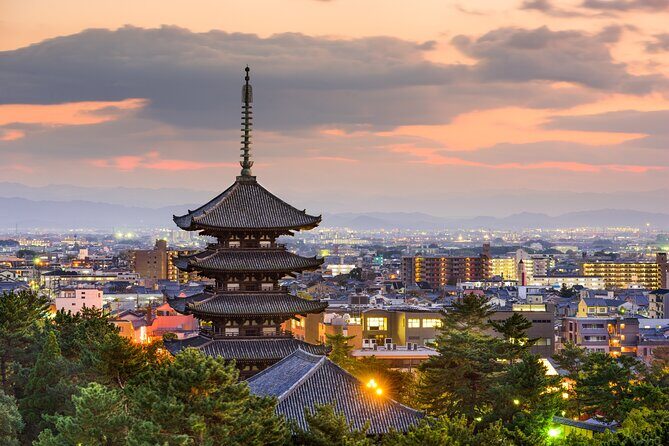
Taking public transit from Osaka to Nara isn’t hard, but it can be time-consuming once you factor in transfers, walking, and getting everyone aligned. Here, you skip that whole stress layer. You get to settle into the day, then hop out when you’re ready—exactly how a day trip should feel.
I also like that this is built for independent travelers. You’re not locked into one fixed route. You can choose a smaller selection of sites from the available list, which means you spend more time where you actually want to look, rather than rushing through everything because the clock says so.
One more practical perk: the driver is English-speaking. That matters in Nara, where street layouts and parking access can vary by area. If you’d rather not second-guess your route or worry about getting lost, this setup is a win.
You can also read our reviews of more private tours in Osaka

Price and what you actually get for $848.72 per group
The price is $848.72 per group (up to 5) for about 8 hours. If you book with the full group size, you’re roughly in the neighborhood of ~$170 per person for a private day—usually a fair trade when you add up taxi/ride-share costs plus the value of not managing transit logistics.
What you get is straightforward:
- English-speaking driver
- Private vehicle
- A customizable day focused on 3–4 sites from the available options
- Pickup offered
- Mobile ticket
What you don’t get (and it’s worth saying clearly):
- A licensed local English-speaking guide
- Entrance fees, lunch, and other personal expenses
So think of it like: you’re paying for comfort, timing, and the right kind of guidance—not for a full-on guide lecturing you from stop to stop.
The route logic: how your day can flow without feeling rushed
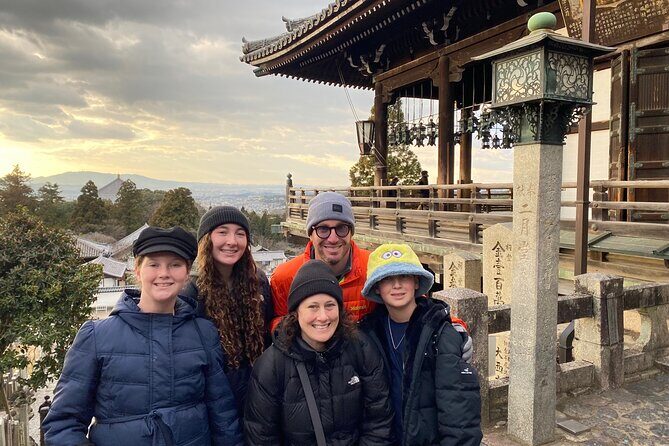
Your day is designed around Nara’s “main story” areas: temple and shrine clusters, the park zone, and the surrounding old-town/garden options. The big advantage of a private day is that you can reduce dead time—less weaving between scattered locations and more time walking at a human pace.
A common smart approach is to choose one “heavy” religious/cultural core (like Todaiji + Kasuga Taisha + Nara Park) and pair it with one calmer add-on (a hill viewpoint, a museum, or a garden). That gives you variety without turning the day into a sprint.
Below are your sight options, what they’re like, and what to consider for each.
Todaiji Temple: your Nara anchor stop
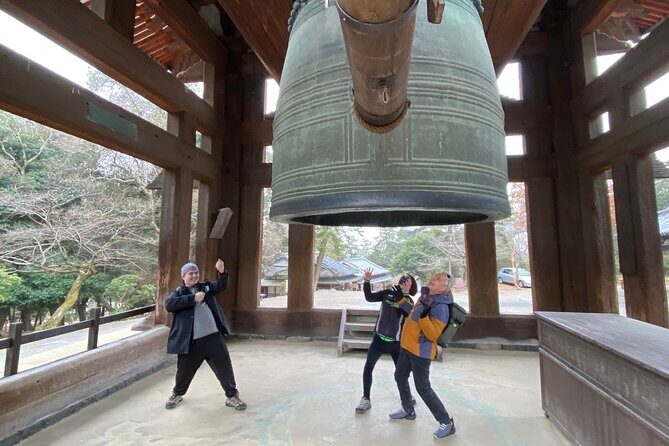
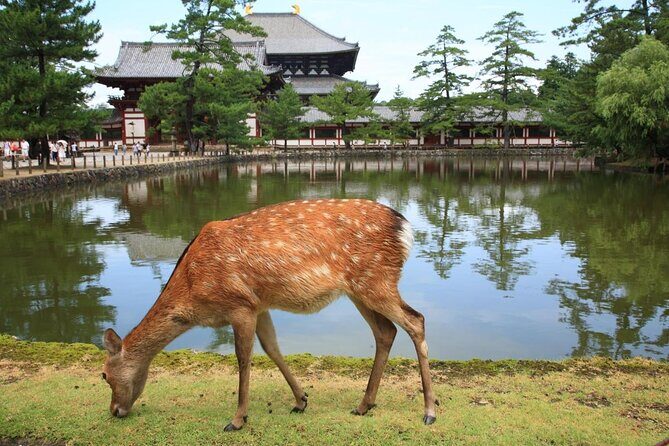
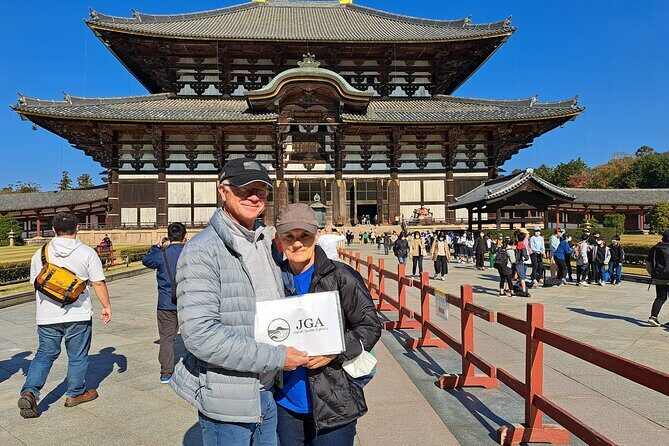
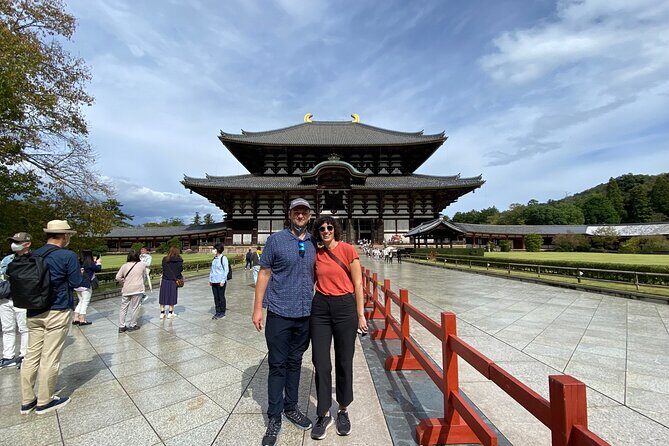
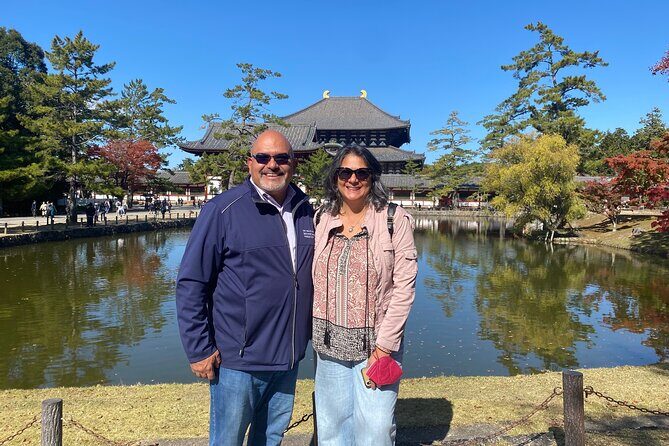
Todaiji is one of Nara’s best-known landmarks, built in 752 and famous enough to function as a destination on its own. It’s also the kind of place where you’ll probably want to look up—both at architecture and at the sheer scale of what you’re seeing.
Time on the itinerary is about 1 hour, and admission is listed as free. That’s ideal for a private day because it’s long enough to feel complete, but not so long that it forces you to cut other stops later.
If you’re planning the most classic Nara mix, Todaiji is usually the best first “anchor.” Even if you don’t love temples, it’s the site that helps everything else in Nara make sense.
Nara Park: deer, open space, and an easy meetup point
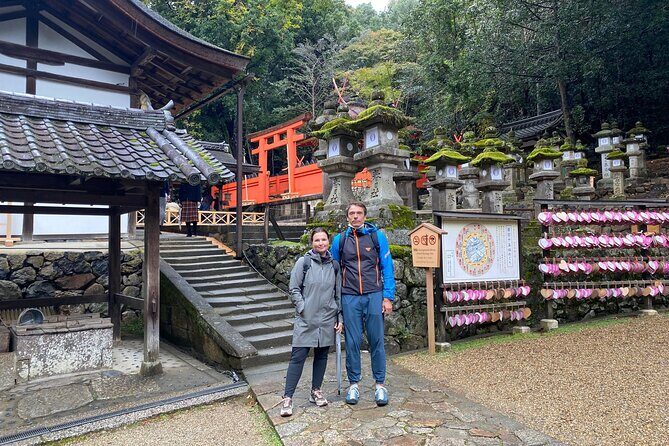
Nara Park is central and practical: it’s where multiple major Nara sights connect, and it’s also the setting for the sacred deer that people come for. The park is large, but the biggest benefit is that it turns several big attractions into a walkable network.
Plan roughly 20 minutes here, and admission is listed as free. In a private schedule, I recommend using this stop like a breather. You can do a quick loop, let the atmosphere sink in, and then move on to the next religious site while you’re still energized.
A few more Osaka tours and experiences worth a look




Kasuga Taisha Shrine: the calm, focused side of Nara
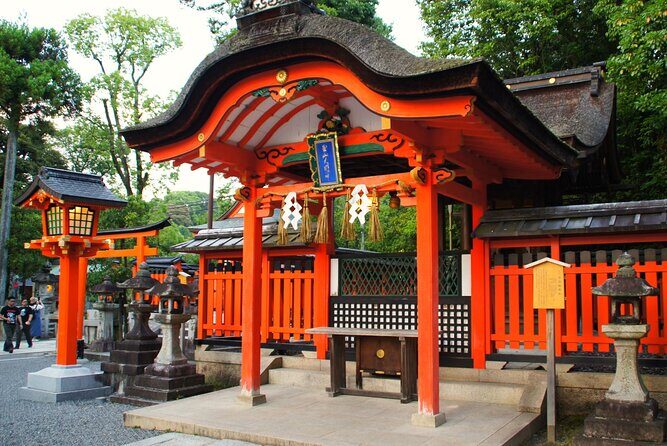
Kasuga Taisha is Nara’s celebrated shrine, established alongside the capital and dedicated to a protective deity associated with the city. It’s typically less “big spectacle” than Todaiji and more about atmosphere: you slow down, look carefully, and enjoy the setting.
The time listed is about 1 hour, with free admission on the itinerary. This is a great complement after Nara Park because the two together feel like one continuous story—park to shrine to old city rhythms.
Wakakusayama Hill: a quick viewpoint that pays off
Mount Wakakusayama sits behind Nara Park and is a simple add-on if you want views without committing to a long hike. It’s described as a grass-covered hill around 350 meters tall with views over Nara.
The itinerary lists 20 minutes and free admission. If you’re choosing only a few stops, this one can be a smart way to get a “bigger picture” without eating your whole afternoon.
Horyu-ji Temple: for when you want older roots
Horyu-ji is one of Japan’s oldest temple sites, founded in 607 by Prince Shotoku and noted for its early promotion of Buddhism. It’s a great choice if your group likes history that reaches farther back than the big postcard stops.
Time on the itinerary is about 1 hour, and admission is listed as free. This is the kind of stop that can make the rest of your Nara day feel deeper, even if you’re not trying to memorize dates.
Naramachi: old merchant town atmosphere and a slower pace
Naramachi is the former merchant district, where traditional residential buildings and warehouses are preserved and open to the public. It’s a different kind of Nara experience: more everyday texture, more strolling, and a better spot to take your time.
The itinerary lists 20 minutes with free admission. If your chosen temples run “dense,” Naramachi works like a mental reset. It’s also a good pairing if you want a bit of shopping or casual café time, though lunch isn’t included in the tour price.
Kofuku-ji, Yakushiji, and Shin-Yakushiji: the temple depth choices
These three stops offer different flavors of Nara’s Buddhist heritage.
- Kofuku-ji (about 30 minutes): former family temple of the Fujiwara clan, tied to major power during the Nara and Heian periods. If you like political history through places, this fits.
- Yakushiji (about 30 minutes): built by Emperor Tenmu in the late 7th century for recovering his sick wife, with a strictly symmetric layout. Symmetry can make the architecture feel more “designed” and easier to take in calmly.
- Shin-Yakushiji (about 20 minutes): founded in the Nara period, devoted to Yakushi Buddha, patron of medicine. This gives you a theme-based stop that feels meaningful rather than just chronological.
All three are listed with free admission in the itinerary. The only real drawback is simple: if you pack too many temples, they start blending together. For most people, picking one or two of these (instead of all three) keeps the day from turning into temple homework.
Nara National Museum: for when you want context
The Nara National Museum focuses on Japanese Buddhist art, established in 1889. If you love religious sites but find it hard to read what you’re seeing in the moment, a museum can help you “decode” the shapes, styles, and themes.
Time listed is about 30 minutes, admission is listed as free. This is also a smart choice if weather turns: you still get cultural payoff without feeling like the day is ruined.
Heijō Palace Site Historical Park: where the capital used to be
Heijō Palace Site Historical Park marks the area of Nara’s old capital, known as Heijō-kyo during much of the Nara period. The itinerary describes the palace extended roughly a kilometer by a kilometer, which gives you a sense of scale even if you’re just walking in the open site.
Time listed is about 1 hour, free admission. This stop can be especially satisfying if you’re the kind of traveler who likes “what was here” moments more than only “what stands here now.”
Toshodai-ji: the international story inside Nara’s Buddhism
Toshodai-ji was founded in 759 by Ganjin, a Chinese priest invited to Japan to train priests and improve Japanese Buddhism. If you enjoy seeing cultural exchange built into religious history, this offers a different angle than the purely local narrative.
The time listed is about 30 minutes, with free admission. For a 3–4 stop day, Toshodai-ji can be the compact “add depth” choice.
Isuien Garden and Yoshikien: calmer breaks that actually matter
If you’ve done enough temples, these garden stops are where Nara breathes.
- Isuien (about 20 minutes): described as a garden that uses borrowed scenery, including Todaiji’s Nandaimon Gate and Mount Wakakusayama. That idea—turning surrounding views into part of the garden—can make a small space feel bigger.
- Yoshikien (about 20 minutes): a pleasant garden named after the Yoshikigawa River, built on the site of Kofukuji’s former priests residence.
Both are listed with free admission. If you want at least one “low-pressure” stop in your day, pick one of these gardens. It’s a good way to end without everyone feeling like they need a nap immediately.
Logistics that can make or break a private day
This tour is private, meaning only your group participates. That usually helps with flexibility—your timing depends on your pace and your chosen stops, not on coordinating multiple groups.
A few practical notes from the details you should take seriously:
- Pickup is offered, and you’ll have a mobile ticket.
- Entrance fees and lunch aren’t included, even though many stops are listed as free-entry.
- If you’re traveling with kids: car seats/booster seats are limited, and rear-facing car seats aren’t available. If that applies to you, contact the provider directly before booking.
Also, the tour can’t combine multiple tour groups. That’s not a problem for most people, but it does mean you should expect that the vehicle and plan are only for your party.
Real satisfaction comes from the driver’s style
One of the strongest signals in the feedback I’d trust is the quality of the driving and explanations. In particular, the driver Kazunori Maeda gets high marks for doing what you want on a day like this: keeping things on time, preventing confusion, and giving helpful context without rushing.
In the port timing example, the day trip worked cleanly and returned on schedule. That’s a big deal if you’re starting from Osaka Port or you have a hard departure window later. Private transport shines when timing matters, and a smooth driver makes it feel effortless.
Who should book this Nara private day trip from Osaka
This is a good match if:
- You want Nara highlights without the hassle of figuring out trains and transfers.
- Your group prefers choosing a few meaningful stops rather than a long checklist.
- You’re traveling with family or mixed-age group members who don’t want constant commuting.
- You’d rather spend money on comfort and timing than on a full licensed guide experience.
It may be less ideal if:
- You want deep, detailed commentary at every stop from a licensed local guide.
- You want a guaranteed long list of sights. The day is built around a smaller set (3–4 stops), which is great for pacing, but it’s not designed for “everything in one day.”
Should you book this private Nara day trip?
If you like your day trips calm, personal, and efficient, I’d book it. The value comes from the private vehicle, the English-speaking driver, and the flexibility to choose 3–4 stops so you can actually enjoy them. When your time is limited, that comfort and control can matter more than adding one extra site.
I’d only hesitate if you’re expecting a licensed local English guide service at every stop or if you’re traveling with a seating setup that requires rear-facing car seats. If those aren’t your needs, this is a strong way to see Nara’s big-name sights plus gardens and old-town atmosphere without turning the day into a transportation puzzle.
FAQ
How long is the private Nara day trip from Osaka?
The tour duration is about 8 hours.
How many people can be in one group?
The price is per group for up to 5 people.
Is pickup included?
Pickup is offered.
Is the driver able to speak English?
Yes. The tour includes an English-speaking driver.
Is this a private tour?
Yes. It’s private, and only your group participates.
What sites can we visit in Nara?
You can customize your day with 3–4 sites chosen from the available Nara highlights list.
Are entrance fees included?
No. Entrance fees are not included.
Are lunch costs included?
No. Lunch is not included.
Are tickets provided digitally?
Yes. You’ll receive a mobile ticket.
Are child seats available?
There are limited car seats and booster seats. Rear-facing car seats are not available, so you should contact the provider directly if you need them.