REVIEW · KYOTO
Kyoto: Fushimi Inari Shrine Walking Tour
Book on Viator →Operated by Traveling Kyoto · Bookable on Viator
Orange gates deserve context.
This Kyoto Fushimi Inari-taisha walking tour is more than a photo walk: you’ll learn what the shrine represents, why the fox deity Inari shows up around the grounds, and what the gate-lined paths mean as you move through the complex. I really like that admission is included, which cuts down on time spent at ticket lines, and I also like the small group size so you can stay with your guide instead of getting swallowed by the crowd.
One thing to consider: the route includes a steady uphill climb on scenic mountain trails, and even in 2 hours it can feel like a workout in the evening.
In This Review
- Key points to know before you go
- Torii After the Rush: Why the 6 pm Fushimi Inari timing matters
- Meeting at Daily Yamazaki: Getting started smoothly in Fushimi
- Fushimi Inari-taisha explained: fox deity, ritual moments, and gate symbolism
- The trail walk: viewpoints, pace, and how to handle the climb
- Guide-led navigation: small group benefits you can feel
- Admission included and ticket on your phone: where the value comes from
- Who this walking tour is best for (and who should think twice)
- Should you book this Kyoto Fushimi Inari Shrine Walking Tour?
- FAQ
- How long is the Kyoto: Fushimi Inari Shrine Walking Tour?
- What time does the tour start?
- Where is the meeting point?
- Does the tour include admission to Fushimi Inari-taisha?
- What’s the group size limit?
- Is there a mobile ticket for this activity?
- What’s included in the tour price?
- Are food and drinks included?
- Do I need to tip?
- What is the cancellation policy?
Key points to know before you go
- 6:00 pm start: better pacing for an evening visit when you want the mood, not the chaos
- Admission included: fewer steps to get going, since entry is part of the tour
- Max 10 travelers: small group keeps the guide close for questions and route guidance
- Fox deity and ritual meaning: you’ll connect what you see (and hear) to shrine traditions
- Scenic trails and viewpoints: you’re not just staying at the entrance area
- Mobile ticket: simpler on-the-day check-in
Torii After the Rush: Why the 6 pm Fushimi Inari timing matters
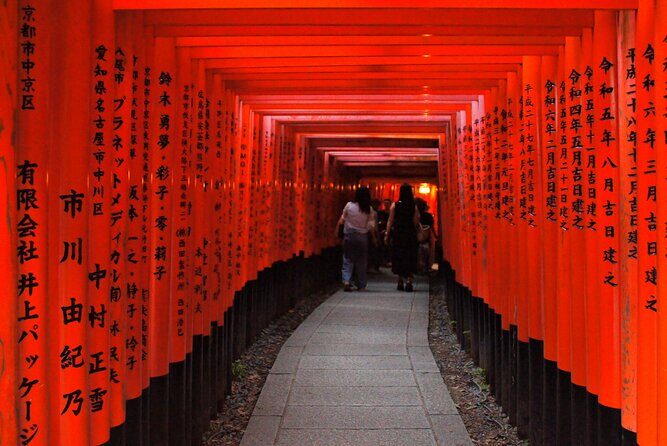
If you’ve ever visited Fushimi Inari, you know it can feel like the entire city decided to arrive at once. What makes this tour appealing is the timing. A 6:00 pm start gives you a different rhythm than the daytime peak: the place still feels alive, but you’re more likely to experience it as a walk with meaning instead of a nonstop queue with cameras.
You also get a guide-led pace, which is a big deal at Fushimi Inari. The shrine is famous for its orange-red torii gates stretching through a forested mountain setting. Without context, it can turn into a treadmill of gates and steps. With guidance, you’re more likely to notice the details that explain how worship actually shows up here—like the shrine rituals you pass and the symbolism behind the torii gates and fox elements.
The tour is about 2 hours (approx.), which is also a sweet spot. You’ll have time to move along the trails for viewpoints, but it’s not so long that you lose the thread of what you’re seeing.
You can also read our reviews of more walking tours in Kyoto



Meeting at Daily Yamazaki: Getting started smoothly in Fushimi
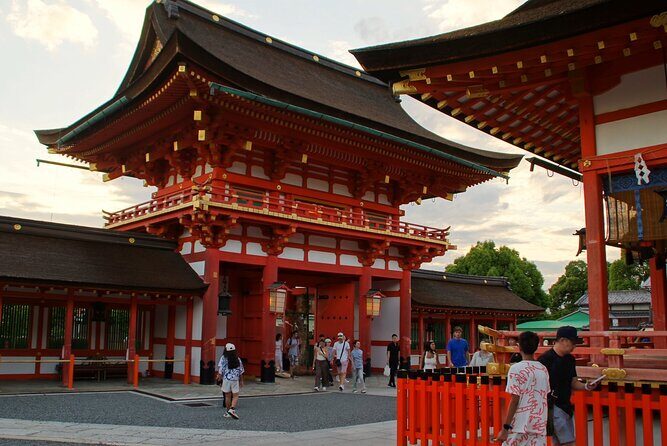
The meeting point is specific and easy to miss if you arrive late: Daily Yamazaki Fushimi Inari Shrine, at 93 Fukakusa Inarionmaechō, Fushimi Ward, Kyoto, 612-0881, Japan.
A couple practical thoughts:
- Arrive a few minutes early so you’re not rushing while trying to find the exact spot.
- Plan to use public transportation, since the tour notes it’s near transit. That matters here because evening crowds can slow you down fast.
Check-in is streamlined with a mobile ticket, and the tour ends back at the same meeting point. That means no stressful end-of-tour navigation when your legs are already negotiating with gravity.
Fushimi Inari-taisha explained: fox deity, ritual moments, and gate symbolism
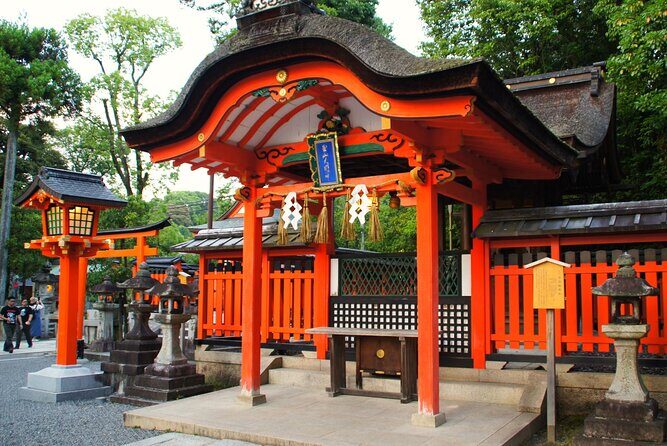
Stop 1 is the main attraction: Fushimi Inari-taisha Shrine. This is where you’ll get the “why” behind what most people see as just an iconic mountain scene.
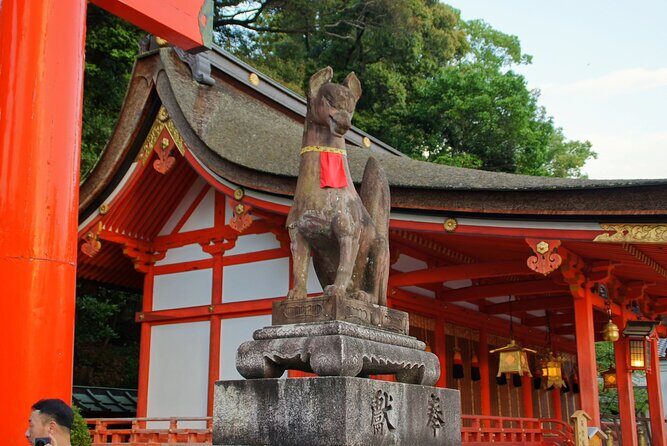
You’ll learn about Inari, the fox deity, and how that belief shapes what you notice as you walk. The shrine’s look is unmistakable—torii gates winding through a peaceful forested mountain—and the guide’s job is to help you connect that visual experience to the spiritual meaning.
What I like about this approach is that it doesn’t leave you staring at objects like a checklist. Instead, the explanations are framed around shrine practices and rituals you encounter during the walk. The goal is simple: when you see a fox-related element, you understand why it’s there. When you move under the torii gates, you understand that they aren’t only architectural—they’re part of a religious landscape.
You’ll also get reflective moments built into the flow. Even though this is an active tour, it’s not just “walk, look, snap, repeat.” The guide helps you slow down at the right times so you can actually take in the meaning of what you’re passing.
The trail walk: viewpoints, pace, and how to handle the climb
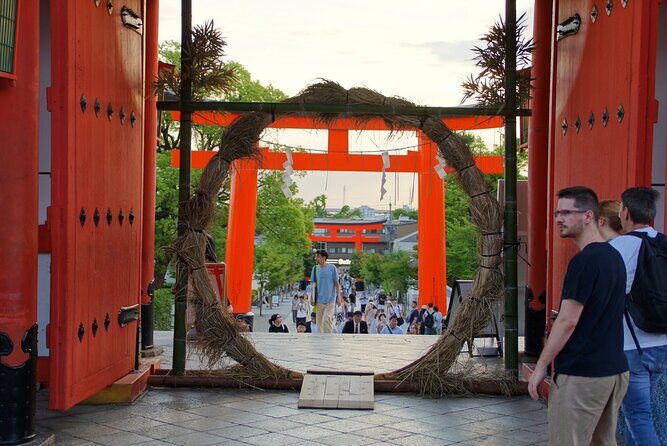
The heart of the experience is the walk up the scenic trails toward panoramic views of Kyoto. This is where the tour earns its name as a walking tour. You’re not just circling the entrance area and calling it done.
The route involves a climb. Some people will feel that more than others, especially if you’re not used to stairs and uneven ground at night. The good news: the tour lasts about 2 hours, and the pacing is designed so you don’t lose the guide or the plot.
Here’s what to expect as you ascend:
- You’ll move from the most recognizable areas into quieter trail paths where the setting feels more peaceful.
- You’ll reach spots with panoramic views, which makes the effort feel worth it.
- You’ll have time for pause-and-think moments that help you soak in the setting instead of just grinding upward.
Also, there’s practical wisdom in how the tour handles crowd flow. The evening start helps, but you still benefit from having someone who knows when to head toward certain viewpoints or quieter areas rather than getting stuck in the most congested lane.
Guide-led navigation: small group benefits you can feel
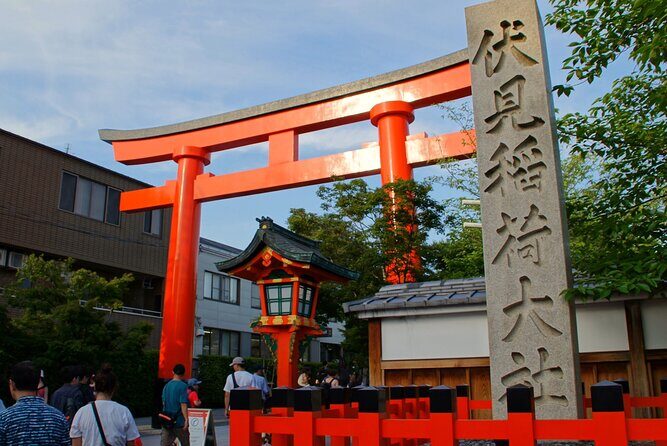
The tour limits the group to a maximum of 10 travelers. That size is not just a “nice to have.” It changes the whole experience.
With a small group, you:
- hear the guide clearly without competing with background noise
- stay oriented on the route instead of losing time to decision-making
- get answers when you have questions, without having to shout across a crowd
And because the guide is English speaking and focused on historical and spiritual context, you’re not stuck translating or guessing what you’re looking at. Instead, you’re walking with someone who can connect the dots between the shrine setting and the rituals happening within it.
A small-group format also tends to make the tour feel more personal. The vibe you’re aiming for at Fushimi Inari isn’t a stiff lecture. It’s more like walking with a local who knows how to point out what matters and where to stop so the place feels sacred instead of just busy.



Admission included and ticket on your phone: where the value comes from
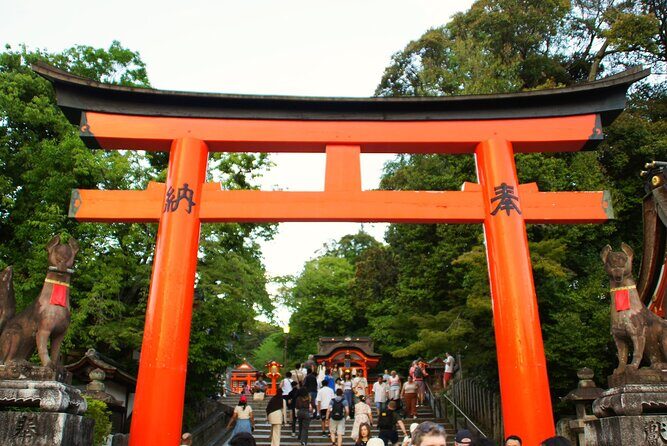
Price is $39.64 per person, and the big value piece is that entry/admission to Fushimi Inari-taisha is included. At a shrine this famous, getting in quickly matters because crowds can turn waiting into a time sink.
You also get:
- an English speaking guide
- historical insights tied to what you’re seeing
- the convenience of someone else navigating and pacing the route
That’s the real tradeoff: you’re paying for time saved and context gained. If you were to do it on your own, you could follow the torii gates and walk the mountain trails, but you’d likely miss the “hidden meanings” and ritual details that make the experience click.
What’s not included is also worth noting:
- Food and drinks
- Tips (optional)
So if your stomach will need something during or after, plan on grabbing a snack before the tour or finding food afterward. Since it’s an evening outing, you don’t want to realize you’re hungry halfway up a climb.
If you like extra flexibility, the tour offers free cancellation up to 24 hours before the experience start time for a full refund. That can make it easier to lock in your Kyoto schedule without too much stress.
Who this walking tour is best for (and who should think twice)
This is a great fit if you:
- want context, not just photos
- like walking with a guide and learning why things are the way they are
- prefer a small group so you don’t feel lost or rushed
- plan to visit in the evening and want a calmer rhythm
It may be less ideal if you:
- have limited tolerance for uphill climbs and stairs
- dislike the idea of moving at a guided pace through a popular shrine complex
One more practical fit check: the tour says most travelers can participate. That’s reassuring, but the physical reality is still a mountain-trail walk. Wear shoes you can trust, and treat it like an evening hike with cultural lessons attached.
Should you book this Kyoto Fushimi Inari Shrine Walking Tour?
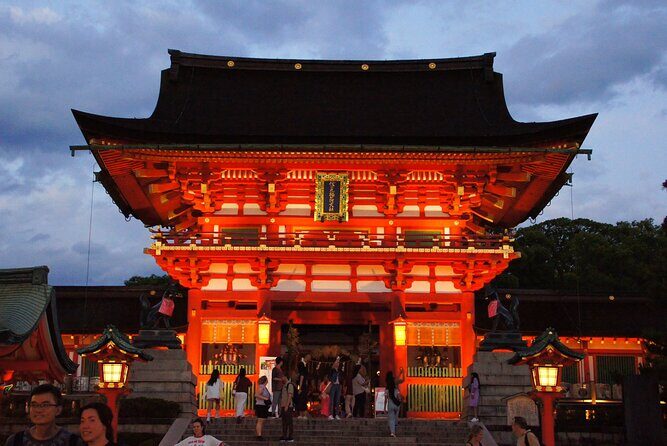
Book it if you want Fushimi Inari to feel like more than a bucket-list stop. This tour gives you the key explanations—Inari, the meaning behind torii gates, and the ritual moments you’ll encounter—plus it keeps you moving with a plan instead of improvising in crowds.
Skip it (or consider a different format) if your priority is maximum freedom to wander at your own speed. Since the tour is about a 2-hour guided experience with a set starting point and route focus, it’s designed to guide you, not let you drift indefinitely.
My simple take: if you’re even slightly curious about what you’re seeing—especially the fox-related elements and the shrine practices—this guided walk is excellent value for your time in Kyoto.
FAQ
How long is the Kyoto: Fushimi Inari Shrine Walking Tour?
It’s about 2 hours long.
What time does the tour start?
The start time is 6:00 pm.
Where is the meeting point?
The meeting point is Daily Yamazaki Fushimi Inari Shrine, 93 Fukakusa Inarionmaechō, Fushimi Ward, Kyoto, 612-0881, Japan.
Does the tour include admission to Fushimi Inari-taisha?
Yes. Entry/admission to Fushimi Inari-taisha Shrine is included.
What’s the group size limit?
The tour has a maximum of 10 travelers.
Is there a mobile ticket for this activity?
Yes, the tour uses a mobile ticket.
What’s included in the tour price?
Included are an English speaking guide, historical insights, and entry/admission to Fushimi Inari-taisha Shrine.
Are food and drinks included?
No. Food and drinks are not included.
Do I need to tip?
Tips are optional.
What is the cancellation policy?
You can cancel for free up to 24 hours in advance for a full refund. If you cancel less than 24 hours before the start time, you won’t receive a refund.


![[1 Group Only] Tokyo Shibuya Food Tour for Family - Meeting up and getting oriented around Shibuya Station](https://images.thejapantraveler.com/wp-content/uploads/1-group-only-tokyo-shibuya-food-tour-for-family.jpg)