REVIEW · TOKYO
Shibuya: Ramen Dojo Tokyo | Make All 3 (Tonkotsu/Shoyu/Miso)
Book on Viator →Operated by Viyago Japan · Bookable on Viator
Ramen class in Shibuya beats another noodle shop visit. In this small-group lesson near Shibuya Station, you’ll learn how to make ramen and then taste three styles—tonkotsu, shoyu, and miso—in one sitting. It’s hands-on Japanese comfort food, with English guidance and a real focus on skills you can repeat at home.
What I like most is the fresh noodle making with a professional noodle machine and cutter. You get plenty of time to work the dough yourself, and the instructor support is patient, even if it’s your first time in the kitchen. I also like that the class doesn’t stop at cooking: you finish by assembling and eating three mini bowls, so you leave full, not just inspired.
One consideration: the class isn’t suitable if you have severe wheat/gluten, egg, or soy allergies, celiac disease, or strict vegan/religious dietary requirements. It also isn’t suitable for people who can’t use stairs, so check your mobility needs before booking.
In This Review
- Key Things to Know Before You Go
- Why This Shibuya Ramen Lesson Feels Practical and Fun
- Getting There: Meeting at Umekita Building Near Shibuya
- The 90-Minute Flow: What You Do, Step by Step
- 1) Check-in and briefing (about 10 minutes)
- 2) Chicken chashu prep (about 5 minutes)
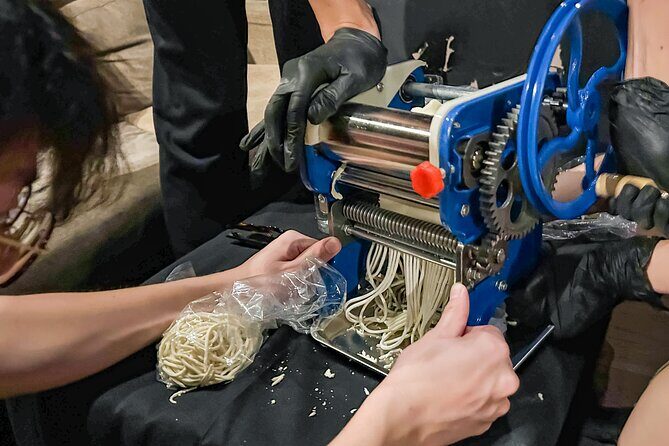
- 3) Noodle making (about 20 minutes)
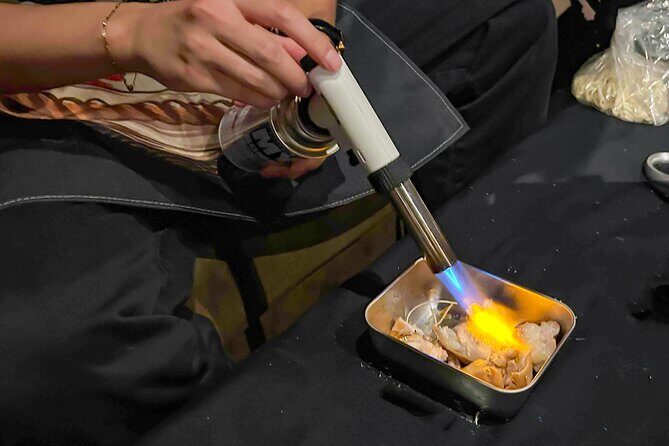
- 4) Chicken chashu finishing (about 10 minutes)
- 5) Boiling noodles / soup preparation (about 10 minutes)
- 6) Plating (about 5 minutes)
- 7) Tasting and photo time (about 30 minutes)
- What You Actually Learn (and What Helps You at Home)
- Small Group Size: Why It Matters More Than You Think
- The Biggest Value: Three Mini Bowls and a Skill Upgrade
- Dietary and Accessibility Considerations (Read This Part Carefully)
- Who This Ramen Dojo Experience Fits Best
- Should You Book This Shibuya Ramen Class?
- FAQ
- Is this ramen class near Shibuya Station?
- How long is the experience?
- What ramen styles will I make and taste?
- Is the class taught in English?
- How many people are in the class?
- Will I get to eat during the class?
- Do I receive a recipe to use later?
- Is the experience suitable for gluten, egg, or soy allergies?
- Is it accessible if I can’t use stairs?
- Can I cancel for a full refund?
Key Things to Know Before You Go
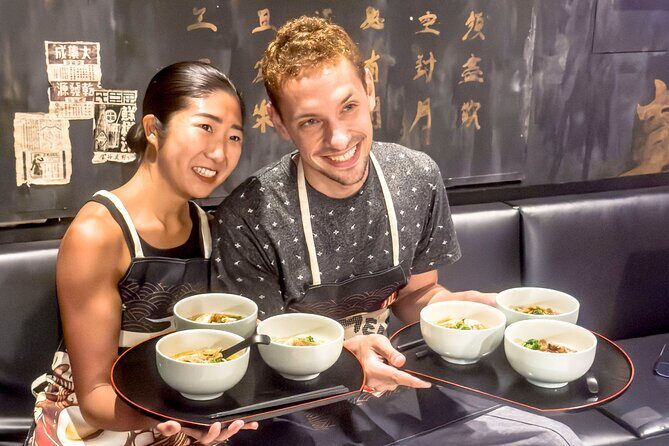
- Three ramen styles, one session: tonkotsu, shoyu, and miso tasting are built into the experience
- You make the noodles: kneading, cutting, and using a professional noodle machine
- Chicken chashu is part of the lesson: prep and finishing steps happen during the class
- Small group pace (max 8): you’ll get closer instructor attention while you work
- Three mini bowls means no hunger pangs: you’re not just smelling the ramen, you’re eating it
- Take-home recipe included: a digital recipe is provided after class
Why This Shibuya Ramen Lesson Feels Practical and Fun

Tokyo has plenty of ramen shops. Still, this experience is different because it turns ramen from something you order into something you can actually reproduce. You’re not only learning flavors. You’re learning technique: noodle dough handling, shaping, cooking timing, and how to adjust the soup to your preference.
I also like the “three-in-one” approach. Tasting tonkotsu, shoyu, and miso side by side is a fast way to understand what changes when you shift broth style. It gives you a clearer mental map than if you only eat one bowl and guess why it tastes the way it does.
And because the group is capped at a small size, you’re not stuck watching while someone else works. You’re doing the work. That matters in a cooking class, because the hands-on learning is what sticks when you try again later.
You can also read our reviews of more tours and experiences in Tokyo.



Getting There: Meeting at Umekita Building Near Shibuya
The meeting point is the Umekita Building, 7-11 Maruyamachō, Shibuya, Tokyo (150-0044). It’s about a 10-minute walk from the station area, so you’re not spending your lesson time battling transit stress.
Check-in and briefing happen first, then the class moves quickly into food prep and cooking. Since the activity starts and ends at the same location, it’s easy to plug into your Shibuya day plan. Do Shibuya browsing after, not before. You’ll walk off with noodle confidence, and you can still snack on the rest of Tokyo later if you want.
The 90-Minute Flow: What You Do, Step by Step
The class runs about 1 hour 30 minutes. A typical flow goes like this: brief check-in, chashu prep, noodle making, chashu finishing, soup prep and noodle boiling, plating, then tasting and photos.
Here’s what each phase means for you, beyond the clock.
1) Check-in and briefing (about 10 minutes)
You’ll get the rules of the kitchen, what you’ll make, and how the session will work as a group. This is also where instructors set expectations for timing and safety so you don’t feel rushed once you’re standing at the station.
For first-timers, this part is helpful. Cooking classes often feel intimidating because you don’t know what’s about to happen. This one gives you the game plan up front, then gets to work.
2) Chicken chashu prep (about 5 minutes)
You start with chicken chashu preparation. That’s a big plus if you like ramen that has satisfying, savory topping energy. Chashu is one of the textures that makes ramen feel like a full meal, not just noodles in broth.
Prep time is short, which usually means the instructor is focused on key steps you can manage quickly. The lesson is designed so you spend your limited class time doing the parts that teach you the most.






3) Noodle making (about 20 minutes)
This is the star of the show. You’ll knead the dough, cut noodles using a professional cutter, and use the professional noodle machine yourself.
The best part is that the process is very tactile. You learn what the dough feels like when it’s ready, and you see how the noodle thickness affects the final bowl. Even if the first batch isn’t perfect, you’ll understand why the instructor keeps emphasizing consistency.
If you’ve ever tried to make noodles at home from scratch, you know it can get messy fast. In this class, you get guided steps plus equipment built for the job, so you’re less likely to burn an hour and a half and end up with a science project.
4) Chicken chashu finishing (about 10 minutes)
After the initial prep, you move into finishing the chashu. This is where ramen becomes ramen, because the topping isn’t just garnish. It’s part of the flavor story across all three bowls.
Finishing time is also a pacing tool. While you’re working, the class is running in a coordinated way so everyone can eat together. That means you’re not waiting around for everything to cook while your noodles sit cold.
5) Boiling noodles / soup preparation (about 10 minutes)
Now it’s time for the cooking crossover: noodles need to be boiled and soups need to be ready. This portion teaches you how ramen timing works in real life: the broth and noodles have to meet at the right moment for best texture.
You also adjust flavor. The class isn’t only about following a recipe like it’s a robot job. It’s about understanding taste and tuning it. That matters if your goal is to make ramen at home later.
One useful note from the way the class is described: some people come in expecting a deep focus on broth flavor building, not just noodle technique. If broth adjustment is your top goal, you might want to be vocal about what you want to learn so the instructor can point you to the most relevant steps.
6) Plating (about 5 minutes)
You assemble three mini bowls. Each bowl is part of your ramen trio: noodles, soup style, chashu, and toppings. This is also where the Instagram-ready presentation happens, without turning the class into a photo-only production.
Plating is more important than it sounds. In ramen, distribution affects how each bite changes. You get to see what the instructor considers the right balance between noodles, broth, and toppings.
7) Tasting and photo time (about 30 minutes)
This is when the lesson clicks. You taste tonkotsu, shoyu, and miso in one sitting, instead of choosing just one bowl. Side-by-side tasting helps you notice differences in richness, saltiness, and overall character.
You also get time for photos. But the real value is that you’re not rushing taste. Thirty minutes is enough to eat, reflect, and ask questions while your brain is still in food mode.
If you’re new to ramen, this is the part that helps you stop guessing. If you already love ramen, you’ll likely enjoy comparing the styles with clearer logic.
What You Actually Learn (and What Helps You at Home)
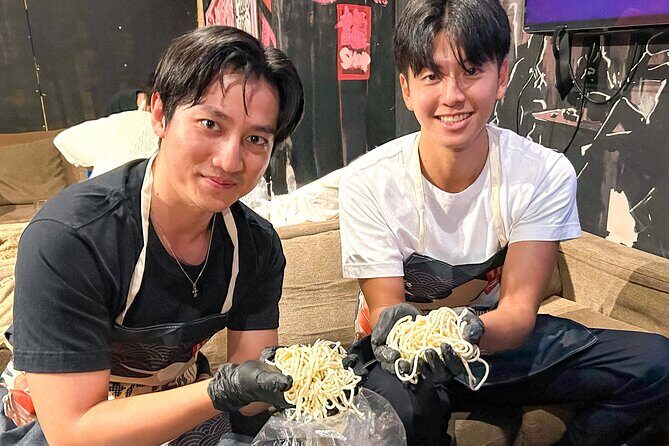
The class is built around three repeatable outcomes:
1) Noodle technique with professional tools
You’ll use a professional noodle machine and cutter, so you learn the “how” without the frustration of missing equipment or wasting dough. The lesson helps you understand thickness, handling, and how the dough responds.
2) Chicken chashu prep and finishing
Even though it’s chicken, not pork, chashu is about rich, savory tenderness. You’ll learn how the topping process works enough to recreate something similar at home.
3) Soup flavor tuning across three styles
You’re guided on how to adjust the soup to your preferred taste. Then you taste the results immediately. That feedback loop is huge. It’s one thing to read about flavor adjustments. It’s another to taste your own bowl and learn what to change next time.
You’ll also receive a digital recipe after class. That’s what turns a fun afternoon into something you can use again.
Small Group Size: Why It Matters More Than You Think

This is capped at a maximum of 8 travelers. That size is a big deal in a cooking workshop. You’re more likely to get help when you’re kneading, rolling, or adjusting timing.
It also changes the vibe. Instead of feeling like you’re competing for attention, you can focus. The class includes attentive English-speaking support, and multiple participants have highlighted how patient the guides are, including when someone brings a child.
If you’re traveling solo, a small group can make the experience feel social without turning it into a crowded show. If you’re traveling with family, it can be a calm way to do something hands-on that doesn’t require previous cooking experience.
The Biggest Value: Three Mini Bowls and a Skill Upgrade
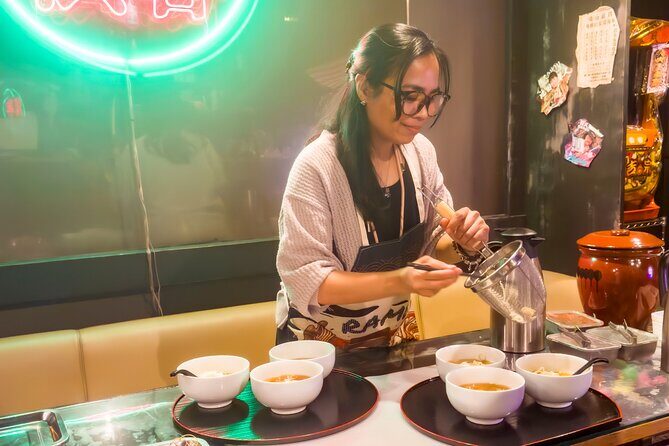
At $86.22 per person, this isn’t a “cheap snack” activity. You should think of it as a skill class with food included. The good news is that the meal portion is built in: you taste three mini bowls (tonkotsu, shoyu, miso), and you use the kitchen equipment plus included ingredients.
Here’s how I’d judge value before you book:
- If you love ramen and want to understand it, not just eat it, the noodle-and-broth workflow is worth paying for.
- If you only want to fill your stomach, you could skip the class and eat ramen somewhere else. You’d trade learning time for lower cost.
- If you want an activity that you can do in English with guidance, and you like the idea of bringing one or two techniques home, this is priced in a reasonable way for what’s included.
The fact that it runs 90 minutes and ends near where you start also helps. You’re not losing half a day to logistics.
Dietary and Accessibility Considerations (Read This Part Carefully)
This class isn’t suitable if you have severe wheat (gluten), egg, or soy allergies, or celiac disease. It also isn’t suitable for severe airborne flour sensitivity. If you need strict dietary compliance (like fully strict vegan or certain religious requirements), you should double-check fit before booking.
Mobility matters too. Guests unable to use stairs aren’t suitable for the experience. If stairs are a problem for you or a travel companion, it’s better to know this upfront than discover it when you arrive.
Who This Ramen Dojo Experience Fits Best
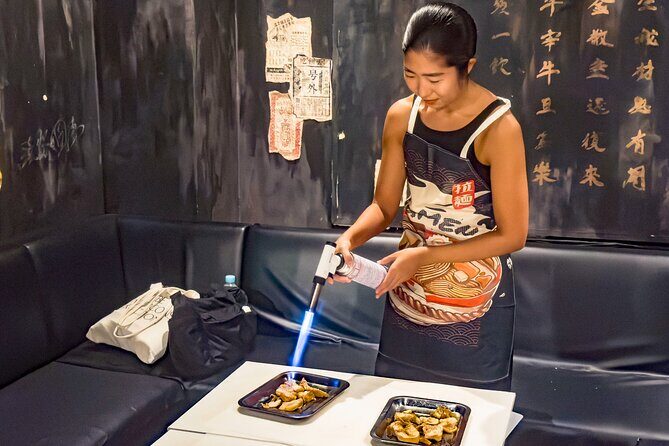
This workshop is a great match if:
- you’re a ramen fan who wants more than ordering
- you want hands-on cooking time, especially with noodles
- you’re traveling with a friend or small family group
- you’re okay with the class being focused on three ramen styles rather than a custom menu
It may not be the best fit if:
- your top goal is a vegetarian-only or fully vegan outcome
- you have the listed severe allergies or celiac disease
- you can’t use stairs
That’s not a dealbreaker for everyone. It just means you should plan based on your needs.
Should You Book This Shibuya Ramen Class?
Yes, if you want a fun, structured ramen experience that teaches you real cooking steps you can repeat later. The fresh noodle work, the small-group support, and the side-by-side tonkotsu/shoyu/miso tasting are the winning combination. You leave with food in your belly and a clearer ramen brain in your head.
Skip it or verify fit first if you have severe dietary restrictions or mobility limitations. Also, if you’re mainly chasing broth science above all else, ask questions early during the class so the instructor can guide you to the parts you care about most.
If your plan is Shibuya sightseeing, this is a smart way to add something hands-on to your day without stretching your schedule.
FAQ
Is this ramen class near Shibuya Station?
Yes. The studio meeting point is about a 10-minute walk from Shibuya Station, at Umekita Building, 7-11 Maruyamachō, Shibuya.
How long is the experience?
It runs about 1 hour 30 minutes (90 minutes).
What ramen styles will I make and taste?
You’ll make and taste three styles: tonkotsu, shoyu, and miso.
Is the class taught in English?
Yes. The class is conducted in English with attentive support for small groups.
How many people are in the class?
There is a maximum of 8 travelers.
Will I get to eat during the class?
Yes. You get three mini bowls of ramen to taste.
Do I receive a recipe to use later?
Yes. You’ll be provided a digital recipe after the class.
Is the experience suitable for gluten, egg, or soy allergies?
No. It’s not suitable for severe wheat (gluten), egg, or soy allergies, or celiac disease.
Is it accessible if I can’t use stairs?
No. Guests unable to use stairs are not suitable for this experience.
Can I cancel for a full refund?
Yes. You can cancel up to 24 hours in advance for a full refund. If you cancel less than 24 hours before the start time, the amount paid will not be refunded.