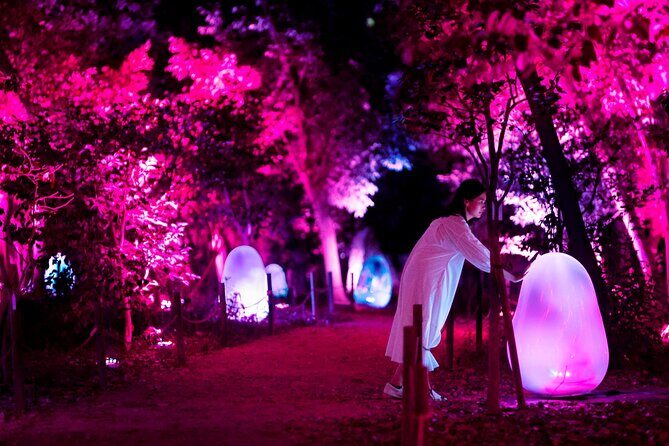
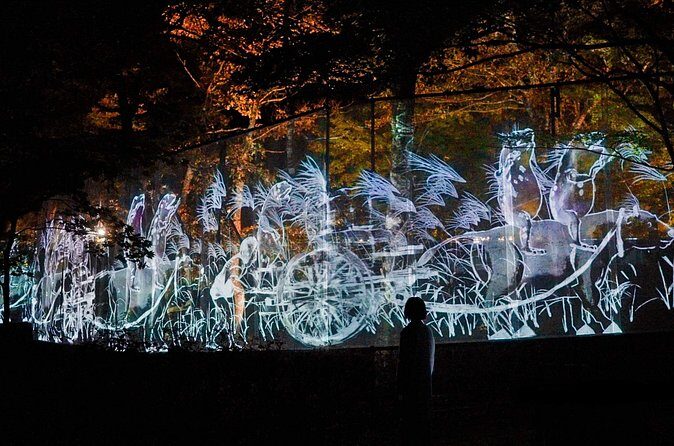
Night falls, and this garden changes fast. teamLab Botanical Garden Osaka turns Nagai Botanical Garden into a glowing, interactive art walk after dark, with light and sound behaving like parts of the show. Instead of a typical stroll, you move through sections where the atmosphere responds to your presence and the whole place feels like a living installation.
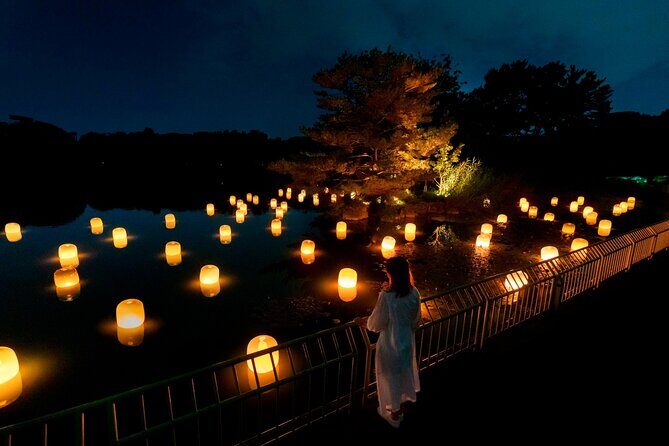
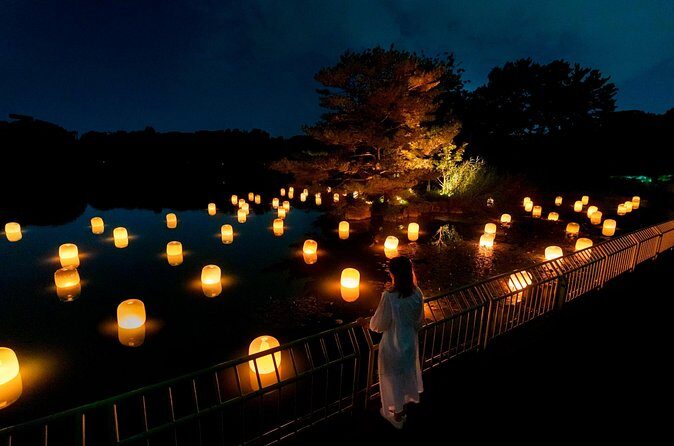
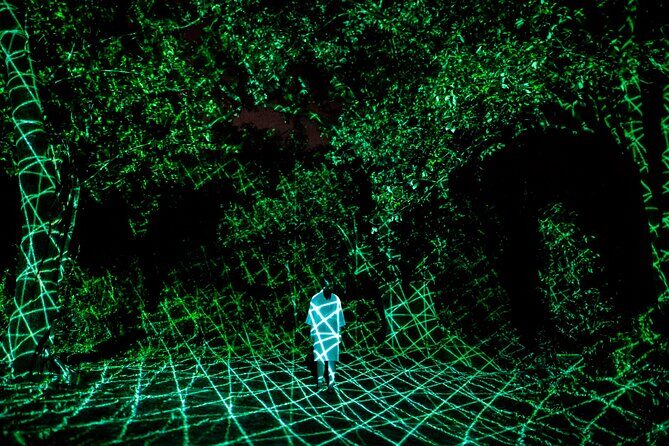
I especially like two moments: the Floating Resonating Lamps on Oike Lake, where lights ripple across the water in sync with ambient music, and the bald cypress forest, which shifts as you pass through. It is surprisingly calming for something so tech-heavy, and you end up walking slower just to take it in.
One thing to think about: the experience can feel repetitive, and if you show up without a ticket plan, you may waste time standing in long lines for entry.
In This Review
- Key things to know before you go
- Night-Only Digital Art in Nagai Botanical Garden
- Timing and Flow: Why the 7:00 PM Start Matters
- Oike Lake’s Floating Resonating Lamps on the Water
- The Bald Cypress Forest: Light, Sound, and Movement
- Rules That Affect Your Experience (and Your Photos)
- Price and Value: What $28 Buys You (and What It Might Not)
- Who Should Go for the Best Night Out
- Should You Book This TeamLab Botanical Garden Osaka Ticket?
- FAQ
- What time is the teamLab Botanical Garden Osaka experience available?
- How long does the visit take?
- Is the admission ticket included in the purchase?
- Can I bring outside food and drinks into the venue?
- Are tripods, monopods, or selfie sticks allowed?
- Is luggage storage available?
Key things to know before you go
- Interactive lighting follows your movement through multiple zones
- Oike Lake’s Floating Resonating Lamps are the standout visual set-piece
- The bald cypress forest changes as you walk, with sound adding to the effect
- You’ll deal with flashing lights and loud noises, so plan for sensory comfort
- Photography gear is restricted, including tripods, monopods, and selfie sticks
- No re-entry after you leave, so commit to staying the full visit
Night-Only Digital Art in Nagai Botanical Garden
teamLab Botanical Garden Osaka runs on a simple idea: nature is the stage, and digital art reacts to your footsteps. It is held inside Nagai Botanical Garden, and the change from daytime garden to nighttime art world is the whole point. From 7:00 PM to 9:00 PM each night, you’re not just looking at installations. You’re part of the system.
What you can expect is a slow-building mix of glowing trees, reflective water, and sound drifting through the pathways. The experience is designed so that you feel you are wandering inside a responsive artwork—one where light behaves like it’s listening. That makes it more than a quick photo stop. Even if you’re there for pictures, you’ll likely pause between moments because the atmosphere shifts as you move.
The nighttime scheduling also changes the vibe. It’s cooler, the lighting does the heavy lifting, and it feels less like a crowded garden and more like a curated walk. Plan for the fact that this is a show, not a stroll through a passive exhibit.
If you’re sensitive to sensory effects, take it seriously. The venue notes flashing lights and loud noises due to the nature of the artworks, so this is not the best choice if you need quiet, steady lighting, or low stimulation.
A few more Osaka tours and experiences worth a look

Timing and Flow: Why the 7:00 PM Start Matters
The garden’s open hours are 7:00 PM to 9:00 PM (daily). The visit typically runs about 1 to 2 hours, which is a sweet spot for a low-commitment night activity. It also means you don’t need to over-plan your whole evening around it, as long as you build in some buffer time.
Here’s how to make the flow work for you:
- Arrive a bit early so you’re not rushing at the start.
- Give yourself time to move through sections without sprinting for photos.
- Remember: no re-entry is allowed after you leave the venue. Once you’re out, you’re done for that visit.
You’ll likely be walking outdoors at night, so wear shoes you trust. City sidewalks and garden paths can feel very different after dark. If you’re coming from central Osaka, you’ll be fine relying on public transportation since it’s described as near transit, but don’t leave your schedule to chance. Waiting at the entrance is where evenings can wobble.
Also, there’s no luggage storage facility. If you’re carrying a big bag, keep it light or plan to store it elsewhere before heading to the garden.
Oike Lake’s Floating Resonating Lamps on the Water
If you only want one reason to go, it’s this one. The Floating Resonating Lamps on Oike Lake are the signature moment: glowing lamps float on the water, and their behavior lines up with ambient sound. The effect is simple but memorable—color and light drifting across reflections, with the sense that the whole lake is part of the music.
Why it works: water makes everything look more magical. Light travels differently on a surface that’s moving, even slightly. Add sound synchronization and the scene turns from pretty to emotional. You’ll probably spend more time here than you planned, because it’s the easiest place to slow down and just watch.
A practical tip: treat this as your anchor photo moment. Don’t chase the perfect shot first and miss the rest. After you catch your bearings, come back mentally to this section as your main visual payoff. Then you can relax elsewhere without feeling like you have to capture everything.
Expect it to feel busy if you come at peak time. Standing still for a while is part of the deal, so plan to be patient. If you’re traveling with kids or you’re tired, this is also the moment where you can sit, watch, and let the show carry you.
The Bald Cypress Forest: Light, Sound, and Movement
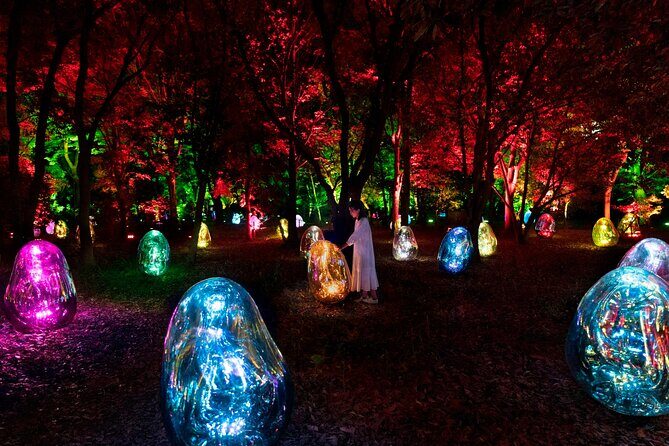
Another highlight is the luminous bald cypress forest, where the atmosphere shifts as you walk through. This is the part people talk about because it’s more than lighting on trees. The garden feels like it’s reacting to where you stand and how you move.
What I like about this zone is the pacing. Instead of one giant spectacle, it’s a series of moments—light changes, sound echoes, and then the experience asks you to continue forward. That keeps the walk from feeling like a single static room.
But there’s a trade-off. Because the art responds to movement and the overall experience builds in zones, it can start to feel same-y if you expect tons of wildly different scenes back-to-back. If your ideal night out is variety every 2 minutes, you might end up wanting more variety than what you get.
If you want the forest to feel more special, do this: slow your pace, and don’t rush through only for photos. The changes are tied to your movement and position, so moving too fast means you might miss subtle shifts.
Also note the sensory conditions. Flashing lights and louder sound are part of the show here, so if you’re sensitive, consider stepping aside briefly when you need a break.
Rules That Affect Your Experience (and Your Photos)
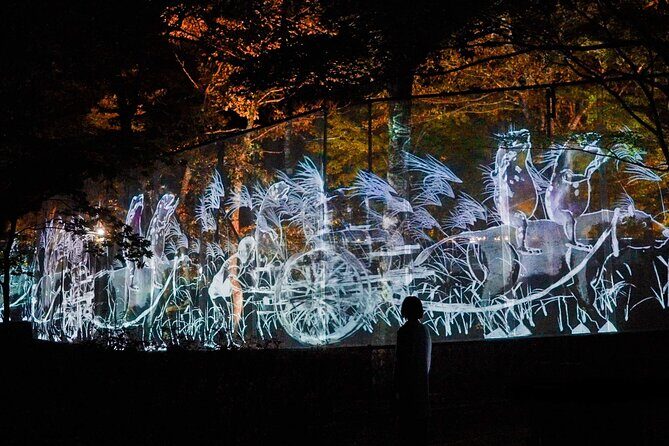
teamLab Botanical Garden Osaka has clear behavior and gear rules, and they matter because they shape how the space feels. The venue does not allow outside food and drinks. Smoking and drinking are also not allowed.
The biggest practical impact for many visitors is the photo and equipment policy. The use of monopods, tripods, selfie sticks, and other auxiliary equipment is prohibited. This helps keep the walk open and reduces the risk of people blocking paths. It also means your photos will rely on handheld shots or phone setups that don’t extend into space.
If you’re hoping for long-exposure tripod-style images, you’ll need to adjust expectations. This is a place where quick, handheld captures make more sense than staging a shoot. You’ll still get plenty of picture-friendly moments, especially near the water and in the forest, but you should plan to travel light on gear.
One more real-world note: outside food isn’t allowed, and there’s no luggage storage on site. So if you’re planning snacks or need room for bags, handle that before you arrive. Keep essentials in a small bag you can manage comfortably while moving through dark pathways.




Price and Value: What $28 Buys You (and What It Might Not)
At $28 per person, this ticket lands in the category of paid attractions where value comes from atmosphere, not from time savings. You’re paying for a specific kind of night experience: a guided-feeling walk through responsive art, using light and sound as the main language.
For value, ask yourself two questions:
- Do you enjoy digital art that reacts to your presence?
- Are you okay spending 1 to 2 hours watching, walking slowly, and taking in one cohesive theme rather than hopping between totally different exhibits?
If yes, this can be a good deal because the standout moments are strong, especially the Oike Lake lamps and the cypress forest transformation. The garden’s nighttime setting adds extra value, since the same place in daylight would not deliver this effect.
If no, it can feel expensive. The criticisms I’d take seriously here are about repetition and the gap between marketing-style promises and what actually works during the visit. Some visitors may find that interactive elements don’t deliver as consistently as they hoped, and that can make the experience feel more like lights and photos than a true hands-on art journey.
My practical take: treat this as an evening show you walk through, not a DIY science experiment. If you match your expectations to that, the ticket usually feels fair.
Who Should Go for the Best Night Out
This is a great option if you want a night activity that’s:
- visually striking,
- atmospheric,
- easy to fit into an Osaka evening,
- and fun for couples or groups who like shared viewing moments.
It also works for solo travelers who enjoy slow, sensory experiences. You can wander at your own pace, take photos, and let the soundscape set the mood.
Families can enjoy it too, but keep in mind the flashing lights and loud noises. If you have kids who get overwhelmed easily by bright light or sound effects, plan on breaks and have a calming strategy.
It may not suit you if:
- you’re sensitive to flashing lights or loud noises,
- you need quiet and predictability,
- or you’re chasing lots of distinct, radically different scenes in a short time.
Should You Book This TeamLab Botanical Garden Osaka Ticket?
Book it if you want a nighttime art walk where water light effects and responsive tree zones are the main attraction. The show is strongest when you’re willing to slow down, watch what the garden is doing, and enjoy the theme as one unified experience. The $28 price feels most reasonable when you’re going for the mood and the signature moments—not when you expect nonstop variety.
Don’t book if you’re trying to avoid flashing lights and louder sound, or if you’re very photo-planning with tripods and selfie-sticks. The rules are firm, and the experience length is short enough that you want your expectations aligned from the start.
If you do go, one smart move: plan your entry so you aren’t stuck waiting. Show up with your timing and ticket situation handled, and you’ll spend more of your 1 to 2 hours inside the garden where the magic actually happens.
FAQ

What time is the teamLab Botanical Garden Osaka experience available?
It runs from 7:00 PM to 9:00 PM each day during the listed operating period.
How long does the visit take?
Plan for about 1 to 2 hours.
Is the admission ticket included in the purchase?
Yes. Admission to the attractions is included with the ticket.
Can I bring outside food and drinks into the venue?
No. Outside food and drinks are not allowed inside the venue.
Are tripods, monopods, or selfie sticks allowed?
No. Tripods, monopods, selfie sticks, and other auxiliary equipment are prohibited.
Is luggage storage available?
No. There is no luggage storage facility at the venue.