REVIEW · TOKYO
TokyoSumoShow, ChickenHotPot, and Mochi-Pounding by Pro Wrestlers
Book on Viator →Operated by SUMO LAND · Bookable on Viator
Sumo in Tokyo sounds straightforward. Then you add food, a ring entrance, and hands-on challenges. That’s the trick here: it turns a sport you’ve seen on TV into something you can touch, taste, and (briefly) attempt yourself.
I like that you get a full “day-of-sumo” vibe in about 1 hour 30 minutes to 2 hours, not just a sit-and-watch performance. I also really like the way the meal is built around chanko: chicken hot pot prepared for you as part of the experience, supervised by the Isegahama stable. One thing to keep in mind: if lots of people want the ring action or mochi pounding, participation can be limited to one per group or decided by lottery.
In This Review
- Key Highlights Worth Planning For
- Ryogoku Ring Energy: Finding SUMOLAND and Getting Settled Fast
- Chicken Chanko Hot Pot: Included Meal That Sets the Tone
- Diet and food rules you should know
- Ring Entrance Ceremony and the Sumo Show: Former Wrestlers, Real Presence
- Mochi-Pounding Challenge: Fun Hands-On Japanese Tradition
- Sumo Bout Challenge: What It’s Like to Try the Match
- Photos, Souvenirs, and Your Best Seating Strategy
- Price and Value for $106.12: Is It Worth It?
- Who This Suits (and Who Might Find It Too Much)
- Quick Planning Tips for a Smooth Visit
- Should You Book SumoLand Tokyo Ryogoku?
- FAQ
- Where is SUMOLAND Tokyo Ryogoku located?
- How long is the experience?
- What’s included in the ticket?
- Is there food for people with dietary restrictions?
- Can I choose my seat location?
- Do I definitely get to do mochi pounding and the sumo bout challenge?
- What should I know about drinks?
Key Highlights Worth Planning For
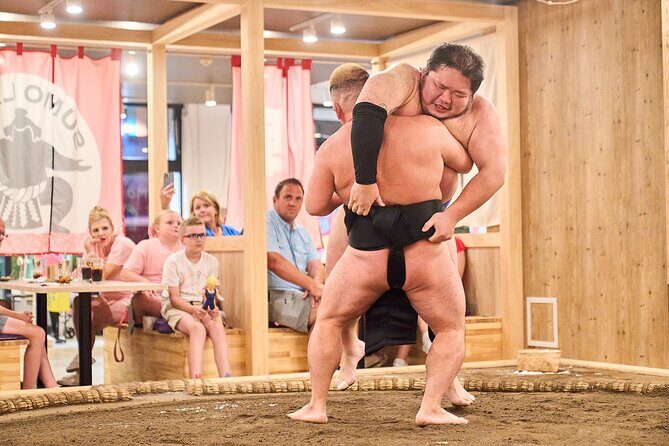
- Ryogoku location: You’re in sumo country, a short walk from Ryogoku Station.
- Chanko hot pot meal: Chicken chanko is included and designed to be part of the program, not an afterthought.
- Former pro wrestlers up close: Ring entrance and in-the-ring performances feel legit.
- Mochi-pounding hands-on: Kids welcome, and the crowd energy stays high.
- Participation limits: Your chance to enter the ring can depend on group size and demand.
- English-friendly delivery: Staff explain steps clearly, and you may get help with Japanese words and pronunciation.
Ryogoku Ring Energy: Finding SUMOLAND and Getting Settled Fast
SUMOLAND Tokyo Ryogoku is in a proper sumo neighborhood, the kind where the whole area makes sense once you’re there. The venue is on the first floor of Takashima Ryogoku Mansion, just a short walk from Ryogoku Station. Look for the big sumo wrestler signs and flags near the entrance and you won’t miss it.
This kind of place works best when you arrive with a calm mindset. The show is organized and starts on time, and you’ll enjoy it more if you’re already seated and ready when the first action begins. A few minutes early is smart—not because you’ll be lost, but because the early moments (ceremonies, explanations, and setup) matter.
One more practical point: seating is assigned by the venue, and you can’t pick where you sit. If you’re traveling with a child, ask when you book about the safest option. Standard seats can be risky if you plan to hold a child on your lap, while box seats are designed to be safer (and can fit up to six people).
You can also read our reviews of more tours and experiences in Tokyo.



Chicken Chanko Hot Pot: Included Meal That Sets the Tone
The biggest “value move” here is that you’re not just paying to watch sumo. You’re paying for a meal—chicken chanko hot pot—that’s built into the flow of the show. It’s specially prepared and supervised by the Isegahama stable, which helps explain why the meal feels like part of sumo culture rather than a generic buffet.
What I like about this meal setup is timing. You eat while the program transitions from ceremony to performance. That means you’re not stuck waiting hungry for the main event, and you have something in your hands as staff move everyone along to the next segment.
Food feedback is also pretty consistent: some people call it simply OK, while others focus on how good the broth is. Either way, it’s a solid included meal for this price point because it reduces extra costs during your visit. Still, if you’re a picky eater or you want a strong “restaurant meal” experience, go in knowing the hot pot is there to support the show, not to become your favorite Tokyo dinner.
Diet and food rules you should know
- Vegetarian and vegan meals are available if you request at least 2 days in advance.
- Gluten-free and halal meals are not available.
- You can bring your own food if you need it.
That’s important. Plan ahead for dietary needs so you don’t waste time figuring things out once you’re there.
Ring Entrance Ceremony and the Sumo Show: Former Wrestlers, Real Presence
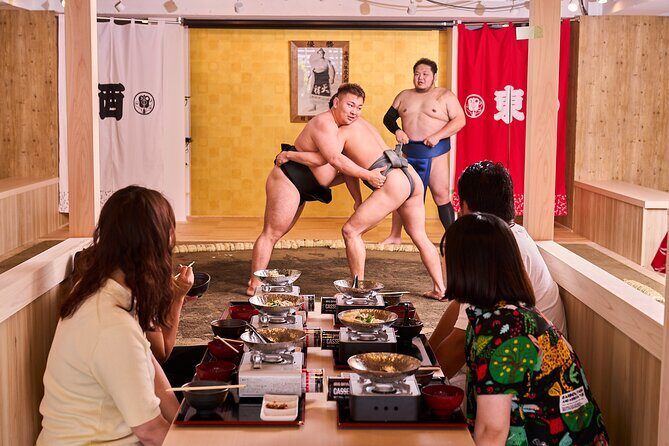
The program has an actual ceremony feel right at the start. You’ll see a powerful ring entrance by former top-division wrestlers, which immediately explains why sumo is more than sport. It’s theater, ritual, and muscle—sometimes all in the same second.
Then the main show begins, with performances supervised by a Yokozuna (the program notes the 63rd Yokozuna). You’re watching sumo techniques presented for an audience, but the wrestlers themselves bring real charisma and credibility. People consistently mention how close the wrestlers feel from the seating area near the ring.
Another thing I appreciate: staff work hard to make the sport understandable. You may get Japanese words paired with translations, plus short practice moments for the audience. That kind of small interaction sounds gimmicky on paper, but it helps you follow along when the action speeds up.
If you’re hoping for deep, tournament-rule detail in the style of a sports lecture, you might want to supplement this with a bit of reading later. Some people felt the narration could explain more about history and rules. Still, as a first introduction—especially for families—it’s built to keep you engaged.
Mochi-Pounding Challenge: Fun Hands-On Japanese Tradition
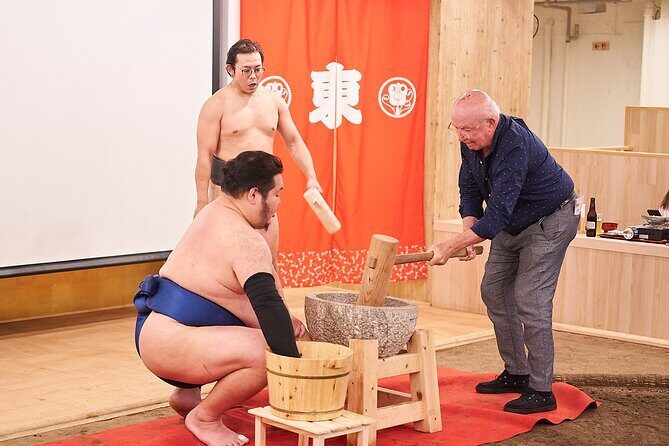
Mochi pounding is one of those activities that instantly levels up the experience. You’re not just watching; you’re participating (kids welcome). It’s also one of the best “Tokyo memory” style moments because it’s tactile. You can feel the rhythm, you can laugh when it goes sideways, and you can take home the bragging rights.
There’s also a real logistics note here. If many people join the mochi-pounding challenge, participation may be limited to one person per group or decided by lottery. So if mochi pounding is a must-do for your trip, arrive early and be ready when staff call names.
From the food side, mochi shows up again too. People often highlight mochi dessert as a standout part of the meal. Even if your main interest is the pounding, the way mochi ties back into the meal makes the whole segment feel complete.






Sumo Bout Challenge: What It’s Like to Try the Match
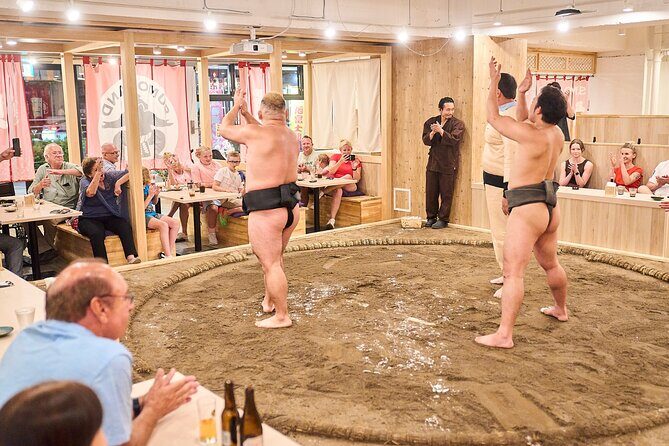
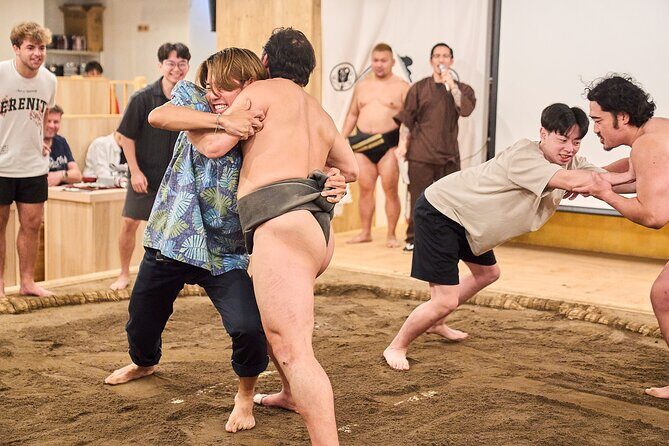
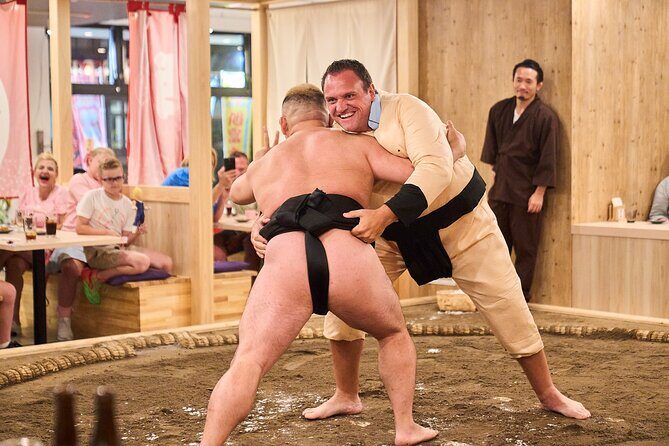
After the show and the culture bits, you get the part many people book for: the chance to step into the ring and try a sumo bout challenge. This is designed to be safe, structured, and fun—more “controlled performance” than serious competition.
Kids can join here too, but remember the big caveat: participation can be limited if too many people want to do it. The program notes that if demand is high, it may be capped at one per group or decided by lottery. That means you shouldn’t assume you’ll automatically get every hands-on moment, even if you bought tickets.
If you want the best odds, arrive early, follow staff instructions quickly, and keep your group moving as they guide people between segments. A slow-moving group can accidentally miss a call when the room is full.
Also, the wrestling itself is meant as entertainment. Some people come expecting a theatrical “tourist thing,” but many leave impressed by how legitimate the mini bouts look when wrestlers demonstrate moves near the end. The personalities of the wrestlers come through, too—this is not stoic sumo robot mode.
Photos, Souvenirs, and Your Best Seating Strategy
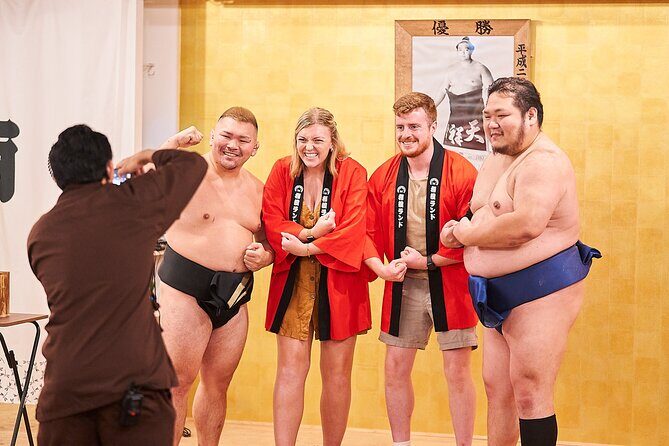
One thing SUMOLAND does well is keeping the energy up between segments. You’ll have photo time with wrestlers, which is usually what families and first-time Tokyo visitors remember most. Having a scheduled moment like that prevents the awkward scramble you can get at less organized attractions.
You also get a souvenir included with admission. Souvenirs may vary by season, so don’t expect the exact same item every month. Still, it’s nice that it’s built into the package rather than sold later at a markup.
Because seats are assigned, the best strategy is managing expectations. You can’t choose your view, so I’d focus on what the venue does offer: interactive segments, close ring energy, and structured photo moments. Many people note there’s no bad seat in the house, but since assigned seating is the rule, keep your plan flexible and enjoy the show rather than chasing a specific angle.
Price and Value for $106.12: Is It Worth It?
At $106.12 per person, this isn’t a cheap add-on. It’s closer to the cost of a solid dinner plus an attraction ticket—except you’re also getting hands-on participation, a chanko hot pot meal, and time with former wrestlers.
Here’s how I’d judge the value:
- You’re paying for more than a show. The mochi pounding and sumo bout challenge add real “I did that” moments.
- You’re not paying separately for the meal. The included chicken chanko hot pot reduces your on-site food spend.
- You’re getting access to wrestlers and training-style demonstrations in a controlled, family-friendly setting.
Where it may not feel like perfect value is if you mainly want a quiet, traditional museum experience. This is entertainment with education, not a replacement for early morning practice or official tournaments.
Food is the only real variable. Some people call the meal just OK, but many point to the broth and the mochi as highlights. If you’re food-driven, consider it included fuel for the show, not a culinary destination.
Who This Suits (and Who Might Find It Too Much)
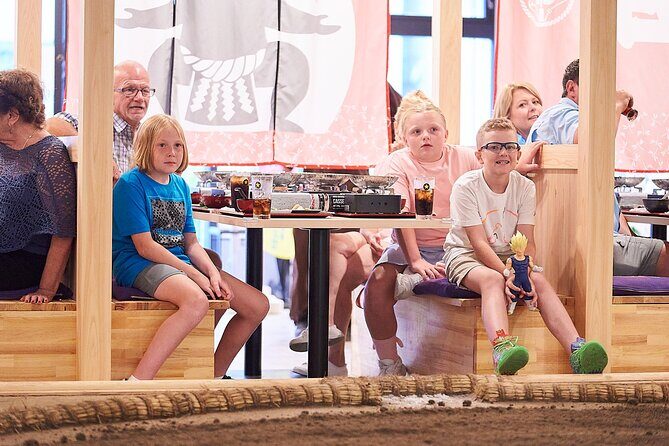
This is a strong fit if you want:
- A fun first look at sumo culture in Tokyo
- A family outing where kids can participate
- An activity that mixes food with performance
- A structured introduction to techniques and traditions without needing prior knowledge
It can feel less ideal if:
- You’re chasing deep tournament rules and history in a detailed lecture format
- You want a fully traditional, low-activity experience
- You’re very sensitive to the idea that the ring challenges can be limited by lottery or group caps
One more practical match: if you like interactive shows and don’t mind following instructions quickly, this will feel smooth. The program is paced to keep you involved without constant chaos.
Quick Planning Tips for a Smooth Visit
- Arrive a little early so you’re seated and ready when the show begins.
- If mochi pounding or the ring challenge is a must, go with the mindset that participation can be limited.
- If you need a special meal, request vegan or vegetarian at least 2 days in advance.
- Since bottled water isn’t included (and alcohol also isn’t), plan to buy drinks separately if you need them.
- Bring your patience. The room moves fast during participation calls, and staff are there to guide you—listen and you’ll have a better time.
Should You Book SumoLand Tokyo Ryogoku?
Yes, if you want a high-energy, family-friendly sumo experience with an included chanko hot pot and hands-on moments like mochi pounding and trying sumo basics in the ring. For many people, the interaction, wrestler closeness, and photo time are exactly what makes the ticket feel worth it.
Skip or reconsider if you want a quiet, traditional sumo immersion, or if you’re mainly there for a long, detailed explanation of tournament rules. Also, if dietary needs are complex (gluten-free or halal), plan to bring your own food because those meals aren’t offered here.
If your goal is a memorable Tokyo activity that feels playful but still rooted in real sumo athletes, this is one of the easiest “book it and enjoy it” choices around Ryogoku.
FAQ
Where is SUMOLAND Tokyo Ryogoku located?
It’s at 1F Takashima Ryogoku Mansion, 4-32-19 Ryogoku, Sumida City, Tokyo 130-0026, Japan.
How long is the experience?
Plan for about 1 hour 30 minutes to 2 hours.
What’s included in the ticket?
The ticket includes the entrance fee, chicken chanko hot pot (meal), and an included souvenir.
Is there food for people with dietary restrictions?
Vegetarian and vegan meals are available if requested at least 2 days in advance. Gluten-free and halal meals are not available, but you may bring your own food.
Can I choose my seat location?
No. Seat locations are assigned by the venue and cannot be selected. Box seats are noted as safer for situations involving children.
Do I definitely get to do mochi pounding and the sumo bout challenge?
Not always. If participation demand is high, it may be limited to one person per group or decided by lottery.
What should I know about drinks?
Alcoholic beverages are not included, and bottled water is not included.